
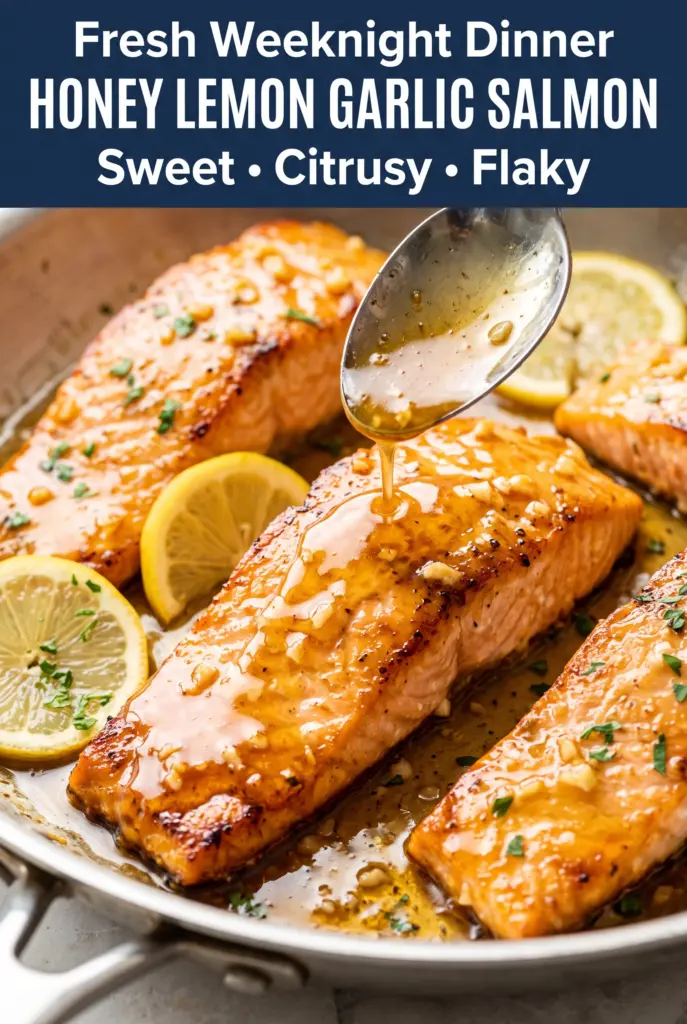
Honey lemon garlic salmon lands on the table with glossy edges, flaky centers, and a sauce that tastes like it took a lot more work than it did. The sweet honey, sharp lemon, and savory garlic hit all at once, then the butter rounds everything out so the glaze clings to each fillet instead of sliding off the pan. It’s the kind of skillet dinner that feels polished without asking for much more than a good sear and a little attention at the stove.
What makes this version work is the order. The salmon gets color first, while the glaze comes together separately so the honey doesn’t scorch and the garlic doesn’t turn bitter. Once the sauce goes into the pan, it only needs a few minutes to thicken enough to spoon over the fish. The butter goes in at the end for shine and body, not for structure, which is why the sauce stays silky instead of breaking.
Below you’ll find the little timing details that matter most, plus a few smart swaps if you’re cooking with what you already have on hand. The recipe is straightforward, but a couple of small choices change the final texture more than people expect.
The glaze thickened up fast and coated the salmon perfectly without turning sticky. I loved that the lemon stayed bright and the garlic didn’t burn in the pan.
Honey lemon garlic salmon is worth saving for the nights when you want a shiny skillet glaze and flaky salmon without a long ingredient list.
The Sear Is Doing More Work Than the Glaze
A lot of salmon recipes lean on sauce to carry the whole dish. That’s where things go sideways. If the fish goes into the pan pale and wet, the glaze has to do the job of both flavor and texture, and it usually ends up steaming instead of finishing with a clean, golden edge. The first side needs contact with a hot skillet so the outside firms up before the honey mixture goes in.
The other common mistake is rushing the flip. Salmon releases more easily when the crust has formed, and that crust protects the flesh from turning chalky. Once you add the sauce, the pan drops from searing territory into glazing territory. That shift is exactly what you want: enough heat to thicken the sauce, not so much that the honey burns.
What Each Ingredient Is Actually Doing in This Dish
The salmon matters most here. Look for fillets that are roughly the same thickness so they finish at the same time; thinner tails will overcook before the center of a thick piece is ready. Skin-on fillets work well because the skin helps hold the fish together in the pan, but skinless works too if you’re careful when flipping.
- Honey — gives the glaze its shine and body. It also helps the sauce cling to the salmon. Maple syrup can stand in, but the finish is a little less floral and a little more earthy.
- Fresh lemon juice and zest — the juice brings brightness, while the zest adds the part of the lemon flavor that stays on the tongue after the sauce is gone. Bottled juice works in a pinch, but it tastes flatter and won’t lift the garlic the same way.
- Garlic — raw garlic would be too sharp here, which is why it goes into the sauce and cooks just long enough to mellow. Mince it finely so it softens quickly instead of staying pungent and chunky.
- Soy sauce — this is the quiet ingredient that makes the glaze taste complete. It deepens the savory side without making the sauce taste overtly like soy. Tamari is the best gluten-free swap.
- Butter — this finishes the sauce with a silky sheen and smooths out the sharp edges of the lemon. If you skip it, the glaze still works, but it lands thinner and less polished.
Building the Glaze Without Burning the Honey
Dry the Salmon and Start With a Hot Pan
Pat the fillets dry before they hit the skillet. Moisture on the surface is what keeps the fish from searing cleanly, and that first layer of steam steals the crust you want. Season both sides, then lay the salmon into hot oil and leave it alone until it naturally releases from the pan. If you try to force the flip too soon, the flesh tears and the surface never gets that crisp edge.
Cook the Sauce Separately Until It Just Starts to Tighten
Whisk the honey, lemon juice, garlic, soy sauce, and zest together, then pour it around the salmon once the fish has some color. Let it simmer over medium, not high. You’re looking for tiny bubbles and a sauce that starts to look slightly heavier at the edges of the pan. High heat makes the honey go from glossy to scorched in a hurry.
Finish With Butter and Baste for Shine
Drop in the butter at the end and spoon the sauce over the salmon as it melts. The glaze should look smooth and glossy, not greasy or separated. Keep spooning until the fish is coated and flakes easily, then pull it from the heat right away. Salmon carries over fast, so if you wait until it looks fully done in the pan, it often goes dry by the time it reaches the plate.
How to Adapt This for What’s in Your Kitchen
Gluten-Free Version With the Same Savory Depth
Swap the soy sauce for tamari or coconut aminos. Tamari gives the closest flavor, while coconut aminos are a little sweeter and softer, so the glaze leans more honey-forward. The fish still browns and the sauce still thickens the same way.
Dairy-Free Salmon With a Lighter Finish
Leave out the butter and reduce the sauce for an extra minute so it tightens on its own. You’ll lose a little of the glossy finish, but the flavor stays bright and clean. A small drizzle of olive oil at the end can give the glaze a softer sheen if you want it.
Using Frozen Salmon Without Ruining the Texture
Thaw the fillets fully and pat them dry before cooking. Frozen salmon that still has surface ice steams in the pan, which keeps the glaze from sticking properly. Once it’s thawed and dry, it cooks just like fresh fillets.
Making Enough for a Crowd
Cook the salmon in batches so the skillet stays hot and each fillet gets a proper sear. If you overcrowd the pan, the fish releases liquid and the sauce turns thin instead of glossy. Hold finished pieces loosely covered in a warm oven while you cook the rest, then spoon the glaze from the pan over everything at the end.
Storage and Reheating
- Refrigerator: Store leftovers in an airtight container for up to 2 days. The glaze will loosen a bit and the salmon will firm up after chilling.
- Freezer: Freezing isn’t ideal once the salmon is glazed; the sauce can separate and the fish turns dry after thawing. If you need to freeze it, wrap the cooked salmon tightly without extra sauce and use within 1 month.
- Reheating: Warm gently in a covered skillet over low heat with a splash of water or a spoonful of fresh lemon juice. The big mistake is blasting it in the microwave, which tightens the fish and dulls the glaze.
Questions I Get Asked About This Recipe
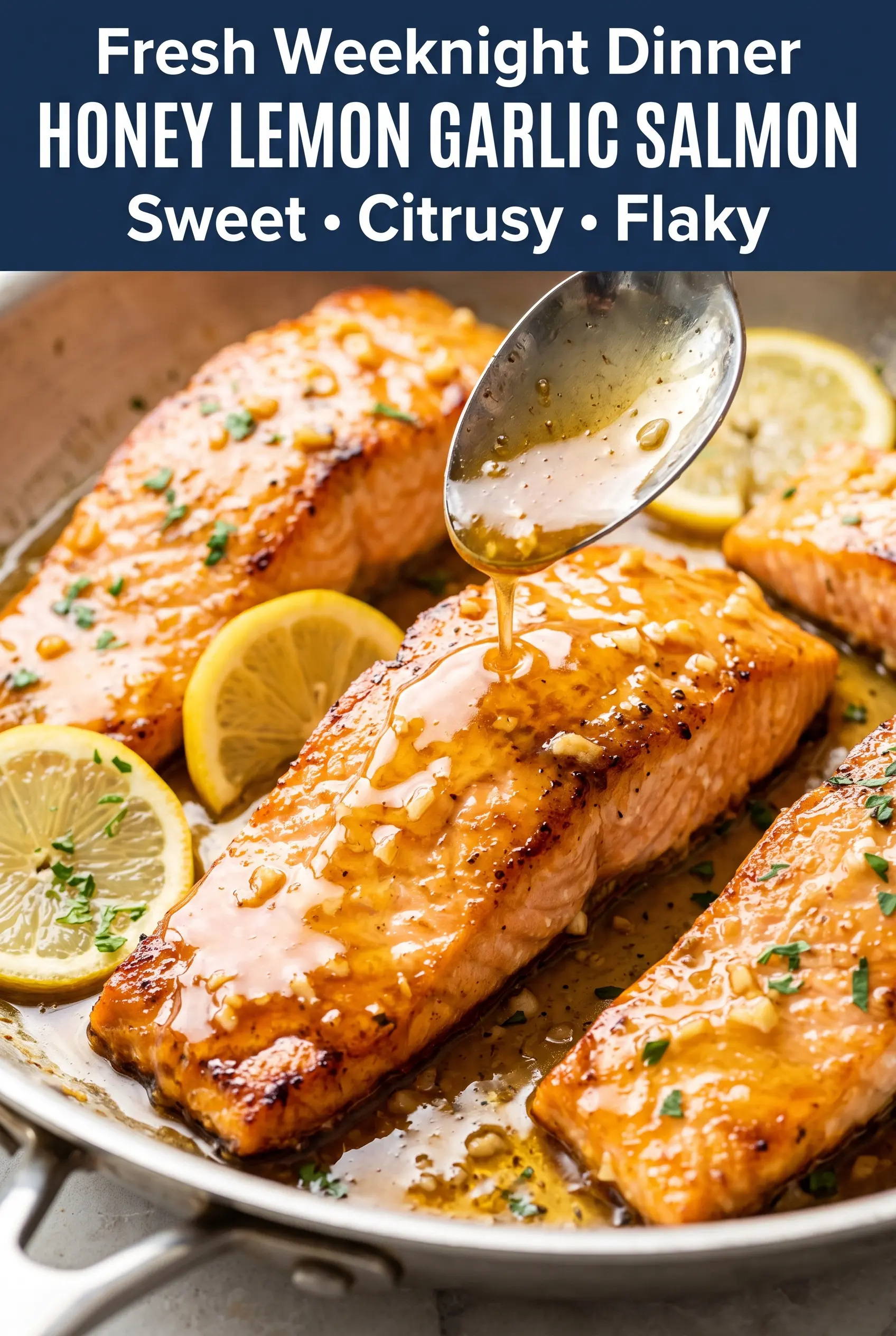
Honey Lemon Garlic Salmon
Ingredients
Equipment
Method
- Pat the salmon fillets dry, then season both sides with salt and black pepper.
- Heat the olive oil in a large skillet over medium-high heat until shimmering.
- Add the salmon and cook for 4–5 minutes until golden underneath.
- Flip the salmon carefully and cook for another 2–3 minutes.
- Whisk the honey, fresh lemon juice, garlic, low-sodium soy sauce, and lemon zest together until smooth.
- Pour the honey lemon garlic mixture around the salmon, reduce heat to medium, and simmer for 2–3 minutes until the glaze begins to thicken.
- Add the unsalted butter and stir until it melts into the glaze.
- Spoon the glossy glaze repeatedly over the salmon until evenly coated.
- Cook until the salmon reaches 145°F and flakes easily with a fork, then remove the skillet from the heat.
- Sprinkle with chopped fresh parsley.
- Serve immediately with lemon wedges and extra honey lemon garlic glaze from the skillet.