

At first, the skillet looks almost too wet: carrots, honey, butter, and water bob around together with no sign of a glaze. That’s exactly where these honey glazed carrots should be before the lid comes off. The covered simmer softens the slices, then a few minutes uncovered turns the buttery liquid glossy.
I like this method because the carrots and glaze finish together in one skillet, so there’s no separate pan of syrup to manage. Cutting the carrots to an even thickness matters more than choosing the biggest, prettiest ones; uniform slices soften at about the same pace instead of leaving you with a mix of firm and floppy pieces.
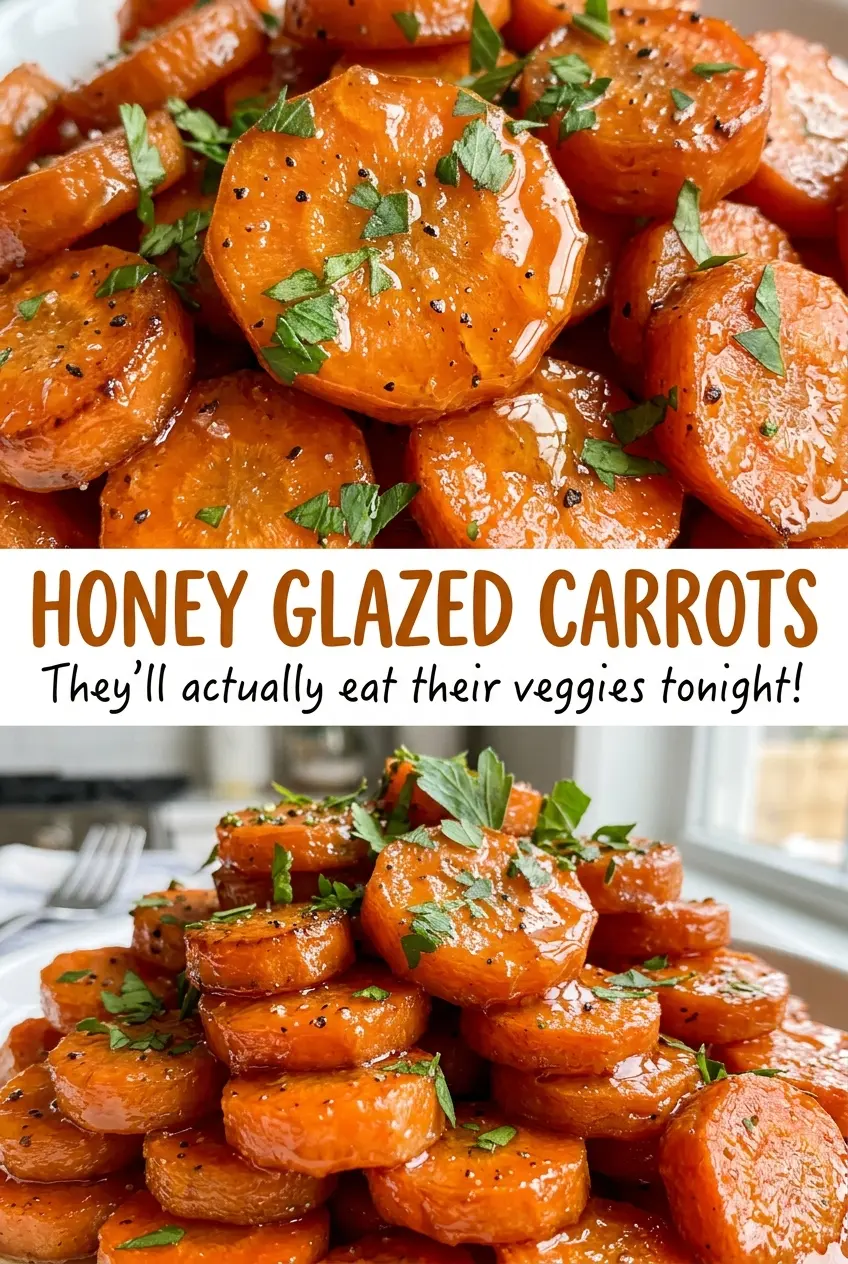
The finished carrots are tender enough for a fork, with a light, shiny coating that clings to every diagonal slice. They’re sweet, but the salt and butter keep the honey from taking over.
Kitchen Note
Check a thicker carrot slice with a fork before moving on to the glaze. If it still feels firm in the center, give the covered simmer another minute rather than trying to soften it during the quick reduction.
Save these honey glazed carrots for a holiday table or weeknight side—the honey-butter glaze clings to tender diagonal slices without a separate saucepan.
Why These Carrots Simmer Before They Glaze
The covered part of the cook isn’t just a shortcut; it handles the job the glaze can’t do well. With a little water in the skillet, the carrots soften in a steamy, gentle environment while the honey and butter stay fluid around them. If you tried to reduce that liquid before the carrots were tender, you’d risk a thick coating before the centers had softened.
Once the lid comes off, the goal changes. The extra moisture escapes, and the honey-butter mixture concentrates into a thin glaze that coats the carrots instead of pooling at the bottom of the skillet. Stirring often during this final stretch moves the slices through the liquid and helps it reduce evenly. Don’t expect a thick candy-like coating; this is a light glaze, glossy enough to shine on the carrots while still tasting like butter and honey rather than cooked sugar. A wide skillet gives the liquid room to evaporate, which is why the 12-inch pan matters here.
The Carrot Cut and Sweetener That Shape the Glaze

- Carrots — Firm, whole carrots are easy to peel and slice into consistent pieces. Cut them about 1/4 inch thick on the diagonal; thicker slices take longer to soften, while very thin ones are more likely to lose their shape. Rainbow carrots work in the same amount and cut, though their color can make the finished dish look different.
- Honey — Honey gives the glaze its rounded sweetness and helps it cling as the liquid reduces. A standard mild honey is a good fit; a strongly flavored honey will be more noticeable in this simple dish. Pure maple syrup can replace it in the same amount, with a woodier, less floral sweetness.
- Unsalted butter — Butter rounds out the honey and gives the reduced liquid a silky feel. Unsalted butter lets you control the seasoning; if salted butter is what you have, leave out the kosher salt and taste the carrots at the end. For a dairy-free option, use plant-based butter in the same amount, keeping in mind that brands vary in saltiness and richness.
How to Soften the Carrots Before the Glaze Reduces
Bring the Skillet to a Boil
Add the sliced carrots, water, butter, honey, and kosher salt to a 12-inch skillet with a lid. Set it over medium-high heat and bring the mixture to a boil. The butter will melt into the water and honey, so the liquid may look loose rather than cohesive at this point. Keep the lid close by for the next stage.
Simmer Until a Fork Slips In
Cover the skillet, lower the heat to medium-low, and simmer for 8–12 minutes, stirring once. The carrots should be tender when pierced with a fork, not crunchy in the center. The exact point can vary slightly with the carrots’ thickness, so check a slice rather than relying only on the clock. Keep the pan covered while they soften; lifting the lid repeatedly lets steam escape.
Reduce the Liquid to a Glossy Coat
Uncover the skillet and raise the heat to medium-high. Cook for 3–5 minutes, stirring often, as the liquid bubbles and reduces around the carrots. Watch for a glossy coating that clings when you lift a slice; a puddle of thin liquid means it needs more time. Stir frequently so the honey-butter mixture doesn’t sit in one spot as it thickens.
Three Small Changes That Give These Carrots a Different Feel
Make the skillet dairy-free
Replace the butter with the same amount of plant-based butter and use maple syrup instead of honey for a vegan version. The glaze still coats the carrots, but it will taste a little less buttery and more maple-forward; check the plant butter’s saltiness before adding kosher salt.
Use rainbow carrots for color
Swap in the same weight of rainbow carrots and peel and slice them just like orange carrots. The flavor stays close to the original, while the mix of colors makes the skillet and serving bowl more vivid; keep the slices uniform so they soften together.
Add a little heat
Stir a pinch of cayenne into the skillet with the other ingredients. It adds a gentle warmth that cuts through the honey’s sweetness without changing the one-pan method; start with a pinch, since the glaze concentrates as it reduces.
Storage and Reheating
- Refrigerator: Refrigerate leftovers within 2 hours and keep them covered for 3–4 days. The glaze may firm up when cold, and the carrots will soften a little more after reheating.
- Freezer: Freeze in an airtight container for up to 2 months for best quality. Thaw overnight in the refrigerator; the carrots will be softer than freshly cooked.
- Reheating: Warm gently in a covered skillet over medium-low heat with a small splash of water, stirring until the leftovers reach 165°F. High heat can make the glaze reduce too far before the carrots warm through.
Questions That Come Up While Cooking Honey Glazed Carrots
Honey Glazed Carrots
Ingredients
Equipment
Method
- Combine the carrots, water, butter, honey, and salt in a 12-inch skillet with a lid.
- Bring to a boil over medium-high heat.
- Cover, reduce the heat to medium-low, and simmer for 8–12 minutes, stirring once, until the carrots are tender when pierced with a fork.
- Uncover and cook over medium-high heat for 3–5 minutes, stirring often, until the liquid reduces to a glossy glaze that coats the carrots.