
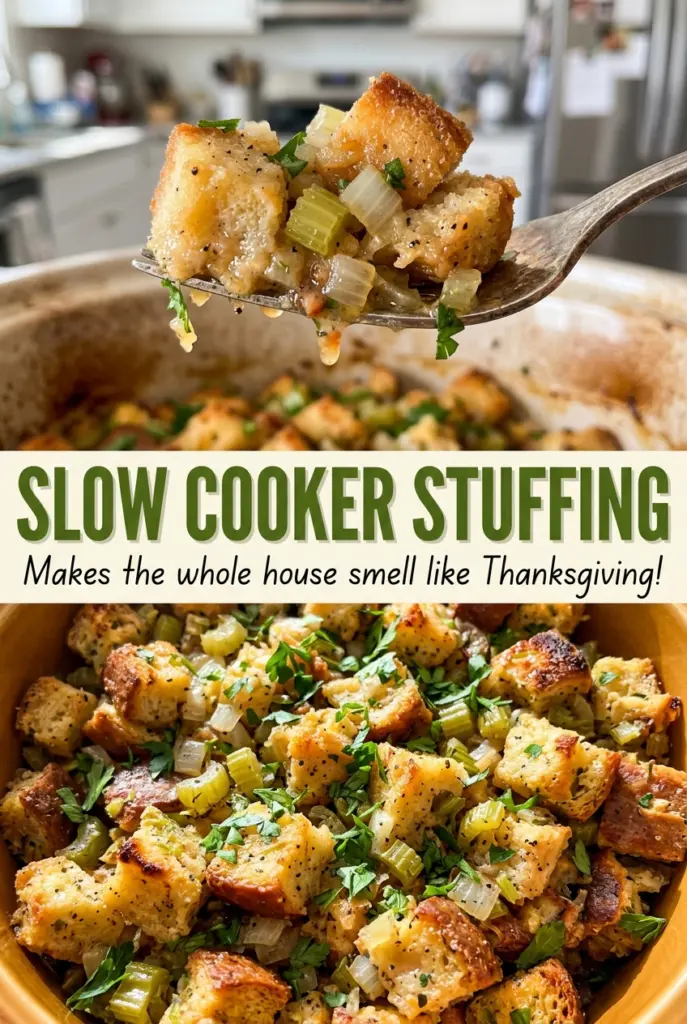
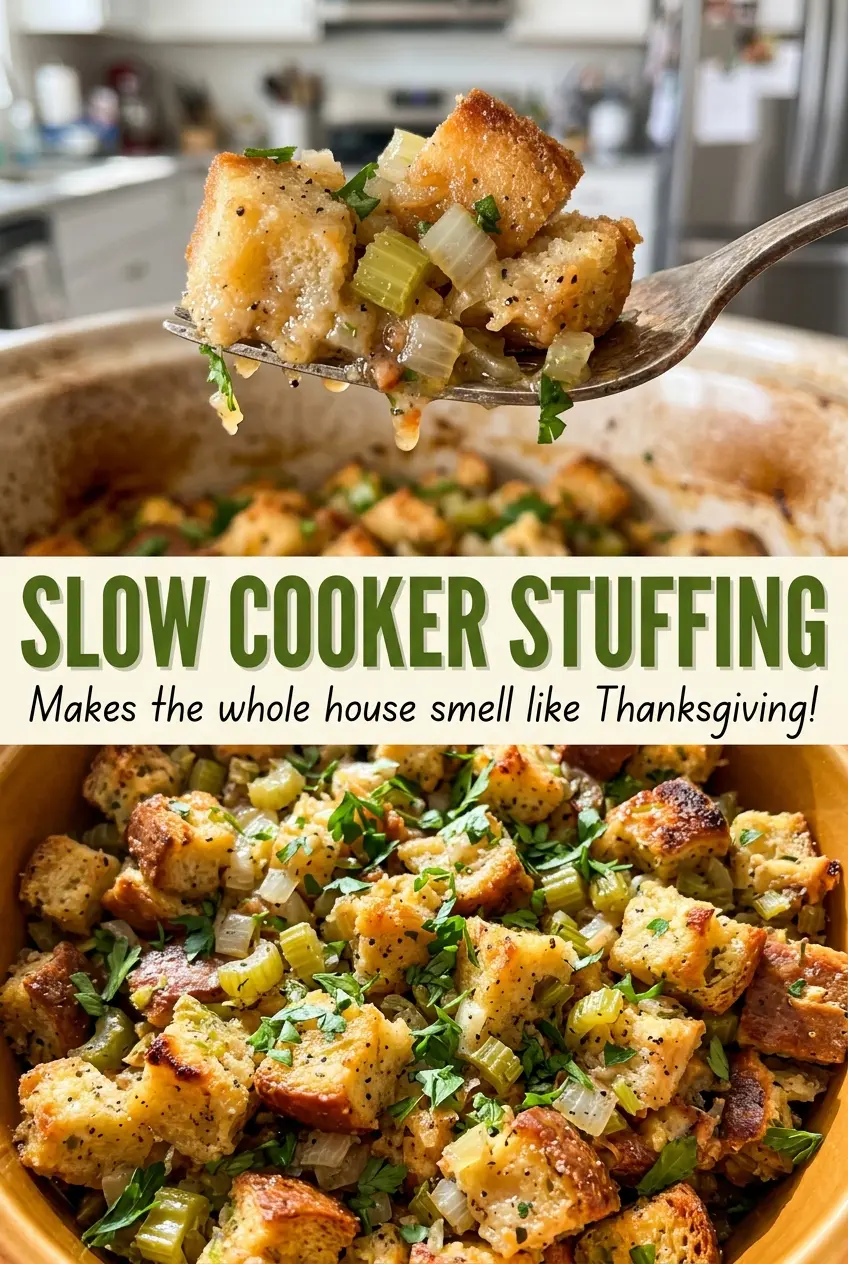
When the oven is full and the side dishes are stacking up, stuffing can be the pan that doesn’t fit. The slow cooker handles it quietly on the counter, leaving the oven free and giving the bread time to absorb the broth. I like this Slow Cooker Stuffing because it comes out tender all the way through, with the onion and celery softened into every bite.
The texture depends on starting with dried, unseasoned bread cubes and adding just enough seasoned broth mixture to moisten them evenly. I sauté the vegetables first, then fold the liquid through gently rather than pressing the bread down into a dense layer. The slow cooker’s covered heat does the rest, while the eggs help the center set.
Let it rest, still covered, before serving, and the spoonfuls hold together instead of collapsing into a wet heap. It’s a cozy, savory stuffing that serves 10 without taking up oven space.
Kitchen Note
After the cooker is off, leave the lid on for the full 10-minute rest. The hot, damp center needs that quiet pause to settle, so the stuffing holds its shape when you serve it.
Save this Slow Cooker Stuffing for a tender, herby side that cooks on the counter while your oven is busy.
Why Slow Cooker Stuffing Needs Dry Cubes, Not a Soupy Start
A covered slow cooker holds in moisture instead of letting the top dry out the way an uncovered oven pan can. That’s useful for keeping stuffing tender, but it also means extra liquid has nowhere to go. Start with dried bread cubes, and aim for evenly moistened pieces rather than a bowl with broth pooled at the bottom.
The eggs matter here, too. They set as the stuffing cooks and give the soft bread mixture structure; broth alone would leave it looser and more likely to slump when spooned out. Folding the liquid through instead of stirring hard keeps the cubes intact, so you get a tender, cohesive texture rather than a paste. This balance is what makes a slow-cooked stuffing feel like stuffing instead of savory bread pudding.
The Bread and Broth Choices That Set the Texture
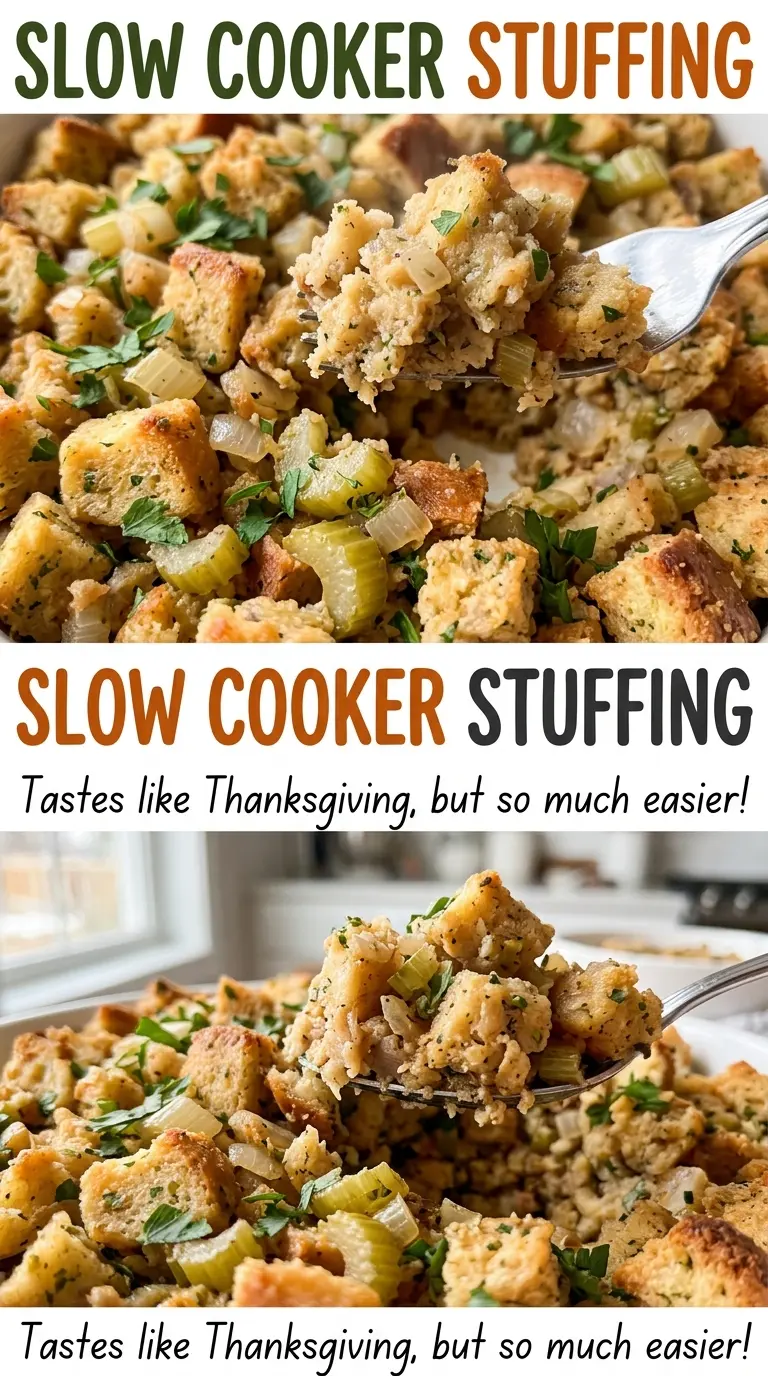
- Unseasoned dried bread cubes — Their dry, airy structure absorbs the broth without bringing extra moisture, and the unseasoned flavor lets the sage, thyme, and salt stay balanced. Choose cubes that feel dry throughout; seasoned cubes can make the finished stuffing saltier and harder to control.
- Low-sodium chicken broth and eggs — The broth carries flavor into the bread, while the eggs help the mixture set. Low-sodium broth gives you more control over seasoning, and eggs are the part that makes the cooked stuffing hold together instead of staying loose.
- Butter, onion, and celery — Butter gives the vegetables a rich base and keeps the bread from tasting dry or bland. Finely chopping the onion and celery helps them soften evenly and spread through the cubes; regular yellow onion and celery are all you need here.
- Parsley, sage, and thyme — Fresh parsley adds a clean, green note, while dried sage and thyme bring the familiar savory character of stuffing. Use fresh parsley with no limp or yellow leaves; dried herbs are a practical choice here because their concentrated flavor stands up well during the long cook.
Building Evenly Moist Slow Cooker Stuffing
Soften the Onion and Celery in Butter
Grease the insert of a 6-quart slow cooker with 1 tablespoon of butter. Melt the remaining butter in a large skillet over medium heat, add the finely chopped onion and celery, and cook for 8 to 10 minutes, stirring occasionally. The vegetables should feel soft rather than crisp when you press a piece with the spoon. Keep the heat at medium; you want them softened, not browned at the edges.
Coat the Dried Cubes
Put the bread cubes in a large bowl and add the cooked vegetables along with the butter from the skillet. Toss until the cubes are coated and the onion and celery are spread through the bowl. Use a broad folding motion rather than crushing the bread with a spoon. This gives the vegetables a chance to land throughout the stuffing instead of settling into one pocket.
Whisk and Fold the Seasoned Liquid
In a medium bowl, whisk the broth with the eggs, parsley, sage, thyme, salt, and pepper until the eggs are fully blended. Pour the mixture over the bread and fold gently until the cubes are evenly moistened. Look across the bowl for dry clusters and turn those through the liquid. If you see a puddle collecting underneath, keep folding gently so the liquid is distributed rather than left at the bottom.
Cook Until the Center Sets
Transfer the mixture to the prepared slow cooker and cover. Cook on LOW for 4 to 5 hours or HIGH for 2 to 3 hours, until the center reaches 165°F. Slow cookers can vary, so check the center rather than relying only on the clock; the middle should be hot and set, not wet or loose. Turn off the cooker and let the covered stuffing rest for 10 minutes before serving.
Three Ways to Adapt the Stuffing to Your Table
Make It Vegetarian with Vegetable Broth
Swap the chicken broth for low-sodium vegetable broth in the same amount. The stuffing stays tender and cohesive, with a slightly lighter savory flavor; the eggs and butter mean this version is vegetarian, not vegan.
Use Gluten-Free Bread Cubes
Choose unseasoned gluten-free dried bread cubes and use a 12-ounce package in place of the regular cubes. Their size and density may differ by brand, so fold the broth mixture through carefully and check that the cubes are moistened evenly. The texture may be a little more delicate, but the slow-cooker method stays the same.
Add Cooked Sausage for a Heartier Side
Fold fully cooked, crumbled sausage into the bread and softened vegetables before adding the broth mixture. It makes the stuffing richer and more substantial, and the sausage’s seasoning will add salt, so choose a mild variety if you want the sage and thyme to stay in front.
Storage and Reheating
- Refrigerator: Refrigerate leftovers within 2 hours in a covered container and use them within 3 to 4 days. The cubes soften as they sit, so the texture will be less distinct than when freshly cooked.
- Freezer: It freezes well for up to 3 months. Pack cooled portions into airtight freezer containers; thaw overnight in the refrigerator before reheating.
- Reheating: Reheat covered in a 325°F oven until hot throughout, adding a splash of broth if the stuffing seems dry. Avoid reheating it uncovered, which can dry out the top before the center warms.
Questions That Come Up Before the Lid Goes On
Slow Cooker Stuffing
Ingredients
Equipment
Method
- Grease the insert of a 6-quart slow cooker with 1 tablespoon of the butter.
- Melt the remaining 7 tablespoons of butter in a large skillet over medium heat.
- Add the onion and celery to the skillet.
- Cook for 8 to 10 minutes, stirring occasionally, until softened.
- Put the bread cubes in a large bowl, add the cooked vegetables and butter, and toss to combine.
- Whisk the broth, eggs, parsley, sage, thyme, salt, and pepper in a medium bowl.
- Pour the broth mixture over the bread.
- Fold until evenly moistened.
- Transfer the mixture to the prepared slow cooker and cover.
- Cook on LOW for 4 to 5 hours or HIGH for 2 to 3 hours, until the center reaches 165°F.
- Turn off the slow cooker and let the stuffing rest, covered, for 10 minutes before serving.