

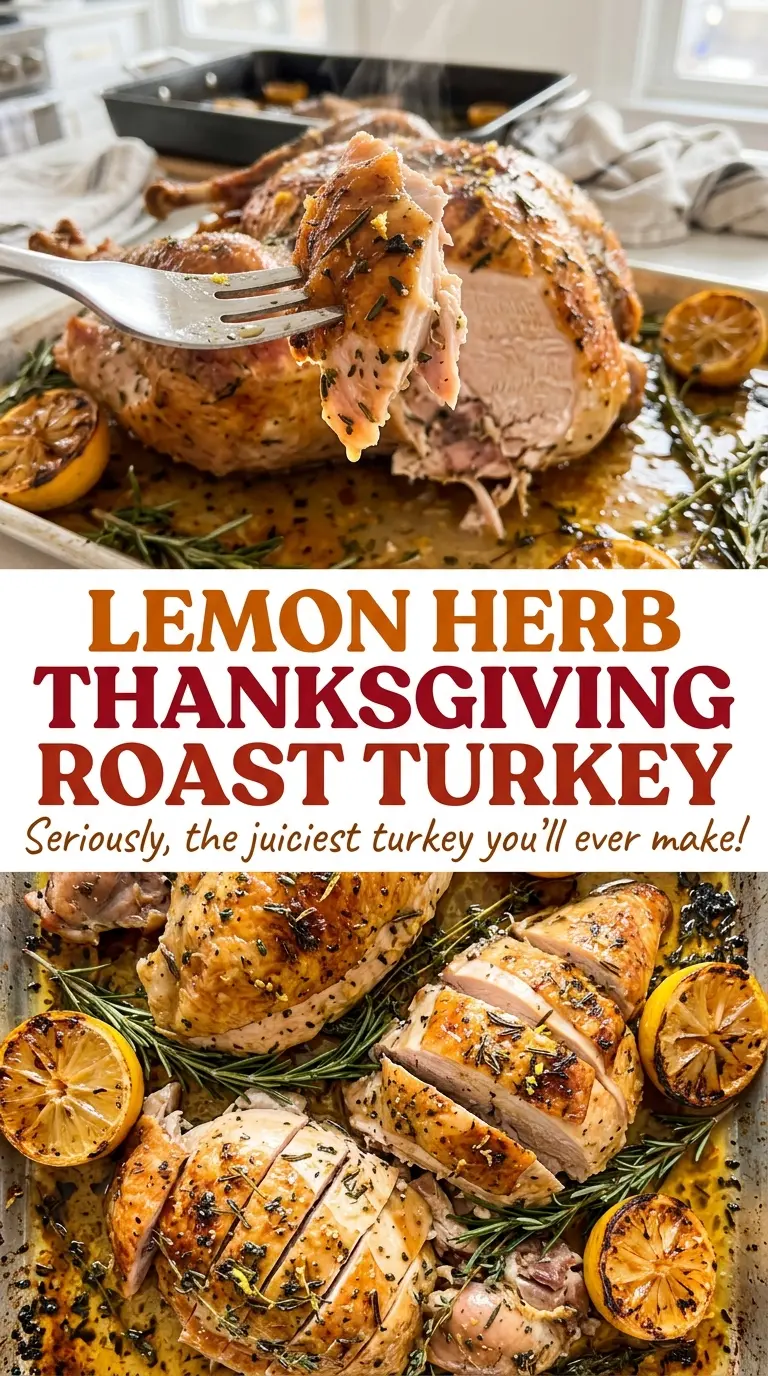
As the lemon-herb butter warms in the oven, the skin turns glossy and the rosemary and garlic start to perfume the kitchen. The part that makes the biggest difference happens before the roasting pan goes in: some of that butter needs to sit beneath the breast skin, not just melt across the top. That’s how this Lemon Herb Thanksgiving Roast Turkey gets flavor into the breast while the outside browns.
I use an unbrined turkey for this version because the butter is seasoned with kosher salt, and starting with an unseasoned bird keeps the final result in balance. Lemon zest brings a bright, fresh note to the butter, while lemon halves and onion in the cavity add aroma as the turkey roasts. The result is a golden, herb-scented bird with juicy slices and a simple pan broth underneath.

Kitchen Note
Go slowly when loosening the skin over the breast. It should lift enough to make room for the butter without tearing, so work with your fingertips rather than pulling hard.
Save this Lemon Herb Thanksgiving Roast Turkey for a golden-skinned centerpiece seasoned with lemon, rosemary, thyme, and sage.
Why an Unbrined Turkey Is the Right Match for This Herb Butter
Salt doesn’t stay on the surface of a turkey. It draws in as the bird cooks, so a turkey that has already been brined starts with seasoning you can’t see or measure. This butter has kosher salt in it, which is why I use an unbrined bird here; starting with a pre-salted turkey could leave the meat too salty, especially near the skin where the butter sits.
The other useful detail is where the butter goes. A coating only on top flavors the skin and the drippings, but butter under the breast skin melts close to the meat. It also helps the herbs stay in place instead of sliding down the outside as the turkey heats. You still spread butter over the exterior for browning, but the layer beneath the skin is what makes each slice taste seasoned rather than relying on the skin alone. Keep the bird unbrined and let the butter do its job in both places.
What the Lemon, Fresh Herbs, and Low-Sodium Broth Each Bring
- Unsalted butter — Softened butter mashes smoothly with the herbs and spreads beneath the skin without needing to melt it first. Unsalted butter keeps the seasoning predictable; salted butter would add salt beyond the amount intended here.
- Fresh rosemary, thyme, and sage — The fresh leaves give the butter a clean, aromatic flavor and distribute through it when finely chopped. Fresh herbs are important for this texture; dried herbs won’t blend into the butter in the same way, so I don’t recommend swapping them into this version.
- Lemon zest and lemon halves — Finely grated zest gives the butter fragrant citrus oils without adding liquid, while the halved lemon goes inside the cavity. Use a fresh lemon with an unblemished peel for zest; bottled lemon juice doesn’t replace the zest’s aroma.
- Garlic — Minced garlic disperses through the butter, so each area gets some savory flavor. Chop it finely; larger pieces are harder to spread evenly beneath the skin.
- Unbrined whole turkey — A fully thawed bird in the specified size range is important for even roasting and for keeping the salt level in check. Choose a bird with the neck and giblets removed before you begin.
- Low-sodium chicken broth — The broth adds moisture to the roasting pan and gives you savory pan liquid without bringing as much extra salt as regular broth. The low-sodium version is the better fit alongside the seasoned butter.
- Yellow onion — Quartered onion goes into the cavity with the lemon, where it contributes aroma as the turkey roasts. A medium yellow onion is the specified choice for this roast.
The Roasting Sequence That Keeps the Breast Protected
Mix a Spreadable Herb Butter
Mash the softened butter with the lemon zest, finely chopped rosemary, thyme leaves, sage, minced garlic, kosher salt, and black pepper until the mixture looks evenly combined. The butter should be soft enough to press with a fork, not melted or oily. If it’s too firm, it will drag against the skin instead of spreading smoothly. Take a moment to distribute the herbs throughout so one area of the turkey doesn’t get all the garlic or seasoning.
Dry and Prepare the Bird
Set a rack in the lower third of the oven and heat it to 325°F. Pat the fully thawed turkey dry with paper towels; a dry surface helps the butter coat the skin instead of slipping over moisture. Place the lemon halves and onion quarters in the cavity, then tuck the wing tips underneath the bird. Keep the cavity aromatics loose rather than packing them tightly.
Work Butter Beneath the Skin
Gently loosen the skin over the breast, then spread some of the lemon-herb butter beneath it. Rub the remaining butter over the outside of the turkey so the whole bird is coated. If the butter gathers in one thick patch, smooth it out with your hand over the skin; an even layer browns more evenly. Take care around the thinner areas of skin so it stays intact.
Roast Until Both Checks Read 165°F
Set the turkey breast-side up on a rack in a large roasting pan and pour the low-sodium broth into the pan. Roast uncovered for 3 to 3 3/4 hours, tenting the breast loosely with foil if it browns too quickly. Check the thickest part of the breast and the innermost part of the thigh with a thermometer, avoiding bone; both spots need to read 165°F. Don’t judge doneness by skin color alone, since the breast may brown before the thigh is ready.
Rest Before Carving
Transfer the turkey to a carving board and tent it loosely with foil. Let it rest for 30 minutes before carving so the juices settle instead of running out as soon as you cut. Keep the tent loose rather than wrapping the bird tightly, which would trap more steam around the skin. Carve after the rest and serve while the meat is warm.
Choosing a Turkey Size and Knowing What Not to Swap
Choose the 12-pound end for the smaller bird
The lower end of the specified 12- to 14-pound range gives you a smaller centerpiece while keeping the ingredient list and roasting method intact. The turkey still needs to meet the same thermometer checks; don’t use appearance alone to decide it’s ready.
Use the 14-pound end for the larger bird
A bird at the upper end stays within the size this roasting approach is written for. It gives you more turkey without changing the lemon-herb butter or adding another ingredient. Since size affects how quickly the meat cooks, use the stated roasting window as a guide and rely on the thermometer in both required spots.
Keep the butter for this dairy-based version
I don’t recommend a dairy-free swap here. Butter carries the chopped herbs under the breast skin and coats the outside; replacing it with a different fat would change how the coating spreads and browns, so it would no longer be this tested version.
Storage and Reheating
- Refrigerator: Refrigerate leftover turkey within 2 hours and use it within 3 to 4 days. The skin softens after chilling, but the carved meat stays tender.
- Freezer: Cooked turkey freezes well. Pack carved meat in an airtight container or freezer bag and use it within 2 to 6 months for best quality.
- Reheating: Reheat covered portions with a little reserved pan broth until they reach 165°F. Uncovered reheating dries the lean breast meat before the center warms through.
Questions I Get About This Roast Turkey
Lemon Herb Thanksgiving Roast Turkey
Ingredients
Equipment
Method
- In a small bowl, mash the butter with the lemon zest, rosemary, thyme, sage, garlic, salt, and pepper until evenly combined.
- Position a rack in the lower third of the oven.
- Heat the oven to 325°F.
- Pat the turkey dry with paper towels.
- Place the lemon halves and onion quarters in the cavity.
- Tuck the wing tips underneath the bird.
- Gently loosen the skin over the breast and spread the lemon-herb butter under the skin and over the outside of the turkey.
- Set the turkey breast-side up on a rack in a large roasting pan.
- Pour the broth into the pan.
- Roast uncovered for 3 to 3 3/4 hours, tenting the breast loosely with foil if it browns too quickly, until a thermometer reads 165°F in the thickest part of the breast and the innermost part of the thigh, without touching bone.
- Transfer the turkey to a carving board and tent loosely with foil.
- Let rest for 30 minutes before carving.