
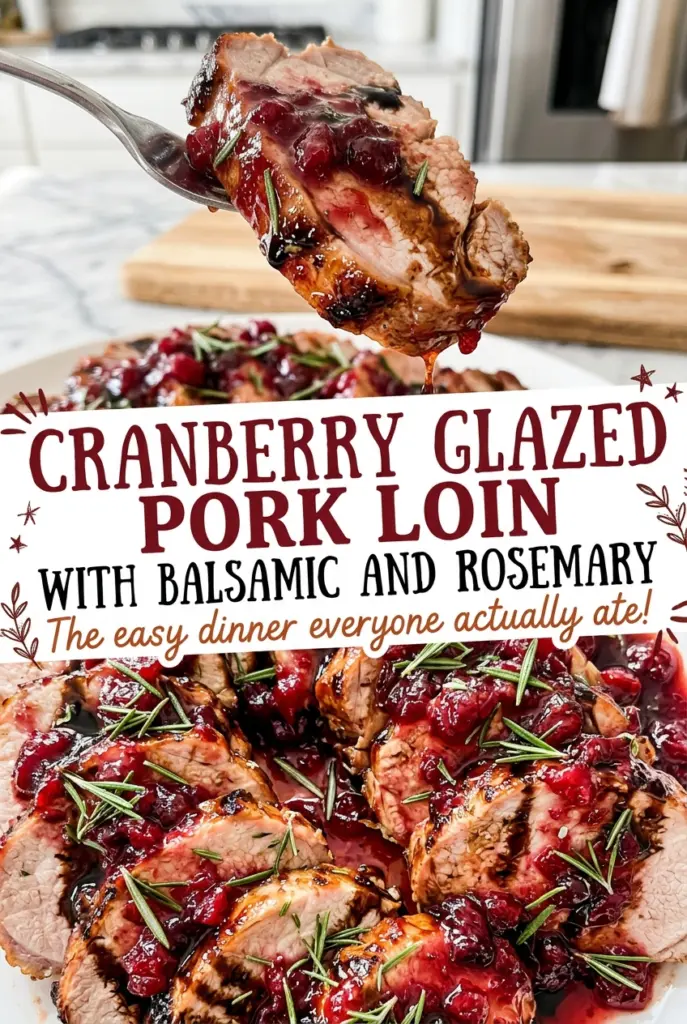
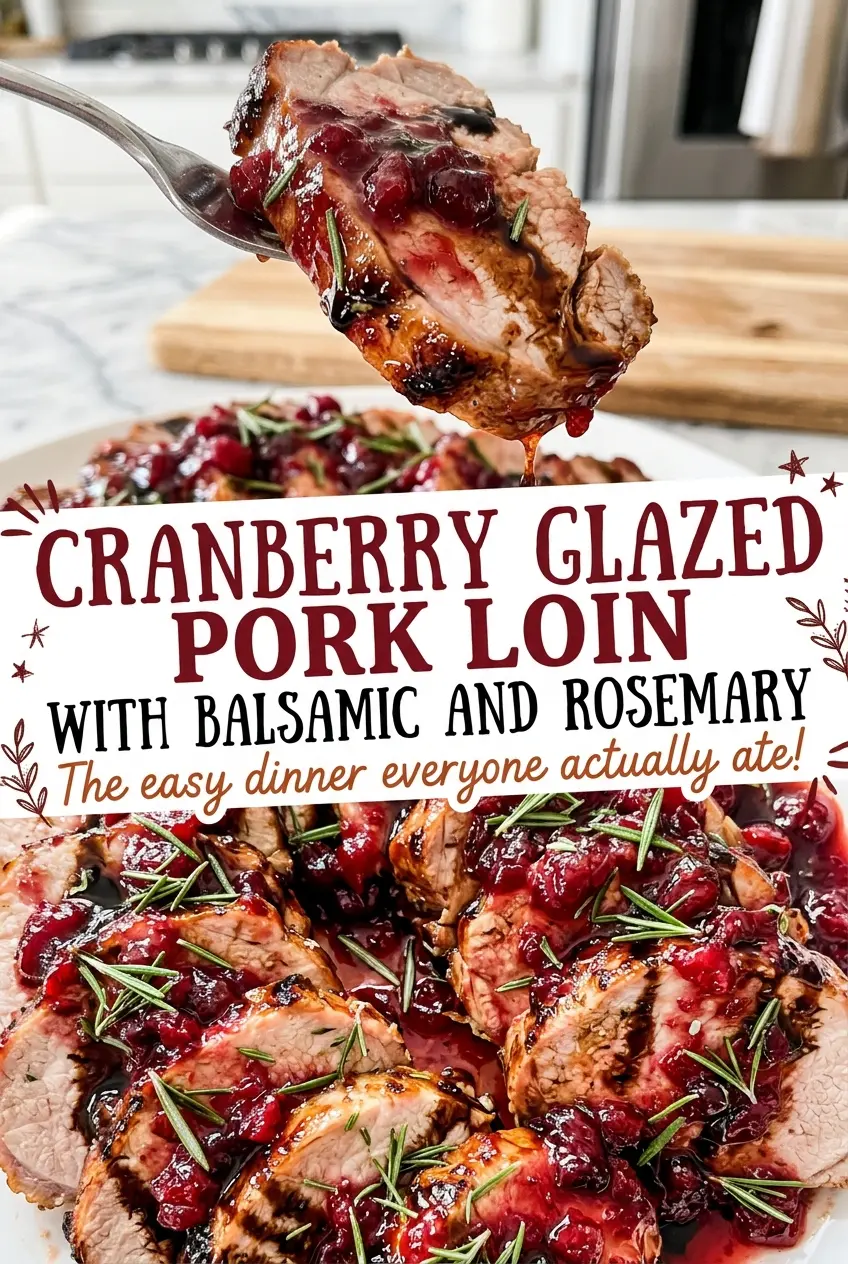
When the cranberries start popping in the saucepan, the sharp, fruity smell of balsamic and rosemary rises right along with them. That’s the moment this pork loin starts to feel like more than a plain roast: the glaze is tart, gently sweet, and bold enough to stand up to the meat without covering it up. Each slice gets a glossy cranberry finish, with extra glaze at the table for anyone who wants a little more.
I keep the pork seasoning simple so the rosemary and balsamic have room to come through. Fresh cranberries are worth using here because they break down as they cook and give the glaze its own texture, rather than the smooth, jammy sweetness of prepared cranberry sauce. The result is a roast with savory edges and a bright, tangy topping that looks right at home on a dinner table.
Kitchen Note
Transfer the serving glaze to a clean bowl before you brush any glaze over the pork. That keeps the sauce you’ll bring to the table separate from the glaze that has touched the roast.
Save this cranberry glazed pork loin for a dinner that calls for tender slices, a glossy balsamic glaze, and bright cranberry flavor.
Why the Cranberry Glaze Goes on After the Roast Has a Head Start
The brown sugar in this glaze gives the cranberries a rounded sweetness and helps create that shiny finish, but sugar can darken quickly in a hot oven. Letting the pork roast uncovered first gives the meat a head start before the sweet coating goes on. The glaze then spends less time exposed to the oven’s heat, so it’s more likely to stay bright and tangy instead of turning too dark at the edges.
There’s also a practical benefit to keeping the glaze in two stages. The pork gets seasoned and roasted on its own first, while the glaze simmers separately and thickens into a spoonable sauce. When it’s brushed on later, it clings to the outside rather than running straight into the baking dish. Keep an eye on the roast during its final stretch: the thermometer, not the color of the glaze, tells you when the center is ready.
What Fresh Cranberries, Balsamic, and Rosemary Each Bring
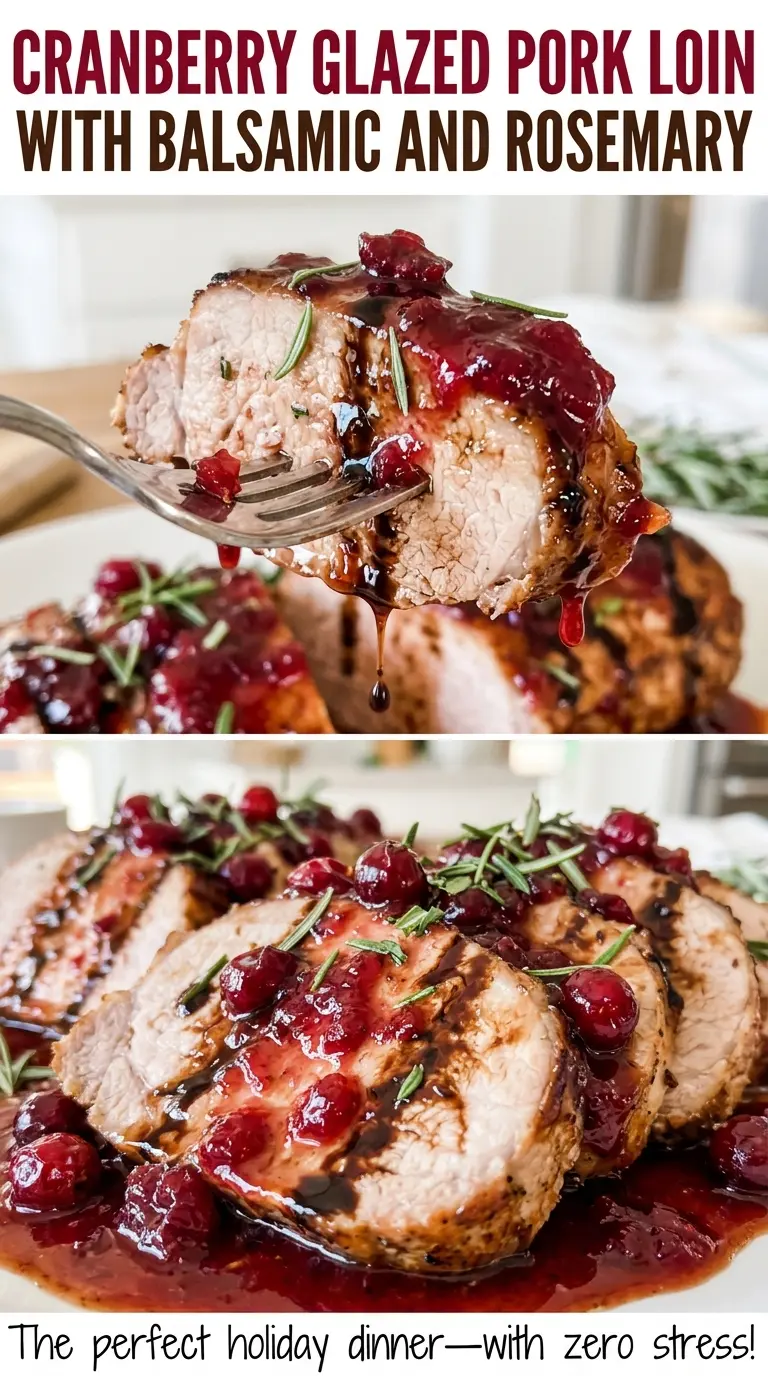
- Boneless pork loin — This broad roast gives you substantial slices and a mild, meaty center that pairs well with a tart glaze. Choose a roast that fits comfortably in the baking dish; pork loin and pork tenderloin aren’t interchangeable cuts for this cooking time. Patting the surface dry helps the oil and seasoning coat it evenly.
- Fresh cranberries — Their tartness keeps the glaze from tasting one-note sweet, and the berries soften as they simmer. Look for firm berries without shriveled or mushy spots. Prepared cranberry sauce won’t behave the same way because it’s already cooked and sweetened.
- Light brown sugar — Its mellow sweetness balances the cranberries and balsamic while giving the glaze body. Packed light brown sugar is the right choice for the intended balance; darker brown sugar brings a stronger molasses note.
- Balsamic vinegar — Balsamic contributes acidity along with a rounded, dark sweetness, so it does more than make the glaze sour. A standard grocery-store balsamic works well; there’s no need to use an expensive aged bottle for a simmered glaze.
- Fresh rosemary — Chopped fresh leaves bring a piney, savory note that cuts through the fruit. Chop them finely so you don’t get large woody pieces in the sauce. Dried rosemary is a workable stand-in, though its flavor is more concentrated and earthy.
- Olive oil and black pepper — Olive oil helps the seasonings spread over the roast, while black pepper adds a gentle savory bite. A regular olive oil is fine here; save a pepper grinder for serving if you like a fresher aroma.
Roast the Pork First, Then Brush on the Glaze
Season and Set Up the Roast
Heat the oven to 375°F, then pat the pork dry and rub it all over with olive oil. Season it with kosher salt and black pepper, and set it fat-side up in a 9×13-inch baking dish. Keeping the roast fat-side up follows the specified setup and leaves the seasoned surface exposed as it cooks. Don’t cut into the roast to judge it at this point; the thermometer check comes later.
Simmer the Cranberry Balsamic Glaze
Combine the cranberries, packed light brown sugar, balsamic vinegar, water, chopped fresh rosemary, and kosher salt in a medium saucepan. Bring the mixture to a simmer over medium heat and cook for 12–15 minutes, stirring occasionally. The berries should burst and the liquid should thicken into a glossy glaze; if whole cranberries remain, give them time to soften rather than turning the heat up sharply. Transfer 1/2 cup of glaze to a clean bowl for serving.
Give the Pork Its First Roast
Roast the pork uncovered for 40 minutes before brushing on the glaze. This lets the roast cook on its own before the sugary coating is exposed to the oven. When the first roast is over, brush the remaining glaze over the pork in an even layer. Cover the top rather than trying to paint on a thick mound that could slide into the dish.
Finish by Temperature, Then Rest
Return the pork to the oven for 15–30 minutes, checking the thickest part with a thermometer until it reads 145°F. Roast size and shape affect how quickly the center reaches that point, so use the temperature rather than relying on the glaze’s color. Transfer the pork to a cutting board and let it rest for 10 minutes before slicing. Serve the slices with the reserved glaze.
Easy Ways to Shift the Glaze’s Flavor
A brighter orange-cranberry glaze
Stir finely grated orange zest into the saucepan with the cranberries and other glaze ingredients. The citrus lifts the fruitiness and makes the balsamic taste a little less deep and dark, while the glaze still works as a tart-sweet coating for the pork.
A more pronounced rosemary note
Use one-third as much dried rosemary as fresh and stir it into the saucepan with the glaze ingredients. Dried rosemary gives the sauce a more concentrated, earthy aroma, so this version tastes a little less fresh and herbal than the original.
A less-sweet, sharper glaze
Reduce the packed light brown sugar to 1/3 cup for a glaze where the cranberry and balsamic tang comes forward more clearly. It won’t taste as round or syrupy, so simmer until it thickens and judge the finish by its texture rather than expecting the original level of sweetness.
Storage and Reheating
- Refrigerator: Refrigerate leftover pork and glaze within 2 hours in covered containers. They keep for 3–4 days; sliced pork will be a little less juicy after chilling.
- Freezer: Freeze sliced pork with some glaze in an airtight freezer container for up to 2–3 months for best quality. Thaw it in the refrigerator before reheating.
- Reheating: Warm slices covered in the microwave or in a covered oven-safe dish, with glaze over the top to help protect them from drying. Reheat leftovers to 165°F; uncovered, high-heat reheating tends to dry out lean pork.
Questions That Come Up While Making Cranberry Glazed Pork Loin
Cranberry Glazed Pork Loin with Balsamic and Rosemary
Ingredients
Equipment
Method
- Heat the oven to 375°F.
- Pat the pork dry.
- Rub the pork all over with the olive oil.
- Season the pork with the salt and pepper.
- Place the pork fat-side up in a 9x13-inch baking dish.
- Combine the cranberries, brown sugar, balsamic vinegar, water, rosemary, and salt in a medium saucepan.
- Bring the mixture to a simmer over medium heat and cook for 12-15 minutes, stirring occasionally, until the cranberries burst and the glaze thickens.
- Transfer 1/2 cup of the glaze to a clean bowl for serving.
- Roast the pork uncovered for 40 minutes.
- Brush the remaining glaze over the pork.
- Return the pork to the oven for 15-30 minutes, until a thermometer inserted into the thickest part reads 145°F.
- Transfer the pork to a cutting board and rest for 10 minutes before slicing.
- Serve the pork with the reserved glaze.