
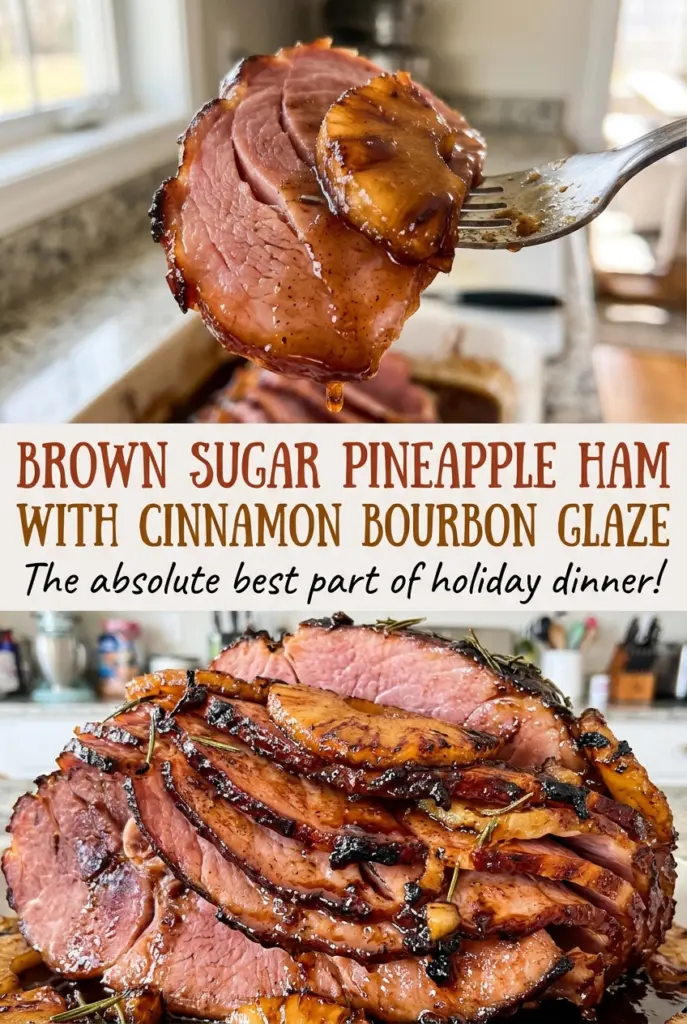
When the foil comes off the roasting pan, the ham is warm but still pale, and the kitchen smells more like supper than the glossy centerpiece you pictured. That’s intentional: this brown sugar pineapple ham gets its shine in the final stretch, not from hours of sugary glaze in the oven. I score the fat into shallow diamonds, then let the covered ham warm gently with water in the pan while I make the glaze.
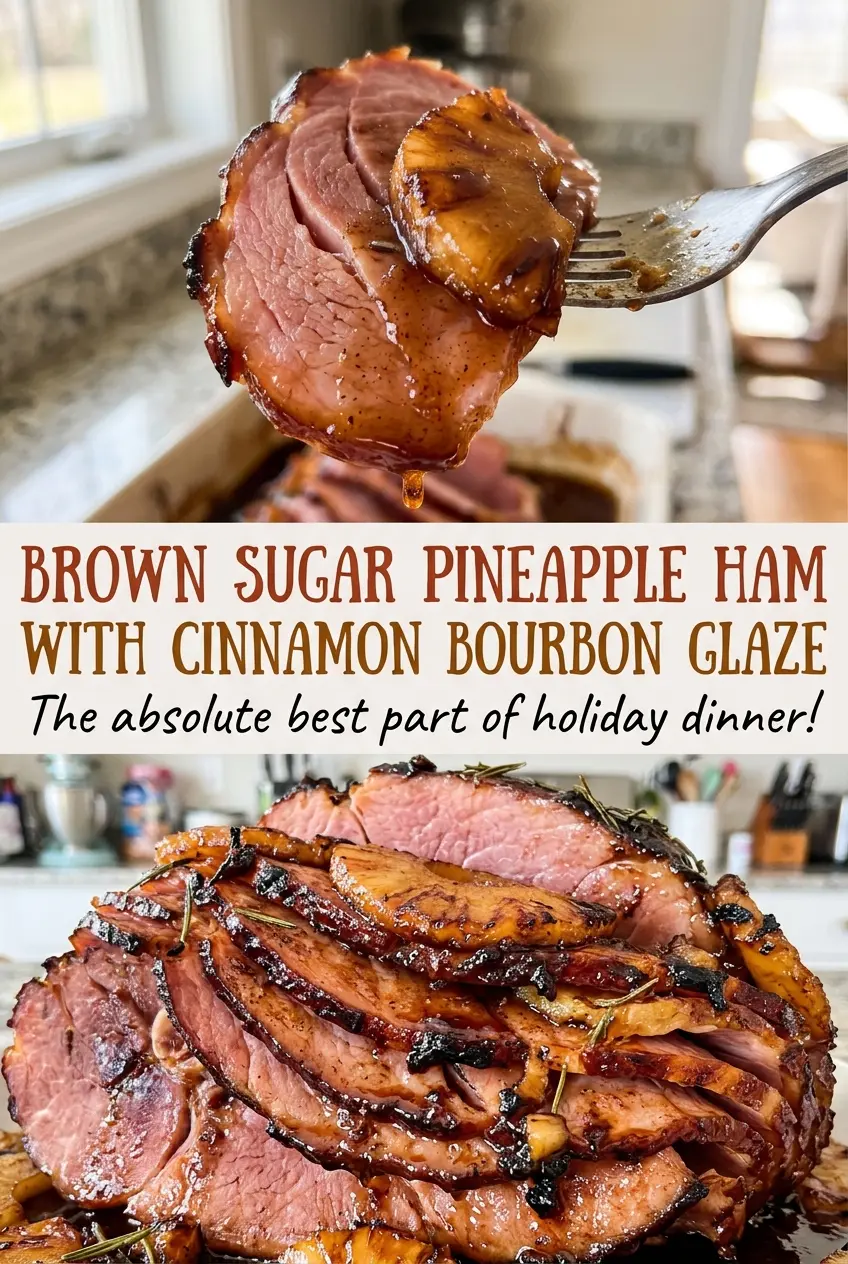
The glaze simmers with reserved pineapple juice, bourbon, Dijon, and cinnamon until smooth and just a little thicker. That bit of fruit juice keeps the brown sugar from tasting one-note sweet, while the bourbon brings a mellow warmth. Once the pineapple rings go on, the uncovered finish turns the top glossy and fragrant. The slices come to the table tender, with sweet pineapple and a cinnamon-bourbon glaze clinging to each cut.
Kitchen Note
Brush on the first half of the glaze before the ham goes back into the oven. Keep brushing with the rest during the uncovered bake; those repeated thin coats are what leave the surface glossy instead of puddling all the glaze in one spot.
Save this brown sugar pineapple ham for a glossy centerpiece with cinnamon-bourbon glaze and juicy pineapple rings.
Why a Fully Cooked Ham Needs a Gentle Warm-Up Before the Glaze
A fully cooked ham doesn’t need a long roast to make it safe to eat; it needs enough time to warm through without drying out. That’s why I don’t start with the sugary glaze. Brown sugar can darken while the center of a large ham is still cool, leaving you with a sticky outside and unevenly warmed slices.
The covered stage gives the ham a gentler start. Water in the pan creates moisture, and the foil keeps that warmth around the meat while the center rises to 120°F. Then the foil comes off, the glaze and pineapple go on, and the shorter uncovered bake finishes heating the ham to 140°F while the outside turns shiny. The order matters: warm first, glaze second. It gives the sugar less time to scorch and keeps the ham’s surface from taking the full force of the oven for the entire roast.
Use an instant-read thermometer in the center rather than judging a large ham by its color. Bone-in hams vary in shape, so the clock gives you a useful window, but the temperature tells you when to move on.
What Pineapple Juice, Bourbon, and Dijon Each Bring to the Glaze
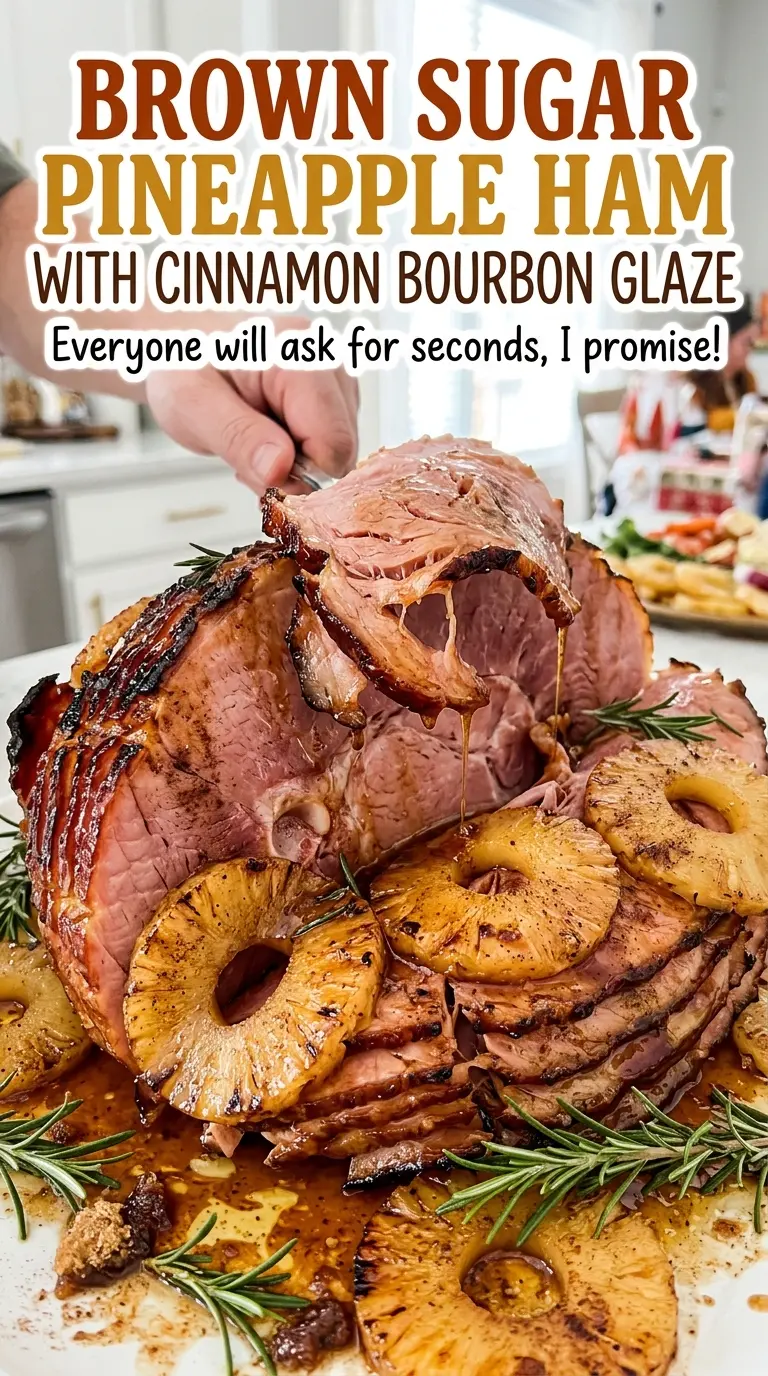
- Fully cooked bone-in ham — The bone helps the ham hold its shape as you carve, and the cut side gives it a steady base in the pan. Check that the ham is fully cooked before you buy; a raw ham needs a different cooking plan. Keep the fat on so you can score it for the glaze.
- Pineapple rings and their juice — Rings make a tidy topping, while the juice lends sweet-tart flavor and liquid to the glaze. Choose pineapple packed in juice rather than syrup so the glaze doesn’t get overly sweet. If rings aren’t available, drained pineapple chunks work; reserve the same portion of juice for the saucepan.
- Light brown sugar — Its moisture helps the glaze become smooth and shiny. Dark brown sugar works in the same amount if that’s what’s in your pantry, but it brings a deeper molasses note. Pack it into the measuring cup so the amount stays consistent.
- Bourbon — Bourbon gives the glaze a warm, rounded aroma beneath the sugar and cinnamon. For a version without alcohol, use the same volume of pineapple juice; the result will taste fruitier and sweeter, with less of the bourbon’s toasted character.
- Dijon mustard — Dijon cuts through the sweetness and adds a little savory tang without making the glaze taste like mustard. Whole-grain mustard is a workable swap in the same amount, though you’ll see its seeds in the finished glaze.
- Unsalted butter — Butter gives the glaze a rounded finish, and unsalted butter lets the other flavors stay in balance. A plain dairy-free baking stick can replace it in the same amount; the glaze will be a little less buttery.
- Ground cinnamon — Cinnamon gives the glaze its gentle baking-spice warmth. Keep it fresh and fragrant; if it smells faint, it won’t add much. Ground ginger is a good flavor change, though it makes the glaze brighter and sharper.
How to Warm the Ham First and Glaze It at the Finish
Score and warm the ham under foil
Heat the oven to 325°F and set a rack in a 12×16-inch roasting pan. Put the ham cut side down on the rack and score the fat in a 1-inch diamond pattern, about 1/4 inch deep; keep the cuts shallow rather than slicing into the meat. Pour the water into the pan, cover it tightly with foil, and roast for 1 1/2 to 2 hours. Start checking the center with an instant-read thermometer, and move on when it reaches 120°F.
Simmer the cinnamon-bourbon glaze
Melt the butter in a small saucepan over medium heat. Stir in the brown sugar, reserved pineapple juice, bourbon, Dijon, and cinnamon until everything is evenly combined. Bring the mixture to a simmer and cook for 3 to 4 minutes, stirring, until it looks smooth and slightly thickened. If you stop while the sugar still looks grainy, keep stirring as it simmers until the glaze comes together.
Arrange the pineapple and brush on the glaze
Remove the foil and arrange the pineapple rings over the ham, using toothpicks if a ring won’t stay in place. Brush the ham and rings with about half the glaze, covering the scored top. Return the ham to the oven uncovered for 20 to 30 minutes, brushing with the remaining glaze twice during that time. Look for a glossy surface, and check that the center reaches 140°F.
Rest before carving
Take the ham out of the oven and let it rest for 15 minutes before carving. That short pause gives the juices time to settle instead of running across the cutting board as soon as you slice. Remove any toothpicks before serving, and carve slices from the ham around the bone.
Two Easy Ways to Change the Glaze Without Losing Its Balance
Make the glaze dairy-free
Use a plain dairy-free baking stick in place of the butter, keeping the amount the same. It melts into the glaze and keeps the brown sugar smooth, though you’ll lose some of butter’s rounded richness.
Trade cinnamon for ginger
Use ground ginger in place of the cinnamon for a brighter, more peppery finish. It shifts the glaze away from warm baking spice and toward a sharper note that pairs nicely with the pineapple.
Storage and Reheating
- Refrigerator: Carve the leftovers and refrigerate them in a covered container within 2 hours. They keep for 3 to 4 days; the glaze firms up when cold.
- Freezer: Wrap carved portions airtight and freeze for up to 1 to 2 months for best quality. Thaw them in the refrigerator before reheating.
- Reheating: Place slices in a covered oven-safe dish with a small splash of water and warm at 325°F until heated through. Reheating uncovered is the common mistake; it dries the edges before the middle warms.
Questions That Come Up When Making Pineapple Bourbon Ham
Brown Sugar Pineapple Ham with Cinnamon Bourbon Glaze
Ingredients
Equipment
Method
- Heat the oven to 325°F.
- Set a rack in a 12x16-inch roasting pan.
- Place the ham cut side down on the rack and score the fat in a 1-inch diamond pattern, about 1/4 inch deep.
- Pour the water into the pan, cover tightly with foil, and roast for 1 1/2 to 2 hours, until the center reaches 120°F on an instant-read thermometer.
- Melt the butter in a small saucepan over medium heat.
- Stir in the brown sugar, reserved pineapple juice, bourbon, Dijon mustard, and cinnamon, then bring to a simmer and cook for 3 to 4 minutes, stirring, until smooth and slightly thickened.
- Remove the foil and arrange the pineapple rings over the ham, securing them with toothpicks if needed.
- Brush the ham and pineapple rings with about half the glaze.
- Return the ham to the oven uncovered and bake for 20 to 30 minutes, brushing with the remaining glaze twice, until glossy and heated to 140°F in the center.
- Rest the ham for 15 minutes before carving.