
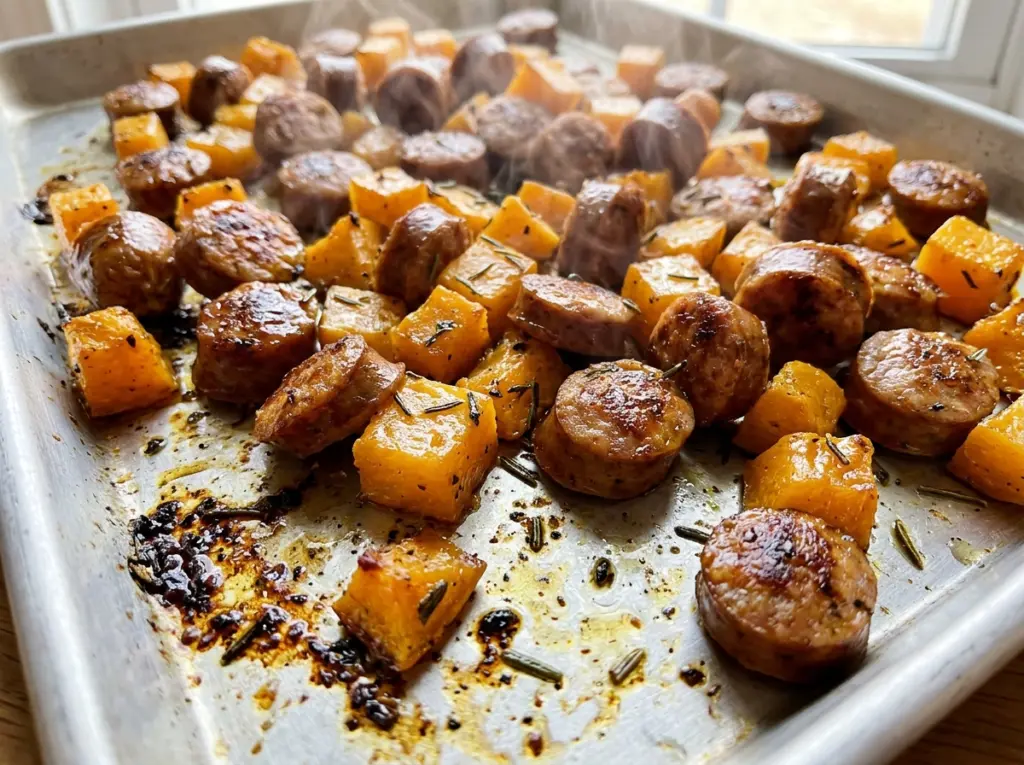
The squash tells you when this sheet pan dinner is coming together: the edges turn golden, the centers give easily to a fork, and the red onion softens without disappearing. When I make Sheet Pan Chicken Sausage with Butternut Squash, I give the vegetables a head start instead of putting everything in the oven at once. That small timing choice lets the squash roast while the fully cooked sausage waits its turn.
Smoked paprika brings a warm, smoky note to the sweet squash, and the onion gets pleasantly tender alongside it. The ingredients are simple, so the cut and the space on the pan matter. Keep the squash pieces close in size and spread the vegetables into an even layer; they brown more readily when they aren’t piled on top of one another. The sausage goes on later, then everything finishes together until the squash is tender and the sausage is hot. You get browned edges, soft onion, and savory slices of chicken sausage in every serving.
Kitchen Note
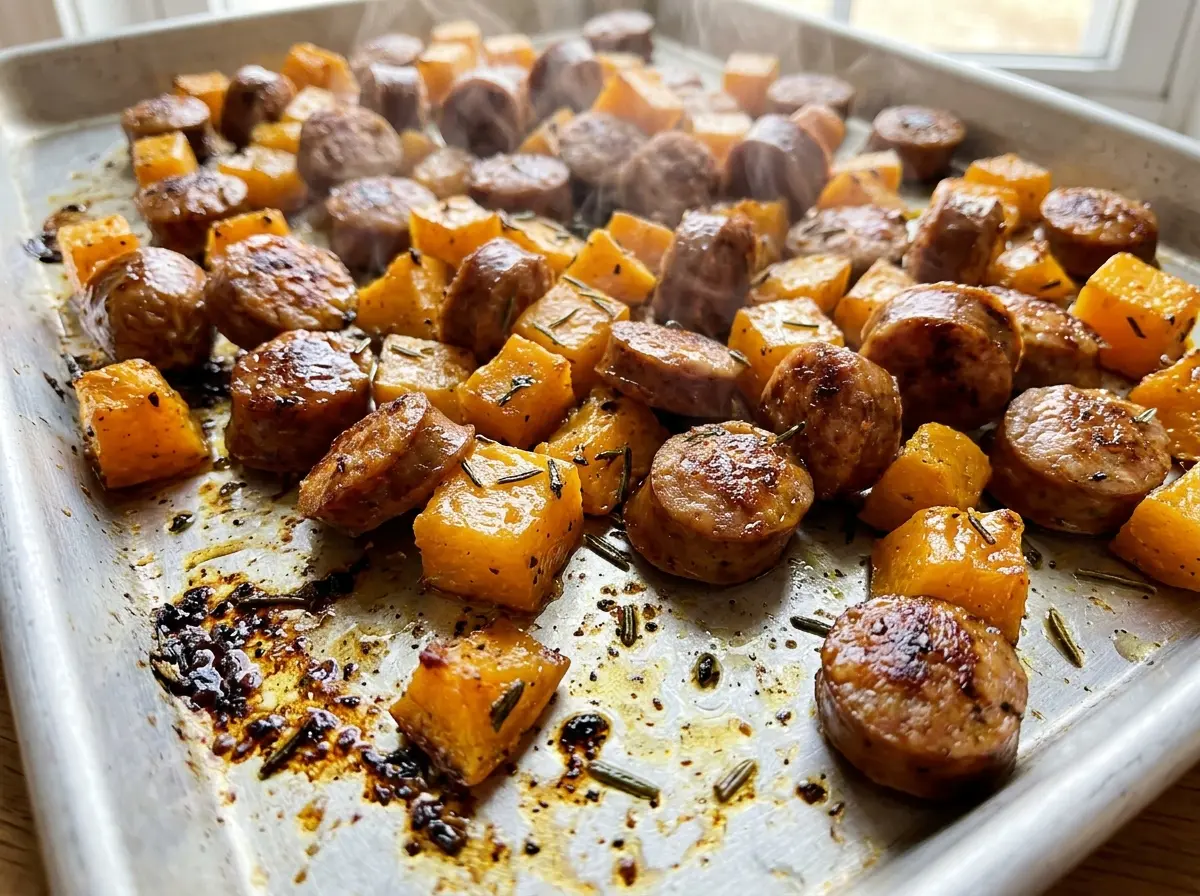
Keep the squash cubes close to the same size. Smaller pieces soften sooner, while oversized cubes can still feel firm in the center when the rest of the pan is ready.
Save Sheet Pan Chicken Sausage with Butternut Squash for a low-fuss dinner with smoky paprika, browned squash, and savory sausage.
Why an even layer matters more than extra roasting time
Butternut squash releases moisture as it cooks. When the cubes are crowded or stacked, that moisture lingers between them, and the squash softens before its surfaces have a chance to brown. Adding more oven time isn’t always the answer: the outer edges can turn mushy while the pan still looks pale. Give the pieces room in a single, even layer so heat can reach the exposed surfaces.
The onion wedges need a little space, too. They soften as the squash roasts, and their cut surfaces pick up color when they aren’t buried under squash. An 18-by-13-inch rimmed pan gives the vegetables room to spread out, which is especially helpful with a full batch. If a few pieces touch, that’s fine; just avoid piling the vegetables into a mound. This is a modest detail, but it’s what helps the finished pan look roasted rather than steamed.
What the squash, paprika, and sausage each bring to the pan

- Butternut squash — Its naturally sweet, dense flesh holds its shape as it roasts and gives the pan its tender, substantial bites. Choose a firm squash; peeled, seeded fresh squash sold ready to cut is also convenient. Keep the pieces about the same size for even cooking.
- Red onion — The wedges become sweet and soft while keeping more shape than thin slices. Cut them into wedges rather than finely chopping them, so they finish alongside the squash instead of disappearing into the pan.
- Olive oil — Oil coats the vegetables and helps the paprika and seasonings cling. A regular cooking olive oil is a good fit here; a pricier finishing oil won’t add much once it has gone through a hot roast.
- Smoked paprika — This is where the dish gets its woodsy, smoky aroma without needing a sauce. Smoked paprika tastes different from plain paprika, so keep the smoked version if you want the intended character.
- Fully cooked chicken sausage — The sausage adds savory flavor and is sliced so the pieces can heat and brown at the end. A different fully cooked chicken sausage works in the same amount; its seasoning will shift the overall flavor. Avoid raw sausage here, since it needs different cooking handling.
- Kosher salt and black pepper — They season the vegetables before roasting, when the oil helps distribute them. The sausage brings its own seasoning, so taste the finished pan before deciding whether it needs anything further.
Roasting the vegetables first, then finishing with sausage
Set up the hot pan
Heat the oven to 425°F and line a large rimmed 18-by-13-inch sheet pan with parchment paper. Peeling and seeding the squash before cutting gives you clean cubes that are ready to season. Slice the fully cooked chicken sausage into half-inch rounds and keep it aside for the second part of the roast. Having it sliced before the vegetables go in keeps the handoff quick.
Coat and spread the vegetables
Toss the squash and red onion with the olive oil, smoked paprika, kosher salt, and black pepper until the pieces look lightly coated. Spread them across the lined pan in an even layer. If the vegetables are heaped together, some will soften in trapped steam instead of browning. A little separation between pieces gives the pan a better chance at those toasted edges.
Give the squash its head start
Roast the vegetables for 15 minutes before adding the sausage. At this point, the squash has begun to soften, but it still needs time to become fork-tender. The onion will look softer around the edges as well. Leave the sausage out during this first stretch so it doesn’t spend the full cooking time in the oven.
Finish the pan until tender and browned
Add the sliced chicken sausage, then spread everything into an even layer again. Bake for another 12 to 15 minutes, until the squash is fork-tender and browned and the sausage reaches 165°F. Check a squash cube with a fork rather than judging by color alone; browned edges don’t guarantee the center has softened. The sausage should be hot through, with some color where it touches the pan.
Two sausage swaps that change the flavor or fit a gluten-free table
Bring in heat with spicy chicken sausage
Swap in 12 ounces of spicy fully cooked chicken sausage, sliced the same way. It gives the pan a noticeable kick against the sweet squash, while the cooking sequence stays the same. Choose a fully cooked variety so it can be added for the final stretch.
Make it gluten-free with the sausage choice
Use 12 ounces of fully cooked chicken sausage labeled gluten-free in place of the standard sausage. It keeps the savory sausage-and-squash combination intact, though the seasoning will depend on the variety you choose. Keep the same half-inch slices and add them at the same point in the roast.
Storage and Reheating
- Refrigerator: Store cooled leftovers in an airtight container for 3 to 4 days. The squash softens a little as it sits.
- Freezer: Freeze portions in an airtight container for up to 2 months. The squash will be softer after thawing, but the sausage and seasoning hold up well.
- Reheating: Warm a portion in the microwave until steaming hot throughout, pausing to turn the pieces so they heat evenly. Short intervals help keep the squash from becoming overly soft.
Questions that come up with this sausage-and-squash sheet pan
Sheet Pan Chicken Sausage with Butternut Squash
Ingredients
Equipment
Method
- Heat the oven to 425°F.
- Line a large rimmed 18x13-inch sheet pan with parchment paper.
- Toss the squash and onion with the olive oil, smoked paprika, salt, and pepper.
- Spread the squash and onion in an even layer on the pan.
- Roast for 15 minutes.
- Add the chicken sausage to the pan and spread everything into an even layer.
- Bake for 12–15 minutes, until the squash is fork-tender and browned and the sausage reaches 165°F.