
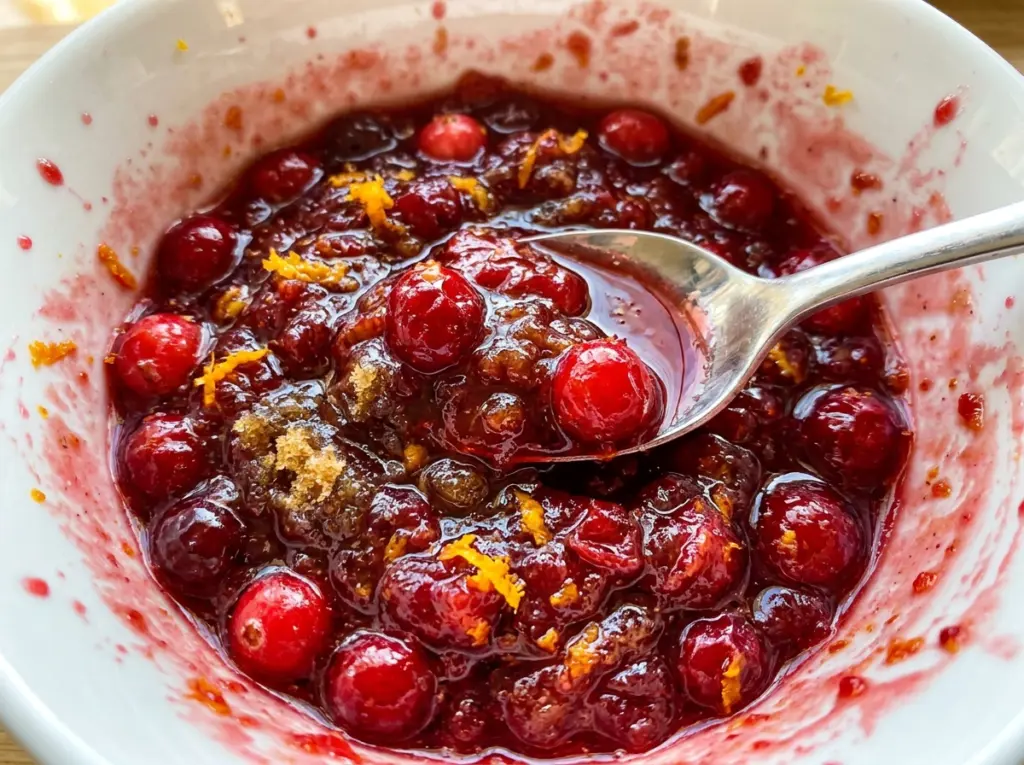
When the cranberries start popping, the saucepan changes from a pot of firm, bright berries to a glossy ruby sauce. I make this cranberry orange sauce with brown sugar when I want the citrus to come through without covering up the berries’ sharpness. Orange juice brings the fruit together, while finely grated zest gives the finished sauce a fresher orange aroma.
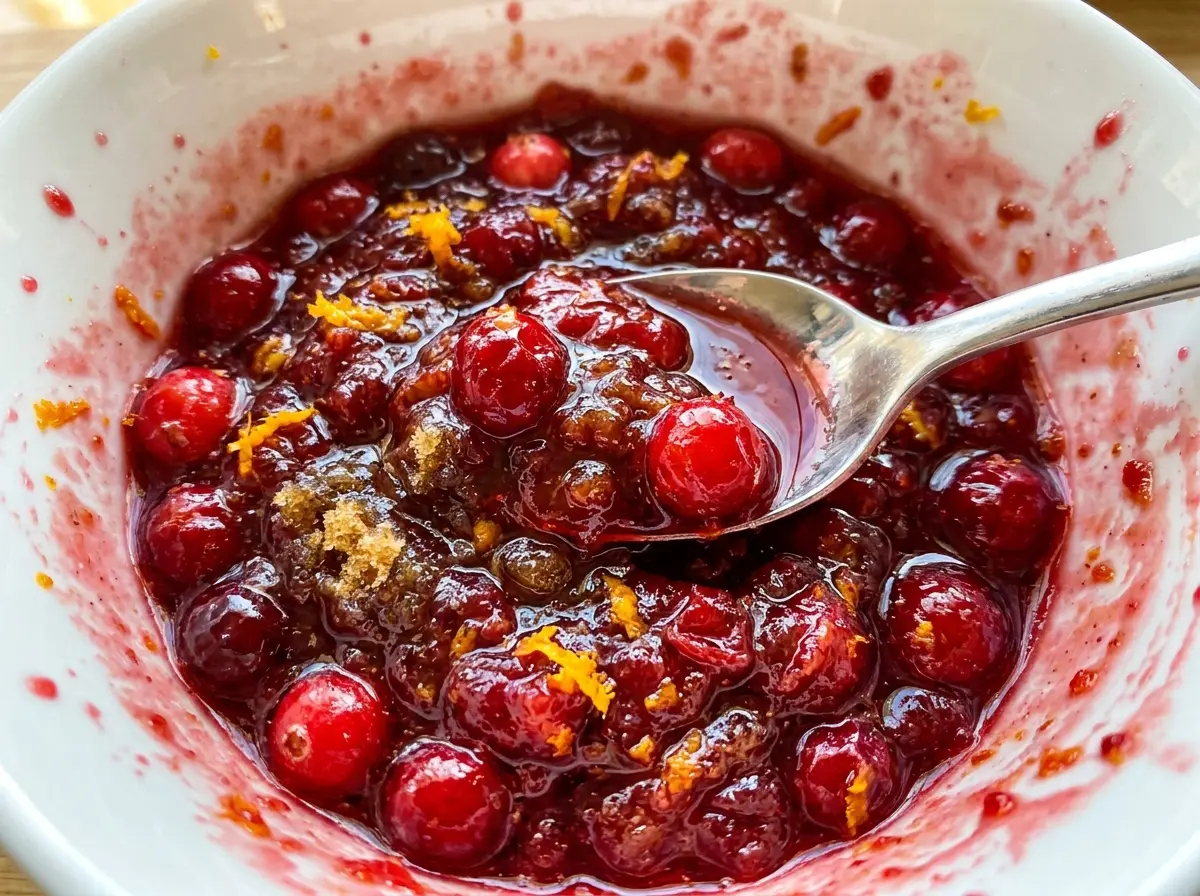
The order of the first steps matters: dissolve the brown sugar in the water and orange juice before stirring in the cranberries. That gives the berries a smooth, citrusy base to cook in, and the light brown sugar adds a mellow sweetness alongside their tart flavor. The finished sauce is glossy, with most of the berries burst and a few whole ones tucked through every spoonful.
Kitchen Note
Let the sugar dissolve completely in the water and orange juice before adding the cranberries. I watch the liquid as I stir; once the grains are gone, it’s ready for the berries, and there’s no need to keep boiling it on its own.
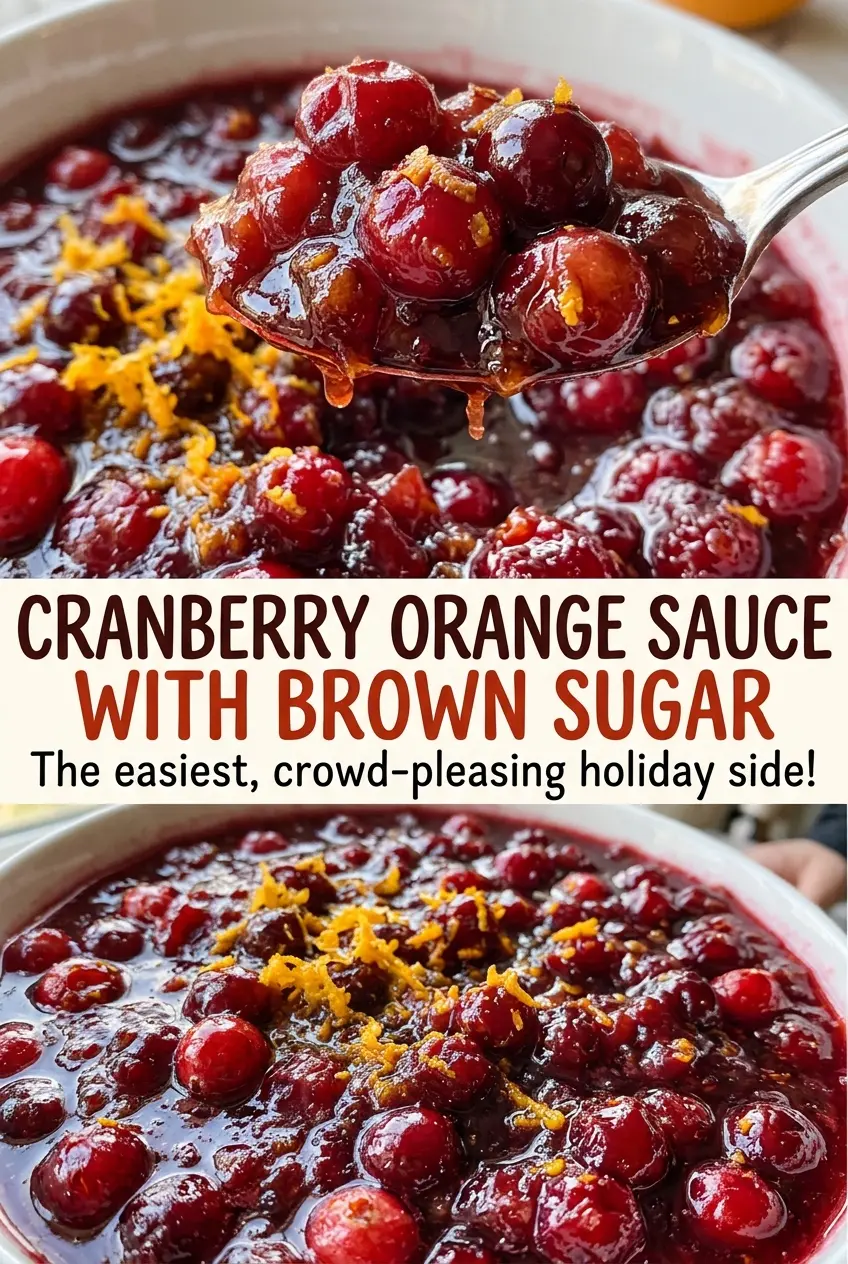
Save this cranberry orange sauce with brown sugar for a glossy, tart-sweet side that works with fresh or frozen cranberries.
Why Cranberry Sauce Can Look Loose Right Up to the Finish
A pot of cranberry sauce doesn’t have to look thick while it’s bubbling to turn out properly. The berries release juice as they cook, so the mixture can look quite fluid even after many of them have burst. Cranberries contain natural pectin, and that, together with the fruit and sugar, helps the sauce take on more body as it cools.
Look for a change in the sauce rather than expecting it to behave like jam on the stove. At the end of its simmer, it should be glossy and slightly thickened, with most of the berries burst. If you keep cooking until it looks fully set in the pan, the cooled sauce may become firmer than you wanted. The balance here is to stop at that glossy, slightly thickened stage and let the sauce finish settling on its own.
There’s also a useful contrast in the flavor: cranberries bring plenty of tartness, while orange juice and light brown sugar round it out. The goal isn’t to hide the berries’ sharp edge. It’s to leave enough of it that the sauce tastes bright alongside a rich meal, instead of flatly sweet.
What the Orange and Brown Sugar Bring to the Cranberries
- Orange juice — It contributes both liquid and a rounded citrus note, so it does more than add aroma. Plain orange juice is a good fit here; a sharply bitter juice can make that flavor stand out in the finished sauce. The recipe uses it alongside water, rather than relying on juice alone.
- Light brown sugar — Its mild molasses character softens the berries’ tartness without pushing the sauce into candy-sweet territory. Pack it firmly when measuring, as directed, so the amount stays consistent. I wouldn’t swap in a different sweetener casually; it would change both the flavor and the balance.
- Finely grated orange zest — The zest provides fragrant orange oils that juice by itself can’t quite reproduce. Use a fine grater so the pieces blend into the sauce instead of leaving long strips. A fresh, aromatic orange makes the zest especially worthwhile.
- Fresh or frozen cranberries — Either works in this sauce. Rinse and pick over the berries before cooking, removing any that are shriveled or damaged. Fresh berries are convenient when they’re easy to find, while frozen berries let you make the same batch when fresh ones aren’t on hand.
From Dissolved Sugar to Glossy Cranberry Sauce
Build the Orange-Sugar Base
Combine the water, orange juice, packed light brown sugar, and finely grated orange zest in a 2-quart saucepan. Set the pan over medium heat and bring the mixture to a boil, stirring as the sugar dissolves. Keep an eye on the bottom and sides of the pan, where undissolved sugar can linger. Once the liquid is boiling and the sugar has dissolved, the base is ready for the cranberries.
Simmer Until Most Berries Burst
Stir in the rinsed and picked-over cranberries, then bring the mixture back to a boil. Reduce the heat to medium-low and simmer uncovered for 10 to 12 minutes, stirring occasionally. The berries will pop as they soften; look for most of them to burst and for the liquid to turn glossy and slightly thickened. If a few berries remain whole, that’s fine—the sauce doesn’t need every berry to disappear.
Let the Sauce Settle
Take the saucepan off the heat and let the sauce cool for at least 30 minutes. It will thicken further as it cools, so judge the finished texture after that pause rather than while it’s bubbling. Serve it warm, or cover the saucepan and refrigerate the sauce until chilled. When you cover it, keep the lid on once the sauce has cooled so it’s ready to serve without picking up fridge odors.
Fresh or Frozen, Warm or Chilled: Two Ways to Adapt the Batch
Use Fresh or Frozen Cranberries
Both choices fit this sauce without changing the rest of the method. Fresh berries are easy to sort when you bring them home; frozen berries are handy when fresh ones aren’t available. Rinse and pick over either kind, then use the same visual cues during the simmer.
Choose a Warm or Chilled Finish
Serve the sauce warm when you want it soft and easy to spoon, or chill it for a more settled texture. Both finishes suit the orange and cranberry flavors; the chilled version is convenient to prepare ahead, while the warm one keeps the sauce closer to its freshly cooked consistency.
Storage and Reheating
- Refrigerator: Cover and refrigerate for up to 4 days. The sauce will become firmer as it chills.
- Freezer: Freeze in an airtight container for up to 2 months. Thaw it in the refrigerator before serving.
- Reheating: Warm it gently in a saucepan over low heat, stirring occasionally until it’s spoonable. Avoid a hard boil, which can make the sauce catch on the bottom of the pan.
Questions I Get Asked About This Cranberry Orange Sauce
Cranberry Orange Sauce with Brown Sugar
Ingredients
Equipment
Method
- Combine the water, orange juice, brown sugar, and orange zest in a 2-quart saucepan, stirring until the sugar dissolves.
- Bring to a boil over medium heat.
- Stir in the cranberries and return to a boil.
- Reduce the heat to medium-low and simmer uncovered for 10 to 12 minutes, stirring occasionally, until most of the berries have burst and the sauce is glossy and slightly thickened.
- Remove the saucepan from the heat and let the sauce cool for at least 30 minutes; it will thicken further as it cools.
- Serve warm or cover and refrigerate until chilled.