
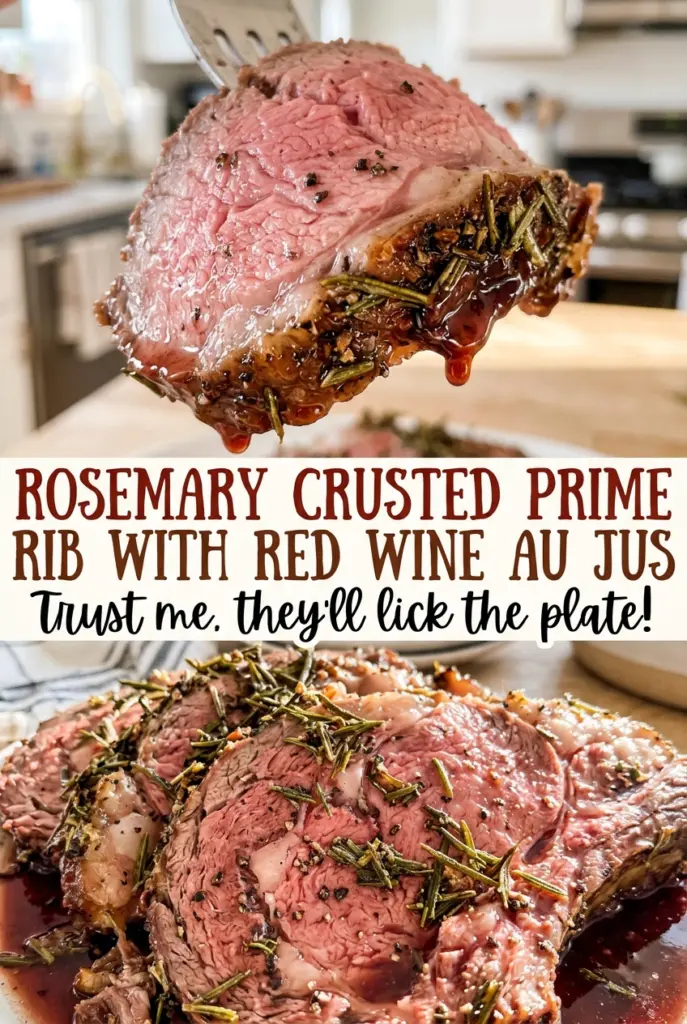
The first 15 minutes in a hot oven give the rosemary and garlic time to toast while the outside of the roast starts to brown. That change in aroma is my cue that the first stage is doing its job. This rosemary crusted prime rib with red wine au jus is built around that contrast: a fragrant, savory exterior and a center that cooks more gently.
I coat the boneless roast with olive oil, minced fresh rosemary, garlic, salt, and pepper, then set it fat-side up on a rack. Starting at a higher temperature and lowering the oven afterward gives the surface a head start without keeping the whole roast at intense heat for the entire cook.
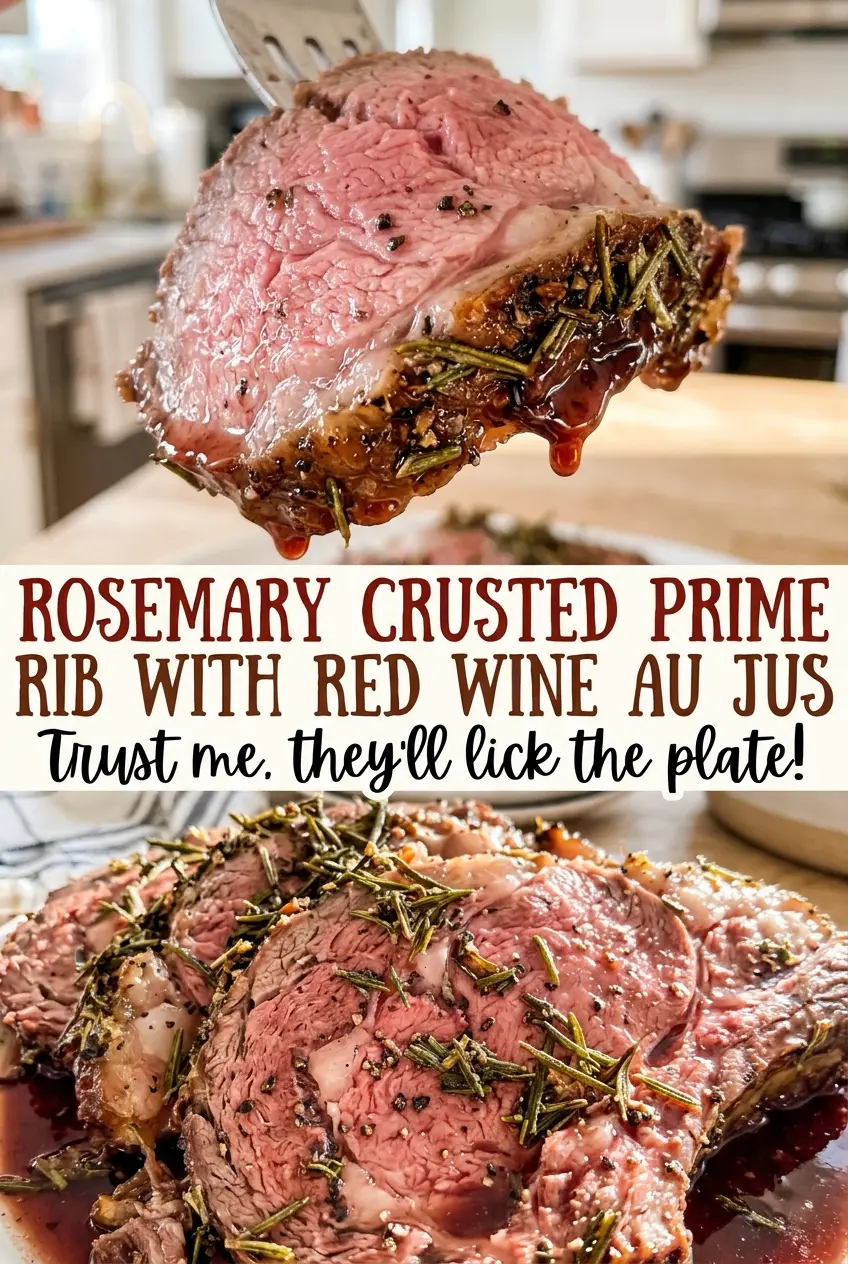
The red wine au jus uses the drippings left in the pan, so none of those browned bits go to waste. After the roast rests, the wine reduces in the same savory juices, then beef broth rounds it out. Slice the roast, spoon the warm jus alongside, and let that rosemary-garlic crust lead.
Kitchen Note
Skim the fat before you measure the drippings for the jus. If too much fat goes into the saucepan, the finished sauce can feel greasy instead of clean and savory.
Save this rosemary crusted prime rib with red wine au jus for a centerpiece roast with a deeply browned herb crust and savory pan sauce.
Why the Roast Starts Hot, Then Finishes at a Lower Temperature
A roast this size needs time for heat to travel from the surface to the center. Keeping the oven at 450°F for the whole cook would expose the outside to high heat far longer than the brief opening stage needs. The switch to 325°F gives the center time to reach its target while the exterior has already started browning.
That two-temperature approach also keeps the seasoning from being treated like a separate crust you have to build in a pan. The olive oil carries the rosemary, garlic, salt, and pepper over the surface, where they roast along with the beef. You don’t need a complicated sear or extra equipment; the rack lets hot air circulate around the roast, and the change in oven temperature does the rest. Keep the order intact: a short hot start, then a gentler finish.
What the Rosemary, Wine, and Drippings Each Bring to the Table
- Boneless beef rib roast — This cut is the foundation of the dish: it gives you a substantial roast to carve and a broad surface for the herb coating. Choose a roast that looks evenly shaped so it cooks more consistently from end to end. Another cut won’t give the same balance of tenderness and rich beef flavor.
- Fresh rosemary and garlic — Freshly minced rosemary brings an assertive, piney aroma, while minced garlic adds a savory note that toasts on the exterior. Fresh rosemary is worth choosing here because its texture and bright scent are part of the crust; dried leaves won’t make the same coating. Mince both finely so they cling to the oil rather than falling off in large pieces.
- Olive oil, kosher salt, and black pepper — The oil helps the minced herbs spread over the roast, and the salt and pepper season the beef as well as the surface. Kosher salt is easy to distribute by hand, and freshly ground black pepper gives the crust a sharper bite. Patting the roast dry first helps the oil mixture stay in place.
- Dry red wine and low-sodium beef broth — The wine reduces to a concentrated base with a little acidity; the broth adds beefy depth without making the sauce taste like straight wine. A dry red is the right choice, not a sweet wine. Low-sodium broth leaves room for the drippings and the measured kosher salt to season the jus.
- Worcestershire sauce — A small amount adds a tangy, savory layer to the broth-and-wine sauce. It isn’t a replacement for the pan drippings, which carry the roast’s flavor into the jus. Use the regular sauce you keep on hand; no specialty variety is needed.
From Herb Coating to a Glossy Red Wine Jus
Season the Roast on the Rack
Set a rack in the center of the oven and preheat it to 450°F. Put a roasting rack in a 16×13-inch roasting pan, then pat the roast dry. Stir the olive oil, minced rosemary, minced garlic, kosher salt, and black pepper together and rub the mixture all over the beef. Set the roast fat-side up on the rack so the surface is exposed to the oven’s heat.
Give the Exterior Its Hot Start
Roast at 450°F for 15 minutes. This is a short browning stage, not the full cook, so don’t leave the oven at that temperature for the remaining time. The herb coating should smell toasted and the outside should begin to color. Once those 15 minutes are up, lower the oven temperature to 325°F.
Finish Gently and Watch the Center
Continue roasting at 325°F until the center reaches 145°F. The total roasting time is about 1 1/2 to 2 1/2 hours, but the temperature at the center is the deciding cue, not the clock alone. Check the center of the roast rather than judging by the color of the crust. A roast that needs the longer end of the range isn’t a problem; keep cooking until it reaches the target.
Rest the Beef While the Wine Reduces
Transfer the roast to a cutting board, loosely tent it with foil, and let it rest for 20 to 30 minutes. Skim the fat from the pan drippings and measure the drippings into a 2-quart saucepan. Add the dry red wine and simmer over medium-high heat until it has reduced by about half, which takes 5 to 7 minutes. If it still looks thin and wine-heavy, give it the full reduction time before adding the broth.
Finish the Au Jus
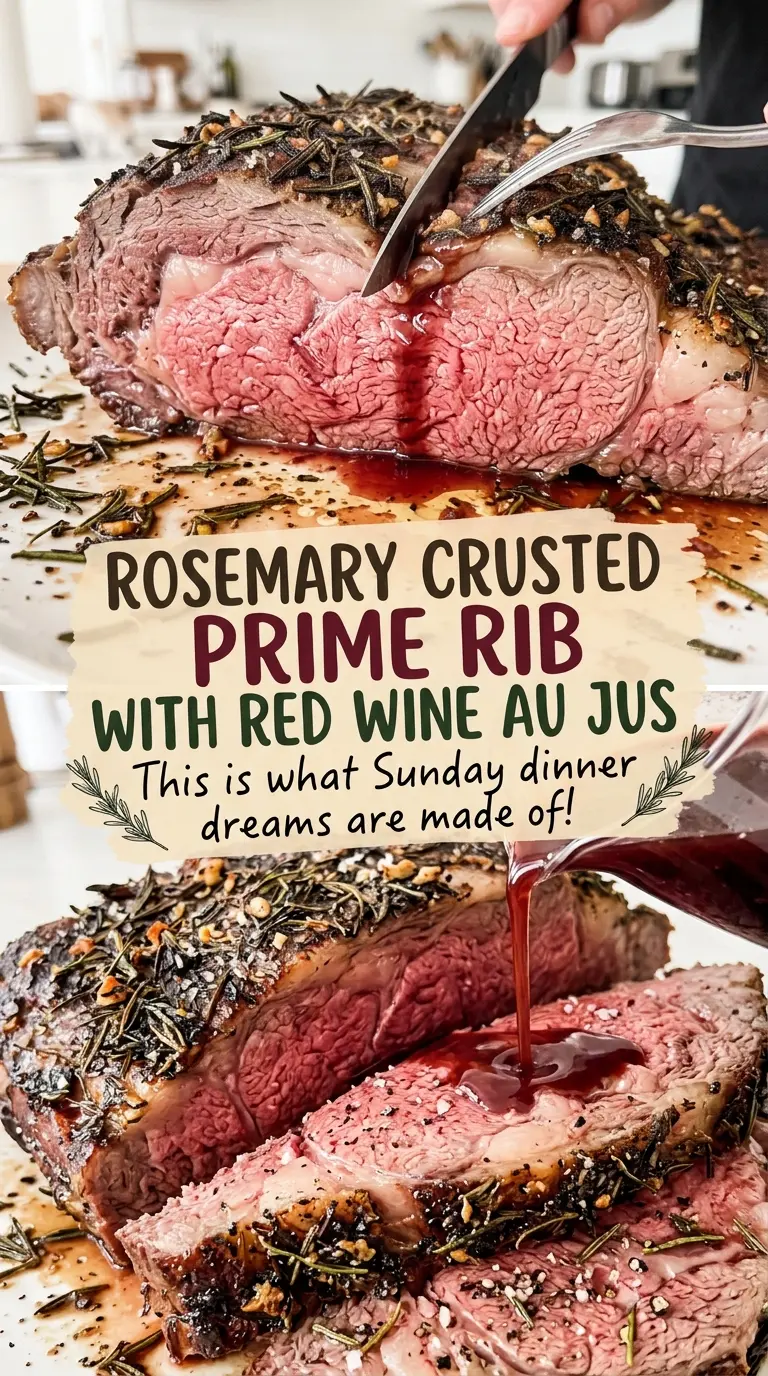
Stir the low-sodium beef broth, Worcestershire sauce, and kosher salt into the reduced wine. Simmer for 8 to 10 minutes, until the jus has reduced slightly and tastes rounded rather than sharp. Keep the simmer steady; a hard boil isn’t needed. Slice the rested roast and serve it with the warm sauce.
Two Simple Ways to Adapt the Roast Without Losing Its Character
A Milder, Garlic-Free Crust
Leave the garlic out of the herb mixture and keep the rosemary, oil, salt, and pepper. The roast will taste more herbal and less pungent, with a little less savory depth on the surface. The cooking method stays the same.
A Gluten-Free Au Jus
Use gluten-free low-sodium beef broth and gluten-free Worcestershire sauce in the same amounts. Those swaps keep the sauce’s beefy, tangy character while making the broth and seasoning choices suitable for a gluten-free version.
Storage and Reheating
- Refrigerator: Store sliced roast and au jus in separate airtight containers for 3 to 4 days. The beef will firm up as it chills.
- Freezer: Freeze sliced portions tightly wrapped or in airtight containers for up to 2 to 3 months. Freeze the jus separately, then thaw both in the refrigerator.
- Reheating: Warm slices covered in a baking dish with a little au jus, or gently heat them in a covered skillet with the sauce, until leftovers reach 165°F. Avoid reheating uncovered or for longer than needed; lean slices dry out quickly.
Questions That Come Up When Roasting Prime Rib
Rosemary Crusted Prime Rib with Red Wine Au Jus
Ingredients
Equipment
Method
- Set a rack in the center of the oven and preheat to 450°F.
- Place a roasting rack in a 16x13-inch roasting pan.
- Pat the beef rib roast dry.
- Stir together the olive oil, rosemary, garlic, 2 teaspoons kosher salt, and black pepper.
- Rub the mixture all over the roast.
- Set the roast fat-side up on the rack and roast at 450°F for 15 minutes, then reduce the oven temperature to 325°F and continue roasting until the center reaches 145°F, about 1 1/2 to 2 1/2 hours total.
- Transfer the roast to a cutting board and loosely tent with foil.
- Rest for 20 to 30 minutes.
- Skim the fat from the roasting pan drippings and measure 2 tablespoons into a 2-quart saucepan.
- Add the red wine.
- Simmer over medium-high heat until reduced by about half, 5 to 7 minutes.
- Add the beef broth, Worcestershire sauce, and 1/4 teaspoon kosher salt.
- Simmer until slightly reduced, 8 to 10 minutes.
- Slice the roast and serve with the au jus.