
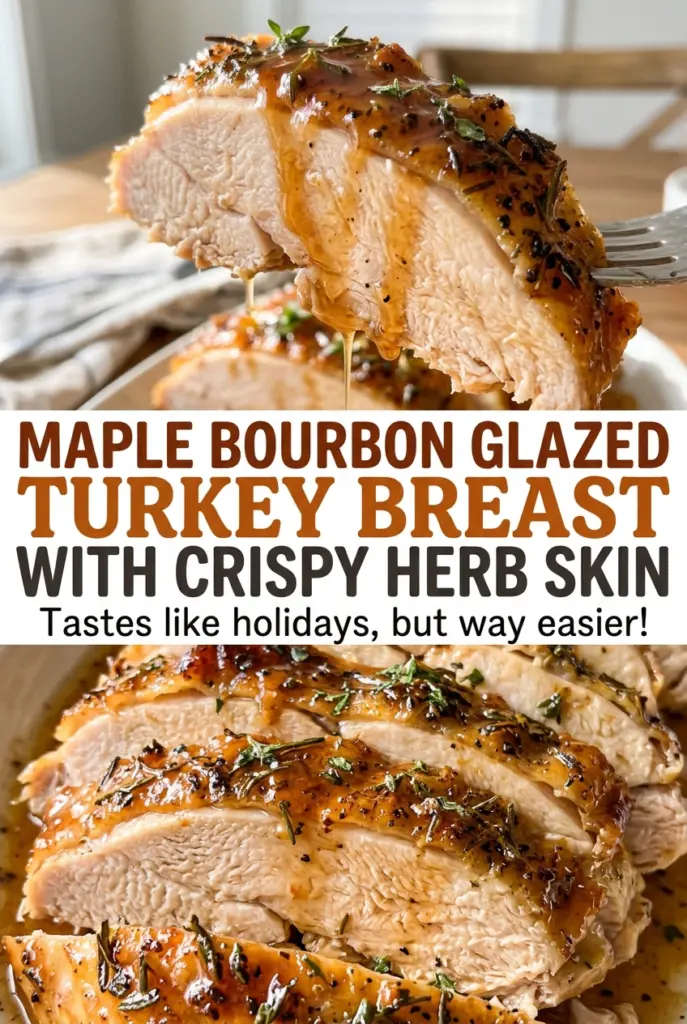
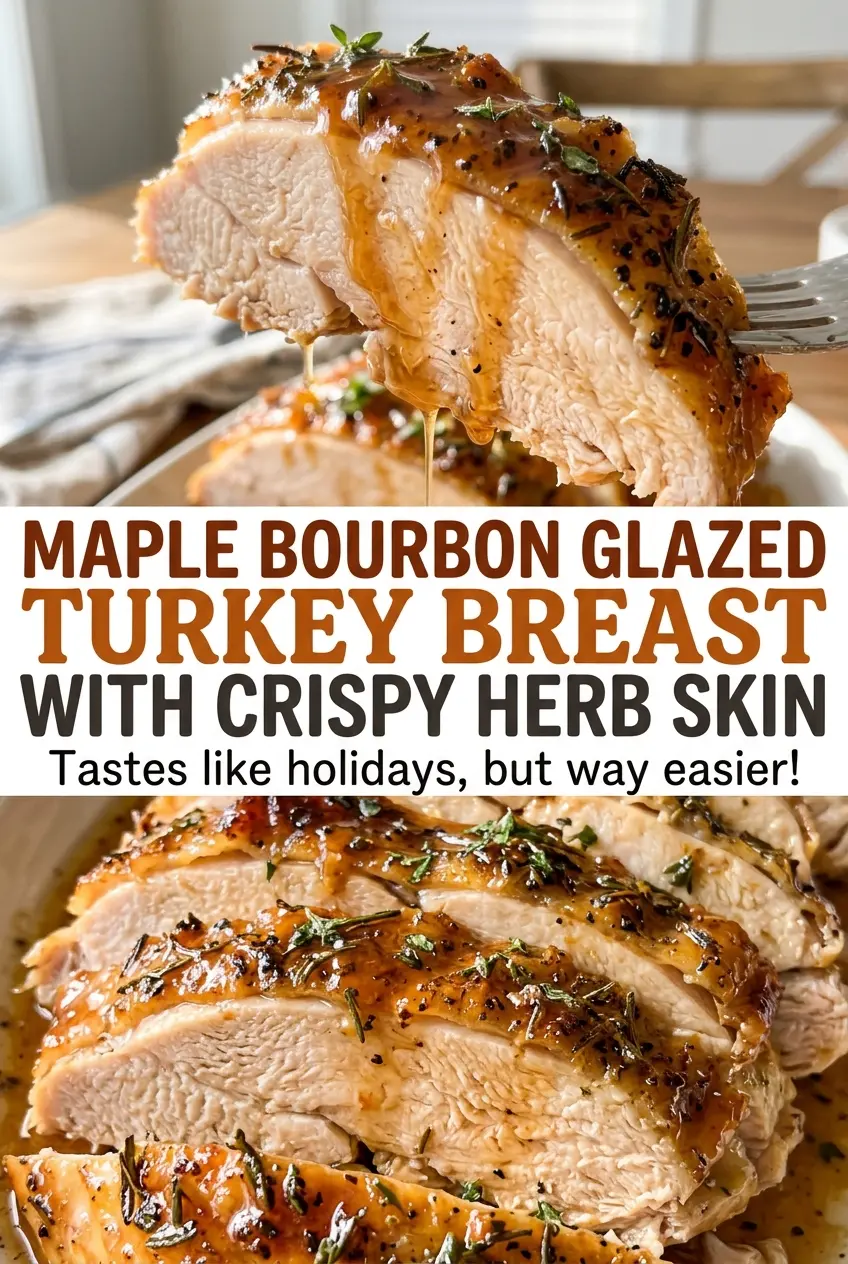
The first 20 minutes in a hot oven are when the turkey skin starts turning taut and golden. I keep the maple bourbon glaze off the bird during that stretch; syrup browns quickly, and putting it on too soon can leave the skin dark before the breast is cooked through. This turkey breast gets its savory flavor from herb butter tucked under the skin, while the glaze goes on near the end.
That timing gives you two different jobs for the oven: crisp the skin first, then let the maple, bourbon, Dijon, and cider vinegar cling to the outside without scorching. I watch the thermometer more closely than the clock once the breast is in the oven, since the final temperature—not the color of the skin—is what tells me when to move on. After a short rest, each slice has juicy meat, crisp skin, and a glossy, tangy-sweet finish.
Kitchen Note
Loosen the skin with your fingers gradually, rather than tugging from one spot. A small tear makes it harder to spread the herb butter evenly underneath.
Save this maple bourbon turkey breast for a special dinner when you want crisp herb skin and a glossy, tangy-sweet glaze.
Why the Maple Glaze Waits Until the Turkey Is Nearly Done
Maple syrup gives this glaze its shine and sweetness, but those sugars also brown faster than the turkey breast cooks. Brush it on at the start and you risk a dark, sticky coating while the center still needs plenty of oven time. Keeping the turkey uncovered and unglazed for most of the roast lets the skin dry and color before the sweet glaze is involved.
The two-stage application matters, too. Once the thickest part reaches 150°F, half the glaze gets a short turn in the oven; the rest goes on for the final stretch. That gives the first layer time to cling, while the last brushing leaves a fresh, glossy finish. Dijon and cider vinegar keep the maple from reading as plain sweetness, so the glaze tastes balanced against the savory herbs and turkey.
Think of the thermometer and the glaze as separate cues. The temperature tells you when to begin glazing, and the final reading tells you when the turkey is ready to come out. A deeply colored surface by itself isn’t a reliable measure of doneness.
What the Herbs, Skin, and Glaze Each Bring to the Turkey
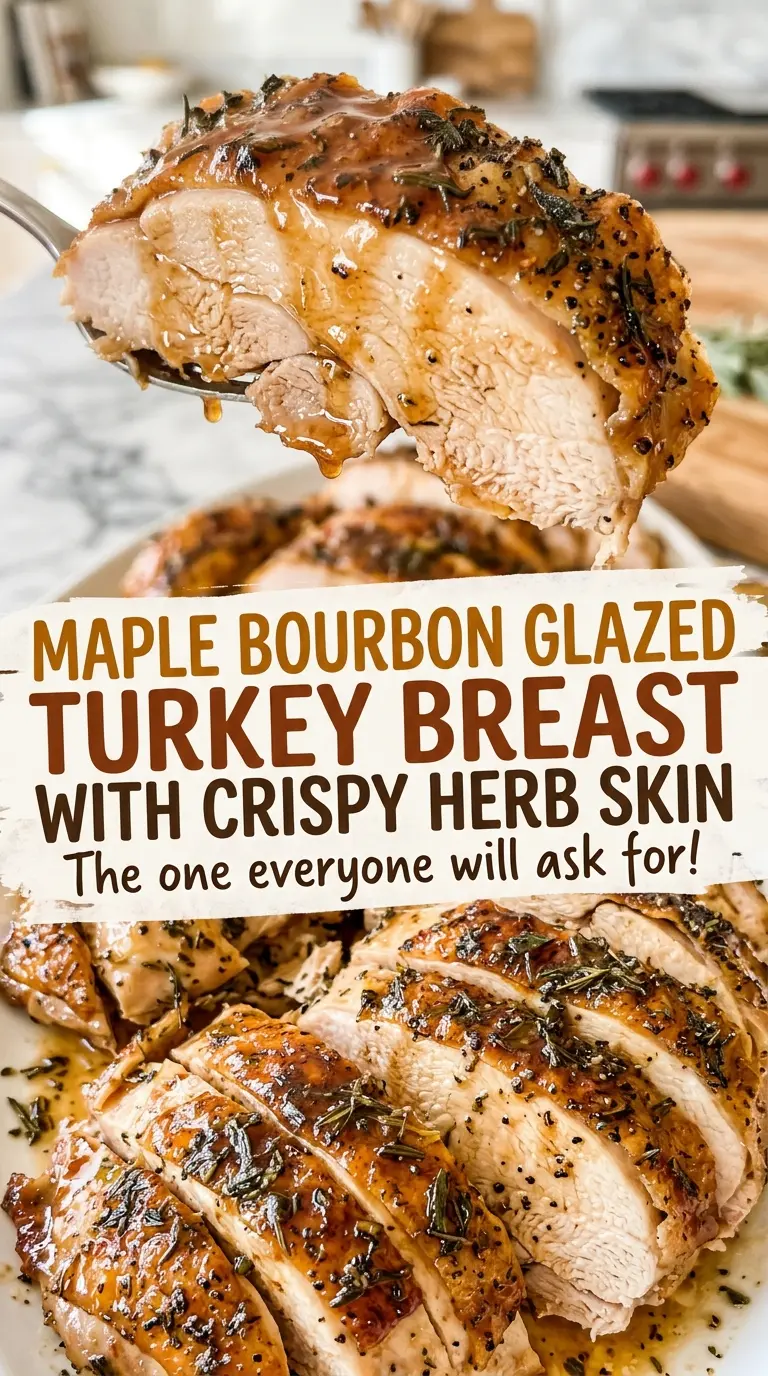
- Bone-in, skin-on turkey breast — The bone is part of the roasting setup, and the skin protects the surface while it cooks and gives the glaze somewhere to catch. Start with a fully thawed breast; frozen spots make even roasting harder to judge.
- Fresh thyme, rosemary, and sage — These herbs are finely chopped and mixed into softened butter, which carries their flavor beneath the skin instead of leaving the herbs exposed on top. Fresh herbs give the butter a brighter, more fragrant character. If one herb is missing, you can leave it out; the mixture will be simpler, but still spreads and seasons the breast.
- Softened unsalted butter — Soft butter blends smoothly with the chopped herbs and is easy to spread beneath the skin. Unsalted butter leaves the salt level to the seasoning on the outside, rather than building in extra salt you can’t adjust.
- Olive oil, kosher salt, and black pepper — The oil coats the skin so the seasoning adheres, while salt and pepper give the crisp exterior a savory base. Distribute them evenly; bare patches won’t season as well as the rest of the surface.
- Pure maple syrup — Use real maple syrup for its distinct maple flavor and the glaze’s characteristic shine. Pancake syrup is formulated differently and won’t give the same result.
- Bourbon, Dijon mustard, and apple cider vinegar — Bourbon adds its warm, barrel-aged character, while mustard gives the glaze a savory edge and vinegar cuts through the maple’s sweetness. Together they make the coating taste rounded rather than sugary. Leaving out bourbon works for an alcohol-free version, though the glaze will be less complex.
Roasting the Breast Before the Glaze Goes On
Set Up a Dry, Even Surface
Heat the oven to 425°F and set a rack inside a 9×13-inch roasting pan. Pat the fully thawed turkey breast dry with paper towels, remove any packet from the cavity, and place it breast-side up on the rack. Drying the skin helps it roast rather than steam, so take a moment to blot folds and damp spots.
Work the Herb Butter Under the Skin
Stir the softened butter with the finely chopped thyme, rosemary, and sage until the herbs are distributed through it. Loosen the skin over the breast with your fingers, then spread the butter evenly underneath. Try to reach across the breast without leaving one thick pocket of butter in a single spot; even coverage means the herb flavor is spread through the meat.
Season the Skin and Simmer the Glaze
Rub olive oil over the skin, then season it evenly with kosher salt and black pepper. In a small saucepan, combine the maple syrup, bourbon, Dijon mustard, and apple cider vinegar. Simmer over medium-low heat for 5 to 7 minutes, stirring occasionally, until the glaze looks slightly thickened; keep the heat moderate so the syrup doesn’t catch on the bottom.
Roast in Two Temperature Stages
Roast the turkey uncovered at 425°F for 20 minutes, then reduce the oven to 350°F. Continue roasting until the thickest part of the breast registers 150°F, which takes about 1 1/4 to 1 3/4 hours more. Place the thermometer in the thickest meat without touching bone, since contact with bone can give you a misleading reading.
Glaze, Finish, and Rest
Brush half the glaze over the breast and roast for 10 minutes. Brush on the remaining glaze and continue roasting until the thickest part reaches 165°F, about 5 to 15 minutes more. Transfer the turkey to a cutting board, tent it loosely with foil, and let it rest for 20 minutes before carving; the juices settle back into the meat instead of running across the board.
Two Easy Ways to Adapt the Maple Bourbon Turkey
Make the Glaze Without Bourbon
For an alcohol-free glaze, leave out the bourbon and simmer the maple syrup, Dijon, and cider vinegar until slightly thickened. The coating will be sweeter and less layered, but the mustard and vinegar still give it a savory, tangy balance.
Let Thyme Lead the Herb Butter
Use the thyme as the sole herb and leave out the rosemary and sage. The butter will taste lighter and more focused, which is a good fit if you prefer a less resinous, less earthy herbal note.
Storage and Reheating
- Refrigerator: Store carved turkey in an airtight container for 3 to 4 days. The skin softens in storage, while the meat stays tender if covered.
- Freezer: Freeze carved portions in a tightly sealed freezer-safe container for up to 2 to 3 months for best quality. Thaw overnight in the refrigerator before reheating.
- Reheating: Cover the turkey and warm it in a 325°F oven until it reaches 165°F. Leaving it uncovered or heating it until piping hot without checking the temperature can dry out the breast.
Questions That Come Up Before Roasting This Turkey Breast
Maple Bourbon Glazed Turkey Breast with Crispy Herb Skin
Ingredients
Equipment
Method
- Preheat the oven to 425°F.
- Set a rack in a 9x13-inch roasting pan.
- Pat the turkey breast dry with paper towels.
- Remove any packet from the cavity.
- Set the turkey breast-side up on the rack.
- Stir the softened butter, thyme, rosemary, and sage together in a small bowl.
- Gently loosen the skin over the breast with your fingers.
- Spread the herb butter evenly underneath the skin.
- Rub the olive oil over the skin.
- Season evenly with the kosher salt and black pepper.
- Combine the maple syrup, bourbon, Dijon mustard, and apple cider vinegar in a small saucepan.
- Simmer over medium-low heat for 5 to 7 minutes, stirring occasionally, until slightly thickened.
- Roast uncovered at 425°F for 20 minutes.
- Reduce the oven to 350°F and continue roasting until the thickest part of the breast registers 150°F, about 1 1/4 to 1 3/4 hours more; insert the thermometer without touching bone.
- Brush the turkey with half the glaze.
- Roast for 10 minutes.
- Brush with the remaining glaze.
- Continue roasting until the thickest part registers 165°F, about 5 to 15 minutes more.
- Transfer the turkey to a cutting board.
- Tent loosely with foil and rest for 20 minutes before carving.