
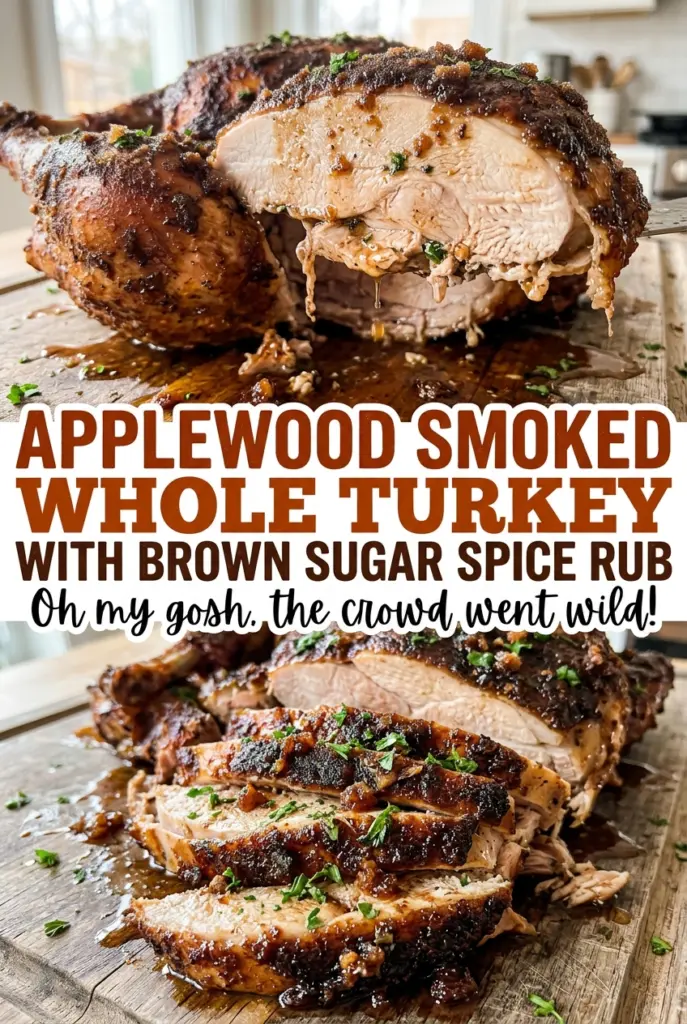
When the smoker lid opens, applewood gives off a gentle, sweet smoke that settles around the turkey without overpowering it. I pair that with a brown sugar spice rub for a bird that has a savory, lightly sweet exterior and plenty of smoky aroma. This 12- to 14-pound whole turkey is sized for a generous table, and the smoker stays at a steady 325°F rather than running low for most of the day.
The rub goes on both the skin and inside the cavity, so the seasoning isn’t limited to the outside. Patting the turkey dry first helps the oil and spices cling instead of sliding over a damp surface. The brown sugar rounds out the paprika, garlic, onion, and pepper, while a little cayenne adds warmth without taking over.
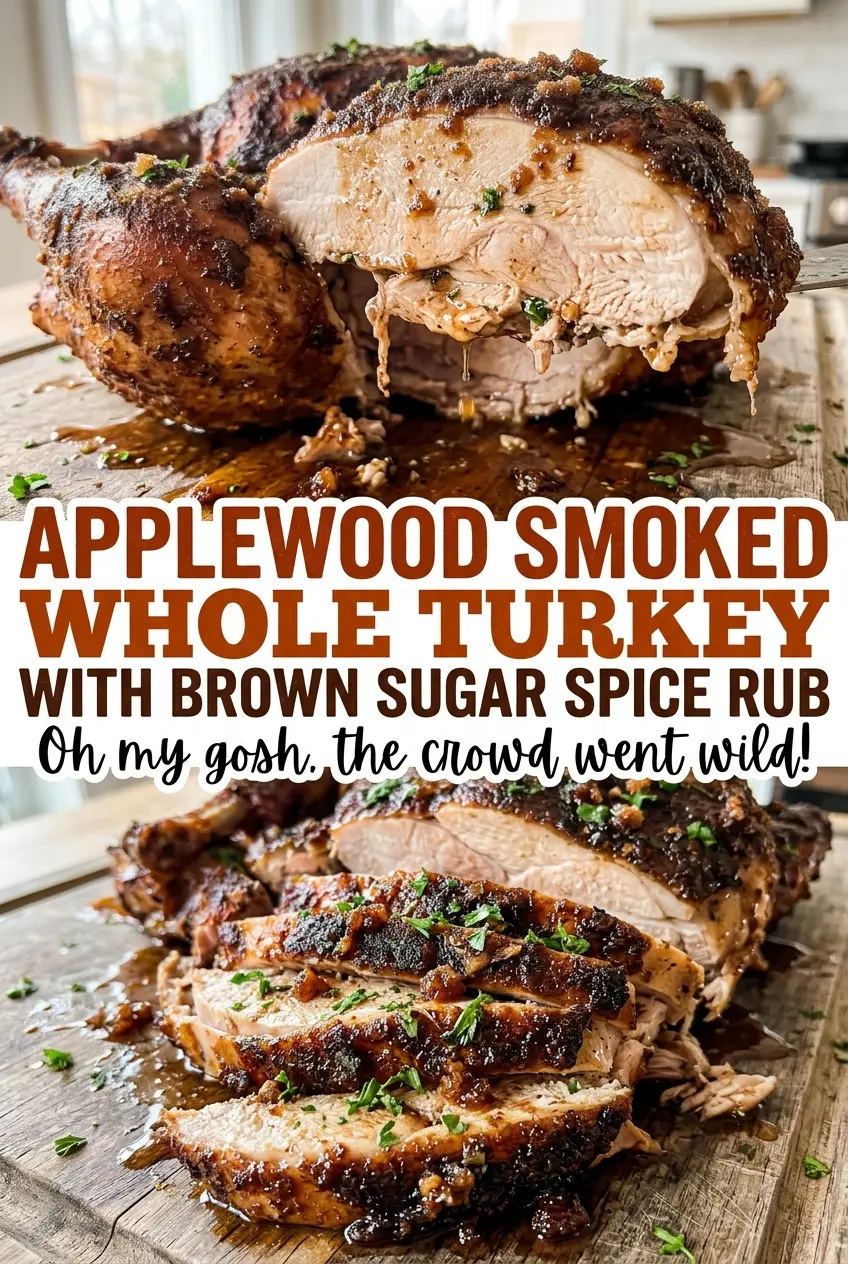
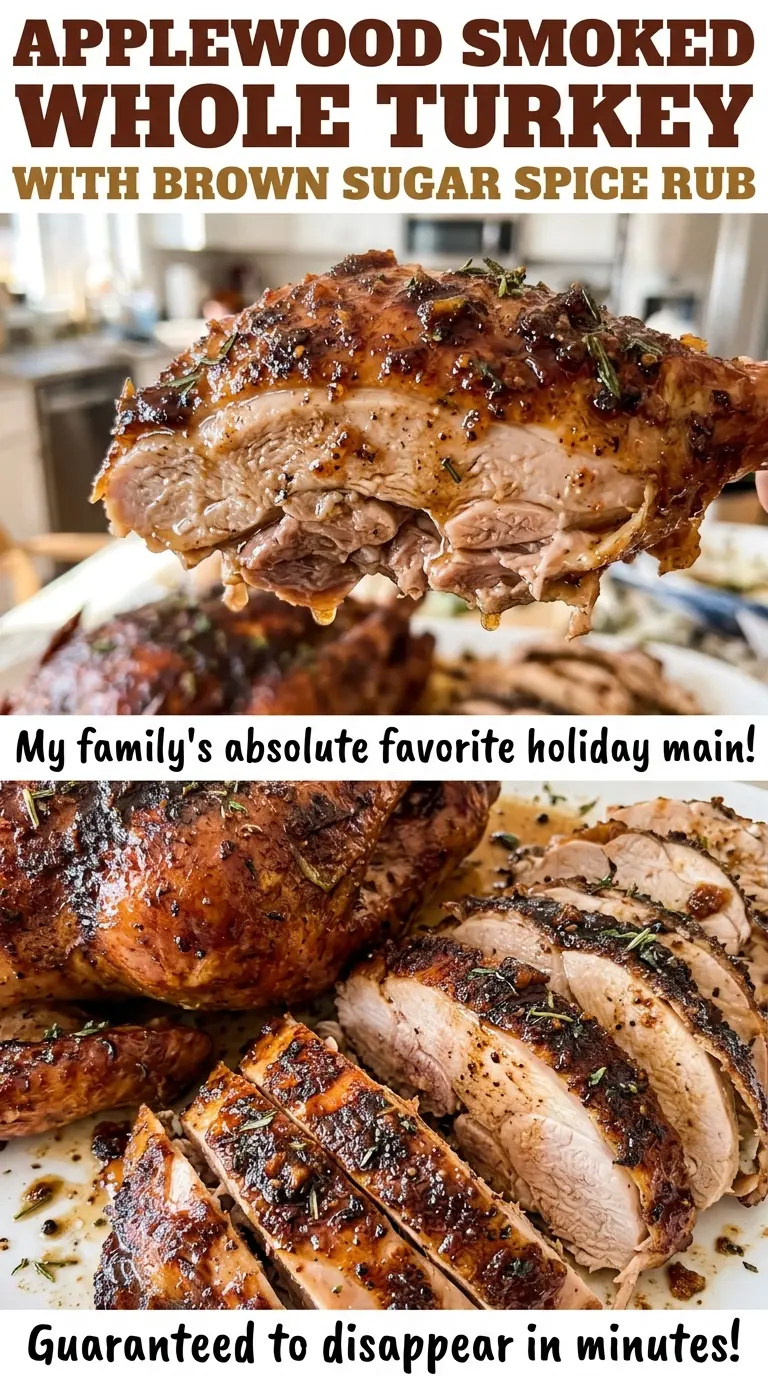
Use a thermometer rather than the clock to decide when the turkey is ready. Once the breast and innermost thigh reach 165°F, a short rest gives the juices time to settle before carving. Each slice carries a bit of the applewood smoke and that warm, peppery brown sugar crust.
Kitchen Note
Don’t let the 3- to 4-hour estimate make you wait to check the turkey. I start checking at 2 1/2 hours, since the bird’s shape and the smoker can change the pace.
Save this applewood smoked turkey for a centerpiece with sweet brown sugar spice and a steady, gentle smoke.
Why the Rub Belongs Inside the Cavity, Too
A whole turkey has a lot of surface area, and seasoning only the skin leaves the inside of the bird without that same savory aroma. Rubbing the spice mixture inside the cavity helps carry the garlic, onion, paprika, and pepper beyond the outer layer. It doesn’t mean the cavity should be packed; leave it open so the bird can cook as intended.
The brown sugar is there for balance, not to turn the turkey into a sweet roast. It softens the sharper edges of the spices, while the salt brings their flavors into focus. Oil brushed over the skin gives the dry rub something to cling to, and a thorough pat-dry beforehand keeps that coating from getting wet and patchy. Take a moment to spread the rub evenly rather than leaving thick clumps in one spot. The aim is an even layer across the skin and inside the cavity, with each spice contributing without any one bite tasting like a pocket of seasoning.
Because this is a whole bird, the cavity is also part of the shape and airflow of the cook. Keeping it free of stuffing preserves the method and timing here. The seasoning inside adds aroma as the turkey smokes, while the skin carries the more concentrated rub and smoke.
What Each Part of the Rub Adds to the Turkey
- Whole turkey — A fully thawed bird in the 12- to 14-pound range gives the cooking time its reference point. Removing the neck and giblets before seasoning leaves the cavity clear for the rub.
- Light brown sugar — Its mild molasses note balances the salt and pepper and helps the rub taste rounded rather than purely sharp. Dark brown sugar works in its place in the same amount, with a deeper molasses taste.
- Morton kosher salt — Salt seasons the meat beneath the skin as the turkey cooks, but crystal size affects spoon measurements. If you’re using table salt instead, use 1 1/2 teaspoons in place of the tablespoon of Morton kosher salt.
- Paprika, black pepper, garlic powder, onion powder, and cayenne — The powders spread evenly over the oiled skin and bring color, savory depth, and a little heat. Freshness matters more than a premium brand; replace spices that smell flat when you open the jar. Smoked paprika can stand in for regular paprika, but it adds a stronger smoke note.
- Canola oil — The oil helps the rub adhere to the skin. A neutral vegetable oil works in the same amount without changing the seasoning’s character.
- Applewood chunks — Chunks provide the smoke that defines this turkey. Choose sound, dry chunks and add them according to your smoker manufacturer’s directions; chips don’t behave the same way as fist-size chunks.
From a Dry Bird to a Rested, Smoky Turkey
Dry the Skin Before Seasoning
Pat the turkey dry inside and out with paper towels, including around the legs and wings where moisture can collect. The surface should feel dry rather than slick. If you skip this, the oil and rub are more likely to slide around instead of coating the bird evenly.
Mix and Spread the Brown Sugar Rub
Stir the brown sugar, Morton kosher salt, paprika, black pepper, garlic powder, onion powder, and cayenne together in a small bowl until no brown sugar clumps remain. Brush the canola oil over the turkey skin, then rub the mixture evenly over the skin and inside the cavity. Work over the whole bird instead of leaving a heavy patch on the breast or legs.
Bring the Smoker to 325°F
Preheat the smoker to 325°F for indirect cooking. Add 2 to 3 fist-size applewood chunks according to the smoker manufacturer’s directions. Give the smoker time to reach its target before setting the turkey on the grate; starting before the temperature is steady can throw off the cooking pace.
Smoke Until Both Readings Reach 165°F
Set the turkey breast-side up on the smoker grate and keep the smoker at 325°F. Cook for about 3 to 4 hours, beginning to check after 2 1/2 hours. Insert a thermometer into the thickest part of the breast and the innermost thigh, keeping the probe away from bone, and continue cooking until both spots read 165°F.
Rest Before Carving
Transfer the turkey to a carving board and tent it loosely with foil. Let it rest for 30 minutes before carving so the juices have time to settle. Keep the foil tent loose rather than wrapping the bird tightly, which would trap more steam around the skin.
Three Ways to Adjust the Rub Without Losing the Smoke
Make the Rub Milder
Leave out the cayenne and keep the rest of the rub the same. The turkey will still have the black pepper’s gentle bite, but it won’t have the extra warmth from cayenne.
Go Lower in Sugar
For a lower-sugar version, leave the brown sugar out and use the remaining spices as the rub. The result will be more savory and less rounded, and the dry mixture won’t cling as readily, so spread the oil evenly before applying it.
Trade Applewood for Cherrywood
Use 2 to 3 fist-size cherrywood chunks in place of the applewood. Cherry gives the turkey a fruitwood smoke character that’s a little different from apple, while keeping the brown sugar and spice rub in balance.
Storage and Reheating
- Refrigerator: Carve the leftovers and refrigerate them in airtight containers within 2 hours. They’ll keep for 3 to 4 days; the skin will soften once chilled.
- Freezer: Freeze carved turkey in airtight freezer-safe packaging for up to 2 to 6 months for best quality. Thaw it in the refrigerator before reheating.
- Reheating: Warm slices covered in the oven or in the microwave until they reach 165°F throughout. Reheat only what you’ll serve; repeated warming dries the breast meat.
Questions That Come Up When Smoking a Whole Turkey
Applewood Smoked Whole Turkey with Brown Sugar Spice Rub
Ingredients
Equipment
Method
- Pat the turkey dry inside and out with paper towels.
- Stir the brown sugar, salt, paprika, black pepper, garlic powder, onion powder, and cayenne together in a small bowl.
- Brush the oil over the turkey skin.
- Rub the spice mixture evenly over the skin and inside the cavity.
- Preheat the smoker to 325°F for indirect cooking.
- Add the applewood chunks according to the smoker manufacturer's directions.
- Set the turkey breast-side up on the smoker grate.
- Cook, keeping the smoker at 325°F, for about 3 to 4 hours; begin checking after 2 1/2 hours and continue until a thermometer inserted into the thickest part of the breast and the innermost thigh, away from bone, reads 165°F.
- Transfer the turkey to a carving board.
- Tent loosely with foil and rest for 30 minutes before carving.