
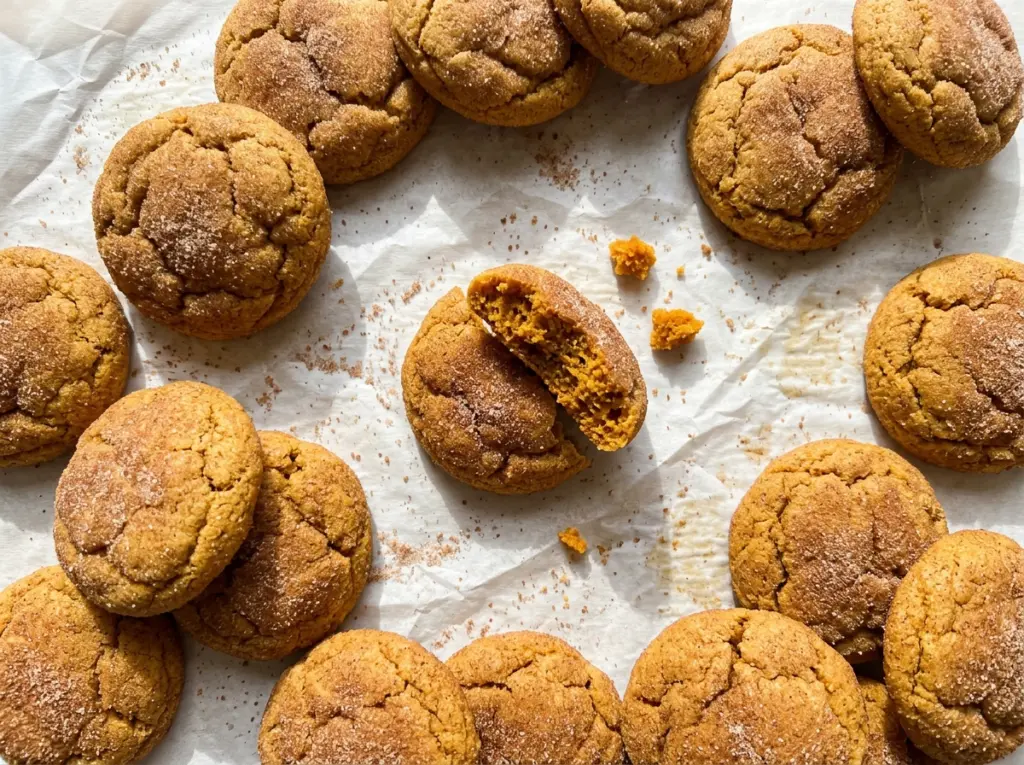
A pumpkin cookie dough can look ready to scoop and still spread more than you expect in the oven. I found that chilling it before shaping makes a noticeable difference: the dough firms up, rolls cleanly, and holds its shape under that cinnamon-sugar coating.
These pumpkin snickerdoodles get their soft texture from pumpkin puree and an egg yolk, not a whole egg that would add more moisture. Cream of tartar brings the gentle tang that makes a snickerdoodle taste like a snickerdoodle, while cinnamon and nutmeg give the pumpkin a warm, familiar spice. Pull them when the edges are set and the centers still look a little underbaked, and you’ll get tender cookies with a fragrant cinnamon-sugar finish.
Kitchen Note
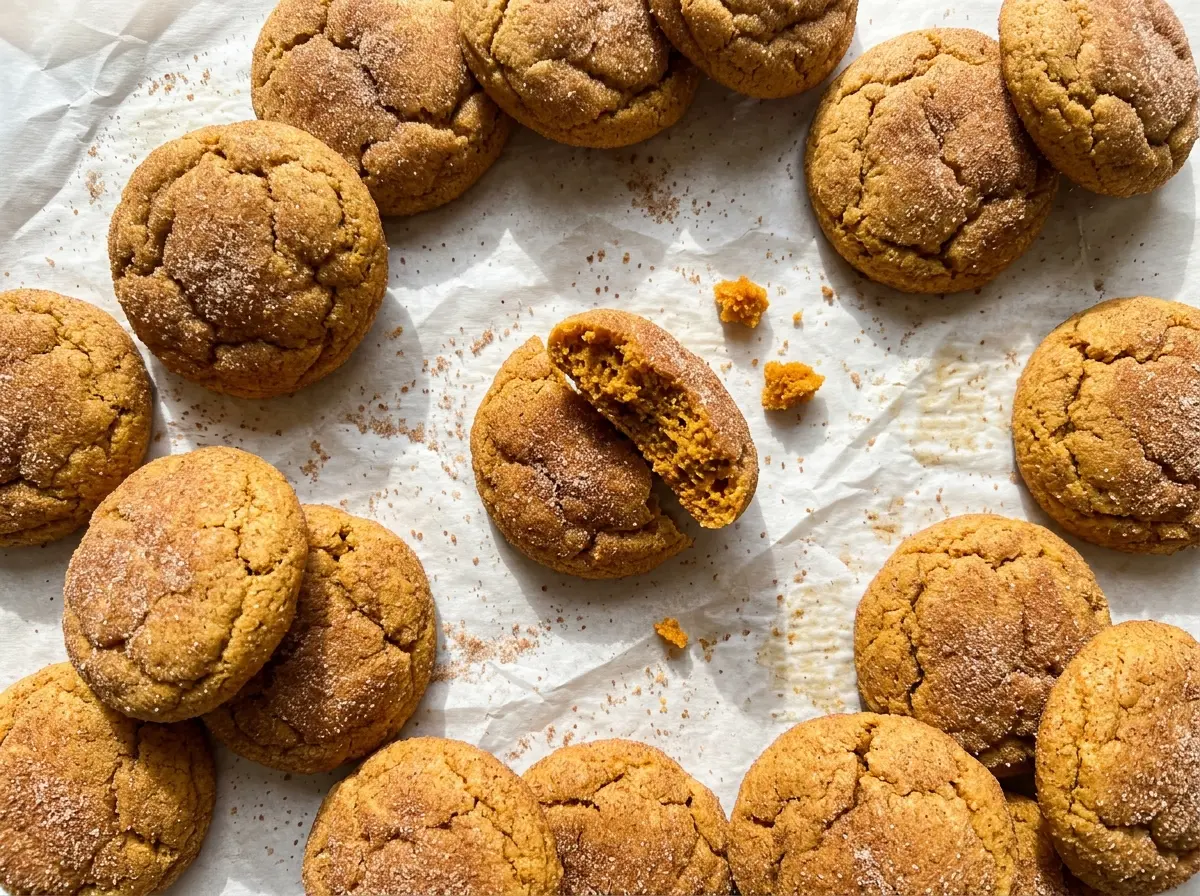
Don’t wait for the centers to look fully baked in the oven. The edges should be set while the middle still looks slightly underdone; five minutes on the hot baking sheet lets the cookies finish setting without drying out.
Save these pumpkin snickerdoodle cookies for a cozy bake: tender pumpkin centers, a cinnamon-sugar coat, and that classic snickerdoodle tang.
Why Pumpkin Cookies Turn Cakey—and What the Egg Yolk Changes
Pumpkin puree brings moisture to cookie dough, which is why pumpkin cookies can lean soft and cakey instead of chewy. Here, the egg yolk adds richness and helps bind the dough without adding the extra moisture from an egg white. That balance matters: the dough still has enough pumpkin character, but it can be rolled into neat balls after a proper chill.
Cream of tartar is another small ingredient with a clear job. It contributes the slight tang associated with snickerdoodles and works alongside baking soda to help the cookies rise. The result isn’t a crisp, flat sugar cookie; these are meant to stay tender, with a little lift and a soft middle. Chilling the dough gives the flour time to absorb moisture and firms the butter, so the cookies spread less aggressively once they reach the oven.
That combination is what makes the cookie feel like both parts of its name. Pumpkin and nutmeg give the dough its autumnal warmth, while the tang and cinnamon-sugar coating keep the familiar snickerdoodle character front and center.
What Pumpkin, Butter, and Cream of Tartar Do in These Cookies

- Pumpkin puree — Use plain pumpkin puree, not pumpkin pie filling, which is already sweetened and spiced. A smooth, thick puree blends into the butter mixture evenly; watery homemade puree can make the dough softer and the baked cookies more cakey.
- Unsalted butter — Softened butter creams with the sugars and helps create a tender cookie. It should give slightly when pressed but shouldn’t look shiny or melted. A plant-based baking stick can replace it for a dairy-free version, though the cookies may have a slightly different spread and flavor.
- Egg yolk — The yolk gives the dough richness and structure without the extra liquid in a whole egg. Keep the yolk rather than swapping in a whole egg if you want the intended soft, less-cakey texture.
- Cream of tartar — This pantry staple gives snickerdoodles their subtle tang and works with the baking soda in the dough. It’s worth using here; leaving it out removes part of the cookie’s defining flavor and changes the balance of the leavening.
- Ground cinnamon and nutmeg — Fresh, fragrant spices make a difference because pumpkin has a mild flavor that can be overwhelmed by stale spices. The separate cinnamon-sugar coating adds a brighter cinnamon note on the outside.
- Granulated and light brown sugars — Granulated sugar helps the butter cream and gives the coating its crisp, sweet finish. Light brown sugar brings a little moisture and deeper sweetness to the dough; pack it into the measuring cup so the amount stays consistent.
Chilling and Baking the Dough for Soft Centers
Creaming the Butter and Sugars
Heat the oven to 350°F and line two baking sheets with parchment paper. In a medium bowl, whisk together the flour, cream of tartar, baking soda, salt, cinnamon, and nutmeg. In a large bowl, beat the softened butter with both sugars until creamy and fluffy, about 2 minutes; stop when the mixture looks lighter and no longer grainy in patches.
Adding Pumpkin and Bringing the Dough Together
Beat in the pumpkin puree, egg yolk, and vanilla until the mixture looks combined. Add the flour mixture and mix on low just until no dry streaks remain. Don’t keep beating once the flour disappears, or the cookies can turn tougher than intended. Cover the bowl and chill the dough for 45 minutes so it firms enough to portion and roll.
Coating Each Dough Ball
Stir the granulated sugar and cinnamon for the coating together in a small bowl. Scoop the chilled dough into 1 1/2-tablespoon portions, roll each portion into a ball, and coat it in the cinnamon sugar. Turn the ball until the surface is covered; an uneven coating leaves some bites without that sweet, spiced outside.
Baking One Sheet at a Time
Arrange the coated dough balls about 2 inches apart on the prepared baking sheets. Bake one sheet at a time for 10 to 12 minutes, until the edges are set and the centers look slightly underbaked. Let the cookies rest on the baking sheet for 5 minutes, then move them to a wire rack to cool. If the centers look fully firm in the oven, they’ve likely stayed in longer than they need.
Three Changes That Keep the Cinnamon-Sugar Character
Make Them Gluten-Free
Replace the all-purpose flour with a cup-for-cup gluten-free baking blend made to substitute for wheat flour. Choose a blend that includes a binder, such as xanthan gum, for better structure; the cookies may be a little more delicate, so let them rest fully on the baking sheet before moving them.
Make a Dairy-Free Batch
Use an equal amount of plant-based butter sticks in place of the unsalted butter. Choose a firm baking stick rather than a soft tub spread, which contains more water and can make the dough spread differently. The cookies will still have pumpkin and cinnamon flavor, with a less buttery finish.
Use Pumpkin Pie Spice in the Dough
For a fuller spice blend, use 1 1/4 teaspoons pumpkin pie spice in place of the dough’s cinnamon and nutmeg. Keep the cinnamon-sugar coating unchanged so the outside still tastes distinctly like a snickerdoodle. Pumpkin pie spice often includes ginger and cloves, which make the baked cookies warmer and more complex.
Storage and Reheating
- Refrigerator: Refrigeration isn’t needed. Keep the cooled cookies in an airtight container at room temperature for up to 4 days; their centers soften as they sit.
- Freezer: Freeze fully cooled cookies in an airtight container for up to 2 months, with parchment between layers. Thaw at room temperature before serving.
- Reheating: These cookies are good at room temperature. To warm one, microwave it for 5 to 8 seconds; longer heating can make the center tough.
Questions That Come Up While Baking Pumpkin Snickerdoodles
Pumpkin Snickerdoodle Cookies With Cinnamon Sugar Recipe
Ingredients
Equipment
Method
- Heat the oven to 350°F and line two baking sheets with parchment paper.
- Whisk the flour, cream of tartar, baking soda, salt, cinnamon, and nutmeg together in a medium bowl.
- Beat the butter, granulated sugar, and brown sugar in a large bowl until creamy and fluffy, about 2 minutes.
- Beat in the pumpkin puree, egg yolk, and vanilla until combined.
- Add the flour mixture and mix on low just until no dry streaks remain, then cover and chill the dough for 45 minutes.
- Stir the sugar and cinnamon for the coating together in a small bowl.
- Scoop the dough into 1 1/2-tablespoon portions, roll each into a ball, and coat in the cinnamon sugar.
- Arrange the dough balls about 2 inches apart on the prepared baking sheets and bake one sheet at a time for 10 to 12 minutes, until the edges are set and the centers look slightly underbaked.
- Let the cookies rest on the baking sheet for 5 minutes, then transfer them to a wire rack to cool.