
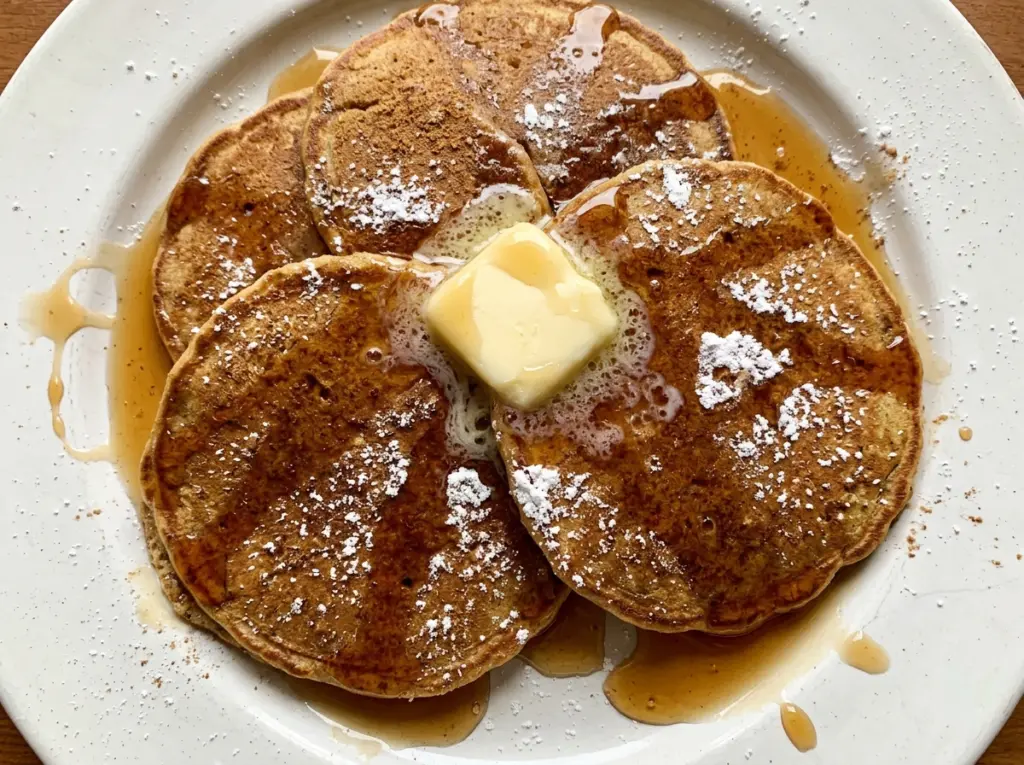
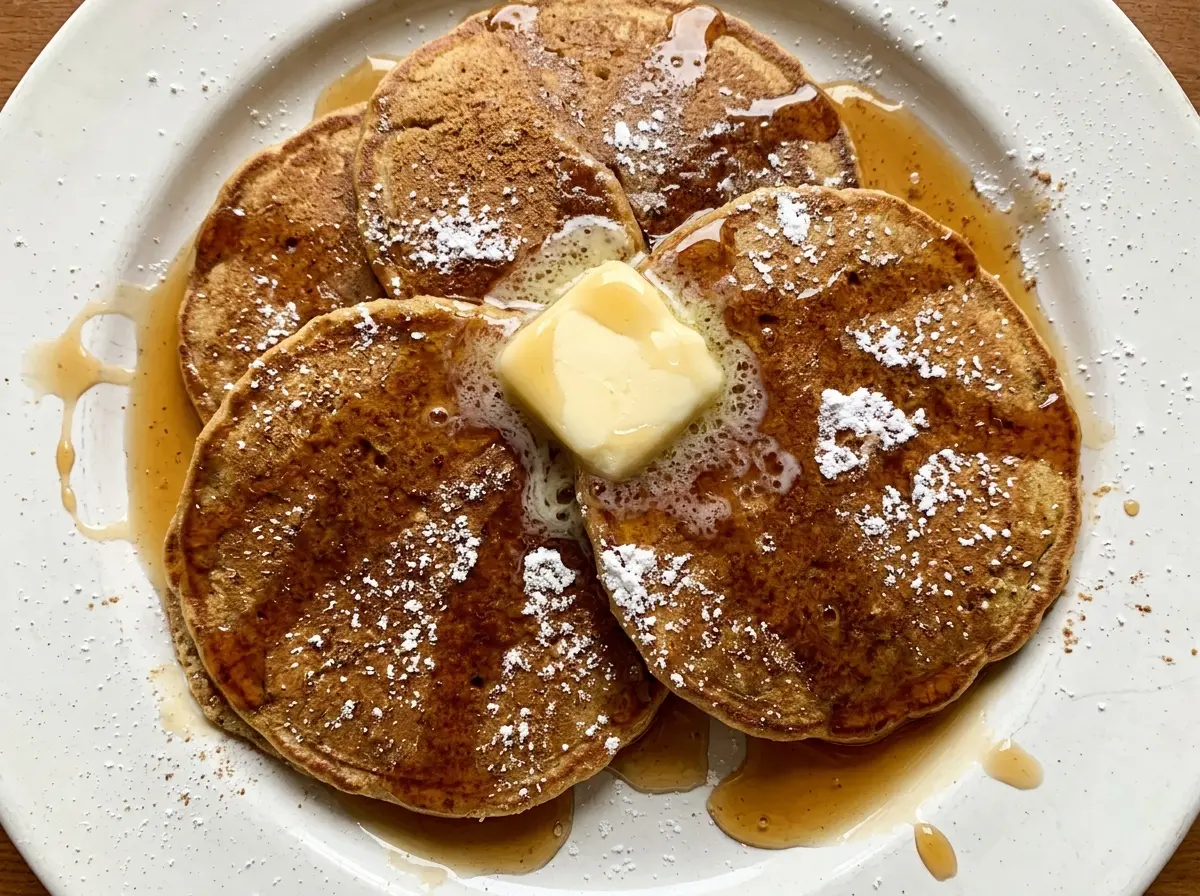
The first pancake tells you a lot: the edges should set before the center loses its little bubbles, and the warm molasses smell should come through before you even flip it. These gingerbread pancakes are easy to rush, especially when the batter looks darker than a plain pancake batter, but a gentler skillet keeps the outside from racing ahead of the middle.
I like the balance here: ginger and cinnamon lead, while just a little clove and nutmeg give the pancakes that familiar gingerbread depth. Buttermilk brings a gentle tang that keeps the molasses from tasting heavy, and the melted butter makes each bite tender. Give the batter a brief rest, then cook small batches over medium-low heat; the finished pancakes are soft, warmly spiced, and ready for a slow breakfast.
Kitchen Note
Let the melted butter cool before whisking it with the egg and buttermilk. If it’s still hot, it can cook the egg in little bits before the batter ever reaches the skillet.
Save these gingerbread pancakes for a breakfast with tender centers, warm spice, and just enough molasses to make every bite taste like gingerbread.
Why Gingerbread Pancakes Need a Careful Balance of Sweet and Spice
Molasses has a deep, slightly bitter edge, so these pancakes aren’t meant to taste like a stack of plain pancakes with extra sugar stirred in. The brown sugar rounds out that edge, while the ginger and cinnamon bring warmth instead of a sharp, sugary sweetness. That balance is what makes each bite read as gingerbread rather than just sweet batter.
Cloves and nutmeg are supporting notes, not co-stars. They’re potent enough that a small amount adds depth without taking over the ginger. If the spice blend feels assertive in the bowl, remember that the batter also includes flour, buttermilk, egg, and butter; the finished flavor is more mellow and balanced than the dry spices smell on their own. Keeping the proportions in check lets the molasses stay noticeable without making the pancakes taste harsh.
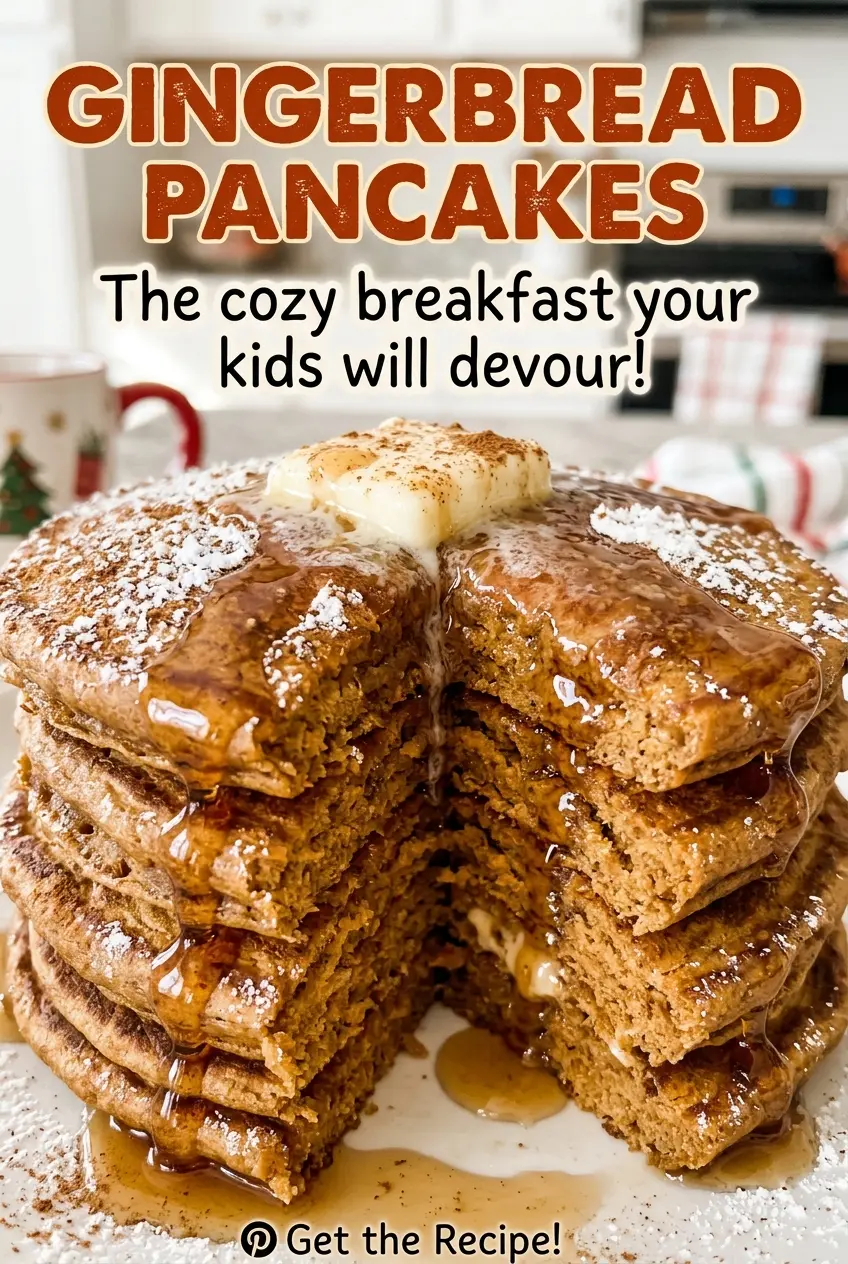
The batter will be darker than a standard pancake batter before it ever hits the pan. That color comes from the molasses, not from overcooking, so use the bubbles and set edges as your cooking cues rather than waiting for the surface to look pale.
What the Molasses, Buttermilk, and Spice Blend Bring to the Batter
- Unsulfured molasses — This gives the pancakes their characteristic deep sweetness and color. A standard, mild unsulfured molasses keeps the flavor rounded; blackstrap is much more intense and can leave the pancakes tasting bitter. The brand doesn’t need to be fancy, but choose a jar you enjoy in baked goods.
- Buttermilk — Its tang balances the molasses, and its acidity works with the baking soda. If you don’t have buttermilk, stir 1 tablespoon lemon juice or vinegar into 1 1/4 cups milk and let it stand for 5 minutes before using; the pancakes will be a little less rich than with cultured buttermilk.
- Ground ginger, cinnamon, cloves, and nutmeg — Together, these make the gingerbread character. Fresh, fragrant spices matter more than an expensive brand; spices that have sat open for years taste muted. If your ground ginger is dull, replacing it is more effective than adding extra cloves or nutmeg.
- All-purpose flour — It gives the pancakes enough structure to hold their soft middle without making them bready. A regular store-brand flour works well. For a gluten-free version, use a cup-for-cup gluten-free flour blend in the same amount; the texture may be a little more delicate.
- Light brown sugar — It adds a gentle caramel note without crowding the molasses. Dark brown sugar works as a direct swap in the same amount and makes the flavor a touch deeper.
- Baking powder and baking soda — Both are there for lift, with the soda also reacting with the acidity in the buttermilk. Use fresh containers if yours have been open for a long time; stale leaveners can leave pancakes flatter and heavier.
- Egg and unsalted butter — The egg helps hold the pancakes together, while butter brings richness and keeps the crumb tender. If you’re buying butter just for this, store-brand unsalted butter is fine; its quality is less noticeable here than the spices or molasses.
How to Mix and Cook Gingerbread Pancakes Without Tough Centers
Distribute the Spices Through the Flour
Whisk the flour, brown sugar, ginger, cinnamon, cloves, nutmeg, baking powder, baking soda, and salt together in a large bowl. Break up any brown sugar clumps as you whisk so they don’t leave concentrated sweet pockets in the cooked pancakes. A thorough dry mix spreads the spices and leaveners evenly through the batter. Set this bowl aside while you combine the wet ingredients.
Whisk the Molasses Mixture Until Even
In a medium bowl, whisk the buttermilk, molasses, egg, and cooled melted butter until combined. The mixture should look consistently brown, with no thick streak of molasses sitting at the bottom. If the butter forms little flecks, it may have cooled too much against cold buttermilk; keep whisking until the mixture is as even as you can get it. That helps each pancake cook with a consistent flavor and texture.
Stir Briefly, Then Let the Batter Rest
Pour the wet mixture into the flour mixture and stir just until no dry flour remains. A few small lumps are fine; chasing a perfectly smooth batter with extra stirring can make the pancakes tough. Let the batter rest for 5 minutes before cooking. It will look thick and spoonable, rather than fluid like crepe batter.
Cook in Batches Over Medium-Low Heat
Heat a 12-inch nonstick skillet or griddle over medium-low heat, about 325°F, and lightly brush it with some of the vegetable oil. Pour 1/4 cup batter per pancake, leaving room to flip, and cook for 2 to 3 minutes. When bubbles form and the edges look set, slide a spatula underneath and flip; cook the second side for 1 to 2 minutes, until cooked through. Brush the skillet with the remaining oil between batches as needed, and avoid turning the heat up to hurry the next round.
Three Easy Ways to Change Up These Gingerbread Pancakes
Make Them Dairy-Free
Replace the buttermilk with 1 1/4 cups unsweetened oat milk mixed with 1 tablespoon lemon juice, and use melted dairy-free butter in place of the unsalted butter. Let the oat milk mixture stand for 5 minutes before mixing the batter. The pancakes keep their gentle tang, though they won’t taste quite as rich as the buttermilk version.
Turn Up the Ginger
For a sharper ginger note, increase the ground ginger from 1 1/2 teaspoons to 2 teaspoons and leave the other spices as they are. The pancakes taste a little warmer and less cinnamon-forward, without changing the batter or cooking method.
Use a Cup-for-Cup Gluten-Free Flour
Swap the all-purpose flour for the same amount of cup-for-cup gluten-free flour blend. The pancakes may be more fragile when you flip them, so let the edges look fully set before sliding the spatula underneath. This keeps the gingerbread flavor intact while making the batch gluten-free.
Storage and Reheating
- Refrigerator: Cool the pancakes, then store them in an airtight container for up to 4 days. They soften a little as they chill.
- Freezer: Freeze cooled pancakes in a single layer, then stack them with parchment between each pancake in an airtight freezer bag or container for up to 2 months.
- Reheating: Warm refrigerated pancakes in a toaster or in a skillet over low heat; reheat frozen pancakes in the toaster or let them thaw in the refrigerator first. Avoid a long microwave blast, which can make the centers rubbery.
Questions That Come Up When Making Gingerbread Pancakes
Gingerbread Pancakes
Ingredients
Equipment
Method
- Whisk the flour, brown sugar, ginger, cinnamon, cloves, nutmeg, baking powder, baking soda, and salt in a large bowl.
- In a medium bowl, whisk the buttermilk, molasses, egg, and melted butter until combined.
- Pour the buttermilk mixture into the flour mixture and stir just until no dry flour remains; a few small lumps are fine.
- Let the batter rest for 5 minutes.
- Heat a 12-inch nonstick skillet or griddle over medium-low heat, about 325°F.
- Lightly brush the skillet or griddle with some of the oil.
- Pour 1/4 cup batter per pancake onto the skillet, cooking in batches.
- Brush the skillet with the remaining oil between batches as needed.
- Cook for 2 to 3 minutes, until bubbles form and the edges look set.
- Flip and cook for 1 to 2 minutes, until the pancakes are cooked through.