
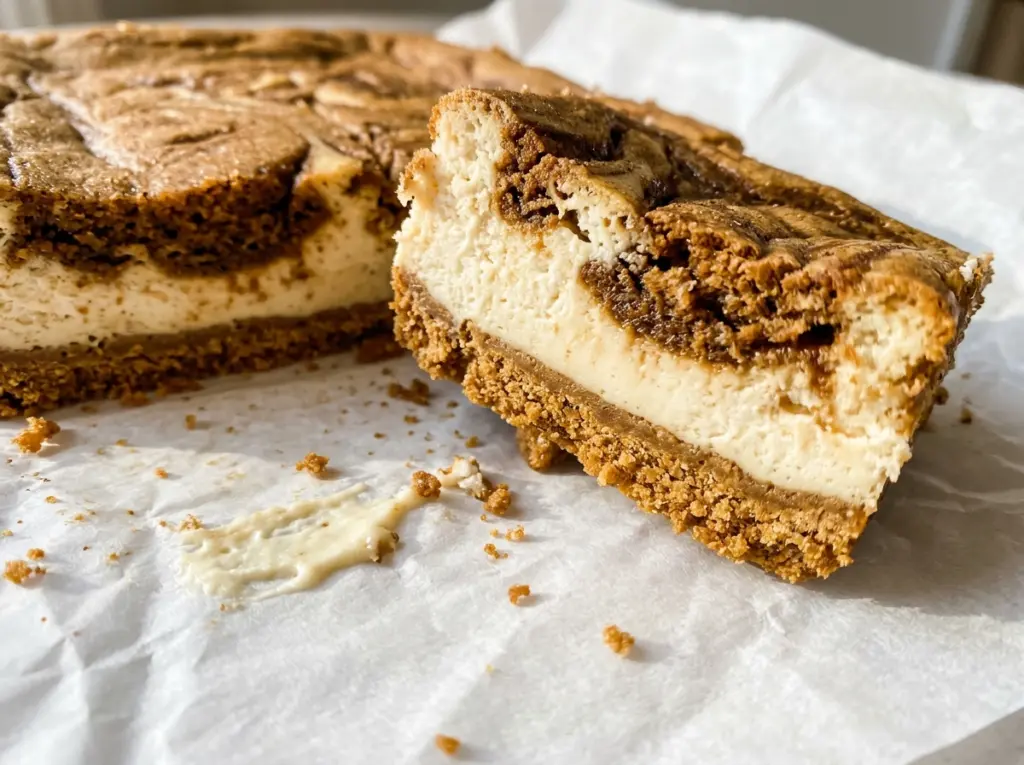
The gingersnap crust is the first thing you notice: crisp at the edge, with a little buttery snap under the creamy filling. As the bars bake, the spiced smell of ginger and cinnamon comes through before the center has fully set, which is why I rely on a thermometer instead of guessing from the top. These gingerbread cheesecake bars have the familiar warmth of gingerbread without losing that cool, tangy cheesecake bite.
The crust gets a short bake on its own before the filling goes in. That small head start helps it hold together beneath the soft cheesecake, and the parchment overhang makes the chilled slab easy to lift from the pan for clean portions. Give the bars their full time in the refrigerator; the filling firms up enough to slice neatly while staying smooth and rich.
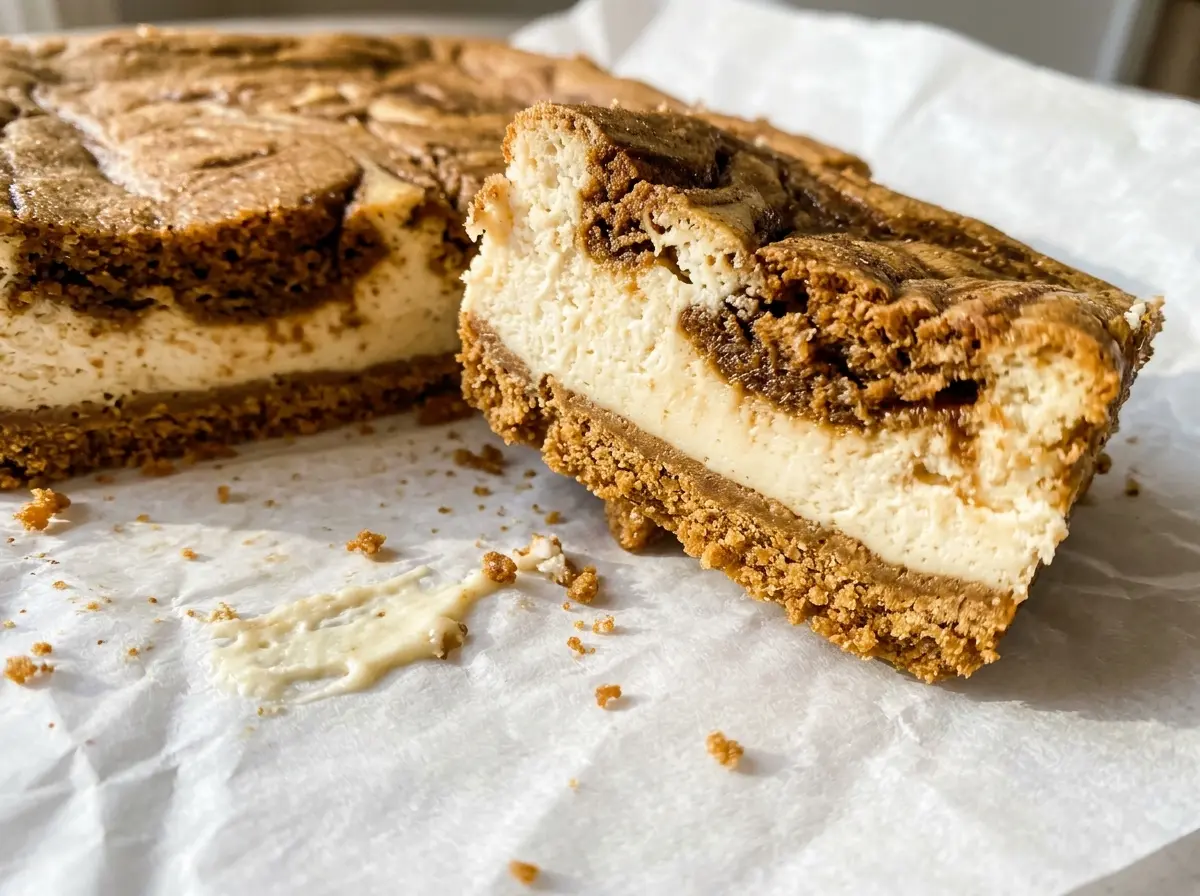
Kitchen Note
Leave the parchment overhang along the long sides generous enough to grip. Once the bars are cold, it gives you a steady lift without prying at the crust.
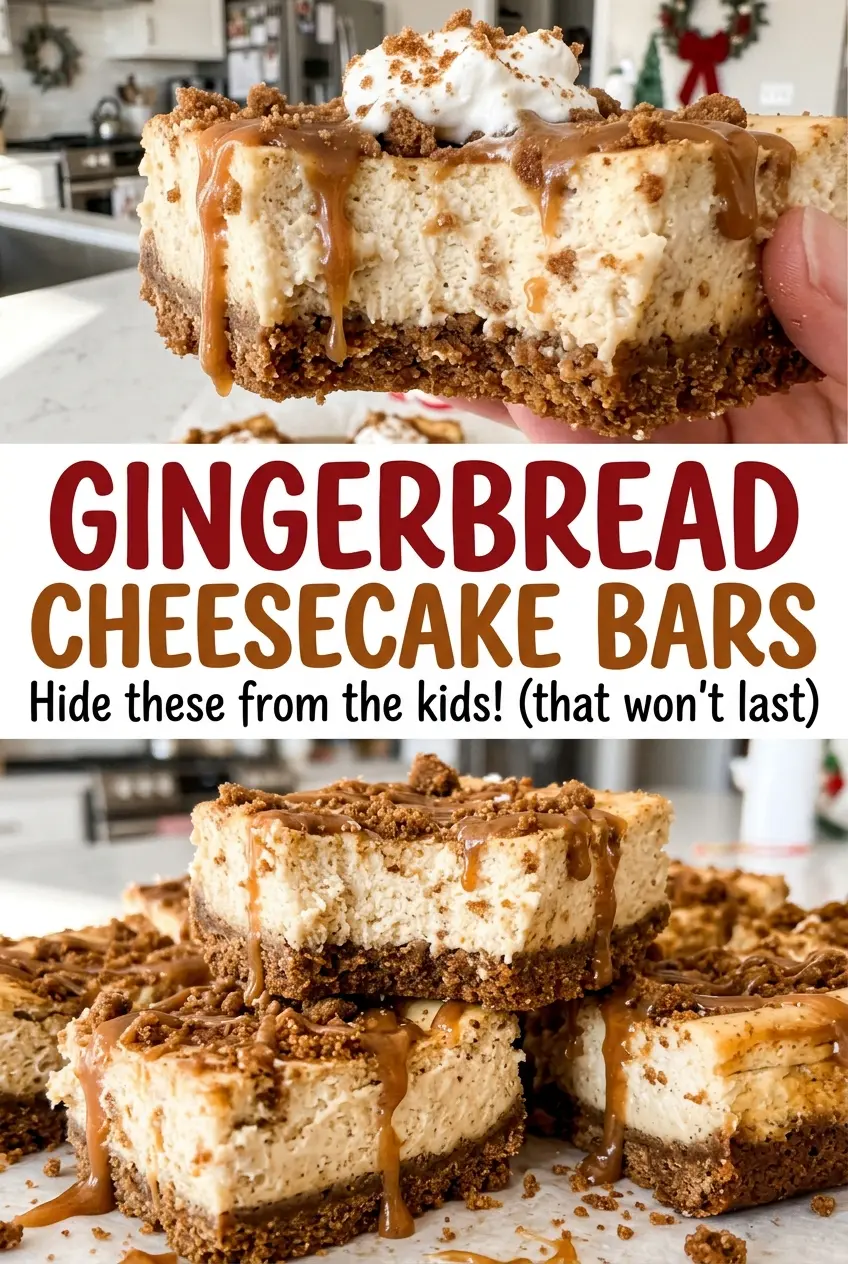
Save these gingerbread cheesecake bars for a make-ahead dessert with a crisp gingersnap base and a warmly spiced, creamy center.
Why the Gingersnap Crust Gets Baked Before the Filling
Cookie crusts can look sturdy in the mixing bowl and still turn soft under a thick cheesecake layer. Gingersnap crumbs are fine and dry, so the melted butter needs to coat them evenly before they go into the pan. If some crumbs stay dry, those patches are more likely to crumble when you cut the bars.
Baking the crust by itself gives the butter a chance to settle the crumbs into one even base before the filling covers it. Press firmly across the bottom and into the corners, rather than packing the center hard and leaving the edges loose. A flat, even crust helps every bar hold its shape, and its ginger-spice flavor stays distinct beneath the creamy layer. Keep the crumbs finely crushed, too; larger cookie pieces make the base uneven and harder to portion cleanly.
What the Molasses, Sour Cream, and Cream Cheese Each Bring
- Gingersnap cookies — Their baked-in spice gives the crust a gingerbread flavor that plain cookie crumbs can’t quite recreate. Choose cookies you enjoy eating; store-brand gingersnaps work well as long as you crush them finely. For a gluten-free version, use gluten-free gingersnap cookies in the same crumb quantity.
- Cream cheese — This is the structure and body of the filling. Use softened block-style cream cheese rather than whipped cream cheese from a tub; the whipped kind has a different texture and can leave the filling less dense. Let it soften enough to beat smooth before adding the other ingredients.
- Unsulphured molasses — It brings the deep, slightly smoky sweetness that makes the filling taste like gingerbread. The quality matters more here than it does for brown sugar, so use a mild unsulphured molasses rather than blackstrap, which can taste sharp and bitter in this amount.
- Sour cream — Its tang balances the brown sugar and molasses and keeps the filling from tasting flat. Plain full-fat Greek yogurt can stand in for sour cream in the same amount; the result will be a little tangier and slightly less rich.
- Eggs and flour — Room-temperature eggs blend into the softened cheese more easily, while the small amount of flour helps the filling hold together after chilling. For a gluten-free batch, replace the all-purpose flour with a measure-for-measure gluten-free baking flour; avoid a starch-only swap, which won’t behave the same way.
- Ground spices — Ground ginger, cinnamon, and nutmeg build the warm flavor without competing with the molasses. Fresh, fragrant spices make the biggest difference; if the jars have been open for years, the filling will taste muted even when the bars bake properly.
Building the Crust and Baking a Smooth Cheesecake Layer
Press and Bake the Gingersnap Base
Heat the oven to 350°F, grease a 9×13-inch baking dish, and line it with parchment paper, leaving an overhang on the long sides. Stir the finely crushed gingersnap cookies with the melted butter until the crumbs are evenly moistened. Press the mixture firmly into the dish, reaching the corners so the base has a consistent thickness. Bake for 10 minutes, then reduce the oven temperature to 325°F.
Beat the Cream Cheese Until Smooth
Beat the softened cream cheese in a large bowl until no lumps remain. Add the packed light brown sugar and flour, then beat just until combined. If you start with cold or firm cream cheese, lumps can linger even after the sugar goes in, so take the time to get the cheese smooth first. Scrape the bowl as needed so the mixture is even from edge to edge.
Add the Eggs and Gingerbread Flavor
Beat in the room-temperature eggs one at a time, letting each blend in before adding the next. Mix in the sour cream, unsulphured molasses, vanilla, ground ginger, cinnamon, nutmeg, and kosher salt until the filling is smooth. Don’t rush the additions; streaks of molasses or spice left in the bowl can mean unevenly flavored bars. Spread the finished filling over the warm crust in an even layer.
Bake Until the Center Reaches 160°F
Bake at 325°F for 40 to 50 minutes, until the edges are set and the center reaches 160°F on an instant-read thermometer. The edge should look firm while the center is just set, not browned across the top. Cool the pan completely on a wire rack for about 1 hour, then cover and refrigerate for at least 4 hours until firm. Lift the chilled cheesecake out by the parchment and cut it into 24 bars.
Easy Ways to Change the Crust or Make These Gluten-Free
Make the Crust Gluten-Free
Use finely crushed gluten-free gingersnap cookies for the crust and measure-for-measure gluten-free baking flour in the filling. The bars keep their gingerbread character, though the crust’s crispness will depend on the cookies you choose.
Use Chocolate Wafer Cookies for the Base
Replace the gingersnap crumbs with finely crushed chocolate wafer cookies, keeping the melted butter as written. The chocolate base gives the spiced filling a deeper, less cookie-forward contrast.
Choose Dark Brown Sugar
Swap the packed light brown sugar for packed dark brown sugar in the same amount. Its extra molasses note makes the filling taste deeper and a little less delicate, while keeping the ginger and cinnamon in the mix.
Storage and Reheating
- Refrigerator: Keep the bars covered and refrigerated for up to 4 days. The crust softens a little as it sits beneath the filling.
- Freezer: Freeze the cut bars in a single layer until firm, then wrap them individually and store them in an airtight container for up to 2 months. Thaw overnight in the refrigerator.
- Reheating: These bars are best served cold, so they don’t need reheating. Microwaving softens the cheesecake and can make the crust greasy.
Questions That Come Up When Baking Gingerbread Cheesecake Bars
Gingerbread Cheesecake Bars
Ingredients
Equipment
Method
- Heat the oven to 350°F.
- Grease a 9x13-inch baking dish, then line it with parchment paper, leaving an overhang on the long sides.
- Stir the gingersnap crumbs and melted butter together until evenly moistened.
- Press the mixture firmly into the prepared dish and bake for 10 minutes.
- Reduce the oven temperature to 325°F.
- In a large bowl, beat the cream cheese until smooth, then beat in the brown sugar and flour until combined.
- Beat in the eggs one at a time.
- Mix in the sour cream, molasses, vanilla, ginger, cinnamon, nutmeg, and salt until smooth.
- Spread the filling over the crust.
- Bake for 40 to 50 minutes, until the edges are set and the center reaches 160°F on an instant-read thermometer.
- Cool completely in the dish on a wire rack, about 1 hour.
- Cover and refrigerate for at least 4 hours until firm.
- Use the parchment overhang to lift the cheesecake from the dish and cut it into 24 bars.