
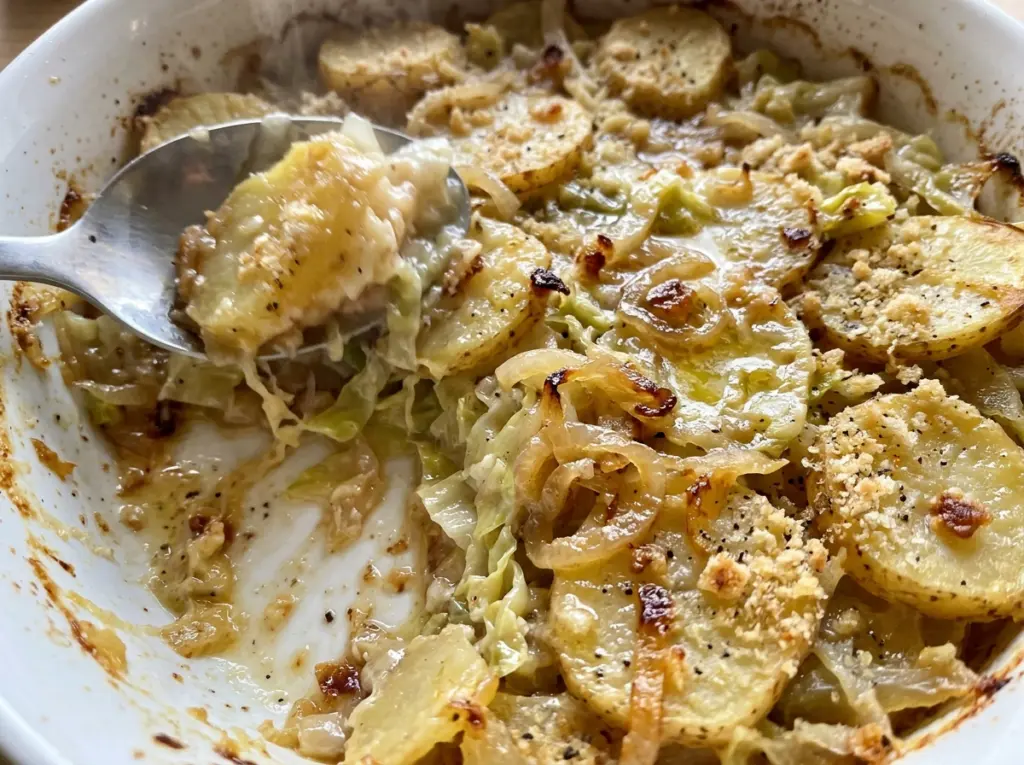
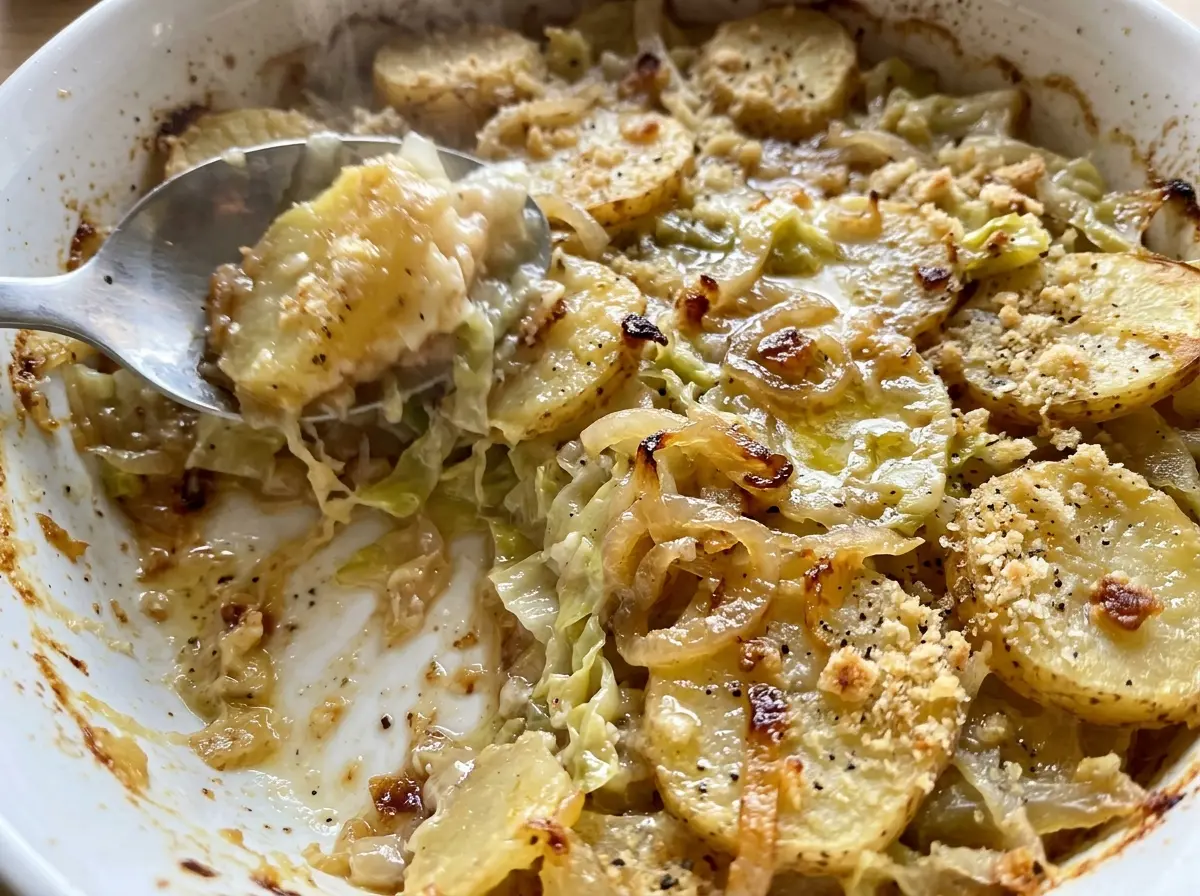
The cabbage nearly fills the skillet when it first goes in, but it softens down as it cooks with the onion and spices. That’s the point where this Polish Potato and Cabbage Casserole starts to come together: tender potato slices, savory kielbasa, and cabbage that’s soft without turning to mush.
I layer everything instead of stirring it into one mixture, so you get a little of each ingredient in every serving. A simple egg-and-sour-cream custard settles between the layers, while sharp cheddar turns golden on top. The result is hearty and sliceable, with caraway and marjoram giving the cabbage a warm, unmistakably Polish-inspired flavor.
Kitchen Note
Give the casserole its full 10-minute rest before serving. The custard firms as it sits, so the potato and cabbage layers hold together when you lift out a portion.
Save this Polish Potato and Cabbage Casserole for its tender layers, savory kielbasa, and golden cheddar top.
Why the Cabbage Has to Cook Down Before It Meets the Potatoes
This casserole has two ingredients that release moisture as they cook: potatoes and cabbage. The potatoes get a short simmer first, then need to drain well. The cabbage gets its own time in the skillet, where it wilts before it goes into the baking dish. That sequence keeps the custard from having to absorb a puddle of liquid released by raw vegetables.
It also gives the layers different textures. The potatoes are tender but still hold their shape, while the cabbage softens enough to settle between them. If you rush the cabbage, it can seem cooked on the outside while still carrying plenty of water. Cook it until it’s wilted, stirring often, and let the potatoes drain thoroughly. The custard is there to bind the layers, not to rescue vegetables that went into the dish too wet. Once assembled, the casserole bakes uncovered, giving the top time to turn golden as the center sets.
What the Potatoes, Cabbage, and Custard Each Bring

- Yukon Gold potatoes — Their creamy texture and ability to keep their shape suit a layered bake. Cut them into even slices so they cook at about the same pace; uneven pieces can leave you with a mix of firm and fragile potatoes.
- Green cabbage and yellow onion — Fresh cabbage is all you need here, and an inexpensive head works well. Thin slices soften evenly in the skillet; thicker pieces take longer to wilt and can make the layers awkward to serve.
- Polish kielbasa — Use fully cooked kielbasa, not raw sausage. Its smoky, savory flavor seasons the cabbage as it warms in the skillet, so a good-quality sausage makes a noticeable difference without needing extra seasoning.
- Marjoram and caraway — Dried marjoram lends a mellow herbal note, while caraway brings a gentle, distinctive warmth that pairs naturally with cabbage. Keep the caraway seeds whole; crushing them would make their flavor more pronounced.
- Eggs, sour cream, and whole milk — Together, these make a pourable custard that sets around the layers. Whisk until smooth so the sour cream is evenly blended rather than sitting in little pockets.
- Dijon mustard and sharp cheddar — Dijon adds a little tang to the custard, and sharp cheddar gives the top a more pronounced savory finish than a mild cheese would. Shred the cheddar yourself if you want the most even melting, though packaged shredded cheddar works for the topping.
Building the Layers Without Breaking the Potato Slices
Simmer the Potatoes Until Just Tender
Heat the oven to 375°F and grease a 9×13-inch baking dish. Put the sliced potatoes in a 6-quart pot with the water and 2 teaspoons of the kosher salt, bring it to a boil, then simmer for 6–8 minutes. Check a slice near the end: it should be just tender but still hold its shape when lifted. Drain the potatoes well so excess water doesn’t collect in the dish.
Wilt the Cabbage Before Adding the Kielbasa
Melt the butter in a 12-inch skillet over medium heat, then cook the onion for 4–5 minutes until softened. Add the cabbage, remaining 1 teaspoon of salt, marjoram, caraway, and black pepper. Cook for 10–12 minutes, stirring often, until the cabbage is wilted; it should look softened and reduced rather than crisp. Add the sliced kielbasa and cook for 3–4 minutes, just long enough to warm it through.
Whisk a Smooth Custard
In a medium bowl, whisk the eggs, sour cream, whole milk, and Dijon mustard until smooth. Scrape the bottom and sides of the bowl as you whisk so no thick streaks of sour cream remain. A uniform mixture pours more evenly across the layers. Keep the potatoes and cabbage mixture ready nearby so you can assemble the casserole while the custard is smooth and blended.
Layer and Bake Until the Center Sets
Arrange half of the potatoes in the prepared baking dish, then cover them with half of the cabbage mixture. Repeat with the remaining potatoes and cabbage, keeping the layers loose rather than pressing them down. Pour the custard evenly over the top and sprinkle with the cheddar. Bake uncovered for 35–45 minutes, until the center reaches 160°F and the custard is set.
Two Simple Changes That Shift the Casserole
Make It Vegetarian by Leaving Out the Kielbasa
Omit the kielbasa and layer the cooked cabbage and potatoes as usual. The casserole will be lighter and less smoky, with the onion, caraway, and marjoram carrying more of the savory flavor. The existing custard and cheddar still make it a filling meatless bake.
Leave Out the Caraway for a Milder Cabbage Flavor
Skip the caraway seeds if you prefer a subtler seasoning. The casserole will still have the herbal note of marjoram and the tang of Dijon, but it won’t have caraway’s distinctive warmth. No other change to the method is needed.
Storage and Reheating
- Refrigerator: Refrigerate leftovers within 2 hours and keep them for 3–4 days. The potatoes soften a little more as they sit.
- Freezer: Freeze cooled portions in airtight containers for up to 2 months for best quality. The custard may separate slightly and the potatoes may turn softer after thawing.
- Reheating: Reheat covered in the oven or microwave individual portions until the center reaches 165°F. Avoid reheating the whole casserole more than once, which can dry the edges while the center warms.
Questions That Come Up When Making This Cabbage and Potato Bake
Polish Potato and Cabbage Casserole
Ingredients
Equipment
Method
- Heat the oven to 375°F and grease a 9x13-inch baking dish.
- Put the potatoes and water in a 6-quart pot and stir in 2 teaspoons of the salt; bring to a boil, then simmer for 6–8 minutes, until the slices are just tender but still hold their shape. Drain well.
- Melt the butter in a 12-inch skillet over medium heat, add the onion, and cook for 4–5 minutes until softened.
- Add the cabbage, remaining 1 teaspoon salt, marjoram, caraway, and pepper; cook for 10–12 minutes, stirring often, until wilted.
- Add the kielbasa and cook for 3–4 minutes.
- Whisk the eggs, sour cream, milk, and Dijon mustard in a medium bowl until smooth.
- Layer half the potatoes in the prepared dish, top with half the cabbage mixture, and repeat.
- Pour the custard evenly over the layers and sprinkle with the cheddar.
- Bake uncovered for 35–45 minutes, until the center reaches 160°F and the custard is set.
- Rest for 10 minutes before serving.