
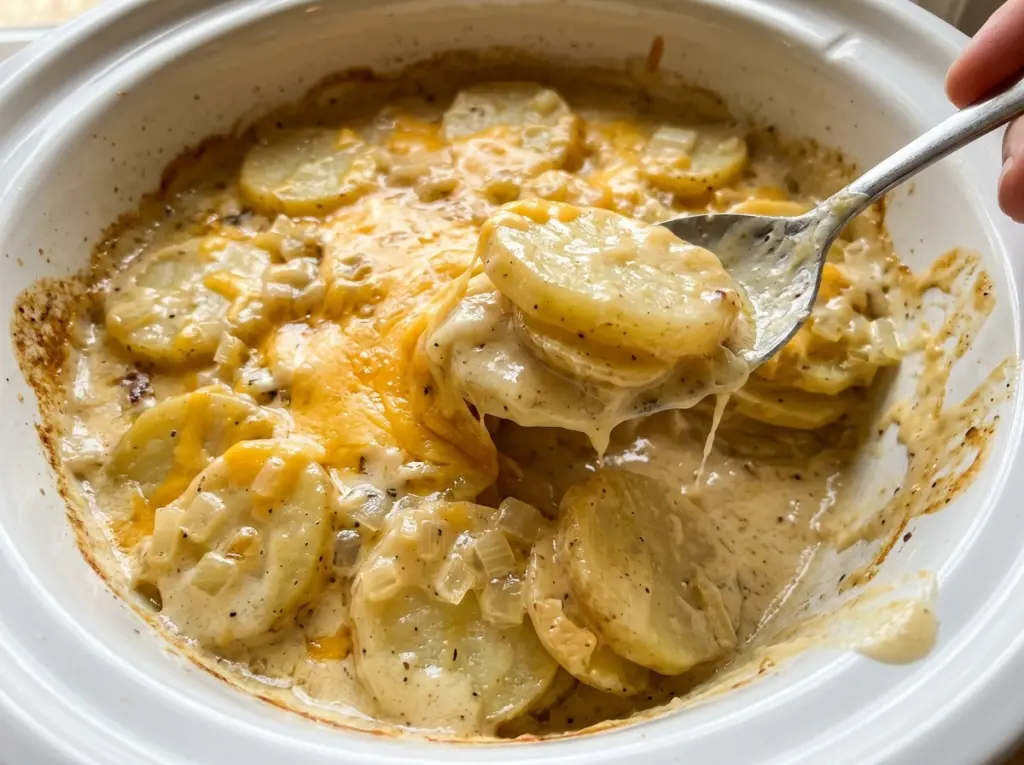
When the lid comes off a slow cooker, scalloped potatoes can look pale and the sauce looser than you expected. That doesn’t mean anything has gone wrong. A little time with the lid off lets the layers settle, and a sauce that was thickened on the stove has enough body to cling to the potatoes instead of pooling at the bottom.
I make these slow cooker scalloped potatoes with Yukon Golds because they turn tender while keeping their shape. The slices are thin, the onion softens between the layers, and a simple garlic cream sauce does the rest. The slow cooker handles the long, gentle cooking without needing the oven.
The step that changes the texture most is cooking the flour and butter together before adding the milk. That quick roux gives the sauce a head start, so it stays creamy as the potatoes cook. Each scoop comes out soft, savory, and coated all the way through.
Kitchen Note
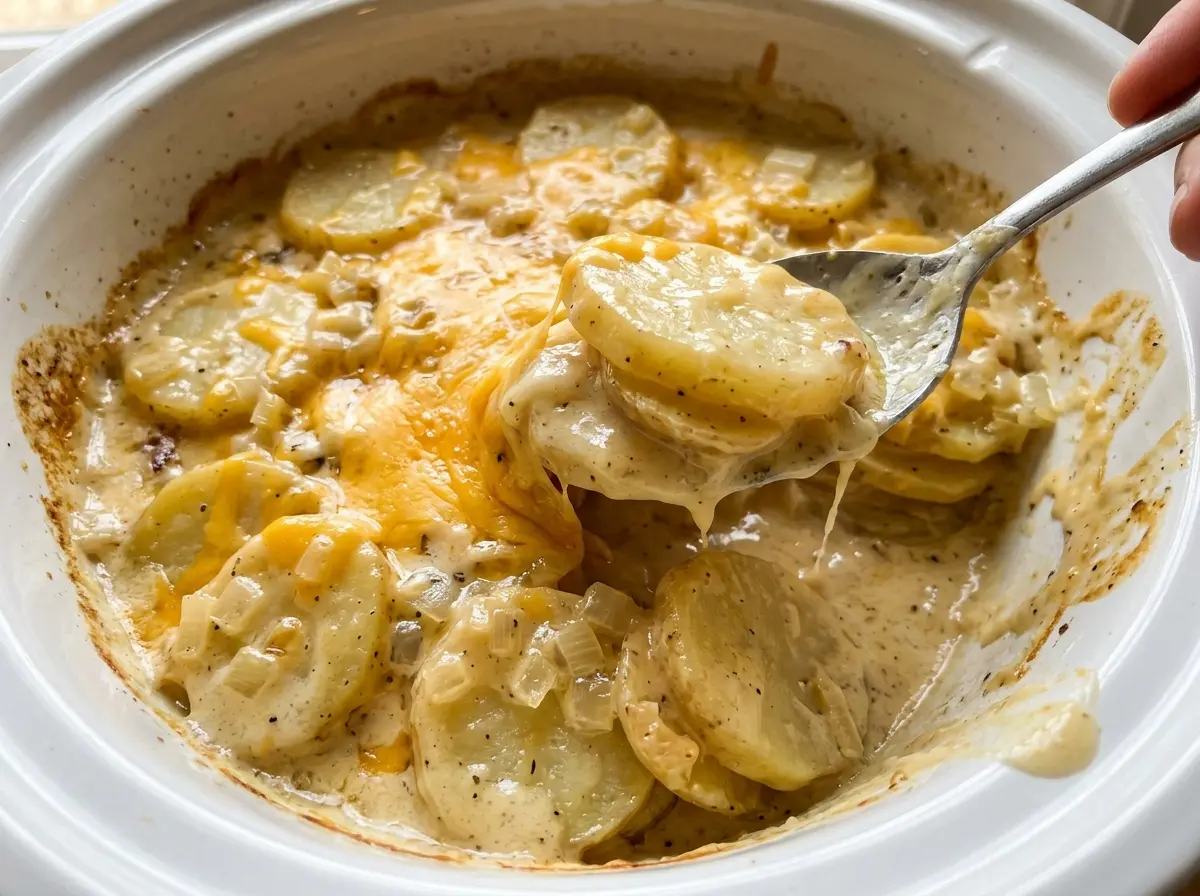
After cooking, turn the slow cooker off and leave the lid off for the full 15-minute rest. That pause gives the sauce time to settle around the potatoes, so the first serving holds together instead of sliding apart.
Save these slow cooker scalloped potatoes for a cozy dinner — tender Yukon Gold slices layered with creamy garlic sauce.
Why the Sauce Needs to Be Thick Before It Meets the Potatoes
A slow cooker traps steam, and potatoes release moisture as they soften. If the sauce starts out thin, that extra liquid can leave you with potatoes sitting in a watery sauce rather than a creamy coating. Thickening the sauce on the stove first gives it enough structure to handle the moisture that builds during the long cook.
The flour and butter roux is doing more than thickening milk. Cooking it for a minute takes away the raw flour taste, and whisking in the milk gradually helps the sauce turn smooth instead of lumpy. Let it reach a gentle simmer, then keep whisking until it coats the back of a spoon. It should look like a light cream sauce, not a paste; the potatoes still need to cook in it and absorb some of its flavor.
Keep the simmer gentle. A hard boil isn’t needed to thicken the sauce, and it can make milk foam up or catch on the bottom of the saucepan. Once the sauce has the right consistency, take it straight to the slow cooker and layer it evenly with the potatoes.
Why Yukon Golds and a Spoon-Coating Sauce Belong Together

- Yukon Gold potatoes — Their creamy texture and moderate starch help them turn tender without falling apart as easily as a softer, starchier potato. Peel them and cut the slices evenly so they finish cooking at about the same time. Russets can be used, but they tend to soften more and make the layers less distinct.
- Whole milk — It gives the sauce a fuller texture than low-fat milk. Lower-fat milk works, but the finished sauce will be less rich and may feel a little thinner.
- All-purpose flour — This is what lets the butter-and-milk sauce thicken into a coating. For a gluten-free version, use a measure-for-measure gluten-free flour blend in its place; the result may have a slightly different texture.
- Unsalted butter — It gives the sauce its richness while leaving the salt level easier to control. A plant-based butter works in the dairy-free adaptation, though the sauce won’t taste quite as buttery.
- Yellow onion — Thin slices soften into the potato layers and bring mild sweetness. Thinly sliced shallot is a good alternative for a gentler, slightly sweeter onion flavor.
- Fresh garlic — Minced garlic gives the milk sauce a savory note without overpowering it. If you don’t have fresh garlic, it’s better to leave it out than to use garlic salt and accidentally add extra salt.
Layering and Cooking Without Losing the Creamy Texture
Prepare the Slow Cooker and Slice Evenly
Grease the inside of a 6-quart slow cooker with the tablespoon of butter set aside for the insert. Peel the potatoes and slice them 1/8 inch thick; even slices matter because thick and thin pieces won’t become tender at the same pace. Thinly slice the onion while you work. Keep the sliced potatoes together so they’re ready to layer as soon as the sauce is finished.
Whisk a Smooth Garlic Sauce
Melt the remaining butter in a medium saucepan over medium heat, then whisk in the flour and cook for 1 minute. Add the milk gradually while whisking, rather than pouring it in all at once; that’s the easiest way to avoid flour lumps. Stir in the minced garlic, kosher salt, and black pepper, then bring the sauce to a gentle simmer. Whisk for 3 to 5 minutes, until it coats the back of a spoon.
Build Three Even Layers
Arrange one-third of the potatoes across the bottom of the slow cooker, then add one-third of the onion and one-third of the sauce. Repeat those layers twice, finishing with the sauce on top. Spread the slices into an even layer instead of leaving a tall mound in the center, so the potatoes cook more consistently. Try to distribute the onion and sauce across each layer rather than leaving them in one spot.
Cook Until a Knife Meets Tender Potatoes
Cover and cook on LOW for 4 to 5 hours or on HIGH for 2 1/2 to 3 1/2 hours. Near the end of the range, pierce a potato with a knife; it should slide in easily, without a firm center. Slow cookers can vary, so use that texture cue rather than relying only on the clock. Turn off the cooker, remove the lid, and let the potatoes rest for 15 minutes before serving.
Three Easy Ways to Change These Scalloped Potatoes
Make the sauce gluten-free
Replace the all-purpose flour with the same amount of a measure-for-measure gluten-free flour blend. Cook it with the butter for the same minute before gradually whisking in the milk. The sauce may not be quite as silky, but it will still thicken and coat the potatoes.
Use dairy-free butter and oat milk
For a dairy-free version, use plant-based butter in place of the butter and unsweetened plain oat milk instead of whole milk. Prepare the roux and sauce the same way, checking for the same spoon-coating texture. The potatoes will still be creamy, with a mild oat flavor and less dairy richness.
Turn it into a cheddar version
For a cheesy variation, stir a cup of shredded sharp cheddar into the finished sauce after taking the saucepan off the heat. Stir until the cheese melts, then layer the sauce with the potatoes and onion. The result is richer and more distinctly cheesy, and the sauce will be thicker.
Storage and Reheating
- Refrigerator: Cool and refrigerate leftovers within 2 hours, then keep them covered for 3 to 4 days. The sauce will firm up as it chills.
- Freezer: Freeze portions in airtight containers for up to 2 months for best quality. The potatoes may turn a little softer after thawing, so the layers won’t be as neat.
- Reheating: Thaw frozen portions in the refrigerator, then reheat covered in a 350°F oven until the center reaches 165°F. Keep the dish covered so the edges don’t dry out.
Questions That Come Up Before the Slow Cooker Goes On
Slow Cooker Scalloped Potatoes
Ingredients
Equipment
Method
- Grease the inside of a 6-quart slow cooker with 1 tablespoon of the butter.
- Melt the remaining 3 tablespoons butter in a medium saucepan over medium heat.
- Whisk in the flour and cook for 1 minute.
- Gradually whisk in the milk.
- Stir in the garlic, salt, and pepper.
- Bring to a gentle simmer and whisk for 3 to 5 minutes, until the sauce thickens enough to coat the back of a spoon.
- Arrange one-third of the potatoes in the slow cooker, top with one-third of the onion and one-third of the sauce, and repeat twice, ending with the sauce.
- Cover and cook on LOW for 4 to 5 hours or HIGH for 2 1/2 to 3 1/2 hours, until the potatoes are tender when pierced with a knife.
- Turn off the slow cooker and remove the lid.
- Let the potatoes rest for 15 minutes before serving.