
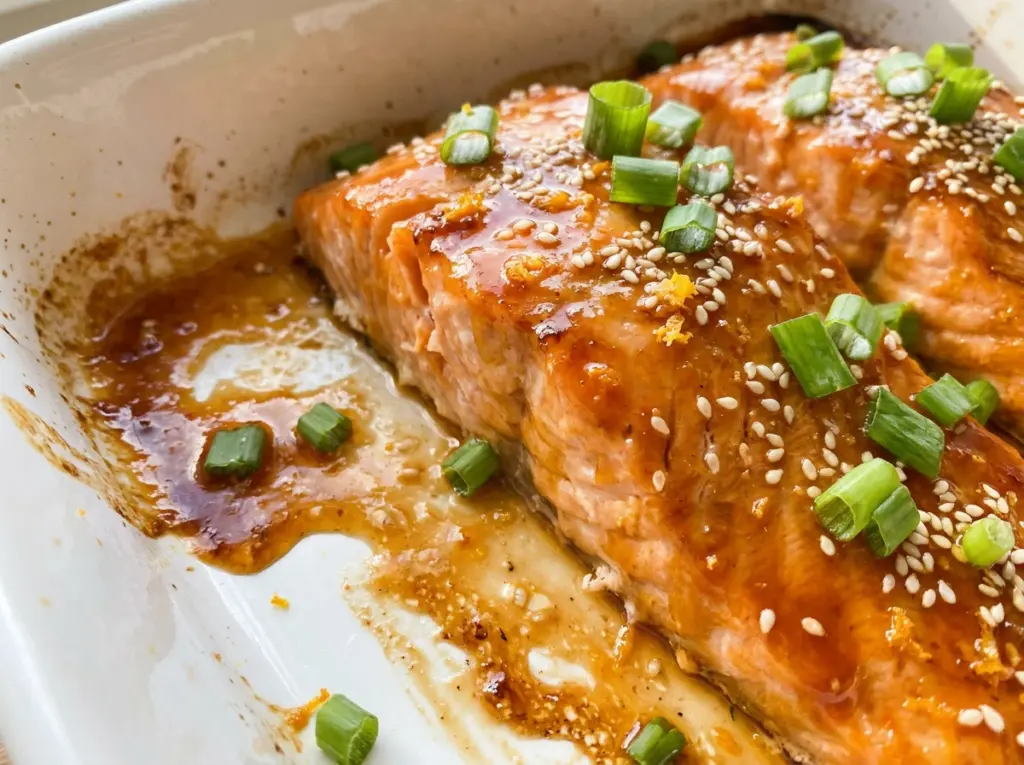
When the orange juice and soy sauce meet in the saucepan, the smell turns bright and savory at once. I make Orange Teriyaki Baked Salmon when I want a glazed fish dinner without babysitting a skillet; the fillets bake in one dish while the sauce gets ready on the stove.
Each serving is an individual salmon fillet, so it’s easy to portion and get onto the table. The glaze brings a sweet-sour edge that works especially well with salmon’s rich texture, and a little reserved sauce at the end lets you add another spoonful without covering up the fish.
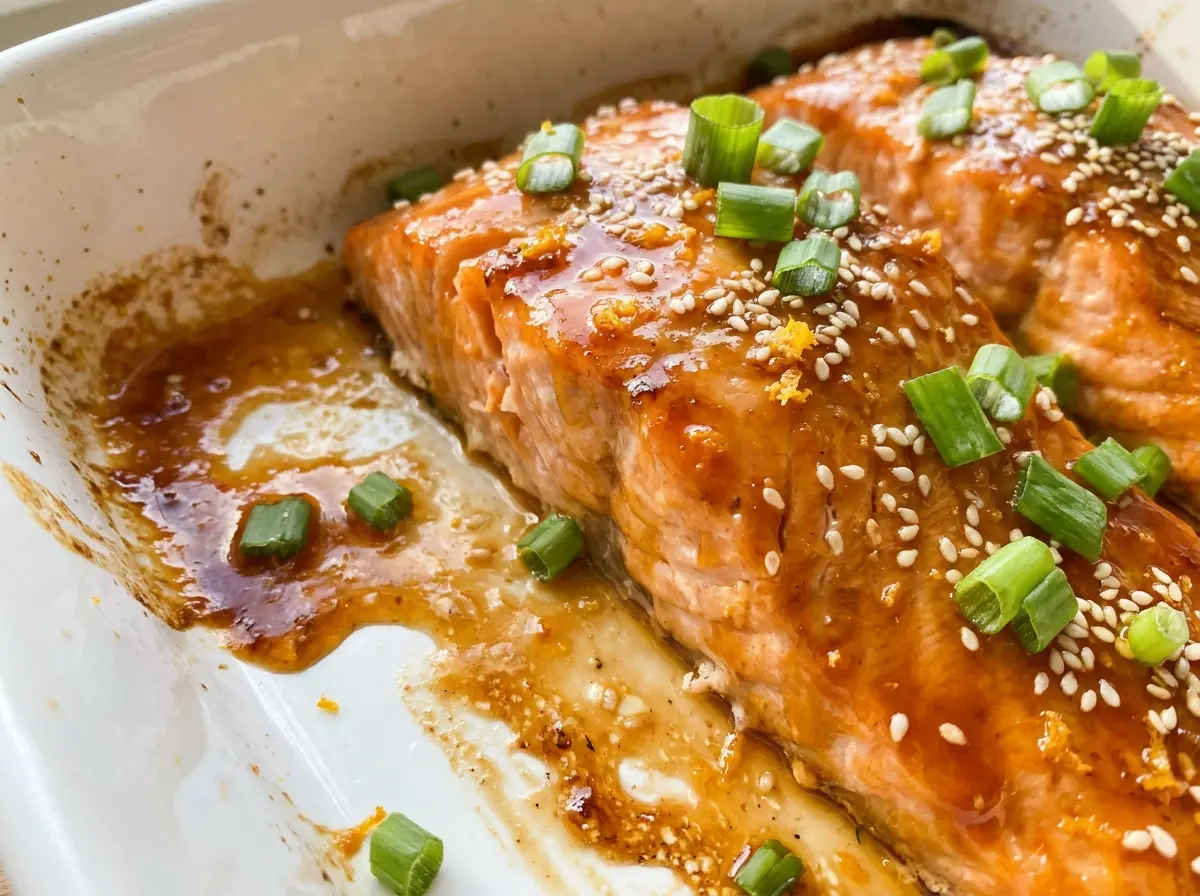
I like that the hands-on work is short and clear: simmer the sauce, brush it over the fillets, then let the oven take over. The salmon comes out tender under a shiny orange teriyaki coating, with enough sauce left to serve alongside.
Kitchen Note
I keep the sauce for serving separate from the start, before any glaze goes onto the raw salmon. That way, the reserved portion stays clean and ready for the table.
Save this orange teriyaki salmon for a dinner with a glossy citrus-soy glaze and tender oven-baked fillets.
Why This Orange Teriyaki Glaze Thickens Before the Salmon Goes In
A thin sauce can slide off the salmon and pool in the baking dish. Here, cornstarch thickens the orange-soy mixture on the stove first, giving it a glossy consistency that clings when you brush it over the fillets. The short simmer also brings the ginger and garlic into the sauce before it reaches the oven.
That matters because the salmon needs a relatively brief bake, not a long stretch while a watery coating reduces. Thickening the glaze ahead of time gives you a more even layer and keeps the orange, soy, and brown sugar balanced from the first bite to the last. The sauce should look shiny and thickened before you move on; it isn’t meant to be a thin liquid poured over the fish.
What Gives This Orange Teriyaki Salmon Its Sweet-Savory Balance

- Orange juice — It supplies the citrus sweetness that defines the glaze. Freshly squeezed juice tastes bright, while regular carton juice works well too; avoid undiluted concentrate, which is much more intense.
- Low-sodium soy sauce — It brings savory depth without making the sauce as salty as a standard soy sauce would. Tamari is a useful gluten-free replacement; see the variation below.
- Light brown sugar and rice vinegar — Brown sugar rounds out the citrus and soy, while rice vinegar keeps the glaze from tasting too sweet. Dark brown sugar can stand in for light brown for a deeper molasses note.
- Fresh ginger and garlic — Finely grated ginger disperses through the sauce, and minced garlic adds a savory base. Fresh ginger has a livelier, cleaner bite than ground ginger here.
- Cornstarch — This is what gives the sauce its glossy, coating texture. Stir it with cold water until smooth before adding it to the saucepan; dry clumps are harder to whisk out once they hit hot liquid.
- Salmon fillets — Choose four fillets close to the same thickness so they cook at a similar pace. The skin stays underneath the fish in the baking dish, helping the fillets hold their shape as they bake.
- Neutral oil and black pepper — A small amount of oil greases the baking dish, and black pepper adds a simple savory contrast to the sweet-tangy glaze.
How to Make the Glaze Glossy and Bake the Salmon Evenly
Simmer the Orange-Soy Base
Combine the orange juice, low-sodium soy sauce, light brown sugar, rice vinegar, grated ginger, and minced garlic in a small saucepan. Bring the mixture to a simmer over medium heat, then cook it for 2 minutes. Keep an eye on the pan as it heats; you want a simmer, not a hard, rolling boil.
Thicken the Sauce Until It Shines
In a small bowl, stir the cornstarch and cold water until the mixture is smooth. Whisk it into the saucepan and cook for 1 to 2 minutes, whisking as the sauce thickens. Look for a glossy finish and a consistency that will coat a brush rather than run like juice.
Season and Glaze the Fillets
Heat the oven to 400°F and grease a 9×13-inch baking dish with the neutral oil. Arrange the salmon skin-side down and sprinkle the fillets with black pepper. Set aside 1/4 cup of sauce for serving, then brush the rest over the salmon, covering the tops evenly.
Bake, Check, and Rest
Bake the salmon for 12 to 16 minutes, until the thickest part of each fillet reaches 145°F. Fillets can vary in thickness, so check each one at its thickest point rather than judging only by the edges. Let the salmon rest for 3 minutes, then serve it with the reserved sauce.
Two Easy Ways to Adapt the Glaze
Make It Gluten-Free With Tamari
Replace the low-sodium soy sauce with the same amount of gluten-free tamari. The sauce keeps its savory depth, though tamari can taste a little fuller and less sharp than soy sauce.
Use Dark Brown Sugar for a Deeper Glaze
Swap the light brown sugar for the same amount of dark brown sugar. The extra molasses gives the glaze a deeper, rounder sweetness that stands out a little more against the orange.
Storage and Reheating
- Refrigerator: Refrigerate leftover salmon in a covered container within 2 hours and eat it within 3 days. The glaze softens as it sits on the fish.
- Freezer: Freeze portions in an airtight container for up to 2 months. Thaw them in the refrigerator; the salmon’s texture may be softer after freezing.
- Reheating: Reheat only the portion you plan to eat in the microwave in short intervals, stopping when it’s steaming hot throughout. Long, continuous reheating can dry out the salmon.
Questions That Come Up When Baking Orange Teriyaki Salmon
Orange Teriyaki Baked Salmon
Ingredients
Equipment
Method
- In a small saucepan, combine the orange juice, soy sauce, brown sugar, rice vinegar, ginger, and garlic.
- Bring the mixture to a simmer over medium heat and cook for 2 minutes.
- In a small bowl, stir the cornstarch and cold water until smooth.
- Whisk the cornstarch mixture into the saucepan and cook for 1 to 2 minutes, whisking, until the sauce is glossy and thickened.
- Heat the oven to 400°F.
- Grease a 9x13-inch baking dish with the oil.
- Arrange the salmon skin-side down in the dish and sprinkle with the black pepper.
- Reserve 1/4 cup of the sauce for serving.
- Brush the remaining sauce over the salmon.
- Bake for 12 to 16 minutes, until the thickest part of each fillet reaches 145°F.
- Let the salmon rest for 3 minutes, then serve with the reserved sauce.