
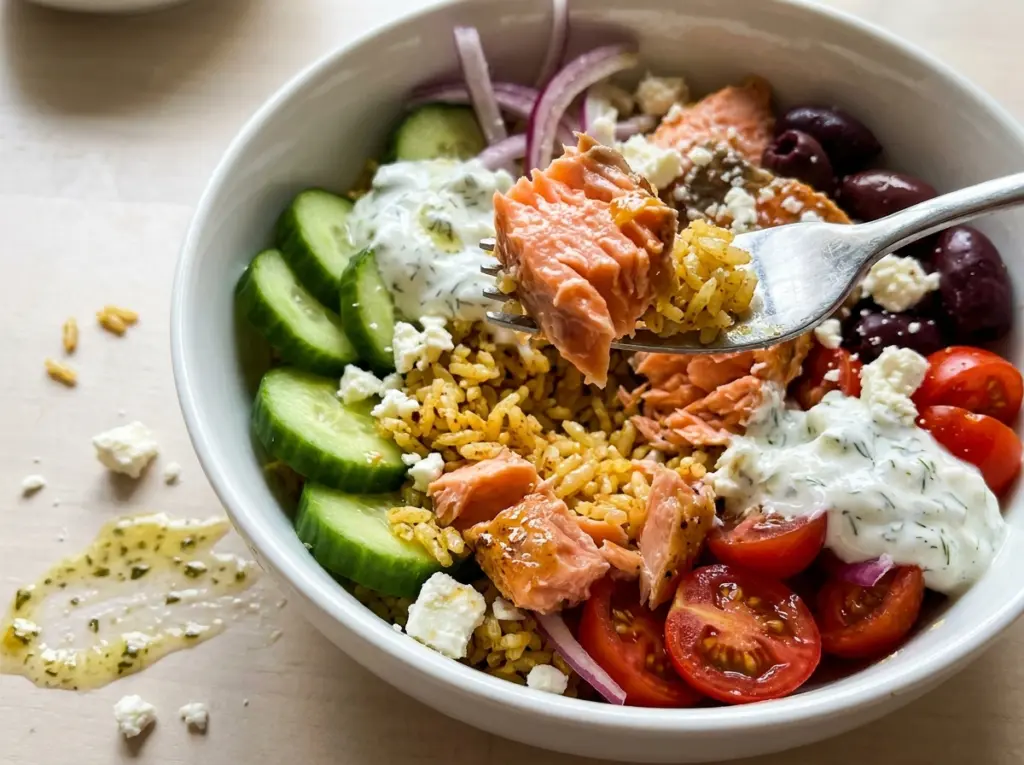
The quinoa is the quiet part of a bowl, but when it turns wet and clumpy, the cool vegetables and creamy sauce can’t quite balance it. Here, the grains cook in water until tender, then rest under the lid before I fluff them with a fork. That pause makes a light base for the salmon instead of a dense layer at the bottom of the bowl.
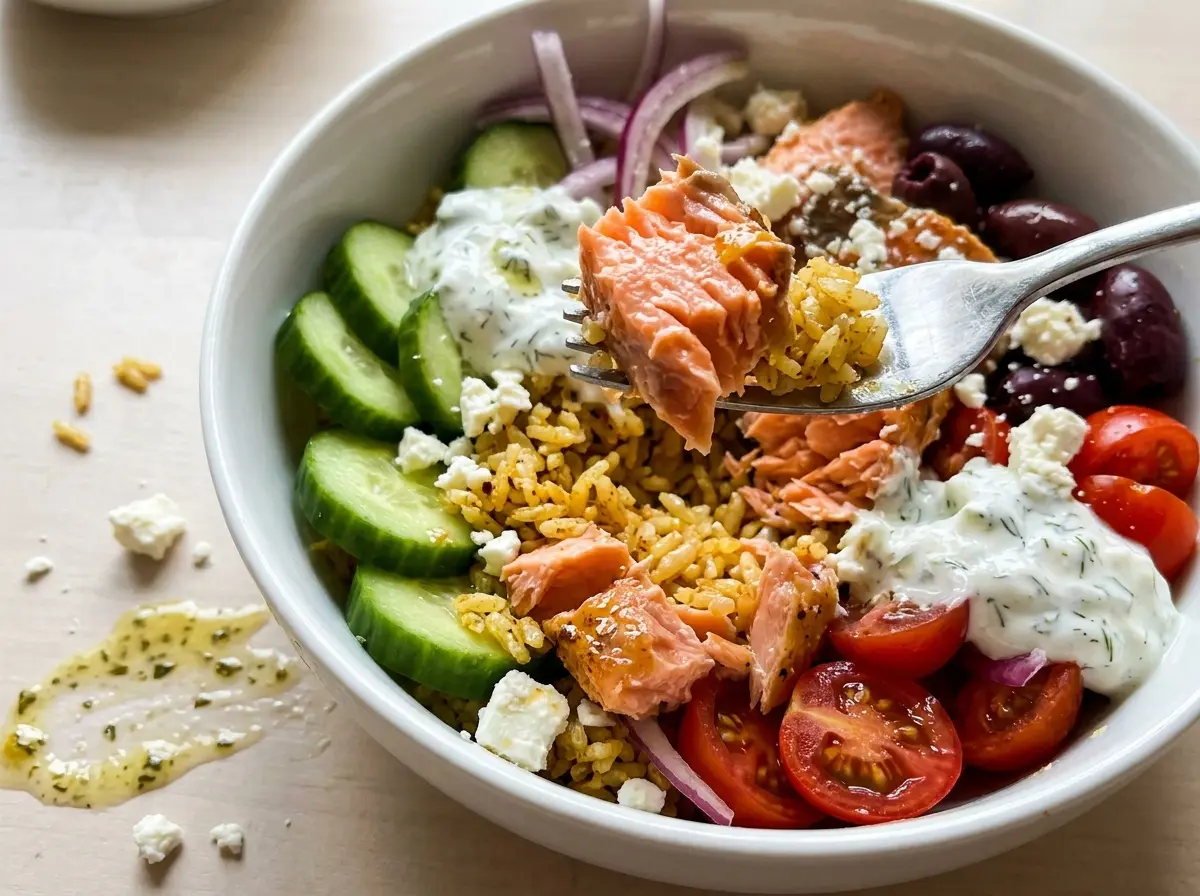
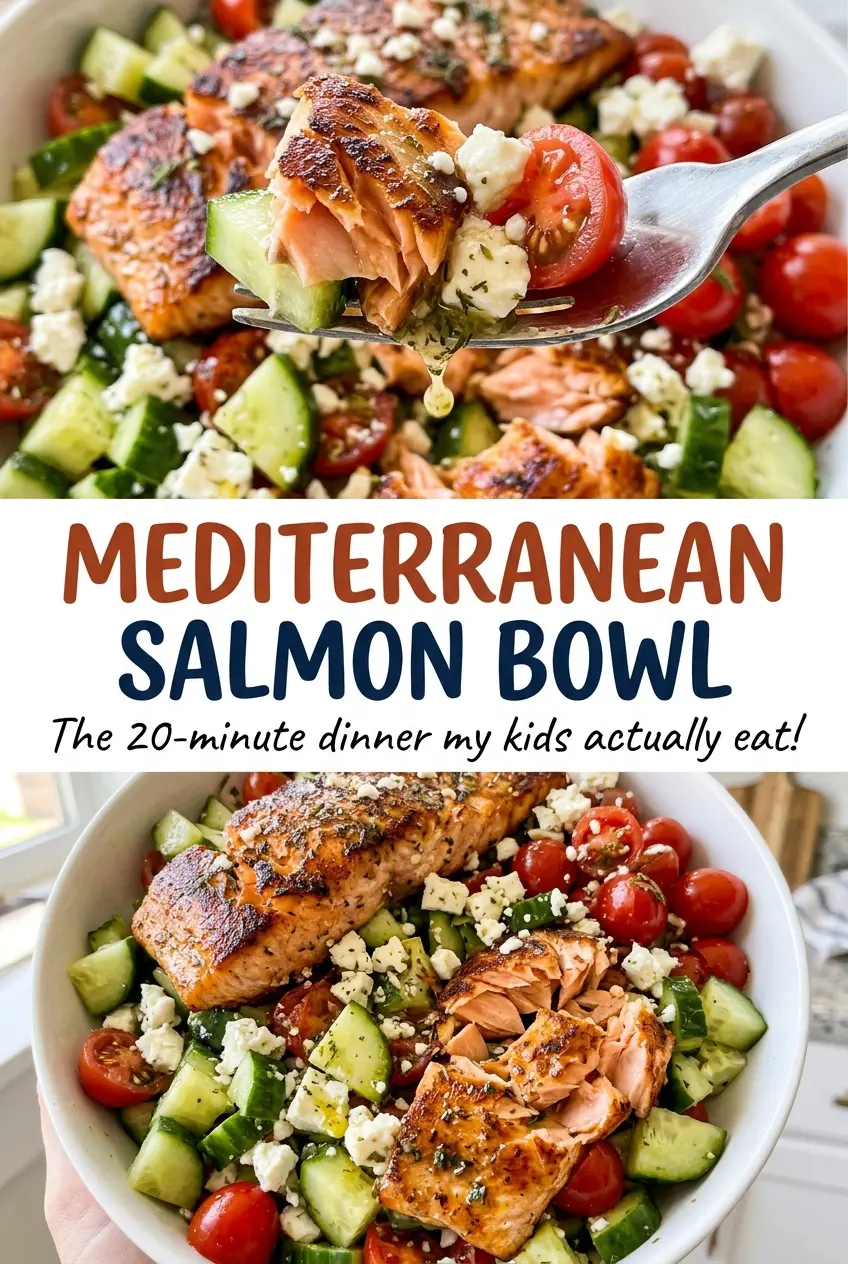
These Mediterranean Salmon Bowls bring together oregano-seasoned salmon, a cucumber-tomato salad with Kalamata olives and feta, and a lemon-dill yogurt sauce. I like that every bite has something different: warm quinoa, tender fish, crisp vegetables, and a tangy drizzle. The components are straightforward, and the oven handles the salmon while you toss the salad and stir together the sauce. Divide everything among four bowls, and you’ve got a full meal with contrasting textures rather than one heavy, mixed-together dish.
Kitchen Note
The olives and feta already give the salad a salty, briny edge, so I don’t add salt to it. Tossing them with the red wine vinegar spreads that savory flavor through the vegetables without needing another seasoning.
Save these Mediterranean Salmon Bowls for a fresh dinner with oregano-seasoned salmon, briny feta, and a cool lemon-dill sauce.
Why the Quinoa Needs to Stay Fluffy Under the Salad
The bowl works because the quinoa gives the other components somewhere to land without competing with them. Its mild flavor lets the oregano and garlic on the salmon come through, while the cucumber, tomatoes, onion, and vinegar bring a sharper, fresher contrast. If the grains are packed down or left with excess water, the base can feel heavy before you add the feta or yogurt sauce.
That’s also why I keep the salad and sauce distinct when assembling the bowls. The vegetables bring their own moisture, and the yogurt sauce is meant to drizzle over the top, not turn the quinoa into a creamy mixture. Spoon the components together in each bowl so you can catch a little of each in a forkful. You get warm grains and salmon alongside cool, crisp toppings, with the sauce tying them together instead of covering every texture.
The Ingredients That Keep Each Bowl in Balance
- Quinoa — Rinsing it under cold running water clears away the surface coating that can taste bitter. A fine-mesh sieve keeps the small grains from escaping down the drain. The quinoa’s mild, slightly nutty taste makes it a sturdy base for the bolder toppings.
- Skinless salmon and dried seasoning — Skinless fillet portions are easy to season on all sides and divide among the bowls. Oregano and garlic powder give the fish a savory Mediterranean-style coating without a wet marinade. The olive oil helps the seasoning cling as the salmon bakes; dried herbs are a practical choice here because they season evenly across the surface.
- English cucumber, cherry tomatoes, and red onion — English cucumber has a tender skin and fewer prominent seeds than many standard cucumbers, so it works well diced and served raw. If you only have a regular cucumber, peel it if the skin is tough and remove the watery seed core before dicing. Cherry tomatoes hold their shape when halved, and thinly sliced red onion distributes its sharper bite through the salad.
- Kalamata olives and feta — Their salty, briny character gives the cucumber and tomatoes more depth. Pitted olives save prep time; halving them makes their flavor easy to catch in a bite. Crumbled feta is convenient for tossing through the salad, and its tang contrasts with the mild quinoa.
- Plain Greek yogurt, lemon, and fresh dill — Greek yogurt makes a thicker sauce that clings to the salmon and vegetables, while lemon juice keeps it bright. Fresh dill gives the sauce a clean herbal note. Plain, unsweetened yogurt matters; a flavored variety would change the savory sauce.
Cook the Quinoa and Salmon, Then Build the Bowls
Let the Quinoa Finish Steaming
Rinse 1 cup of quinoa in a fine-mesh sieve under cold running water, then combine it with 2 cups of water in a small saucepan. Bring it to a boil over medium-high heat, cover, and reduce the heat to low. Simmer for 15 minutes, until the water is absorbed and the grains are tender. Take the pan off the heat, leave it covered for 5 minutes, then fluff the quinoa with a fork.
Season the Salmon Evenly
Heat the oven to 425°F and line a rimmed baking sheet with parchment paper. Arrange 1 1/2 pounds of skinless salmon, cut into 4 portions, on the sheet. Rub the portions with 1 tablespoon of olive oil, then season them with 1 teaspoon of dried oregano, 1/2 teaspoon of garlic powder, 3/4 teaspoon of kosher salt, and 1/4 teaspoon of black pepper. Spread the oil and seasoning over the surfaces so each portion is coated.
Bake Until the Thickest Portion Reaches 145°F
Bake the salmon for 12–15 minutes. Start checking toward the shorter end of that range, since the time depends on the thickness of the portions. Check the thickest portion with a food thermometer; it should reach 145°F. Use that reading rather than judging doneness from the outside color alone.
Toss the Cucumber-Tomato Salad
While the salmon bakes, combine 1 diced English cucumber, 1 pint of halved cherry tomatoes, 1/4 medium red onion thinly sliced, 1/3 cup of halved pitted Kalamata olives, 2 tablespoons of red wine vinegar, and 1/2 cup of crumbled feta in a bowl. Toss gently until the vinegar coats the vegetables and feta is distributed throughout. Keep the pieces intact rather than crushing the tomatoes as you mix.
Stir the Sauce and Assemble
Stir together 3/4 cup of plain Greek yogurt, 1 tablespoon of lemon juice, 1 tablespoon of chopped fresh dill, and 1 tablespoon of cold water until smooth. Divide the quinoa among 4 bowls, then top each with a salmon portion and some of the salad. Drizzle the yogurt sauce over the bowls just before serving so it stays distinct from the vegetables.
Two Ways to Shift These Salmon Bowls
Make the Bowl Dairy-Free
Leave out the feta and yogurt sauce. Divide the listed tablespoon of olive oil between rubbing the salmon and tossing with the salad, which you can dress with the red wine vinegar. The bowl will be less creamy and less salty, with the olives carrying more of the savory flavor.
Spread the Olive Flavor Through the Base
For a more savory grain base, fold the halved Kalamata olives through the fluffed quinoa instead of leaving them all in the cucumber-tomato salad. The olives bring briny flavor into more bites, while the salad stays bright and crisp on top.
Storage and Reheating
- Refrigerator: Store the salmon, quinoa, salad, and yogurt sauce in separate airtight containers and refrigerate within 2 hours. Use within 3 to 4 days; the cucumber and tomatoes soften and release liquid first.
- Freezer: Freeze cooked salmon and quinoa separately for up to 2 months for the best quality. Thaw them in the refrigerator; the fresh salad and yogurt sauce don’t freeze well.
- Reheating: Warm the salmon and quinoa, covered, in the microwave or in a low oven until they reach 165°F. Add the cold salad and yogurt sauce after reheating; warming those toppings makes them watery and dull.
Questions That Come Up When Making These Salmon Bowls
Mediterranean Salmon Bowl
Ingredients
Equipment
Method
- Rinse the quinoa in a fine-mesh sieve under cold running water.
- Combine the quinoa with the water in a small saucepan.
- Bring the quinoa to a boil over medium-high heat.
- Cover, reduce the heat to low, and simmer for 15 minutes, until the water is absorbed and the quinoa is tender.
- Remove the pan from the heat and let it stand, covered, for 5 minutes.
- Fluff the quinoa with a fork.
- Heat the oven to 425°F.
- Line a rimmed baking sheet with parchment paper.
- Arrange the salmon on the sheet.
- Rub the salmon with the olive oil.
- Season it with the oregano, garlic powder, salt, and pepper.
- Bake the salmon for 12–15 minutes, until the thickest portion reaches 145°F.
- Combine the cucumber, tomatoes, red onion, olives, red wine vinegar, and feta in a bowl.
- Toss to coat.
- Stir together the Greek yogurt, lemon juice, dill, and water until smooth.
- Divide the quinoa among 4 bowls.
- Top each bowl with a salmon portion and some salad.
- Drizzle with the yogurt sauce.