
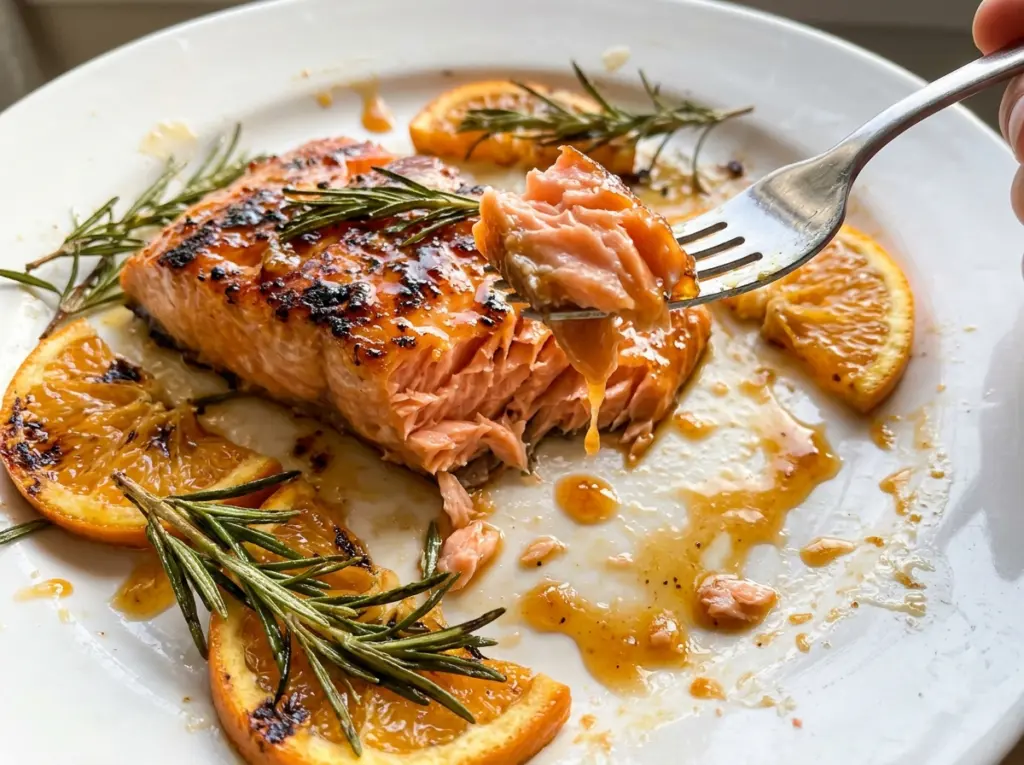
When orange juice and honey start bubbling together, the sharp citrus smell softens and the glaze begins to cling to the spoon. That’s the point where I stop watching the clock for a second and look at the pan: a thin, watery sauce needs a little longer, but a lightly syrupy one is ready for the salmon. Orange Rosemary Glazed Salmon gets its bright, savory-sweet finish from that small saucepan, not from a complicated marinade.
I roast the fillets first with just olive oil, salt, and pepper, then brush on the glaze for the final few minutes. That timing lets the salmon cook through without leaving the honey on the fish for the entire roast. The rosemary stays fragrant, the orange comes through clearly, and the center-cut fillets turn flaky without needing a long list of extras.
Kitchen Note
Chop the rosemary finely instead of leaving long needles in the glaze. It distributes through the sauce, so each bite gets its aroma without a mouthful of tough leaves.
Save Orange Rosemary Glazed Salmon for a bright, savory-sweet dinner with a glossy orange glaze and tender roasted fish.
Why the Honey Glaze Goes on After the First Roast
Honey gives this glaze its gentle sweetness and helps it cling, but it also browns quickly in a hot oven. If you coat raw salmon before roasting, that sweet coating spends the full cooking time in the heat and can get darker than the fish needs. Starting the fillets with oil and seasoning gives them a head start while keeping the glaze from overcooking.
After the first eight minutes, the surface of the salmon is warm enough for the glaze to spread easily. Those last few minutes in the oven let the orange, rosemary, garlic, and Dijon settle onto the fish without turning the coating into a thick, scorched layer. Brush all of the glaze over the tops then; dividing it earlier leaves less of that concentrated finish where it belongs. The sequence matters more than adding extra sweetness or seasoning.
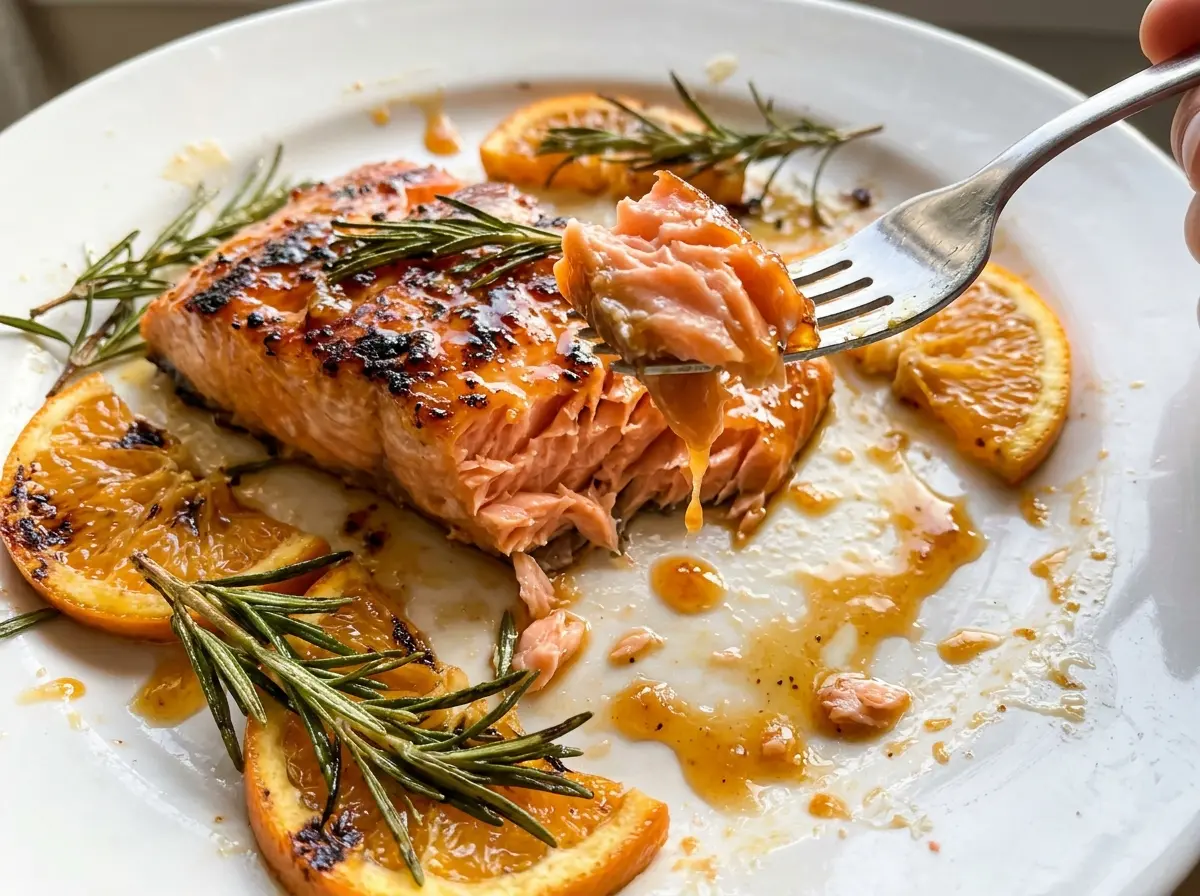
This also gives you a clean visual check at the end. The glaze should look shiny and lightly set, while the salmon flakes when nudged with a fork. If the fish needs a little more oven time to reach the proper temperature, the short final roast gives it that time with the glaze already in place.
What Orange, Rosemary, and Dijon Each Bring to the Glaze

- Fresh orange — Zest gives the glaze fragrant orange oil, while the juice supplies its tart, juicy base. Use a fresh orange and zest it before juicing; bottled juice won’t bring the same aroma. The small amount of zest is potent, so avoid digging into the bitter white pith.
- Honey — Honey rounds off the orange’s sharpness and helps the reduced glaze coat the fish. A mild honey keeps the citrus and rosemary in focus; a strongly flavored honey will be more noticeable.
- Dijon mustard — Dijon adds a gentle tang that keeps the glaze from tasting like orange syrup. Choose a smooth Dijon rather than a grainy mustard so the finished coating stays even.
- Fresh rosemary and garlic — Fresh rosemary gives the glaze a piney, savory edge, and minced garlic brings a mellow background note after simmering. If fresh rosemary isn’t available, use dried rosemary at about one-third the amount and crush it between your fingers before stirring it in; dried herbs taste more concentrated.
- Center-cut salmon — Fillets about one inch thick cook at a similar pace, which makes the short roasting window easier to judge. Fresh-looking fish matters more than a particular variety; keep the thickness consistent when choosing pieces.
- Olive oil — Brushing the foil and the salmon helps prevent sticking and gives the simple salt-and-pepper seasoning a surface to cling to. A standard olive oil works well here; there’s no need to use an expensive finishing oil.
Reduce the Orange Glaze Before the Salmon Goes In
Simmer Until It Turns Lightly Syrupy
Combine the orange zest and juice, honey, Dijon, finely chopped rosemary, and minced garlic in a small saucepan. Bring the mixture to a simmer over medium heat, then cook it for 5–8 minutes, stirring occasionally. Watch how it moves on the spoon: it should look a little thicker and reduce to about 1/4 cup, not boil down to a sticky paste. Take it off the heat once it reaches that lightly syrupy texture.
Oil and Season the Fillets
Heat the oven to 400°F and line a rimmed baking sheet with foil. Brush the foil lightly with some of the olive oil so the skin is less likely to stick. Set the salmon skin-side down, brush the tops with the remaining oil, and season with kosher salt and black pepper. Keep the fillets in a single layer with a little room between them so hot air can circulate.
Glaze for the Final Minutes
Roast the salmon for 8 minutes before brushing all of the glaze over the tops. Return the pan to the oven for 4–7 minutes; the thickest part should reach 145°F and flake easily with a fork. Check the center of a fillet rather than judging doneness from the surface color. If it’s not there yet, give it a little more time and check again.
Small Glaze Changes for a Different Kind of Salmon Dinner
Make the glaze less sweet and more tangy
Use a little less honey and let the orange and Dijon come forward. The result is brighter and less sticky, so keep simmering only until the glaze is lightly syrupy and reduced; don’t wait for the same thick, candy-like coating you’d get with more honey.
Turn up the rosemary
For a more pronounced herbal finish, increase the finely chopped fresh rosemary and ease back slightly on the honey. The glaze will taste more savory and woodsy, with less sweetness in the foreground; keep the rosemary finely chopped so it disperses through the sauce.
Keep the dish gluten-free
The salmon, orange, honey, rosemary, garlic, and olive oil contain no gluten. If you’re cooking for someone who needs to avoid gluten, replace the Dijon with a certified gluten-free Dijon; the amount and method stay the same, and the glaze keeps its tangy balance.
Storage and Reheating
- Refrigerator: Store leftover salmon in a covered container for 3–4 days. The glaze will lose some of its shine as it chills.
- Freezer: Freeze portions in an airtight container for up to 2–3 months. Thaw them overnight in the refrigerator; the salmon will be a little softer after freezing.
- Reheating: Warm covered in a 275°F oven until the center reaches 165°F. High heat can dry out the fish before the middle warms through.
Questions I Get Asked About Orange Rosemary Glazed Salmon
Orange Rosemary Glazed Salmon
Ingredients
Equipment
Method
- Combine the orange zest and juice, honey, Dijon mustard, rosemary, and garlic in a small saucepan and bring to a simmer over medium heat.
- Simmer for 5–8 minutes, stirring occasionally, until reduced to about 1/4 cup and lightly syrupy, then remove from the heat.
- Heat the oven to 400°F and line a rimmed baking sheet with foil; brush the foil lightly with some of the olive oil.
- Place the salmon skin-side down on the baking sheet, brush the tops with the remaining oil, and season with the salt and pepper.
- Roast for 8 minutes, then brush all of the glaze over the salmon and return it to the oven for 4–7 minutes, until the thickest part reaches 145°F and flakes easily with a fork.