
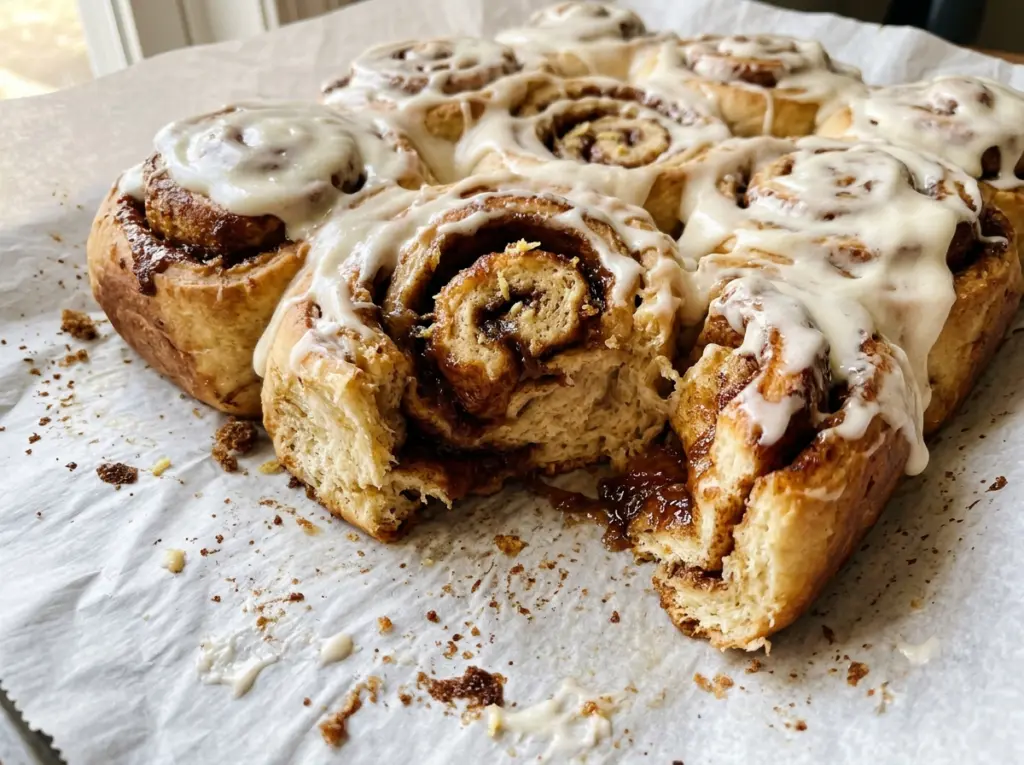
When the dough pulls away from the mixer bowl, it should feel soft and springy, not stiff. That’s the point where I know these Gingerbread Cinnamon Rolls are on their way to tender centers and a warm, spiced swirl. Molasses gives them a deeper flavor than a plain cinnamon roll, while cream cheese icing softens the edges of that gingerbread bite.
I use the spices in both the dough and the filling, so the flavor doesn’t disappear into one sugary stripe. The dough gets time to rise twice: first until doubled, then again after the rolls are shaped. Give it those rests, and the finished rolls come out fluffy with golden tops and a soft layer of icing melting over them.
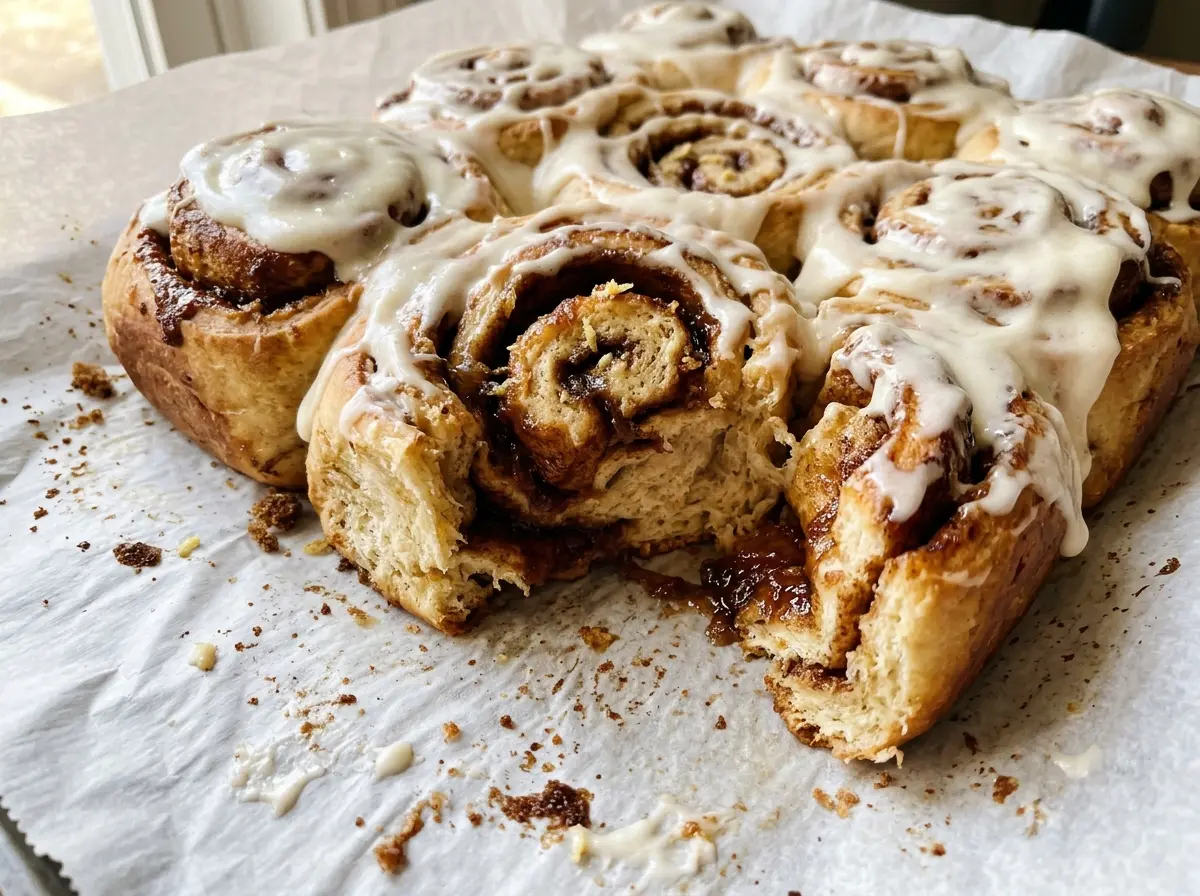
Kitchen Note
Let the melted butter cool before it goes into the bowl with the egg. Hot butter can warm the mixture too much, while cooled butter blends in smoothly and keeps the dough from starting out greasy.
Save these Gingerbread Cinnamon Rolls for a cozy bake: soft spiced dough, a molasses filling, and cream cheese icing.
Why the Gingerbread Flavor Belongs in Both the Dough and the Swirl
A cinnamon roll can taste strongly spiced in the middle and almost plain around the edges. Here, ginger, cinnamon, and cloves are mixed into the dough as well as the filling, so each bite carries that gingerbread warmth instead of relying on a single ribbon of sugar. Molasses in both layers gives the spice a rounded, slightly dark sweetness.
That balance matters because the dough itself is tender and mildly sweet. The filling brings the concentrated brown-sugar flavor, but the spiced dough keeps the outer bites from tasting like plain bread. You get a clear swirl when you pull one apart, with the same gingerbread notes running through the soft layers.
The flavor also settles as the rolls bake. The spices mingle with the butter and molasses, while the cream cheese icing adds a cool, tangy finish rather than another layer of plain sweetness. It’s a good reason to keep the icing on the light side when spreading it over the warm rolls.
Which Ingredients Give These Rolls Their Gingerbread Character

- Unsulphured molasses — This is what gives the dough and filling their deep, rounded sweetness. Choose regular unsulphured molasses for a gentle gingerbread flavor; dark molasses works if you like a more pronounced taste, but blackstrap can make the filling taste harsh and bitter.
- Active dry yeast — The foamy yeast mixture gives the dough its lift, so check that the yeast is fresh before you begin. Instant yeast can replace active dry yeast in the same amount; stir it into the flour instead of waiting for it to foam in the milk.
- Whole milk — Its fat helps make the dough tender and rich. Two-percent milk works in the same amount, though the rolls may be a little less soft and rich; skim milk won’t give quite the same result.
- All-purpose flour — It keeps the crumb soft enough to pull apart without making the rolls overly chewy. Bread flour can be used, but it tends to give the dough a firmer, chewier bite, so all-purpose flour is the better fit here.
- Ground ginger, cinnamon, and cloves — Fresh, aromatic spices make a noticeable difference because the flavor is spread through both layers. If the jars have been open for years and smell faint, replace them; changing the spice balance won’t bring old spices back to life.
- Cream cheese — Full-fat cream cheese makes a smooth, tangy icing that holds its body on warm rolls. Neufchâtel can stand in, but the icing will be softer and less rich.
From Foamy Yeast to Soft, Swirled Rolls
Wake the yeast and knead the dough
Warm the milk to 105–110°F, stir in the active dry yeast, and leave it for 5–10 minutes, until foamy. Whisk the molasses, brown sugar, room-temperature egg, and cooled melted butter in the mixer bowl, then whisk in the yeast mixture. Add the flour, spices, and salt, mixing on low until no dry flour remains. Knead on medium-low for 6–8 minutes; the dough should look smooth and feel elastic, not rough or shaggy.
Give the dough its first rise
Cover the bowl and leave the dough at room temperature for 1–1 1/2 hours, until it has doubled in size. A cool room can slow the rise, so use the dough’s size rather than the clock alone. If it still looks dense and hasn’t grown much, give it more time instead of moving on early. The dough should look pillowy and feel lighter when gently pressed.
Spread, roll, and proof the spirals
Mix the softened butter, brown sugar, molasses, ginger, cinnamon, and cloves into a spreadable paste. Use the reserved flour on the counter and rolling pin, then roll the dough into a 12×18-inch rectangle and spread the filling, leaving a 1/2-inch border along one long edge. Roll from the opposite long edge into a tight log, pinch the seam closed, and cut 12 equal rolls; set them cut side up in the greased 9×13-inch dish. Cover for 30–45 minutes, until puffy, and heat the oven to 350°F during the final 15 minutes of that rise.
Bake until the centers look set, then ice
Bake for 25–30 minutes, until the tops are golden brown and the center rolls look set rather than doughy. If the edges are browning while the middle still looks wet, give the pan more time; the center is the part to watch. While the rolls bake, beat the softened cream cheese and butter until smooth, then beat in the powdered sugar, vanilla, and milk until creamy. Let the rolls rest in the dish for 5 minutes before spreading the icing over them.
Two Easy Ways to Adapt the Rolls for Your Schedule
Shape the rolls the night before
After arranging the cut rolls in the prepared dish, cover and refrigerate them overnight instead of doing the second rise right away. The next day, let them sit at room temperature until puffy before baking; chilled dough usually needs longer than the usual second rise. This shifts the work earlier, though the morning rise won’t follow an exact clock.
Serve the cream cheese icing on the side
For a less-sweet finish, leave the warm rolls plain and serve the icing alongside them. The gingerbread swirl stays easy to taste without the cream cheese layer, and everyone can add as much icing as they like. Keep the icing chilled until serving.
Storage and Reheating
- Refrigerator: Cover and refrigerate iced leftovers for up to 4 days. The rolls will firm up as they chill, and the icing will set.
- Freezer: Freeze baked rolls without icing, wrapped individually or in an airtight container, for up to 2 months. Thaw in the refrigerator, then warm and ice before serving.
- Reheating: Warm one roll in the microwave for 10–15 seconds, just until soft and warm. The icing will loosen, so avoid heating it for too long or it can melt into the dish.
Questions I Get Asked About Gingerbread Cinnamon Rolls
Gingerbread Cinnamon Rolls
Ingredients
Equipment
Method
- Lightly coat the bowl of a stand mixer and a 9x13-inch baking dish with nonstick cooking spray.
- Warm the milk to 105–110°F, stir in the yeast, and let stand for 5–10 minutes, until foamy.
- Whisk the molasses, brown sugar, egg, and melted butter in the mixer bowl, then whisk in the yeast mixture.
- Add the flour, ginger, cinnamon, cloves, and salt; mix with the dough hook on low until no dry flour remains, then knead on medium-low for 6–8 minutes, until smooth and elastic.
- Cover the bowl and let the dough rise at room temperature for 1–1 1/2 hours, until doubled in size.
- Mix the softened butter, brown sugar, molasses, ginger, cinnamon, and cloves into a spreadable paste.
- Dust the counter and rolling pin with the 2 tablespoons flour.
- Roll the dough into a 12x18-inch rectangle.
- Spread the filling over the dough, leaving a 1/2-inch border along one long edge.
- Starting at the opposite long edge, roll the dough into a tight log and pinch the seam closed.
- Cut into 12 equal rolls and arrange them cut side up in the prepared dish.
- Cover and let the rolls rise for 30–45 minutes, until puffy; preheat the oven to 350°F during the final 15 minutes.
- Bake for 25–30 minutes, until golden brown and the center rolls look set rather than doughy.
- Beat the cream cheese and softened butter until smooth, then beat in the powdered sugar, vanilla, and milk until creamy.
- Let the rolls rest in the dish for 5 minutes.
- Spread the icing over the warm rolls.