
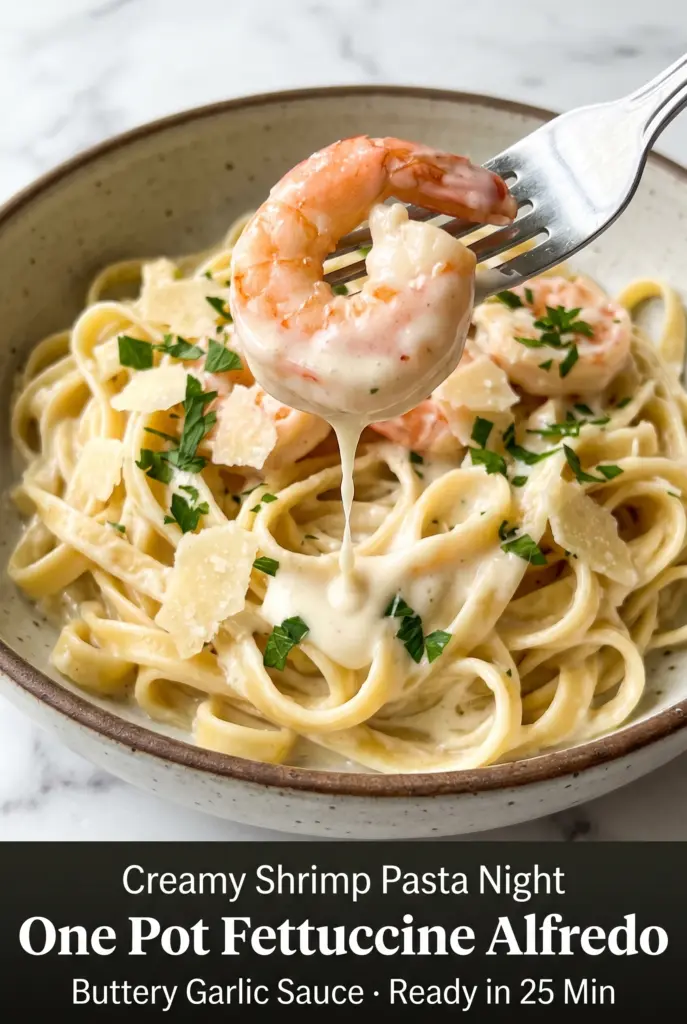
Plump shrimp, silky Alfredo sauce, and fettuccine that cooks right in the pot come together in a way that feels a lot more polished than the effort it takes. The pasta soaks up the broth and cream as it cooks, which means the sauce clings to every strand instead of sitting underneath it. You get a rich, garlicky dinner with one pan to wash and no separate pot for boiling pasta.
The key here is treating the shrimp and pasta as two different jobs. Shrimp cook fast and turn rubbery if they stay on the heat too long, so they go in first and come back at the end. The sauce also stays smoother when the Parmesan goes in off the heat, after the pasta has finished cooking and the liquid has reduced into something creamy and glossy.
Below, I’ll walk through the timing that keeps the shrimp tender, the trick that helps the fettuccine cook evenly in a shallow amount of liquid, and a few easy variations if you want to make the dish lighter or adjust it for what’s already in your kitchen.
The sauce thickened up beautifully and the shrimp stayed tender instead of getting chewy. I loved that the pasta cooked right in the same pot and picked up all that garlic-Parmesan flavor.
Save this one pot shrimp fettuccine Alfredo for the night you want creamy pasta, tender shrimp, and just one pan to clean.
The reason the shrimp go in first and come back later
Shrimp and Alfredo sauce want different heat. Shrimp need a fast sear, then they need to get out of the pan before they overcook. If they stay in while the pasta simmers, they tighten up and go tough, which is the fastest way to ruin an otherwise good pot of pasta.
The other thing that matters is the order of the liquid. The broth and cream go in before the pasta so the noodles can cook in the sauce instead of in plain water. That’s what gives the finished dish more body and a little more starch-thickened silkiness. Stir often enough to keep the fettuccine from sticking in clumps, but not so aggressively that you break the strands once they start softening.
- Shrimp — Large shrimp hold up best here because they can take a quick sear and still stay juicy when they’re folded back in at the end. Smaller shrimp cook too fast and can turn rubbery before the pasta is done.
- Fettuccine — The broad ribbons are ideal for clinging to Alfredo sauce. If you swap in another pasta, choose one with enough surface area to catch the sauce; thin spaghetti won’t hold it the same way.
- Heavy cream — This is what keeps the sauce stable and rich. Half-and-half can work in a pinch, but it won’t coat the pasta as thickly and it’s more likely to look loose by the time everything is finished.
- Parmesan — Freshly grated Parmesan melts smoothly and thickens the sauce without turning grainy. Pre-shredded cheese often has anti-caking agents that can leave the sauce a little gritty.
- Chicken broth — The broth seasons the pasta from the inside out while it cooks. If you use low-sodium broth, you’ll have more control at the end; if you use regular broth, taste before adding extra salt.
- Garlic — Minced garlic cooks into the butter and gives the whole pot that classic Alfredo base. If it browns, it turns bitter, so keep it moving and only cook it until fragrant.
How to keep the sauce creamy while the pasta cooks
Searing the shrimp fast
Heat the oil until it shimmers, then add the shrimp in a single layer. They only need 1 to 2 minutes per side, just until they turn pink and curl into a loose C shape. If they form tight little O’s, they’ve gone too far. Pull them out as soon as they’re opaque and set them aside on a plate; they’ll finish gently at the end.
Building the Alfredo base
Use the same pot and melt the butter over medium heat, then stir in the garlic long enough to smell it bloom, not long enough to color it. Pour in the broth and cream and scrape up any browned bits from the bottom of the pan. That fond adds depth, and leaving it there means you’re throwing away flavor for no reason.
Cooking the pasta in the sauce
Add the dry fettuccine straight into the simmering liquid and press it down so it’s mostly submerged. Keep the heat at a gentle simmer, not a hard boil, and stir every couple of minutes so the noodles don’t glue themselves together. If the pot looks too dry before the pasta is tender, add a splash more broth or water. The goal is pasta that’s al dente with a creamy sauce left behind, not a soupy skillet.
Finishing with cheese and shrimp
Take the pot off the heat before adding the Parmesan. High heat is what makes cheese seize or turn grainy, especially in a cream sauce. Stir until the sauce turns glossy and coats the pasta in a smooth layer, then fold the shrimp back in just long enough to warm through. Finish with parsley and a crack of black pepper while it’s still steaming.
What to change when you want a different version of this pasta
Dairy-free version
Use a full-fat unsweetened coconut cream or a dairy-free cooking cream and swap the Parmesan for a dairy-free Parmesan-style alternative. The sauce will taste a little different, but the method still works because the pasta cooks in the liquid and the shrimp stay separate until the end.
Gluten-free version
Use a sturdy gluten-free fettuccine and watch it closely, since some brands soften faster than wheat pasta. Stir a little more often and pull it off the heat as soon as it’s tender, because gluten-free noodles can go from al dente to fragile in a short window.
Add vegetables without watering it down
Stir in a handful of baby spinach at the very end or add sautéed mushrooms with the garlic. Anything watery, like zucchini, needs to be cooked separately first or it will thin out the sauce and make the pasta taste flat.
Storage and Reheating
- Refrigerator: Store leftovers in an airtight container for up to 3 days. The sauce will thicken as it chills, and the pasta will soften a bit.
- Freezer: This doesn’t freeze well once the cream sauce and pasta are combined. The sauce can separate and the noodles turn mushy after thawing.
- Reheating: Warm it gently on the stove over low heat with a splash of broth, milk, or cream to loosen the sauce. Microwaving on high dries out the shrimp fast, so use short bursts and stir between each one.
Answers to the questions worth asking
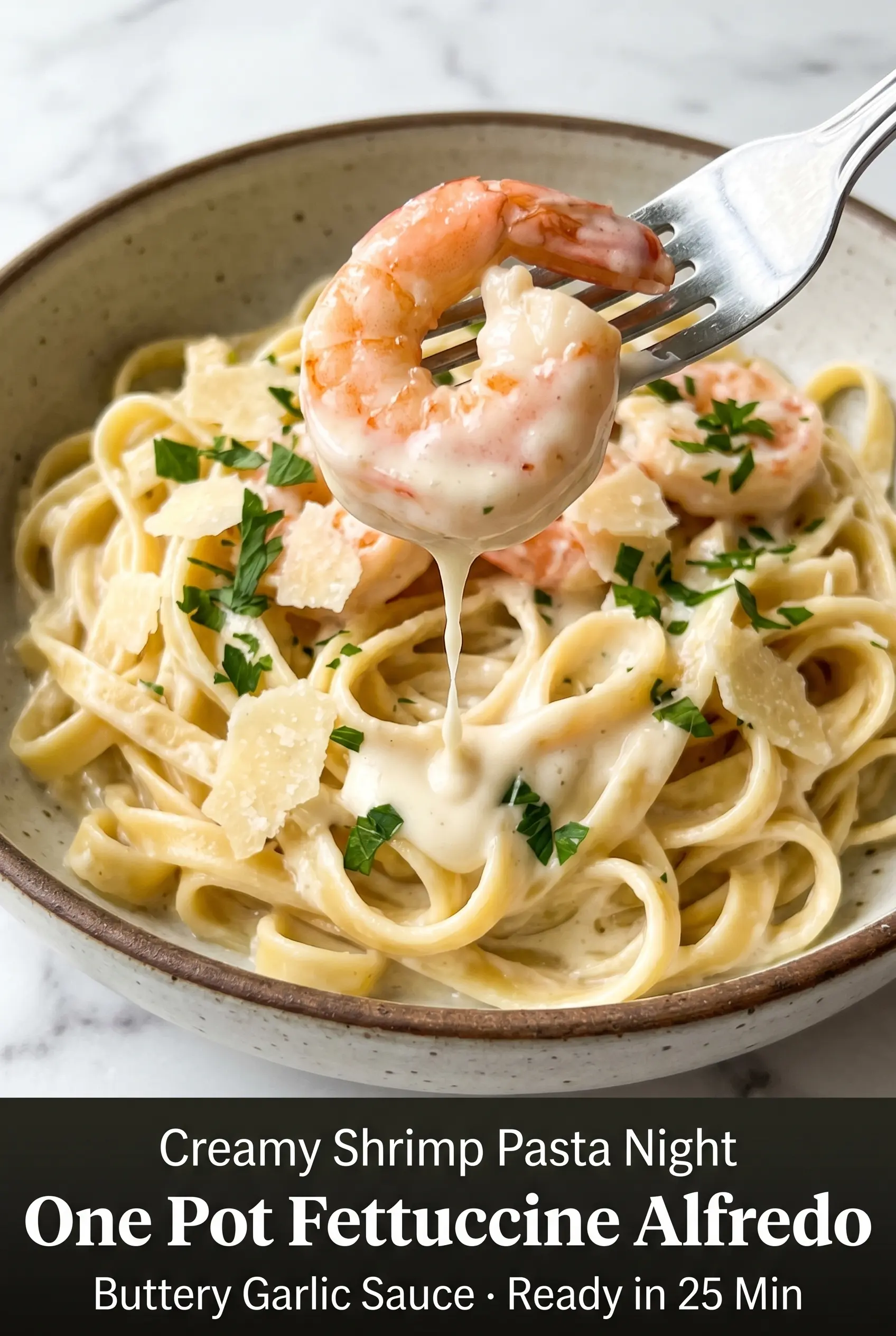
One Pot Shrimp Fettuccine Alfredo
Ingredients
Equipment
Method
- Heat olive oil in a large deep skillet or wide pot over medium-high heat. Season shrimp with salt and pepper, then add them in a single layer and cook 1–2 minutes per side until pink and just opaque, removing to a plate.
- Melt butter in the same pot over medium heat. Add minced garlic and cook 1 minute until fragrant, stirring constantly so it doesn’t burn.
- Pour in chicken broth and heavy cream, then stir in Italian seasoning, onion powder, and red pepper flakes. Bring to a gentle boil.
- Add the uncooked fettuccine to the pot and press it into the liquid. Reduce heat to medium, cover partially, and cook 10–12 minutes, stirring every 2–3 minutes, until pasta is al dente and absorbed most of the liquid.
- Remove from heat, then stir in Parmesan cheese until the sauce is silky and coats every strand.
- Return the cooked shrimp to the pot and gently fold them in. Let sit 1–2 minutes so the shrimp warm through.
- Taste and adjust salt and black pepper, then garnish with fresh parsley and extra Parmesan. Serve immediately straight from the pot.