
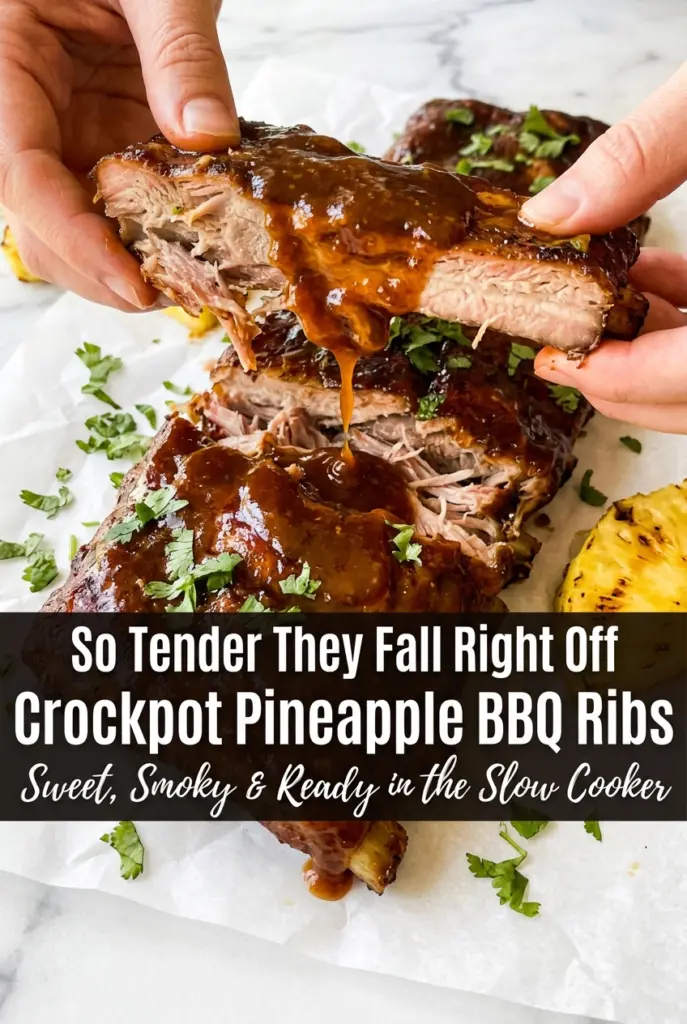
Sticky, smoky ribs with a tangy pineapple glaze have a way of disappearing fast, and the slow cooker is what turns them into the kind of dinner people go quiet for. The meat comes out so tender it pulls cleanly from the bone, but the sauce still has enough body to cling in glossy layers instead of sliding off into the bottom of the pot. That balance is what makes these ribs worth repeating.
The pineapple does more than add sweetness. Its juice loosens the barbecue sauce just enough to keep everything spoonable while it cooks, and the brown sugar helps the sauce thicken into that lacquered finish once the ribs are broiled. Rubbing the ribs with smoked paprika, garlic, and onion before they go in gives the meat a deeper base flavor, so the final result tastes built, not just sauced.
Below, I’ll show you the small step that matters most for tenderness, how to get the sauce to cling after slow cooking, and a few smart swaps if you want to adjust the heat or make this with a different cut.
The ribs were falling apart tender and the pineapple sauce thickened up beautifully after broiling. My husband kept sneaking pieces straight from the pan.
Save these Crockpot Pineapple BBQ Ribs for the nights when you want fall-off-the-bone ribs with sticky pineapple glaze and almost no hands-on work.
The Membrane Is the Difference Between Tender and Tough
Baby back ribs can still cook beautifully in a slow cooker even if they start out firm, but the silver membrane on the back will keep them from eating as tender as they should. Pulling it off before seasoning lets the spice rub reach the meat directly and keeps the finished ribs from feeling chewy in spots. It also helps the sauce settle into the surface instead of sitting on top of a slick layer that never quite absorbs.
The other mistake people make is cramming the rack in without thinking about fit. If the ribs need to stand upright or get cut in half to sit comfortably, that’s fine. What matters is even contact with the heat and enough room for the sauce to circulate around the meat instead of steaming in a dense pile.
What Each Ingredient Is Actually Doing in This Dish
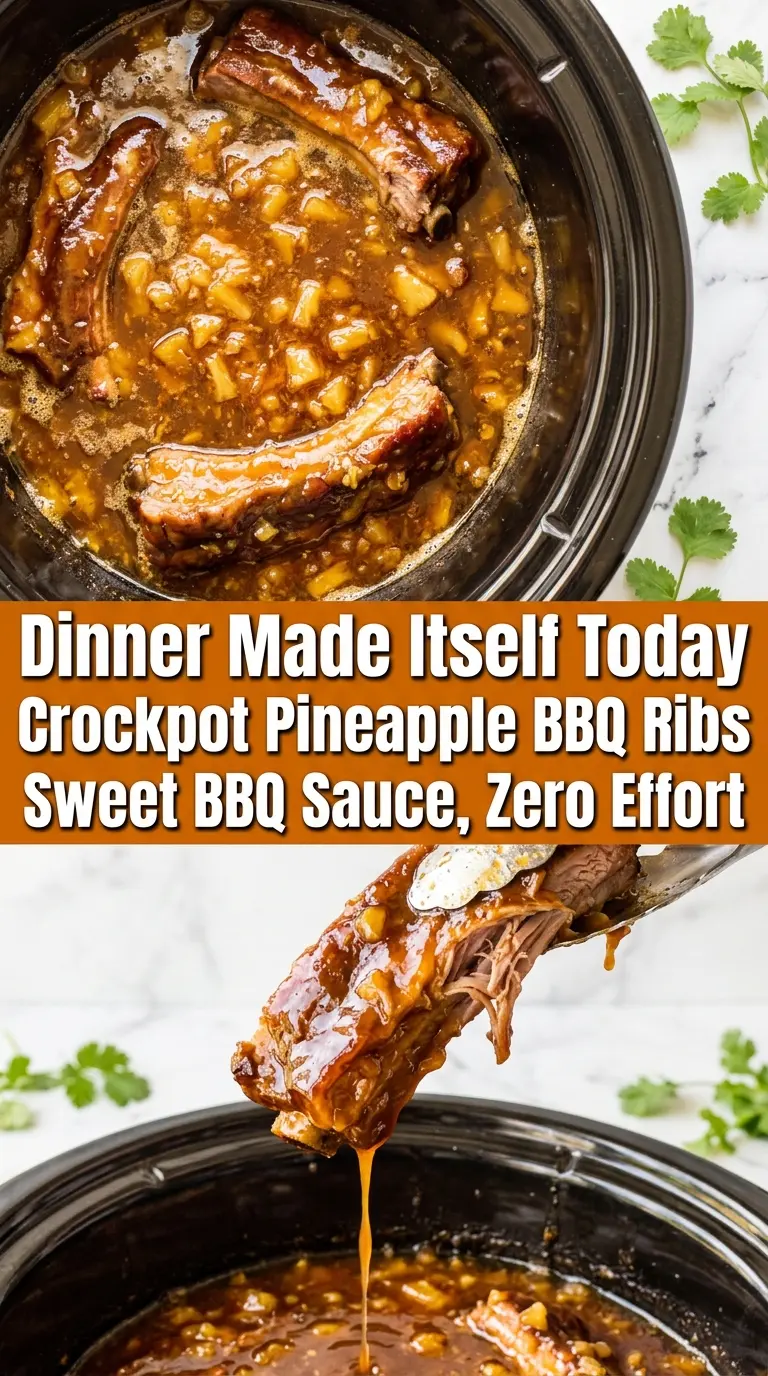
- Baby back pork ribs — These are the right cut for this style because they turn tender without falling completely apart before the sauce has time to build flavor. Spare ribs also work, but they usually need a little longer and a bit more trimming.
- Crushed pineapple with juice — This is what gives the sauce its signature sweet-tangy edge and keeps the slow cooker sauce from tasting flat. Fresh pineapple can be used, but you’ll want enough juice in the mix to keep the sauce loose while it cooks.
- BBQ sauce — Use one you like the taste of on its own, because it carries the whole dish. A thinner sauce works best here since it reduces and thickens a bit in the crockpot.
- Soy sauce and Worcestershire sauce — These add the savory depth that keeps the pineapple from taking over. If you need a gluten-free version, use tamari in place of soy sauce and check your Worcestershire label.
- Smoked paprika and garlic powder — These round out the flavor before the sauce even goes on. Smoked paprika matters more than regular paprika here because it gives the ribs that backyard grill character the slow cooker can’t create on its own.
- Brown sugar — This helps the sauce caramelize later under the broiler. You can reduce it a little if your barbecue sauce is already very sweet, but don’t cut it completely or the glaze won’t have the same sticky finish.
How to Build the Sauce and Cook the Ribs Without Losing the Glaze
Seasoning the Ribs First
Mix the dry spices in a small bowl, then rub them over both sides of the ribs before anything else touches the meat. The seasoning under the sauce gives you flavor all the way through, not just on the surface. If your ribs seem slippery, pat them dry first so the spices can stick instead of sliding off.
Mixing the Pineapple BBQ Sauce
Whisk the barbecue sauce, pineapple, brown sugar, soy sauce, vinegar, garlic, and Worcestershire until the mixture looks smooth and glossy. You want the pineapple distributed evenly so you don’t end up with one sweet pocket and one bland one. If the sauce seems too thick to pour easily, the pineapple juice will loosen it right up without watering it down.
Slow Cooking Until the Meat Gives Up
Pour a little sauce into the crockpot first, then add the ribs and cover them with the rest. Cook on low if you have the time; that gentler heat gives the collagen time to break down without drying out the edges. If you cook on high, check earlier, because once the meat starts pulling cleanly from the bone, it can tip from tender into overly soft fast.
Broiling for the Sticky Finish
Move the ribs to a foil-lined baking sheet, brush with sauce from the crockpot, and broil just until the glaze bubbles and darkens at the edges. This is where the texture changes from good to memorable. Watch closely, because the sugar in the sauce can go from caramelized to burnt in less than a minute if you walk away.
Three Ways to Make These Ribs Fit Your Table
Gluten-Free Version
Swap the soy sauce for tamari and check that your barbecue sauce and Worcestershire sauce are certified gluten-free. The ribs still get the same sweet-smoky balance, and the texture doesn’t change at all.
Less Sweet, More Tangy
Cut the brown sugar to 1 tablespoon and add another teaspoon of apple cider vinegar. That keeps the pineapple flavor bright and gives the sauce a sharper edge without making it thin or sour.
Spicy Version
Keep the cayenne in the rub and add a little hot sauce to the barbecue sauce mixture. The heat lands after the sweetness, so it reads as balanced instead of sharp.
Storage and Reheating
- Refrigerator: Store leftovers in an airtight container for up to 4 days. The sauce gets thicker as it chills, which helps it cling even better when reheated.
- Freezer: These ribs freeze well for up to 2 months. Cool them completely, portion with sauce, and wrap tightly so the glaze doesn’t pick up freezer burn.
- Reheating: Reheat covered in a 300°F oven with a splash of extra sauce or water until warmed through. Microwave reheating works in a pinch, but it can make the meat rubbery and the sauce separate.
Answers to the Questions Worth Asking
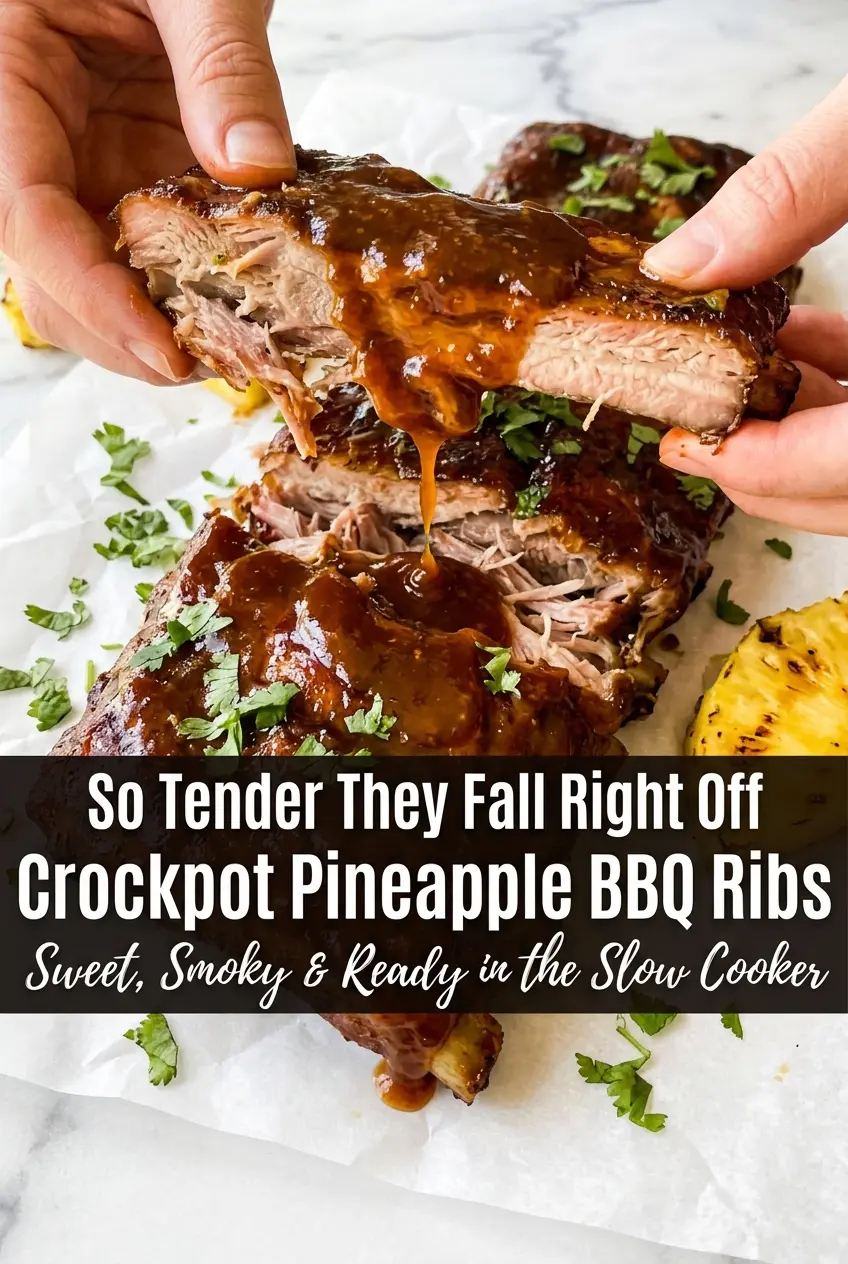
Crockpot Pineapple BBQ Ribs
Ingredients
Equipment
Method
- Remove the silver membrane from the back of the ribs by sliding a butter knife under it and pulling it off with a paper towel; this helps them get extra tender. Use a towel as a visual grip and pull the membrane away in one sheet where possible.
- In a small bowl, mix garlic powder, onion powder, smoked paprika, black pepper, salt, and cayenne pepper. Rub the spice mixture all over both sides of the ribs, pressing lightly so it sticks evenly.
- In a medium bowl, whisk BBQ sauce, crushed pineapple with its juice, brown sugar, soy sauce, apple cider vinegar, minced garlic, and Worcestershire sauce until the sugar dissolves and the sauce looks glossy. Stop whisking when no sugar granules remain.
- Pour about 1/3 of the pineapple BBQ sauce into the bottom of the crockpot. Tilt the crockpot slightly if needed so the sauce spreads into an even layer.
- Place the ribs inside, standing them upright along the edges if needed (cut the rack in half for a better fit). Arrange them so they sit snugly and can heat through evenly.
- Pour the remaining sauce over and around the ribs, coating them well. Make sure the top surfaces and sides are covered so the glaze clings during cooking.
- Cover and cook on LOW for 7–8 hours (or HIGH for 4–5 hours) until fall-off-the-bone tender and pulls away easily. Look for meat shrinking slightly from the bones and sauce thickening around the edges.
- Carefully remove the ribs and place them on a foil-lined baking sheet, then brush with extra sauce from the crockpot. Coat the tops with a thin, even layer so the glaze caramelizes rather than puddles.
- Broil at 425°F for 5–7 minutes until the sauce caramelizes and gets slightly charred. Watch closely in the last 2 minutes for dark amber spots without burning.
- Garnish with chopped fresh cilantro and serve with extra pineapple BBQ sauce on the side. Add pineapple rings if using for a bright, sweet finish.