
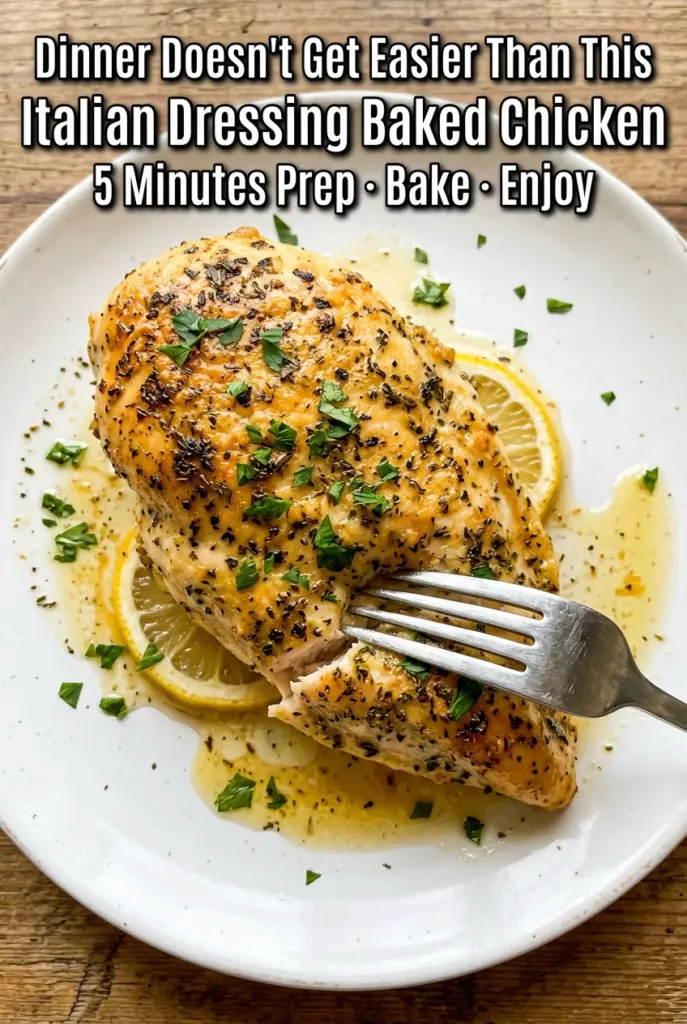
Juicy baked chicken with a golden, herby crust has a way of disappearing fast at the table, and this version earns that reaction without asking much from you. Italian dressing does the heavy lifting here: it brings acid, oil, garlic, herbs, and salt all at once, so the chicken gets seasoned all the way through while the oven finishes the job. The Parmesan on top gives you those browned, savory spots that make the whole dish taste like it took more effort than it did.
What makes this work is the balance of marinating time and hot oven heat. A short soak gives the chicken flavor and tenderness; too long and the surface can turn a little soft from all the acid. Baking at 425°F sets the outside quickly, which keeps the breasts juicy instead of slowly drying out while they cook through. I like serving it with lemon at the end because that last squeeze wakes everything up and keeps the dressing from tasting heavy.
Below, you’ll find the small details that matter most: how long to marinate, how to keep the chicken from going bland or rubbery, and what to change if you want to use thighs instead of breasts.
The chicken stayed unbelievably juicy, and the Parmesan on top got those little golden spots I was hoping for. I marinated it for about an hour and it had plenty of flavor without turning mushy.
Save this juicy Italian Dressing Baked Chicken for the nights when you want golden chicken, almost no prep, and a dinner that goes straight from oven to table.
The Shortcut That Still Tastes Like You Cooked
Italian dressing can be a crutch if you pour it over chicken and hope for the best. The trick is using it as a marinade, not just a coating, then giving the chicken enough direct heat in the oven to brown the surface. That’s what keeps this from tasting flat or steamed.
The other thing people miss is the salt level. Many bottled dressings already bring plenty of seasoning, so adding a full heavy hand of extra salt can push the chicken past savory and into sharp or over-seasoned. The Parmesan helps with depth, but it should sit on top of the marinade-coated chicken, not replace the seasoning underneath.
- Italian dressing — This is the backbone of the recipe. It brings fat for moisture, acid for tenderness, and seasoning in one step. Store-bought works fine here, but pick one you’d actually like to taste on salad because its flavor concentrates as it bakes.
- Chicken breasts — Boneless, skinless breasts cook quickly and slice cleanly, but they dry out if they’re uneven. If one side is much thicker, pound them lightly to even thickness so the thinner end doesn’t overcook while the thick end finishes.
- Parmesan — Freshly grated Parmesan browns better than the shelf-stable powdery kind. It also melts into little savory spots instead of disappearing into the marinade.
- Lemon — The lemon isn’t just garnish. A squeeze right before eating cuts through the richness and sharpens the herbs in the dressing. If you skip it, the dish can taste a little heavier than it should.
Why the Oven Temperature Matters More Than the Marinade Time
Marinate for flavor, not forever
Let the chicken sit in the dressing long enough to take on flavor, but don’t leave it all day unless the dressing is very mild. About 30 minutes to 8 hours is the useful window. If you go much longer with a strongly acidic dressing, the outside can turn a little mealy before the center even hits temperature.
Get the chicken into a hot pan
Set the breasts in an oiled baking dish in a single layer, leaving a bit of space between them if you can. Crowding traps steam, and steam is the enemy of browning. The chicken should go into a fully heated 425°F oven so the surface starts setting right away instead of slowly simmering in its own juices.
Watch for the right finish
Pull the chicken when it reaches 165°F in the thickest part and the tops are golden with browned Parmesan edges. If the cheese is pale, the chicken may be done but the top won’t have the same savory bite. Let it rest for 5 minutes before slicing so the juices settle instead of running onto the cutting board.
What to Change When You Want a Different Kind of Dinner
Use chicken thighs for a richer result
Boneless thighs stay juicier and taste a little deeper than breasts, especially if you like dark meat. They usually need a few extra minutes in the oven, and the end result is less sliceable but more forgiving if you’re worried about drying out the chicken.
Make it dairy-free
Skip the Parmesan and finish with extra lemon and a handful of parsley. You lose a little salty, browned crust, but the chicken still comes out bright and flavorful because the dressing carries the marinade on its own.
Lower-carb serving ideas
Serve it with roasted broccoli, zucchini, cauliflower mash, or a crisp salad instead of pasta or rice. The chicken already brings plenty of richness, so it pairs well with something simple and green.
Turn leftovers into lunch
Slice the chicken thin and tuck it into sandwiches, grain bowls, or wraps. The dressing seasoning holds up well cold, which is one reason this recipe earns a repeat spot.
Storage and Reheating
- Refrigerator: Store in an airtight container for up to 4 days. The chicken stays moist, though the Parmesan top softens a bit.
- Freezer: It freezes well for up to 2 months. Wrap portions tightly and freeze without the lemon garnish; thaw in the fridge before reheating.
- Reheating: Reheat covered in a 325°F oven until warmed through, or use short bursts in the microwave at medium power. High heat dries out the breasts fast, so go gently and stop as soon as the center is hot.
Answers to the Questions Worth Asking
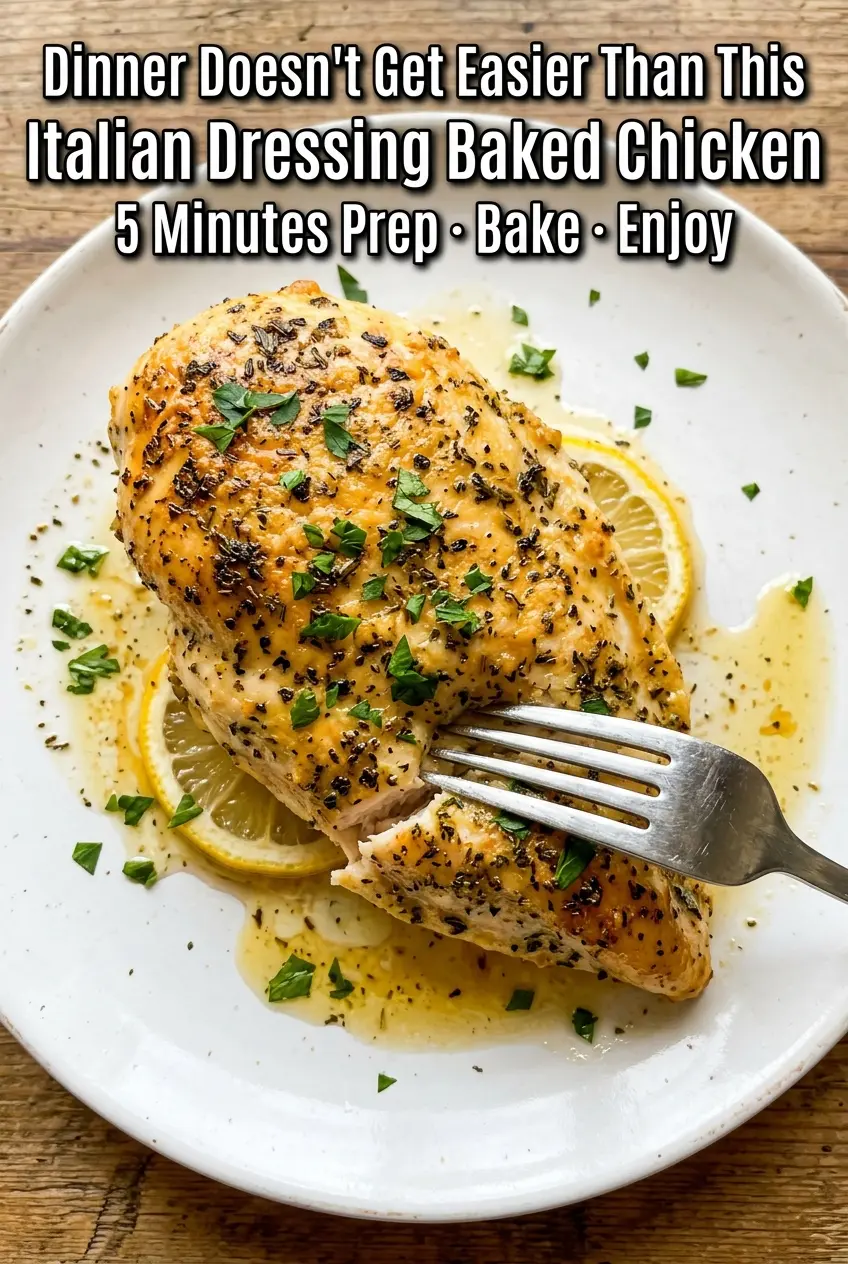
Italian Dressing Baked Chicken
Ingredients
Equipment
Method
- Place the chicken breasts in a large zip-lock bag or shallow dish and pour the Italian dressing over them to coat evenly.
- Add garlic powder, onion powder, dried Italian seasoning, salt, black pepper, and red pepper flakes if using, then seal and coat the chicken again.
- Refrigerate for at least 30 minutes, up to 8 hours, so the marinade flavor penetrates the chicken.
- Preheat the oven to 425°F (220°C) and lightly grease a baking dish with olive oil.
- Remove the chicken from the marinade, let any excess drip off, and arrange the pieces in the dish in a single layer.
- Sprinkle the grated Parmesan evenly over the top of each chicken breast.
- Bake uncovered for 22–28 minutes at 425°F (220°C), until the chicken reaches 165°F (74°C) and the tops are golden with slightly caramelized edges.
- Rest the baked chicken for 5 minutes to help the juices stay in the meat.
- Garnish with chopped fresh parsley and serve with lemon slices alongside pasta, rice, roasted vegetables, or a crisp garden salad.