
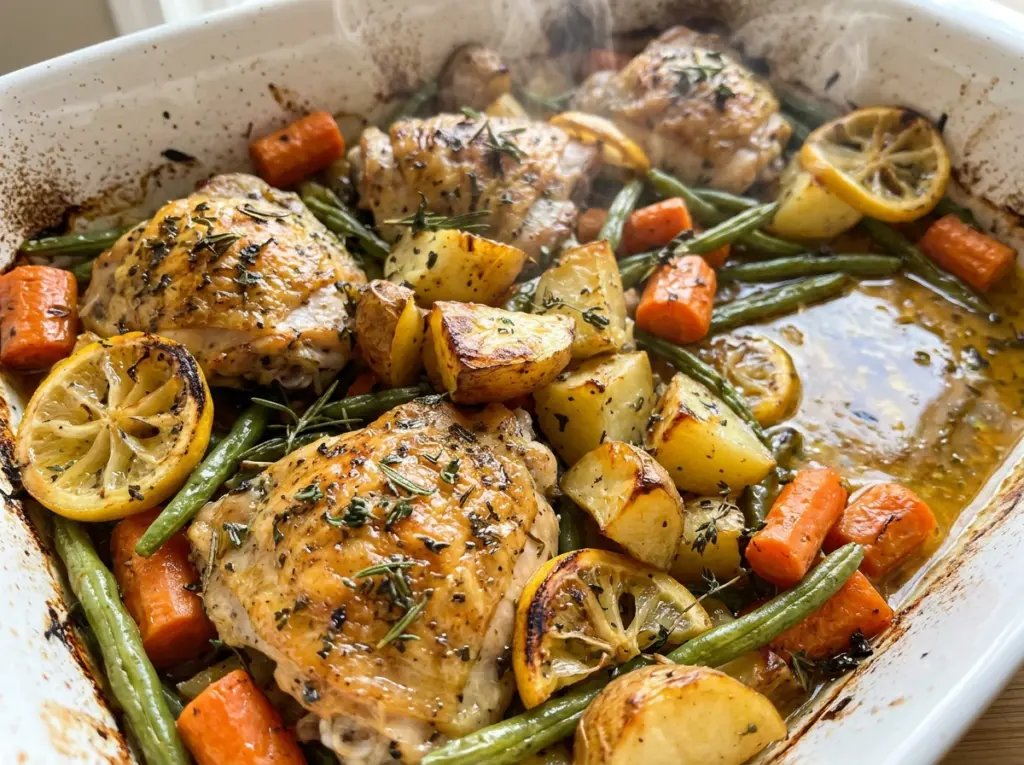
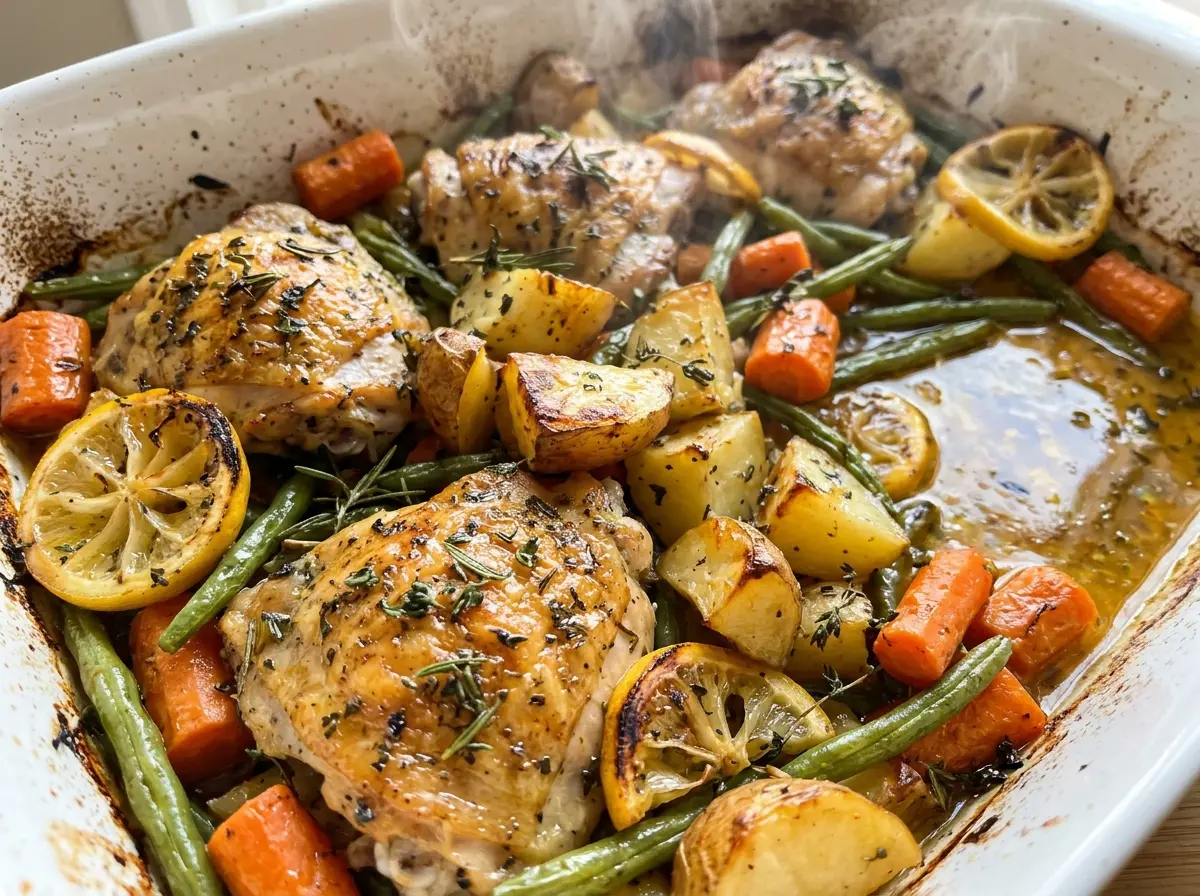
When this pan comes out of the oven, the chicken skin should be bronzed while the potatoes yield easily to a fork and the green beans still have a little shape. Getting all three there together is what makes One Pan Lemon Herb Chicken and Vegetables such a useful dinner: the hearty vegetables get a head start, and the beans join later so they don’t roast for the full stretch.
I use bone-in, skin-on thighs here because they stay juicy during the time the potatoes and carrots need in the oven. The lemon zest seasons the vegetables and chicken before roasting, while the juice goes on at the end, when its bright, fresh flavor can stand out. Everything cooks on one rimmed sheet pan, with no separate sauce or pot to manage, and each serving has chicken and vegetables ready together.
Kitchen Note
The green beans need less oven time than the potatoes and carrots, so I add them after the first roast rather than putting everything on the pan at once. That later start helps them finish tender without turning limp.
Save this one-pan lemon herb chicken for a dinner with juicy thighs, tender potatoes, and green beans roasted right alongside.
The Lemon Goes in Twice for Two Different Reasons
Lemon zest and lemon juice don’t do the same job in this pan. The zest goes in before roasting, divided between the vegetables and the chicken, so its aromatic oils coat the food as it cooks. It gives the browned surfaces a gentle citrus note without adding liquid that would collect on the pan.
The juice waits until everything comes out of the oven. That gives you a brighter, more noticeable lemon finish against the savory chicken and roasted vegetables. Squeezing it over the whole pan also lets the juice catch on the potatoes and beans, not just the chicken. If you add the juice before roasting, much of that fresh, sharp character gets lost during the long cook; adding it at the end keeps the finished dish lively.
Why These Thighs and Vegetables Suit the Same Roast

- Bone-in, skin-on chicken thighs — The bone helps the meat stay succulent through the vegetables’ longer roast, and the skin protects the surface while it browns. Choose thighs of roughly similar size so they finish at about the same time. There isn’t a direct boneless-chicken swap that keeps the same timing; the meat cooks faster. A budget pack is fine as long as the pieces are similar in size.
- Baby potatoes — Their small size makes halving them a practical way to get tender centers during the roast. Choose firm potatoes without soft spots; there’s no need to seek out a specialty variety. Yukon Gold potatoes also work: cut them into pieces about the size of halved baby potatoes so they cook evenly.
- Carrots — Carrots bring sweetness and hold their shape beside the potatoes. Fresh, firm carrots from an inexpensive bag work well; peeling and cutting them into even pieces matters more than buying a particular variety. Parsnips are a useful swap if you want a more earthy, slightly sweeter vegetable, as long as you cut them to the same thickness.
- Green beans — Fresh beans have enough structure to roast alongside the chicken without getting waterlogged. Look for firm pods, trim the ends, and keep them in a single layer. Fresh beans are a better fit than frozen here because they start with less surface moisture.
- Olive oil — It helps the vegetables roast and lets the seasoning cling to the chicken. A basic olive oil is all you need. Avocado oil is a straightforward swap if that’s what you keep on hand; use it in the same quantity.
- Fresh lemon — A fresh lemon provides both the zest and juice, which bottled juice can’t replace as a whole. Choose one with an unblemished peel that gives slightly when pressed. If you don’t have a lemon, a lime can fill both roles, though the dish will have a sharper, more floral citrus flavor.
- Dried oregano, dried thyme, and garlic powder — These seasonings distribute evenly over the chicken and vegetables and are well suited to the oven’s high heat. Store-brand dried herbs and garlic powder work just as well as pricier jars. If you’re out of both herbs, dried Italian seasoning can stand in for the oregano and thyme together, with a more basil-forward taste.
How to Roast the Chicken Without Overcooking the Beans
Heat the Oven and Set Up the Pan
Heat the oven to 425°F and use an 18×13-inch rimmed baking sheet. That surface gives the chicken and vegetables room to roast rather than crowding them into a deep pile. Keep the pan on a level oven rack so oil stays on the sheet instead of running toward one edge. The vegetables should be spread out in one layer once they’re seasoned.
Season the Potatoes and Carrots
Toss the halved potatoes and cut carrots with olive oil, half the lemon zest, garlic powder, oregano, thyme, salt, and pepper. Coat the pieces well so you don’t end up with a few heavily seasoned vegetables and others left plain. Spread them in a single layer across the pan. Even pieces are helpful here: oversized chunks take longer to soften than the smaller carrots.
Rub and Arrange the Chicken
Pat the thighs dry, then rub them with olive oil and the remaining zest, garlic powder, oregano, thyme, salt, and pepper. Arrange them skin-side up among the vegetables, leaving the skin exposed rather than tucked underneath another piece. This position gives the chicken’s surface a chance to brown while the vegetables roast. Start the pan in the oven for 25 minutes before adding the beans.
Add the Beans and Finish the Pan
Toss the trimmed green beans with the remaining olive oil and spread them in a single layer on the sheet pan. Roast for another 15 to 20 minutes. Check that the thickest part of each thigh reaches 165°F without the thermometer touching bone, the potatoes are tender when pierced, and the beans are tender. Squeeze the lemon juice over the chicken and vegetables, then let the pan rest for 5 minutes before serving.
Two Easy Swaps That Keep the Sheet-Pan Timing Useful
Trade the Carrots for Parsnips
Use the same weight of peeled parsnips, cut into 1/2-inch pieces, in place of the carrots. They roast alongside the potatoes and bring a deeper, earthier sweetness; keep the pieces even so they soften at a similar pace.
Make the Herb Blend More Woodsy
Replace the dried oregano with the same quantity of dried rosemary for a piney, more pronounced herb flavor. Keep the thyme in the mix to round it out, and crush the rosemary between your fingers before rubbing it onto the chicken so the pieces are less coarse.
Storage and Reheating
- Refrigerator: Refrigerate leftovers in an airtight container within 2 hours and use them within 3 to 4 days. The potatoes and beans soften somewhat after chilling.
- Freezer: Freeze cooled portions in airtight freezer-safe containers for up to 2 to 3 months for best quality. The chicken freezes well, though the potatoes and green beans will be softer after thawing.
- Reheating: Warm in a 350°F oven until hot throughout, or microwave individual portions in short intervals. The oven is better for the chicken skin; the microwave is quicker but leaves it soft.
Questions That Come Up With This Lemon Herb Sheet Pan
One Pan Lemon Herb Chicken and Vegetables
Ingredients
Equipment
Method
- Heat the oven to 425°F.
- On an 18x13-inch rimmed baking sheet, toss the potatoes and carrots with 1 tablespoon olive oil, half the lemon zest, 1/2 teaspoon garlic powder, 1/2 teaspoon each oregano and thyme, 3/4 teaspoon salt, and 1/4 teaspoon pepper; spread in a single layer.
- Pat the chicken thighs dry.
- Rub the chicken thighs with 1 tablespoon olive oil, the remaining lemon zest, garlic powder, oregano, thyme, salt, and pepper.
- Arrange the chicken skin-side up among the vegetables.
- Roast for 25 minutes.
- Toss the green beans with the remaining 1 tablespoon olive oil.
- Add the green beans to the pan in a single layer.
- Roast for 15 to 20 minutes more, until the chicken reaches 165°F in the thickest part without touching bone, the potatoes are tender when pierced, and the green beans are tender.
- Squeeze the lemon juice over the chicken and vegetables.
- Let rest for 5 minutes before serving.