
The syrup looks calm at first, then the butter and sugar start bubbling together and the thermometer begins climbing faster than you expect. That last stretch is where homemade English toffee goes from soft and bendy to crisp enough to snap, so I keep stirring and stay close rather than trying to multitask.
I use a heavy-bottomed saucepan and cook the mixture to 300°F, which gives the toffee its clean, brittle bite. A candy thermometer takes the guesswork out of judging the finish; the color alone isn’t as dependable when butter is in the pan.
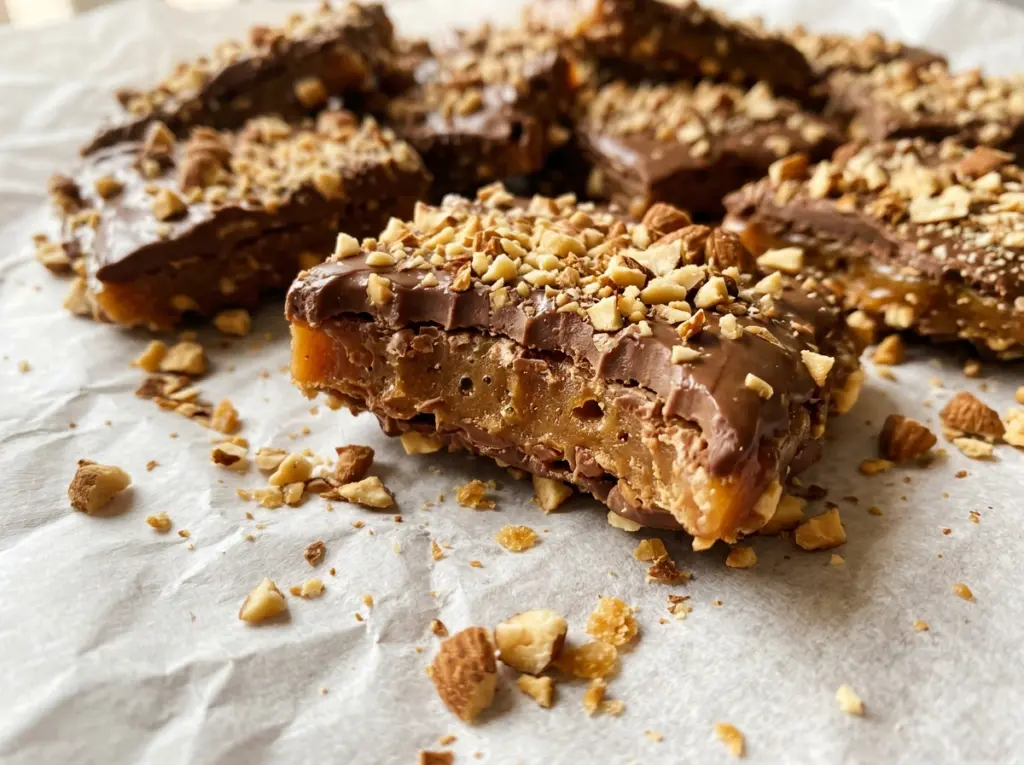
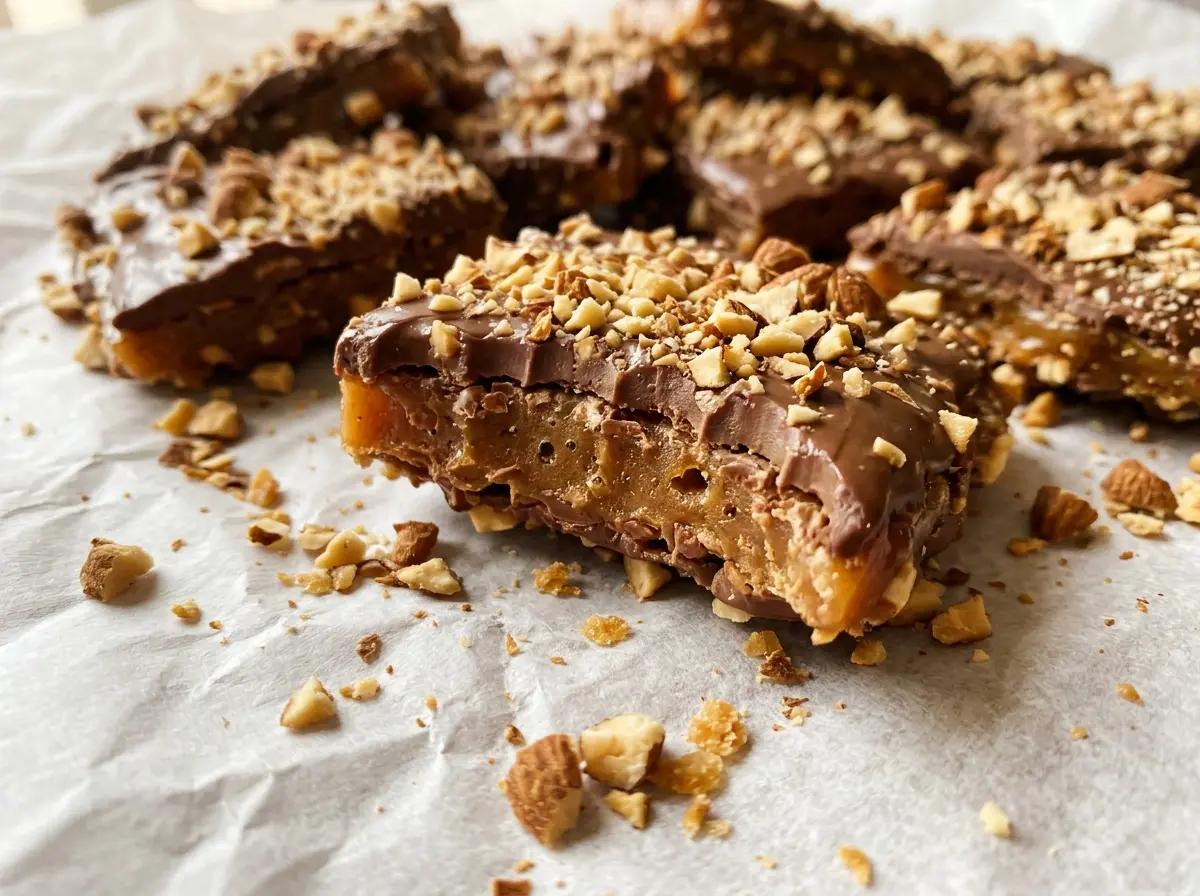
Once the toffee is poured, chocolate chips melt right on top from the heat below. A layer of finely chopped almonds adds crunch without making the pieces difficult to break. Let the slab cool until firm, and you’ll have crisp toffee with a smooth chocolate cap.
Kitchen Note
Set the vanilla and a heatproof spatula beside the stove before you start. Once the toffee reaches 300°F, you’ll want everything ready so you can stir in the vanilla and pour without pausing.
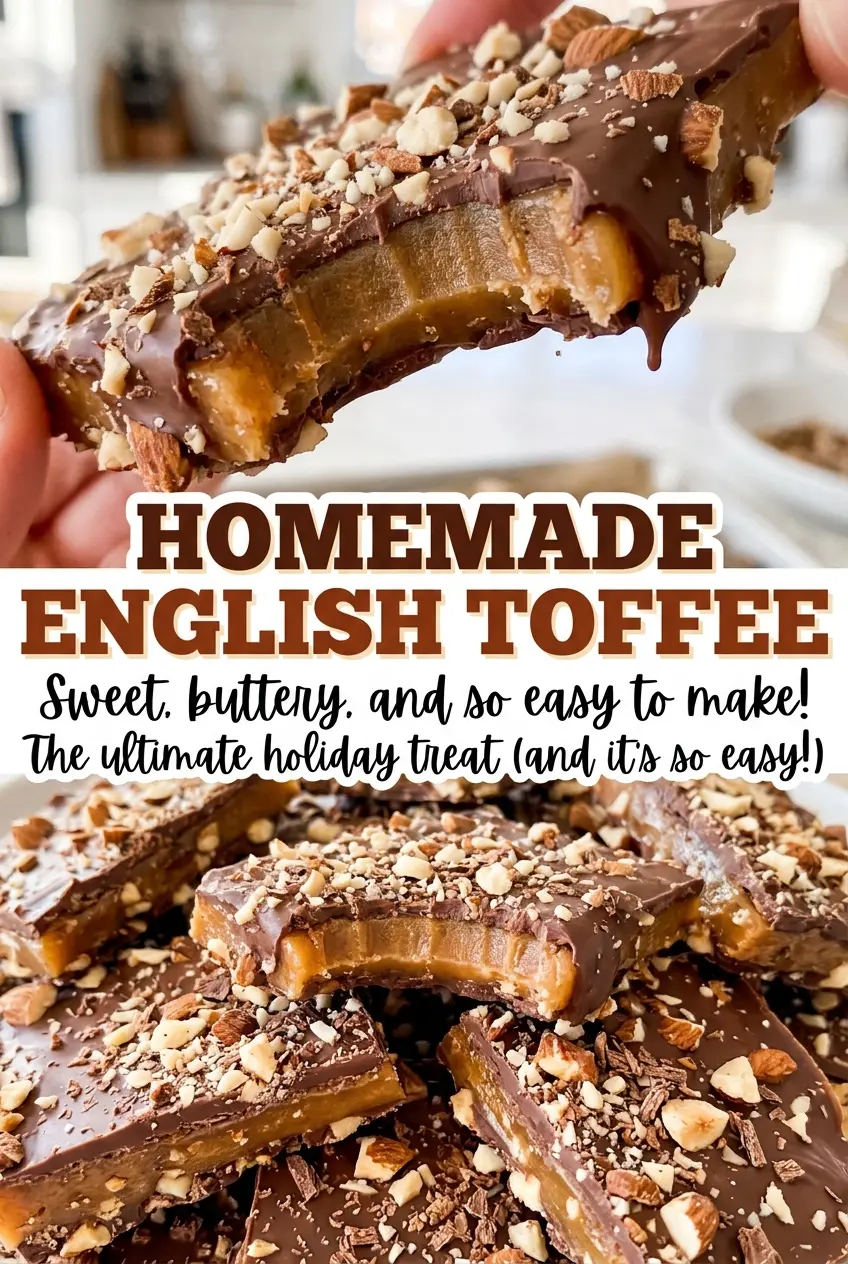
Save this homemade English toffee for a crisp, buttery candy topped with semisweet chocolate and almonds.
Why 300°F Is the Line Between Snappy Toffee and a Chewy Slab
Toffee is a cooked sugar candy, and its final texture depends on how much moisture cooks out. At 300°F, the mixture reaches the hard-crack stage: once it cools, it sets into a firm candy that snaps instead of bending. Stop short and the finished pieces can feel chewy or soft, even if the mixture looked thick in the pan.
Butter makes the temperature check especially useful. The mixture can look deeply colored before it has reached the right stage, and judging by color alone can send you off course. Keep the thermometer in the mixture without letting its tip rest against the bottom of the saucepan, where it can read hotter than the candy. Stir constantly over medium heat as it cooks; steady movement helps the butter and sugar heat evenly and keeps the bottom from scorching.
Plan for the full cooking window, but let the thermometer call the finish. The 12 to 18 minutes is a useful estimate, not a substitute for the temperature reading. When it reaches 300°F, take the pan off the heat and move straight into the vanilla and pouring steps.
What Makes the Butter, Syrup, and Chocolate Matter in This Toffee
- Butter — Unsalted butter lets you control the salt level and gives the candy its rich, buttery taste. Fresh butter matters more here than an expensive brand. Salted butter can work, but leave out the added kosher salt so the finished toffee doesn’t become too salty.
- Granulated sugar and light corn syrup — Plain granulated sugar keeps the toffee’s sweetness clean, while corn syrup helps limit unwanted sugar crystals as the mixture cooks. The water helps the sugar dissolve at the start. Keep the corn syrup in the mix; swapping in honey changes the flavor and makes the candy less predictable.
- Vanilla extract — Vanilla rounds out the cooked-sugar and butter flavors. Pure extract has a fuller aroma, but imitation vanilla is fine in a candy that cooks to a strong caramelized flavor. Vanilla bean paste can replace the extract in the same quantity.
- Semisweet chocolate chips — Semisweet chocolate balances the sweet toffee instead of making the topping cloying. A good everyday bag works well. Finely chopped semisweet chocolate can stand in for chips; smaller pieces soften more evenly over the hot slab.
- Almonds — Finely chopped nuts give the topping a crisp contrast and are easier to press into the chocolate than large pieces. Fresh almonds have a cleaner, sweeter taste, but there’s no need to seek out a specialty variety. Finely chopped pecans work as a substitute and bring a softer, more buttery crunch.
Cooking the Toffee to a Clean Snap
Get the Pan Ready Before the Candy Cooks
Line a 9×13-inch baking pan with parchment, leaving enough overhang to lift the slab out later. Combine the butter, sugar, light corn syrup, water, and kosher salt in a 3-quart heavy-bottomed saucepan. Have the candy thermometer ready, along with the vanilla and a spatula. Once the mixture is cooking, you’ll need to stir constantly, so the pan and tools should be within reach.
Stir to 300°F
Cook the mixture over medium heat, stirring constantly, until a candy thermometer reads 300°F; this usually takes 12 to 18 minutes. The mixture will bubble as it cooks, so keep your hand on the spatula and sweep across the bottom of the pan. Don’t stop at a darker color or a thick-looking consistency—the temperature is what gives you the right brittle texture. If the thermometer tip touches the pan, adjust it so it measures the candy instead.
Flavor and Pour While It’s Hot
Remove the saucepan from the heat, then carefully stir in the vanilla. The mixture may bubble as the vanilla goes in, so keep your hands back from the pan. Immediately pour the hot toffee into the prepared pan and spread it evenly before it begins to firm. An even layer gives you pieces with a consistent balance of candy and topping.
Melt the Chocolate and Set the Slab
Sprinkle the chocolate chips over the hot toffee and let them stand for 2 to 3 minutes. When the chips have softened, spread the chocolate into an even layer without dragging the toffee beneath it. Scatter the chopped almonds over the chocolate and press them in gently so they adhere. Leave the pan at room temperature until the slab is firm, about 1 to 2 hours, then lift it out by the parchment and break it into pieces.
Change the Chocolate or Crunch Without Losing the Toffee’s Snap
Use Dark Chocolate for a Less-Sweet Finish
Replace the semisweet chips with dark chocolate chips. The toffee stays crisp, while the topping tastes more bittersweet and gives the candy a sharper contrast. Keep the same topping method so the chocolate melts from the heat of the toffee.
Make the Topping Nut-Free with Pepitas
Swap the chopped almonds for roasted pumpkin seeds, chopping any large ones so they sit neatly on the chocolate. You’ll get a savory, crisp topping without the almond flavor. For an allergy-sensitive batch, choose ingredients that haven’t been exposed to the allergen.
Make a Gluten-Free Batch
Use semisweet chocolate chips labeled gluten-free in place of standard chips; the toffee ingredients and almonds otherwise need no changes. The result keeps the same buttery snap and chocolate-almond finish without adding a flour-based ingredient.
Storage and Reheating
- Refrigerator: Keep it airtight for up to 2 weeks if your kitchen is warm; condensation can soften the chocolate as the container warms. A cool, dry cupboard is better.
- Freezer: Freeze in an airtight container for up to 2 months, with parchment between layers so the chocolate doesn’t scuff. Thaw while still sealed to limit condensation.
- Reheating: Toffee isn’t meant to be reheated. Serve it at room temperature; warming it will soften the candy and chocolate instead of restoring the snap.
The Questions That Come Up When Making English Toffee
Homemade English Toffee
Ingredients
Equipment
Method
- Line a 9x13-inch baking pan with parchment paper, leaving enough overhang to lift out the toffee.
- Combine the butter, sugar, corn syrup, water, and salt in a 3-quart heavy-bottomed saucepan.
- Cook over medium heat, stirring constantly, until the mixture reaches 300°F on a candy thermometer, about 12-18 minutes.
- Remove the pan from the heat.
- Carefully stir in the vanilla.
- Immediately pour the mixture into the prepared pan and spread it evenly.
- Sprinkle the chocolate chips over the hot toffee and let stand for 2-3 minutes.
- Spread the melted chocolate into an even layer.
- Sprinkle the chopped almonds evenly over the chocolate and gently press them in.
- Cool completely at room temperature until firm, about 1-2 hours.
- Lift the toffee from the pan and break it into pieces.