
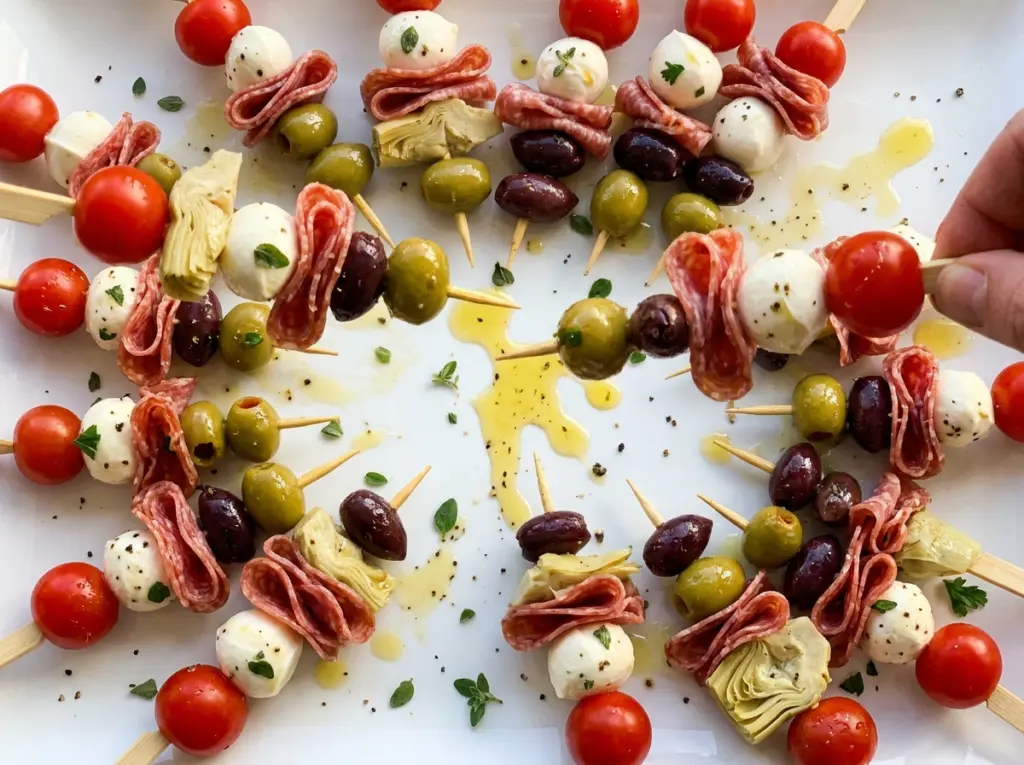
A grape tomato can roll off the cutting board, and a wet artichoke can leave a little puddle in the bottom of the dish. Those are small details, but they matter when you want an appetizer that looks neat after it’s been sitting out. I like these New Year’s Eve Antipasto Skewers because each one holds a complete bite: juicy tomato, milky mozzarella, folded salami, a briny olive, and a tender piece of artichoke.
The order keeps the pieces easy to thread and gives every skewer the same mix, rather than leaving someone with only the salty bits at the end. I drain the ingredients that come packed in liquid, dry the tomatoes, and take a moment to fold the salami into compact layers. After a short chill, the skewers are cool, colorful, and ready to set out.
Kitchen Note
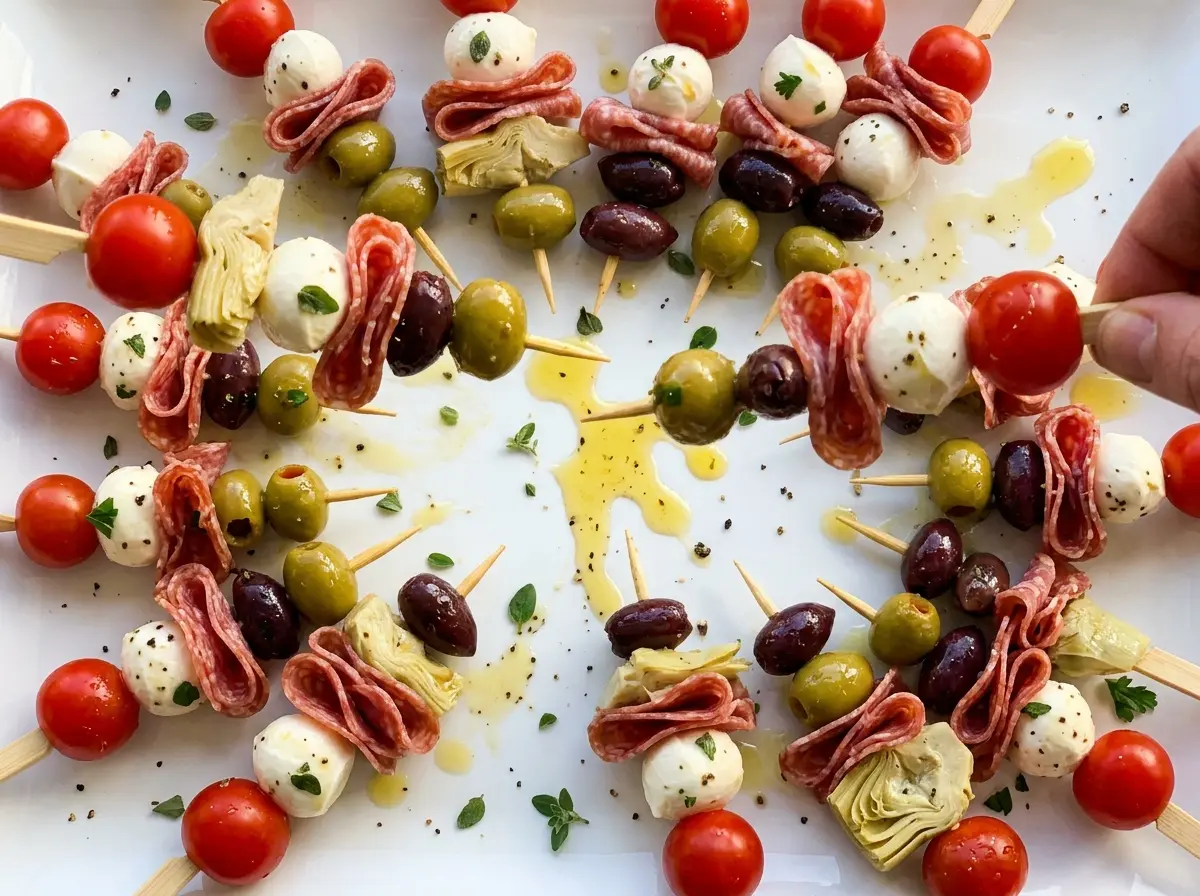
Fold each salami slice in half, then in half again. That compact fold stays put on the skewer and gives you a tidy, easy-to-bite piece instead of a loose slice that flops around.
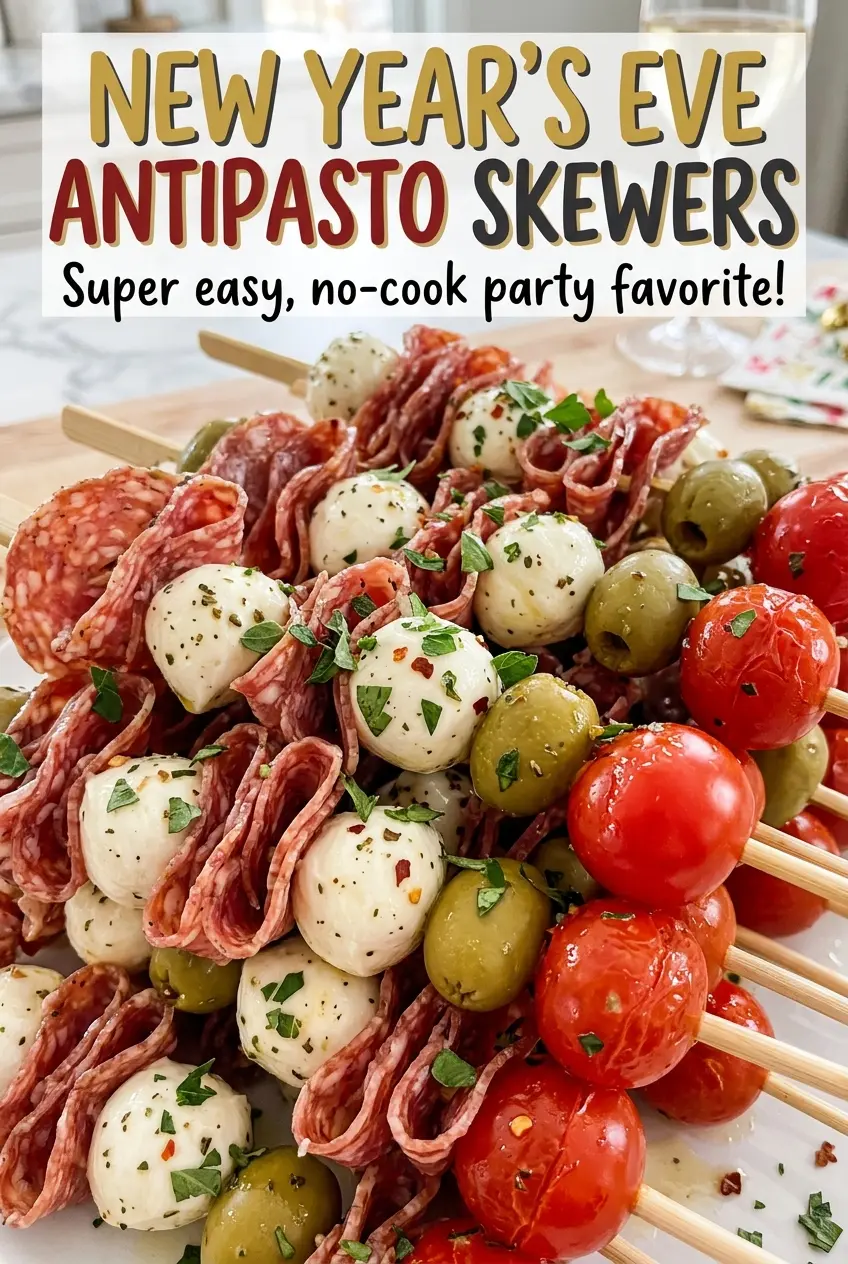
Save these New Year’s Eve Antipasto Skewers for a party spread with five savory bites on every stick and almost no last-minute work.
Why the 6-Inch Skewer Is Just Right for Five Antipasto Bites
These are meant to be a complete little bite, not a long skewer that needs two hands and a plate. A 6-inch skewer gives you room for one of each component while leaving a handle at the end. That makes them easy to pick up from a serving dish, and the pieces stay together as you eat.
The sequence also helps keep the balance consistent. The tomato and mozzarella bring a mild, fresh start; the salami and olive add salt and richness; the marinated artichoke finishes with a tender, tangy bite. Threading one of each in the same order means no skewer ends up all tomato or all salami. It’s a small bit of assembly that makes the platter feel considered without adding another garnish or sauce.
Keep the pieces close enough that they read as one appetizer, but don’t force the skewer through anything. If a piece is especially firm, turn it gently as you thread it rather than pushing hard. A neat skewer is easier to handle and less likely to split a tomato or break an artichoke piece.
What Each Antipasto Ingredient Brings to the Skewer
- Grape tomatoes — They add a fresh, juicy contrast to the salty ingredients. Choose tomatoes that feel firm and have unbroken skins; rinsing and drying them helps keep the finished dish from getting watery. Grape tomatoes are small enough to thread whole.
- Mozzarella pearls — Their mild, creamy texture softens the stronger flavors of the salami, olives, and artichokes. Drain them well so leftover liquid doesn’t collect in the serving dish. If you need a dairy-free version, the variation below uses an extra grape tomato in place of each pearl.
- Hard salami — Thin slices fold into compact layers without making the skewer bulky. The recipe uses hard salami for its savory, firm bite; very thick slices are harder to fold neatly, so stick with thin slices.
- Kalamata olives and marinated artichoke hearts — Kalamatas bring a concentrated briny note, while the artichoke pieces are softer and tangy from their marinade. Buy pitted olives to avoid an unpleasant surprise in a party bite. Drain both well, and cut the artichoke hearts into pieces small enough to thread securely.
From Draining to Chilling: Assemble the Skewers Without a Mess
Get the Pieces Ready to Thread
Rinse and dry the grape tomatoes, then drain the mozzarella pearls, Kalamata olives, and marinated artichoke hearts. Cut the artichokes into 24 bite-size pieces so each skewer gets one. Let excess liquid drain away instead of carrying it onto the serving dish; wet ingredients can make the finished platter look messy.
Build Each Skewer in the Same Order
Use 24 skewers that are 6 inches long. Thread one tomato, one mozzarella pearl, one folded salami slice, one olive, and one artichoke piece onto each one. Keep the pieces close together, but don’t press them hard against one another. Repeating the same sequence makes it easy to see that every skewer has all five components.
Chill Them Covered Before Serving
Arrange the finished skewers in a 9-by-13-inch dish, cover it, and refrigerate for at least 30 minutes before serving. The covered dish keeps the ingredients protected while they chill. Set the skewers out cold, and use a serving dish that lets guests lift them without tugging the neighboring pieces loose.
Two Simple Ways to Adapt These Antipasto Skewers
Make a Dairy-Free Batch with Extra Tomatoes
Replace each mozzarella pearl with one additional grape tomato. You’ll need 24 extra tomatoes for the full batch. The skewers lose the creamy contrast, but the tomato keeps the bite fresh and juicy without introducing a new ingredient.
Turn the Same Ingredients into an Antipasto Platter
Skip the skewers and arrange the tomatoes, mozzarella pearls, folded salami, olives, and artichoke pieces in separate groups on a serving dish. Guests can choose their own combinations, though the platter won’t have the same ready-to-grab, one-of-each bite as the skewers.
Storage and Reheating
- Refrigerator: Keep leftover skewers covered and refrigerated; for the best texture, eat them within 3 days. The tomatoes soften and the artichokes may release a little moisture as they sit.
- Freezer: Freezing isn’t a good fit. The tomatoes and mozzarella lose their pleasant texture after thawing, and the artichokes can turn soft.
- Reheating: These are served cold, so reheating isn’t needed. Don’t leave the perishable skewers at room temperature for more than 2 hours.
Questions About Making Antipasto Skewers
New Year's Eve Antipasto Skewers
Ingredients
Equipment
Method
- Fold each salami slice in half, then in half again.
- Thread each of 24 (6-inch) skewers with 1 tomato, 1 mozzarella pearl, 1 folded salami slice, 1 olive, and 1 artichoke piece.
- Arrange the skewers in a 9x13-inch dish.
- Cover and refrigerate for at least 30 minutes and up to 4 hours before serving.