
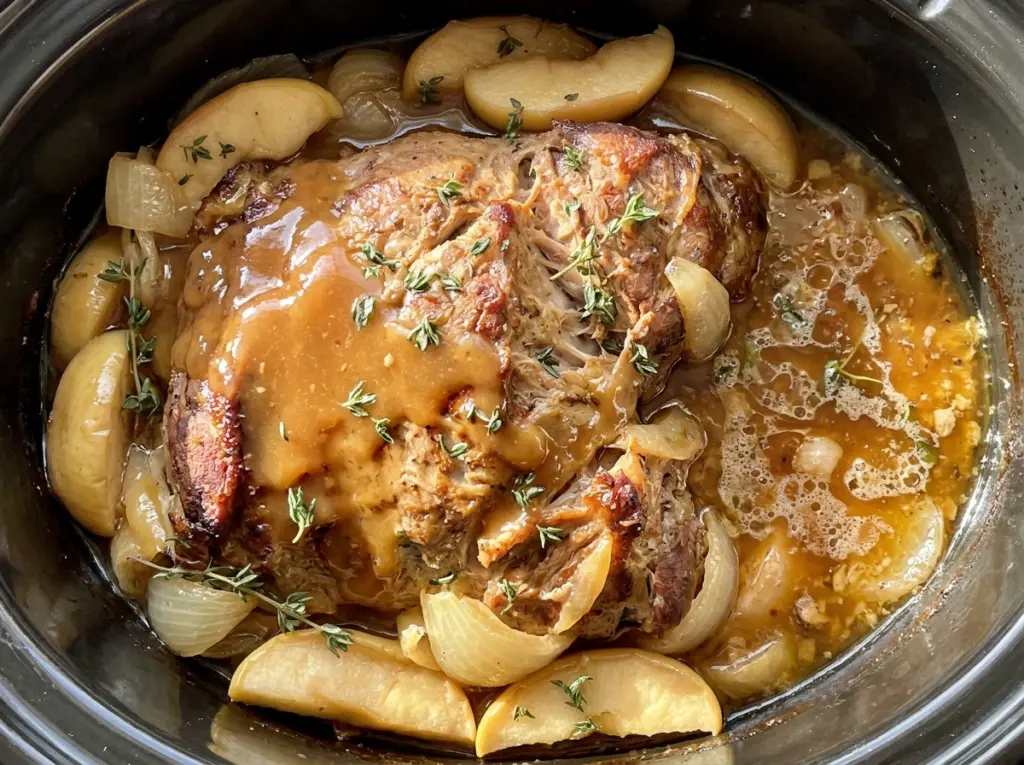
The pork gives a quick, loud sizzle as it hits the skillet, and the smell turns savory before the apple cider even goes into the slow cooker. I sear every side, then let the pork shoulder cook low and slow with onion, garlic, thyme, and a little Dijon. By the time it’s ready, the roast is tender enough to slice or pull, and the cooking liquid has picked up all those savory notes.
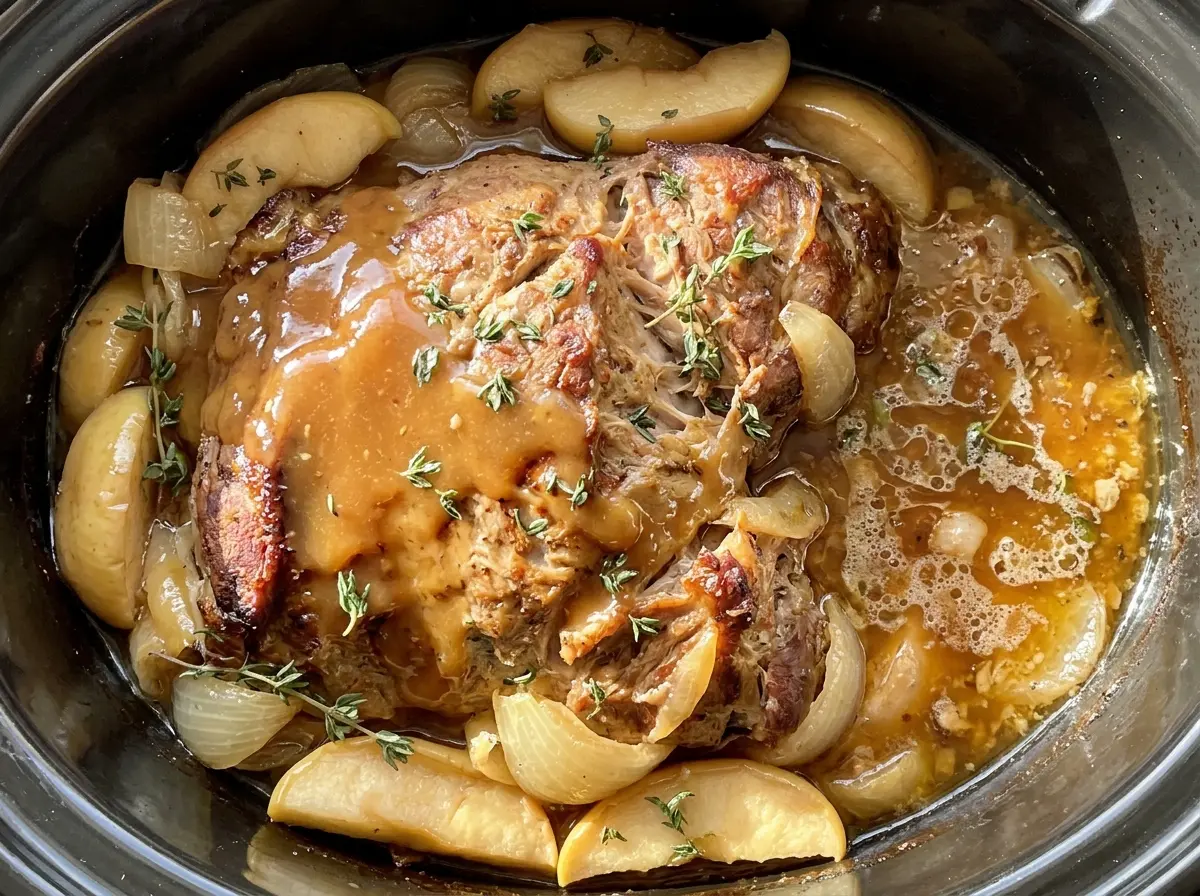
This slow cooker apple cider pork roast gets a maple gravy that tastes rounded, not like dessert. The cider brings a gentle fruitiness, while a little cider vinegar keeps the maple in check. I like the way the gravy clings to the pork without burying its flavor; it’s the sort of cozy dinner that feels complete with a generous spoonful over the top.
Kitchen Note
Give the roast the full 15-minute rest under a loose foil tent before slicing or pulling it. Cutting into it right away lets more juice escape onto the board instead of staying with the pork.
Save this slow cooker apple cider pork roast for a cozy dinner with tender pork and maple gravy that’s savory, gently sweet, and ready to spoon over every slice.
Why a Slow Cooker Won’t Give You the Flavor of That First Sear
A slow cooker is excellent at turning pork shoulder tender, but its moist, covered heat won’t brown the outside of the roast. That’s why I sear the pork in a skillet first. The browned surface gives the finished meat a deeper, more savory taste than a roast that goes straight into the cooker.
Take the time to turn the roast so each side touches the hot pan. The goal isn’t to cook the pork through on the stovetop; the slow cooker handles that. You’re building color on the outside before the long cook begins. Don’t rush the turning or crowd the pan with extra ingredients—the skillet needs room for the roast to make contact and brown.
This step also gives you a useful visual check: the outside should look browned rather than pale before you move the pork. If it still looks gray, give that side a little longer. A few extra minutes here pay off in a more developed roast, while the cider and broth keep the slow-cooked meat moist and flavorful.
Why Shoulder, Cider, and Maple Each Matter Here

- Boneless pork shoulder — This cut has the richness and connective tissue that suit a long slow cook. A leaner roast won’t become tender in quite the same way, so stick with shoulder for the texture this dish is built around.
- Apple cider — Cider gives the cooking liquid a mellow apple note that pairs naturally with pork. It’s a defining part of the braise, not just a splash of sweetness; hard cider or vinegar would change the balance.
- Chicken broth and Dijon — The broth keeps the cooking liquid savory, while Dijon adds a gentle tang that stops the cider from tasting flat. Low-sodium broth leaves room for the salt already seasoning the pork and gravy.
- Onion, garlic, and dried thyme — These aromatics season the liquid as the pork cooks. Slice the onion and mince the garlic before adding them so they’re ready to soften beneath the roast.
- Pure maple syrup and apple cider vinegar — Maple brings a clear sweetness to the gravy; vinegar provides a tart counterpoint. Pure maple syrup gives a more distinct maple taste than pancake-style syrup.
- Butter and all-purpose flour — Together they form the base that thickens the strained cooking liquid into gravy. Whisk the flour into fully melted butter before adding liquid so the flour disperses evenly.
From the Skillet Sear to Gravy That Coats the Spoon
Season and brown the shoulder
Pat the pork dry, then season it all over with 1 teaspoon of the kosher salt and the black pepper. Heat the canola oil in a 12-inch skillet over medium-high heat. Sear the roast on all sides, turning it as needed, for about 8 to 10 minutes total. Keep the surface in contact with the pan long enough to brown instead of flipping it constantly.
Set up the slow cooker and let it cook
Add the sliced onion and minced garlic to a 6-quart slow cooker and set the pork on top. Whisk the apple cider, chicken broth, Dijon mustard, and dried thyme together, then pour that mixture around the pork. Cover and cook on LOW for 8 to 9 hours or HIGH for 5 to 6 hours. The pork is ready when it’s fork-tender and registers 195°F to 205°F in the thickest part.
Rest the roast and strain the liquid
Transfer the pork to a cutting board and tent it loosely with foil while it rests. Strain the slow-cooker liquid through a fine-mesh strainer into a fat separator or measuring cup. Skim off the fat, then measure the strained liquid for the gravy. Taking a moment to remove the fat keeps the finished sauce from feeling greasy.
Whisk the maple gravy until smooth
Melt the butter in a medium saucepan over medium heat, whisk in the flour, and cook for 1 minute. Gradually whisk in the measured cooking liquid, maple syrup, apple cider vinegar, and the remaining kosher salt. Bring the mixture to a simmer and cook, whisking often, for 3 to 5 minutes. The gravy is ready when it thickens enough to coat the back of a spoon; slice or pull the pork into large pieces and serve it with the gravy.
A Pulled, Cider-Forward, or Gluten-Free Take on the Roast
Pull the pork and fold in the gravy
For a looser, more casual presentation, pull the cooked pork into large strands instead of slicing it. Spoon some maple gravy over the meat and toss gently so it’s coated without turning soupy. This gives you more gravy in each bite and a softer, less formal texture.
Make the braise more cider-forward
Replace the chicken broth with apple cider in the slow-cooker liquid and leave the other ingredients unchanged. The result leans sweeter and more distinctly apple-scented, with less savory depth from the broth. The maple gravy will taste fruitier, so this is a good fit if you want the cider to lead.
Make the gravy gluten-free
Replace the all-purpose flour with the same amount of a 1:1 gluten-free flour blend when making the butter-flour base. Choose gluten-free versions of the chicken broth and Dijon as well. The gravy may be a little less silky, but it still gives the pork a proper sauce.
Storage and Reheating
- Refrigerator: Refrigerate the pork and gravy in shallow airtight containers within 2 hours; keep them for 3 to 4 days. The gravy will thicken as it chills.
- Freezer: Freeze the pork and gravy separately in airtight containers for best quality for up to 2 to 3 months. Thaw them in the refrigerator before reheating.
- Reheating: Warm the pork and gravy gently in a saucepan or microwave, stirring the gravy so it heats evenly. Reheat leftovers to 165°F; boiling the gravy can make it reduce too far.
The Questions That Come Up Before the Slow Cooker Goes On
Slow Cooker Apple Cider Pork Roast With Maple Gravy – Cozy Dinner Recipe
Ingredients
Equipment
Method
- Pat the pork dry and season it all over with 1 tsp of the salt and the black pepper.
- Heat the canola oil in a 12-inch skillet over medium-high heat and sear the pork on all sides, about 8 to 10 minutes total.
- Put the onion and garlic in a 6-quart slow cooker.
- Set the pork on top of the onion and garlic.
- Whisk together the apple cider, chicken broth, Dijon mustard, and thyme.
- Pour the cider mixture around the pork.
- Cover and cook on LOW for 8 to 9 hours or HIGH for 5 to 6 hours, until the pork is fork-tender and registers 195°F to 205°F in the thickest part.
- Transfer the pork to a cutting board, tent loosely with foil, and rest for 15 minutes.
- Strain the slow-cooker liquid through a fine-mesh strainer into a fat separator or measuring cup.
- Skim off the fat and measure 1 3/4 cups of the cooking liquid.
- Melt the butter in a medium saucepan over medium heat.
- Whisk in the flour and cook for 1 minute.
- Gradually whisk in the strained cooking liquid, maple syrup, apple cider vinegar, and the remaining 1/4 tsp salt.
- Bring the gravy to a simmer and cook, whisking often, for 3 to 5 minutes, until it thickens and coats the back of a spoon.
- Slice or pull the pork into large pieces.
- Serve the pork with the maple gravy.