
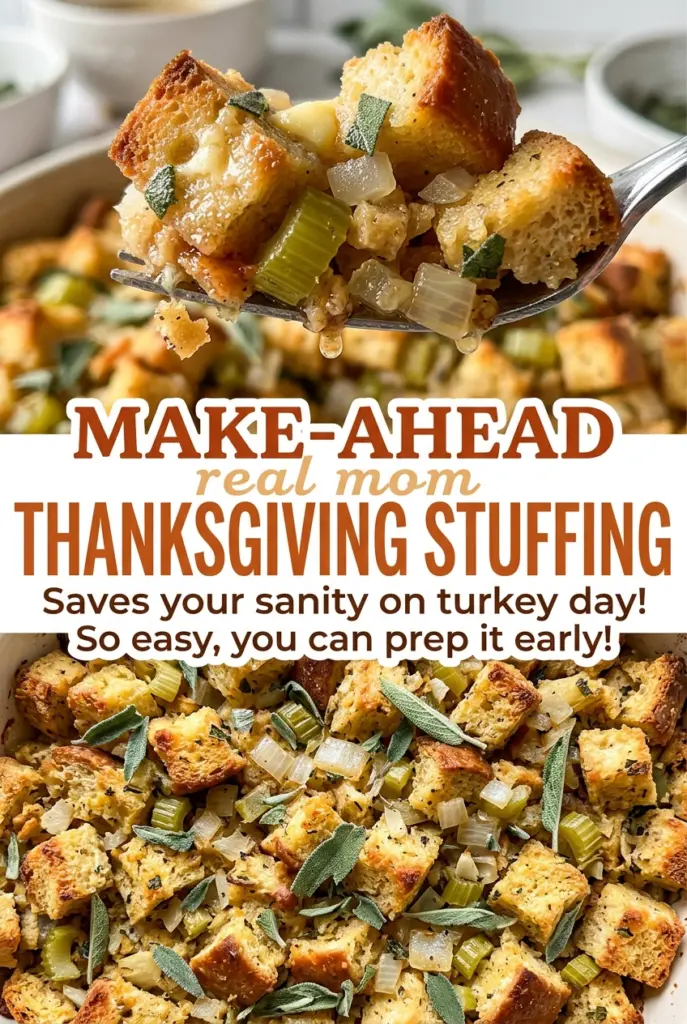
The bread cubes look almost too dry when they come out of the oven, and that’s exactly what you want. For this Make-Ahead Thanksgiving Stuffing, the bread needs to be ready to soak up broth overnight without collapsing into a heavy, wet layer.
I like that the hands-on work happens before the holiday rush: dry the bread, soften the vegetables in butter, then toss everything with broth, eggs, and herbs. Once the pan is covered and chilled, the flavors have time to settle together while the oven stays free for the rest of the meal.
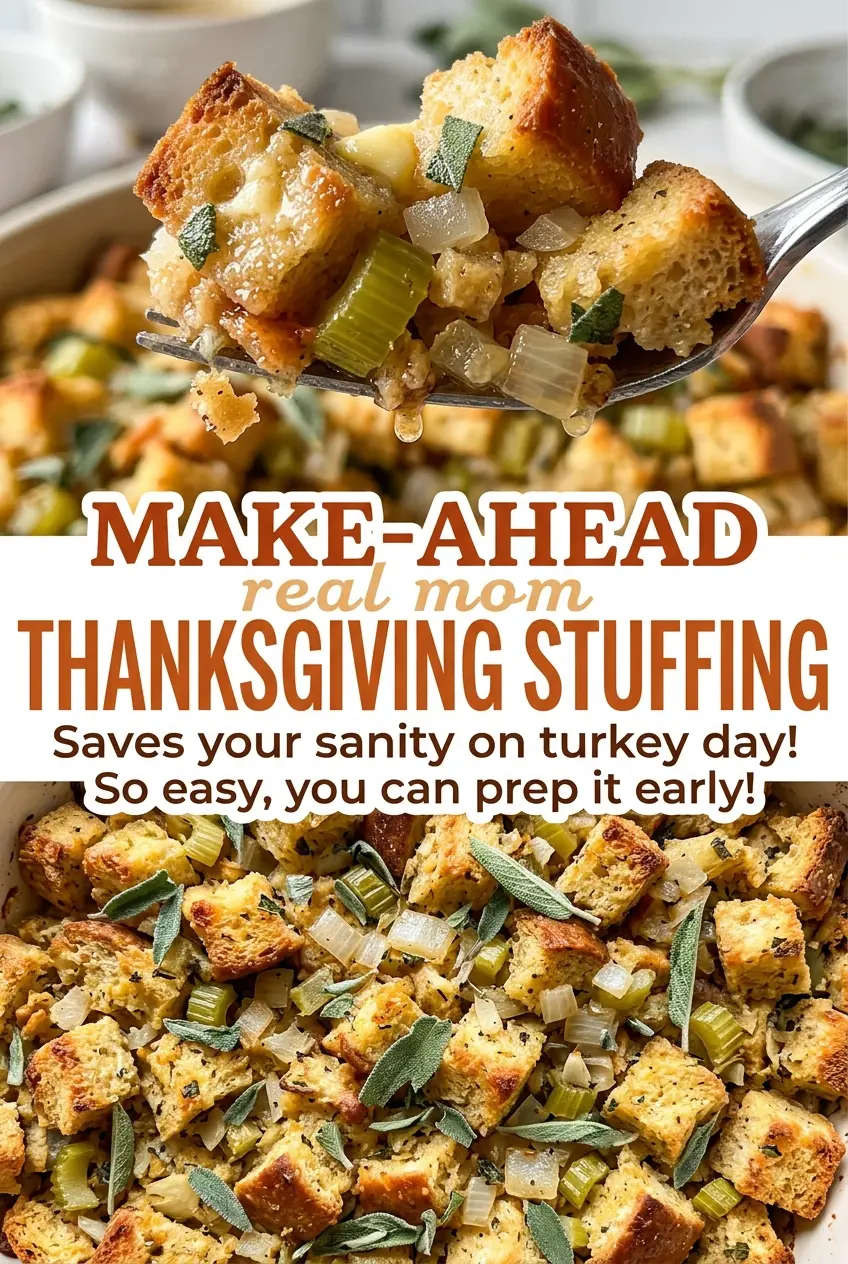
The next day, it bakes straight from the refrigerator. The top turns golden after the foil comes off, while the center stays moist and holds together when you scoop it. It’s the kind of stuffing that makes ahead without giving up that fresh-baked finish.
Kitchen Note
Let the onion and celery mixture cool before you add the eggs. I give it the full 10–15 minutes so the eggs stay liquid and mix evenly through the bread instead of starting to set in the warm bowl.
Save this Make-Ahead Thanksgiving Stuffing for its crisp golden top and the calm that comes from having it ready the day before.
Why the Bread Has to Be Drier Than You Think Before It Goes Into the Fridge
Fresh bread or lightly toasted bread can seem like the shortcut to a softer stuffing, but it has too much moisture left in it for an overnight soak. Once broth and eggs go in, the cubes keep absorbing liquid as the dish rests. If the bread starts out damp, the middle can turn dense before the top has a chance to brown.
Drying the cubes completely gives them room to take in the broth evenly. Spread them in one layer, stir them once as they bake, and let them cool before mixing. The cubes should feel dry all the way through, not just firm on the outside. That bit of preparation is what gives the finished stuffing a tender center with distinct pieces of bread instead of a soft, packed texture.
The Bread, Herbs, and Broth That Shape This Stuffing
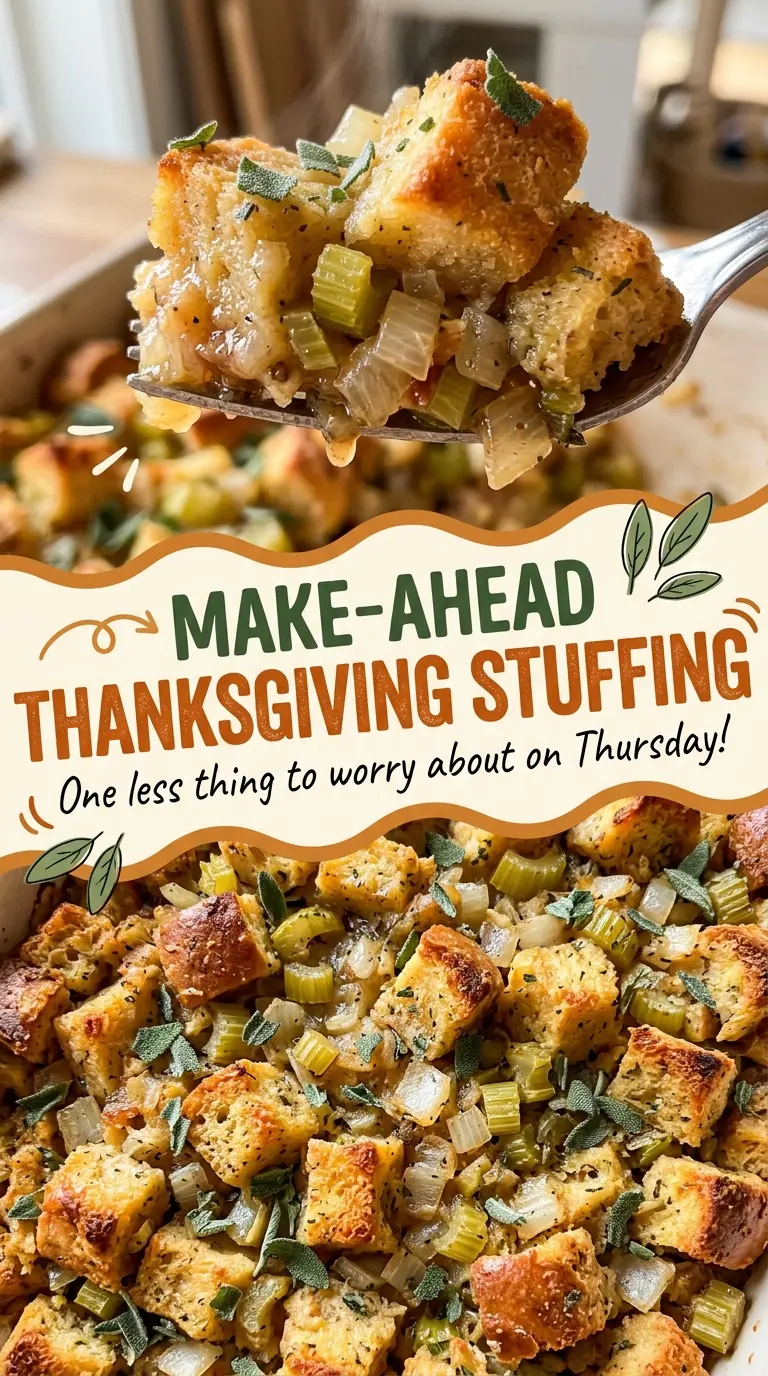
- Sturdy white bread — A firm loaf holds its shape through drying, tossing, and the long chill. Cut it into even 3/4-inch cubes so the pieces take up moisture at a similar rate. Soft, thin sandwich bread tends to break down more easily.
- Unsalted butter — Butter softens the onion and celery and carries the dried herbs through the mixture. Unsalted butter lets the measured kosher salt do the seasoning; salted butter can make the finished dish saltier than intended.
- Yellow onion and celery — Fine, even dicing helps both vegetables soften in the skillet and spread through each scoop. Take the time to cut them small rather than leaving large pieces that stay firm in the finished stuffing.
- Dried sage and thyme — Dried herbs bring concentrated, familiar stuffing flavor without adding extra moisture. Use the dried versions here; fresh herbs don’t have the same strength by volume, so a direct swap changes the balance.
- Low-sodium chicken broth — Broth hydrates the bread and adds savory depth, while low-sodium broth leaves room for the salt in the mixture. A very salty broth can push the seasoning too far.
- Fresh parsley and eggs — Parsley gives the bread mixture a fresh herbal note, while the eggs help it set into a scoopable bake. Whisk the eggs into the broth before pouring so they distribute through the stuffing instead of clumping in one spot.
How to Dry, Chill, and Bake the Stuffing Without Losing Its Texture
Dry the Bread Until the Centers Feel Dry
Heat the oven to 300°F and spread the bread cubes in a single layer over two large rimmed baking sheets. Bake for 35–45 minutes, stirring once, until the cubes are completely dry; a damp or springy center means they need more time. Let them cool completely before they meet the vegetables. Warm bread can soften unevenly once the broth goes in.
Soften the Vegetables in Butter
Grease a 9×13-inch metal baking dish with 1 tablespoon of butter. Melt the remaining 8 tablespoons in a 12-inch skillet over medium heat, then add the finely diced onion and celery. Cook for 8–10 minutes, until softened, before stirring in the sage, thyme, salt, and pepper. If the vegetables still feel crisp, give them a little longer; they should be tender, not browned hard at the edges.
Cool the Mixture Before Adding the Eggs
Transfer the cooked vegetables to a large bowl and let them cool for 10–15 minutes. Add the dried bread and parsley, then toss to distribute the vegetables through the cubes. Whisk the broth and eggs together separately, pour them over the bread, and toss until everything is evenly moistened. Look for damp cubes throughout the bowl, without a puddle of broth collecting at the bottom.
Chill Covered, Then Finish the Top Uncovered
Transfer the stuffing to the buttered metal dish and cover it tightly with foil. Refrigerate for 8–24 hours, putting it in the refrigerator within 2 hours of assembly. When you’re ready to bake, heat the oven to 350°F and bake the dish straight from the refrigerator, still covered, for 50–60 minutes. Uncover and bake for 15–20 minutes more, until the top is golden and the center reaches 165°F.
Two Simple Ways to Adapt This Thanksgiving Stuffing
Make It Vegetarian With Vegetable Broth
Replace the chicken broth with the same amount of low-sodium vegetable broth. The stuffing keeps its onion, celery, and herb character, though it will have a gentler savory taste without the chicken broth.
Use Sturdy Gluten-Free White Bread
Choose a sturdy gluten-free white loaf and cut it into the same-size cubes in place of the regular white bread. The flavor stays close to the original, but the finished cubes may have a more tender, delicate texture, so toss gently when combining everything.
Storage and Reheating
- Refrigerator: Store cooked leftovers in an airtight container for 3–4 days.
- Freezer: Freeze cooled portions in airtight freezer-safe containers for up to 1 month for the best texture. Thaw overnight in the refrigerator before reheating.
- Reheating: Warm portions covered in a 350°F oven until steaming in the center, then uncover briefly to bring back some crispness on top. Starting uncovered can dry the edges before the middle is hot.
Questions That Come Up When Making Stuffing Ahead
Make-Ahead Thanksgiving Stuffing
Ingredients
Equipment
Method
- Heat the oven to 300°F.
- Spread the bread cubes in a single layer on 2 large rimmed baking sheets and bake for 35–45 minutes, stirring once, until completely dry.
- Cool the bread completely.
- Grease a 9x13-inch metal baking dish with 1 tablespoon of the butter.
- Melt the remaining 8 tablespoons butter in a 12-inch skillet over medium heat.
- Add the onion and celery and cook for 8–10 minutes, until softened.
- Stir in the sage, thyme, salt, and pepper.
- Transfer the vegetable mixture to a large bowl and cool for 10–15 minutes.
- Add the dried bread and parsley to the bowl and toss.
- Whisk the broth and eggs together.
- Pour the broth mixture over the bread mixture and toss until evenly moistened.
- Transfer the mixture to the prepared baking dish and cover tightly with foil.
- Refrigerate for 8–24 hours, placing it in the refrigerator within 2 hours of assembly.
- Heat the oven to 350°F.
- Bake the stuffing straight from the refrigerator, covered, for 50–60 minutes.
- Uncover and bake for 15–20 minutes more, until the top is golden and the center reaches 165°F.