
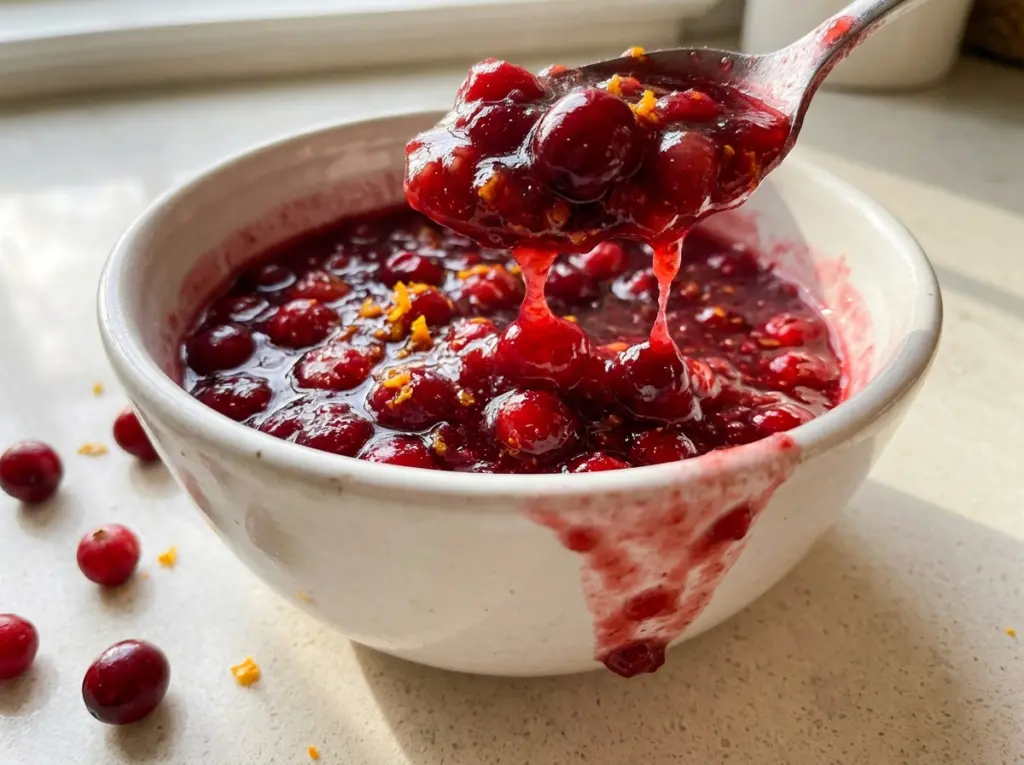
The cranberries start popping one by one, then the saucepan fills with that bright, sharp orange-and-berry smell. I like this Joanna Gaines Holiday Cranberry Sauce because it turns a bag of fresh cranberries into a side that tastes balanced, not like a bowl of plain sugar. The orange brings a clean citrus note, and a little cinnamon gives the sauce a gentle warmth without taking over.
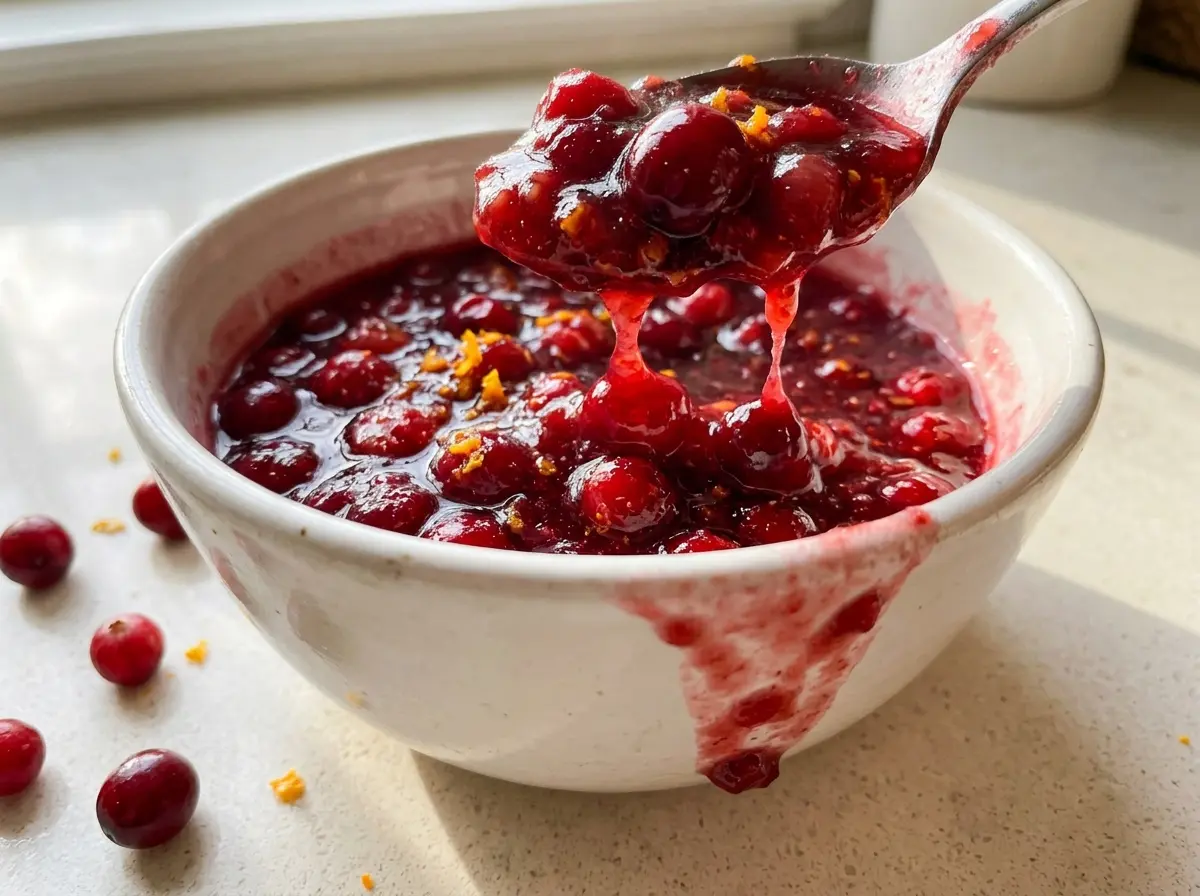
There’s no need to mash every berry or add a thickener. As the cranberries simmer, many burst and release their natural pectin; the sauce also thickens as it cools. I keep the heat at a steady simmer and let the berries do the work. After a couple of hours in the refrigerator, it’s glossy, spoonable, and ready for the holiday table.
Kitchen Note
When the cranberries begin popping, the bubbling can get lively. I keep the spoon moving occasionally and stay close to the pan; that’s enough to settle the sauce without crushing every berry.
Save this cranberry-orange sauce for a holiday table: bright citrus, tender berries, and a make-ahead chill.
Why Cranberry Sauce Thickens Without a Thickener
Cranberries bring their own setting power. Their natural pectin helps the juices turn from thin and tart into a sauce as the fruit cooks, and the sugar supports that transformation. That’s why this pan needs time at a simmer rather than cornstarch or another thickener.
Don’t judge the final texture while it’s still hot. The sauce will look looser in the saucepan, then become more cohesive as it cools and chills. The goal during cooking is not a stiff jam; it’s a bubbling mixture with most of the berries burst and enough body to coat a spoon. A few intact berries are welcome. They add little pockets of tartness and make the finished sauce look homemade rather than perfectly uniform.
Using the full combination of water and orange juice gives the cranberries liquid to cook in, while the citrus keeps the sweetness from tasting flat. Stir now and then so the sugar dissolves and the fruit cooks evenly, but don’t try to force the sauce into a smooth texture. Let the fruit and the cooling time finish the job.
How Orange, Sugar, and Cinnamon Shape the Cranberries
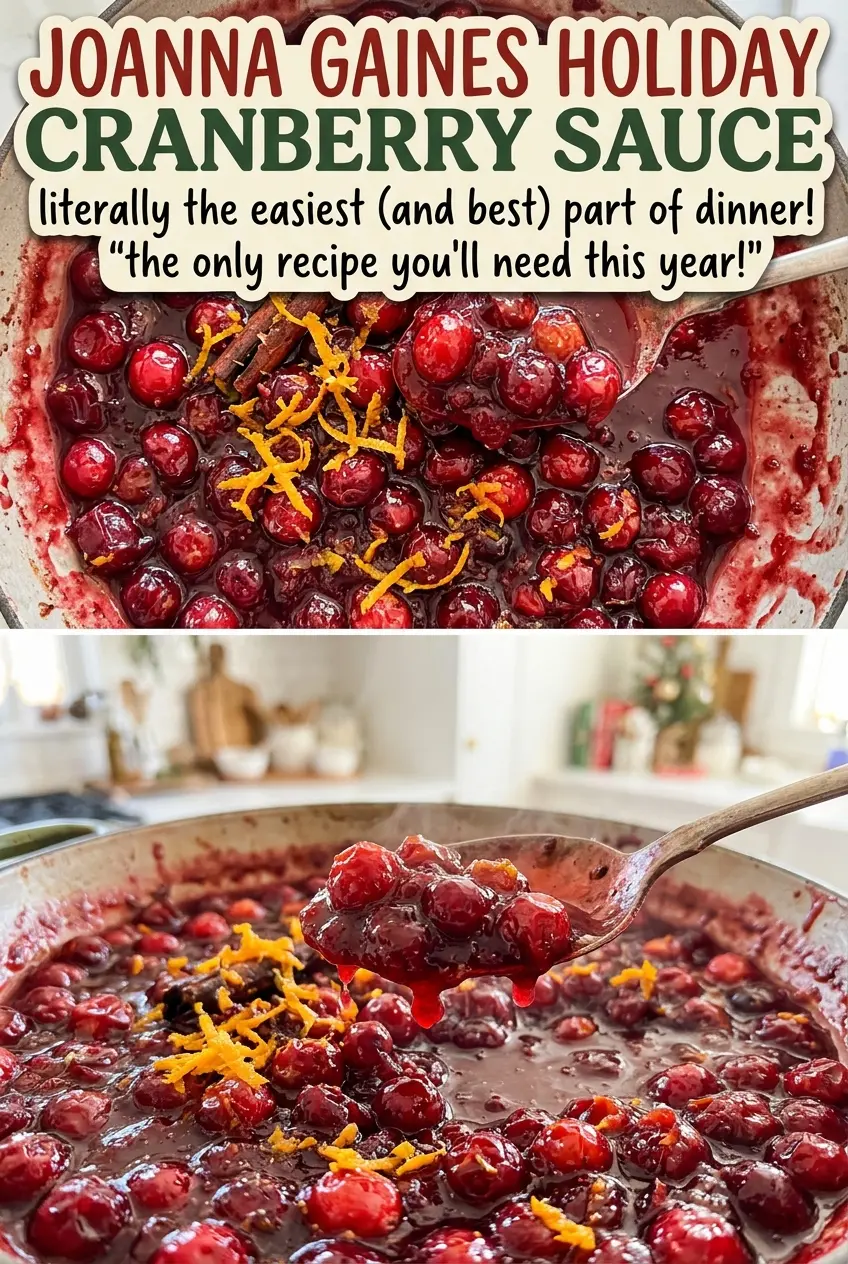
- Fresh cranberries — Firm berries cook down into a sauce while keeping their lively tartness. Sort out any shriveled or soft berries before they go into the pan. Frozen cranberries aren’t the specified ingredient here, so fresh berries give the most predictable result for this timing.
- Orange juice and finely grated zest — Juice adds citrus flavor throughout the sauce, while the zest gives it a more fragrant orange lift. Freshly squeezed or bottled orange juice works; choose a plain juice rather than one with extra flavorings. Grate only the colored outer peel for zest, since the white pith can taste bitter.
- Granulated sugar — It rounds out the berries’ sharpness and helps the sauce set as it cools. Regular granulated sugar is the right choice for the clean, familiar sweetness here; a light brown sugar swap is described below if you want a deeper note.
- Ground cinnamon — A small amount adds warmth in the background, not a strong cinnamon flavor. Use a fresh-smelling jar for the clearest aroma; old spice can taste dusty and disappear against the fruit.
- Water — It gives the cranberries enough liquid to begin cooking before they release their own juices. Keep it in the mix rather than replacing all of it with more juice, which would make the citrus more pronounced.
From First Pop to a Chilled, Spoonable Sauce
Combine Everything in the Saucepan
Add the cranberries, sugar, water, orange juice, orange zest, and cinnamon to a 2-quart saucepan. Stir to distribute the sugar and zest through the berries before turning on the heat. The mixture will look loose at this point, which is expected. Keeping everything in one pan makes the short cooking process easy to manage.
Bring the Berries to a Steady Simmer
Bring the mixture to a boil over medium-high heat, stirring occasionally. Once it boils, reduce the heat to medium-low and let it simmer for 10 to 15 minutes, stirring now and then. The berries will pop as their skins split, and the liquid will gradually look thicker and less watery. Stop when most berries have burst and the sauce has thickened; you don’t need every berry to collapse.
Cool Before Covering
Take the pan off the heat when the sauce reaches that thick, glossy stage. Let it cool to room temperature before covering it, rather than putting a hot saucepan straight into the refrigerator. The sauce will still be warm and relatively loose at first, so give it time on the counter instead of trying to judge its final consistency immediately.
Chill Until the Texture Settles
Cover the cooled sauce and refrigerate it for at least 2 hours before serving. It will firm up as it chills, becoming easier to spoon and less runny around the edges. If it looks quite set straight from the refrigerator, a gentle stir loosens it for serving. Keep the sauce cold until it’s ready to go on the table.
Two Flavor Changes That Keep the Cranberries in Front
Swap in Light Brown Sugar
Replace the granulated sugar with the same amount of light brown sugar for a softer, molasses-like sweetness. The fruit remains tart, but the sauce tastes a little rounder and darker. Dark brown sugar brings a stronger molasses note that can compete with the orange.
Leave Out the Cinnamon
For a brighter, more citrus-led sauce, omit the cinnamon and keep the other ingredients unchanged. The berries and orange come through more clearly without the warm spice in the background. This version still thickens the same way as it cools.
A Naturally Gluten-Free, Dairy-Free Side
The ingredients in this cranberry sauce contain no flour, butter, or dairy, so no replacement is needed to serve it as a gluten-free and dairy-free side. Keep it in a separate serving bowl if you’re avoiding contact with other dishes at the table.
Storage and Reheating
- Refrigerator: Keep the covered sauce refrigerated and use it within 3 to 4 days. It will stay thick when cold and soften slightly as it sits out for serving.
- Freezer: It freezes well for up to 2 months. Cool it fully, transfer it to an airtight freezer-safe container with a little room at the top, and thaw it in the refrigerator.
- Reheating: This sauce is served chilled, so reheating isn’t necessary. If you prefer it warm, heat it gently in a saucepan over low heat and stir; high heat can make the sugar catch on the bottom.
Questions That Come Up While Making Cranberry Sauce
Joanna Gaines Holiday Cranberry Sauce
Ingredients
Equipment
Method
- Combine the cranberries, sugar, water, orange juice, orange zest, and cinnamon in a 2-quart saucepan.
- Bring to a boil over medium-high heat, stirring occasionally, then reduce the heat to medium-low and simmer for 10 to 15 minutes, stirring occasionally, until most of the cranberries burst and the sauce thickens.
- Remove the pan from the heat and let the sauce cool to room temperature, then cover and refrigerate for at least 2 hours before serving.