
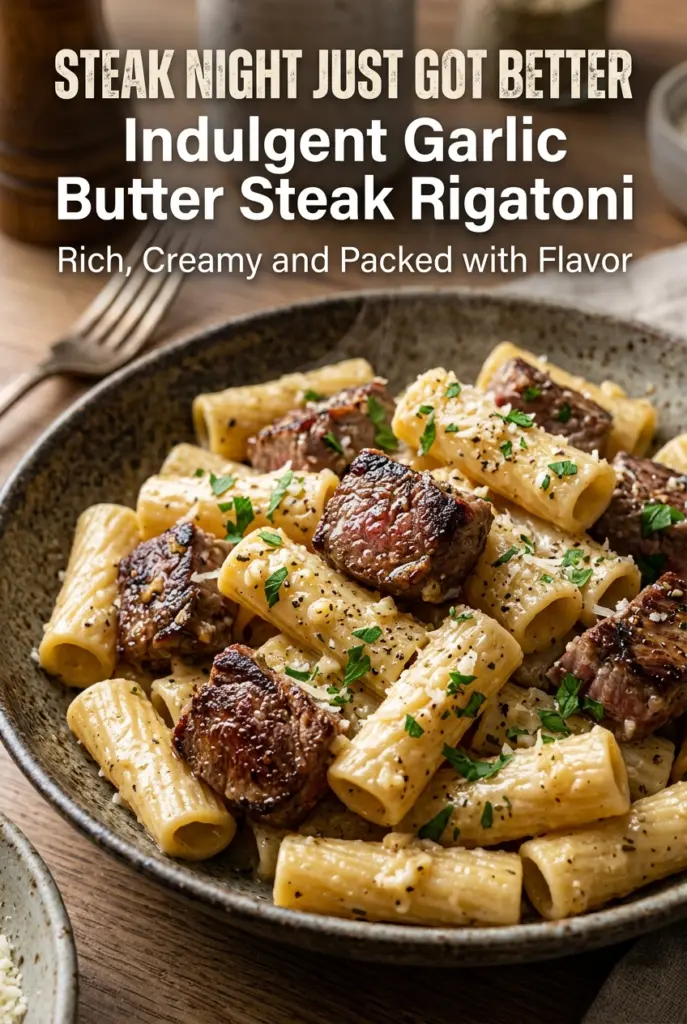
Garlic butter steak rigatoni hits the table with the kind of rich, glossy sauce that clings to every ridge of pasta and every bite of seared steak. The rigatoni holds onto the cream sauce instead of letting it slide to the bottom of the bowl, and the steak stays juicy because it gets pulled out before it can overcook. What you get is a pan of dinner that tastes like it came from a place that knows how to build flavor in layers.
The difference here is in the timing. The steak gets a hard sear first, then the garlic goes into the same pan for just long enough to bloom without burning. From there, the cream and Parmesan melt into the browned bits left behind, which is where the real depth comes from. A splash of pasta water at the end loosens the sauce without thinning it out, so it stays silky instead of heavy.
Below, I’ll walk through the part that matters most: how to keep the sauce smooth, how to keep the steak tender, and when to use the pasta water so the whole dish comes together in one pan without turning greasy or grainy.
The steak stayed tender and the sauce coated the rigatoni perfectly without getting gloppy. I added a little pasta water at the end and it came together like a restaurant dish.
Save this steak rigatoni for the night you want a creamy, garlicky pasta with a proper sear and almost no cleanup.
The Seared Steak Has to Come First, or the Sauce Pays for It
This dish falls apart when people try to cook everything at once. The steak needs high heat and space so it browns instead of steaming, and the sauce needs the same pan afterward so it can pick up the fond left behind. If you crowd the pan or let the steak sit in the sauce too long, you lose both the crust and the clean bite that make the dish worth making.
The other common mistake is rushing the cream. Once the butter and garlic go in, the heat needs to come down before the cream follows. That keeps the sauce from splitting and gives the Parmesan time to melt into a smooth, glossy finish instead of turning grainy.
What Each Ingredient Is Actually Doing in This Dish
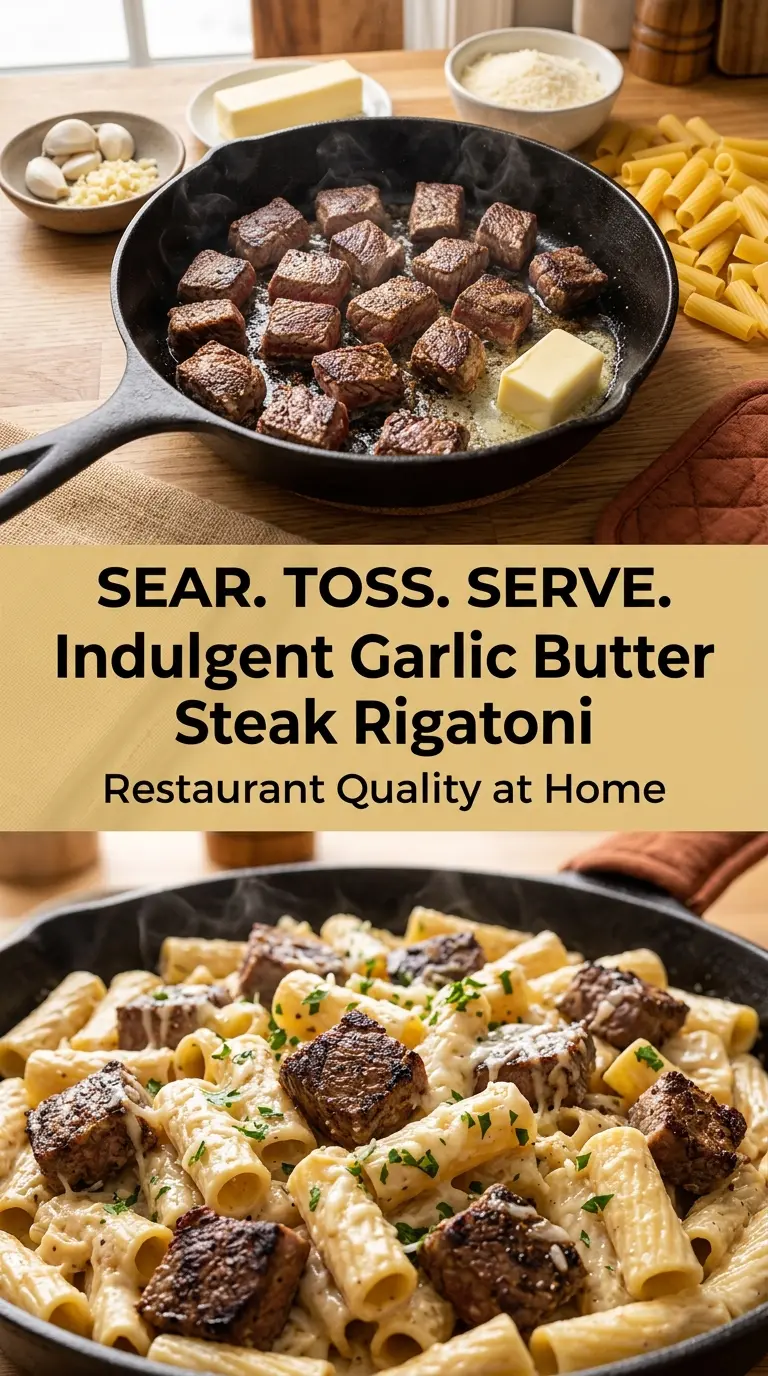
- Sirloin steak — Sirloin gives you a tender bite without the ribeye price tag, and it holds up well when cut into cubes and seared hard. Cut it against the grain if you can spot the direction; that keeps each piece more tender when you chew. If you use a more marbled cut, it will taste richer, but sirloin is the sweet spot for this kind of pasta.
- Rigatoni — The ridges and the tube shape matter here. They trap the garlic butter sauce in a way that smoother pasta can’t, which is why penne is the next-best swap and long noodles are less ideal. Cook it to true al dente so it can finish in the sauce without turning soft.
- Heavy cream — This is what turns the pan juices into a sauce that feels luxurious instead of oily. Half-and-half can work in a pinch, but the sauce will be thinner and more likely to break if you boil it hard. Keep the heat at a gentle simmer once it’s in the pan.
- Freshly grated Parmesan — Pre-grated cheese often has anti-caking agents that make the sauce sandy instead of smooth. Freshly grated Parmesan melts cleanly and helps thicken the sauce as it finishes. Add it gradually and whisk or stir constantly so it disappears into the cream.
- Garlic and butter — These are the backbone of the whole dish, and neither one should be rushed. The butter carries the garlic flavor through the sauce, but garlic burns fast, so it only needs about 30 seconds before the cream goes in. If the garlic turns dark, start over; bitter garlic will take over the whole pan.
The 20 Minutes That Actually Matter
Getting the Pasta Ready
Boil the rigatoni until it’s al dente, then pull out about half a cup of the cooking water before draining. That starchy water is what helps the sauce cling and loosen at the same time. If you forget it, the sauce can still work, but it won’t have the same silky finish.
Building the Steak Crust
Season the steak pieces, then sear them in a very hot skillet with olive oil. Leave them alone long enough for a deep brown crust to form on one side before turning them. If the pan is crowded, the meat steams and turns gray, so cook in batches if you need to.
Turning the Pan Drippings Into Sauce
Lower the heat before the butter goes in, then add the garlic for just a short burst until it smells fragrant. Stir in the cream and Italian seasoning, and let it bubble gently for a couple of minutes. Once the Parmesan goes in, the sauce should look smooth and slightly thickened; if it gets grainy, the heat was too high or the cheese went in all at once.
Bringing Everything Together
Add the drained rigatoni to the sauce and toss until every piece is coated. Use the pasta water a spoonful at a time if the sauce looks tight or starts to clump. Return the steak at the very end so it warms through without losing its seared edges or turning chewy.
Three Ways to Make This Steak Rigatoni Work for Different Tables
Dairy-Free Swap
Use a full-fat unsweetened oat cream or cashew cream and finish with a dairy-free Parmesan alternative. The sauce will taste a little less sharp and a touch lighter, but the garlic butter base still carries plenty of richness.
Gluten-Free Version
Swap in a sturdy gluten-free rigatoni and cook it just until al dente, since gluten-free pasta can go from firm to soft fast. Stir it into the sauce gently because it’s more delicate than wheat pasta, but the shape still does the same job of holding the sauce.
Chicken Instead of Steak
Use bite-sized chicken thighs and sear them the same way, but cook them through fully before moving on to the sauce. You lose the deeper beefy flavor, but you get a softer, more budget-friendly version that still tastes rich and garlicky.
Make It Spicier
Add the red pepper flakes with the garlic so they bloom in the butter instead of sitting raw in the sauce. That gives you a deeper heat that spreads through the whole pan instead of sharp little bursts on top.
Storage and Reheating
- Refrigerator: Store leftovers in an airtight container for up to 3 days. The sauce will thicken as it chills, so it won’t look as glossy straight from the fridge.
- Freezer: This dish isn’t a great freezer meal because the cream sauce can separate and the pasta softens too much after thawing. If you do freeze it, expect a looser texture when reheated.
- Reheating: Warm it slowly in a skillet over low heat with a splash of water, milk, or cream. High heat is what breaks the sauce and makes the steak tough, so gentle heat is the key to keeping the leftovers close to the original.
Answers to the Questions Worth Asking
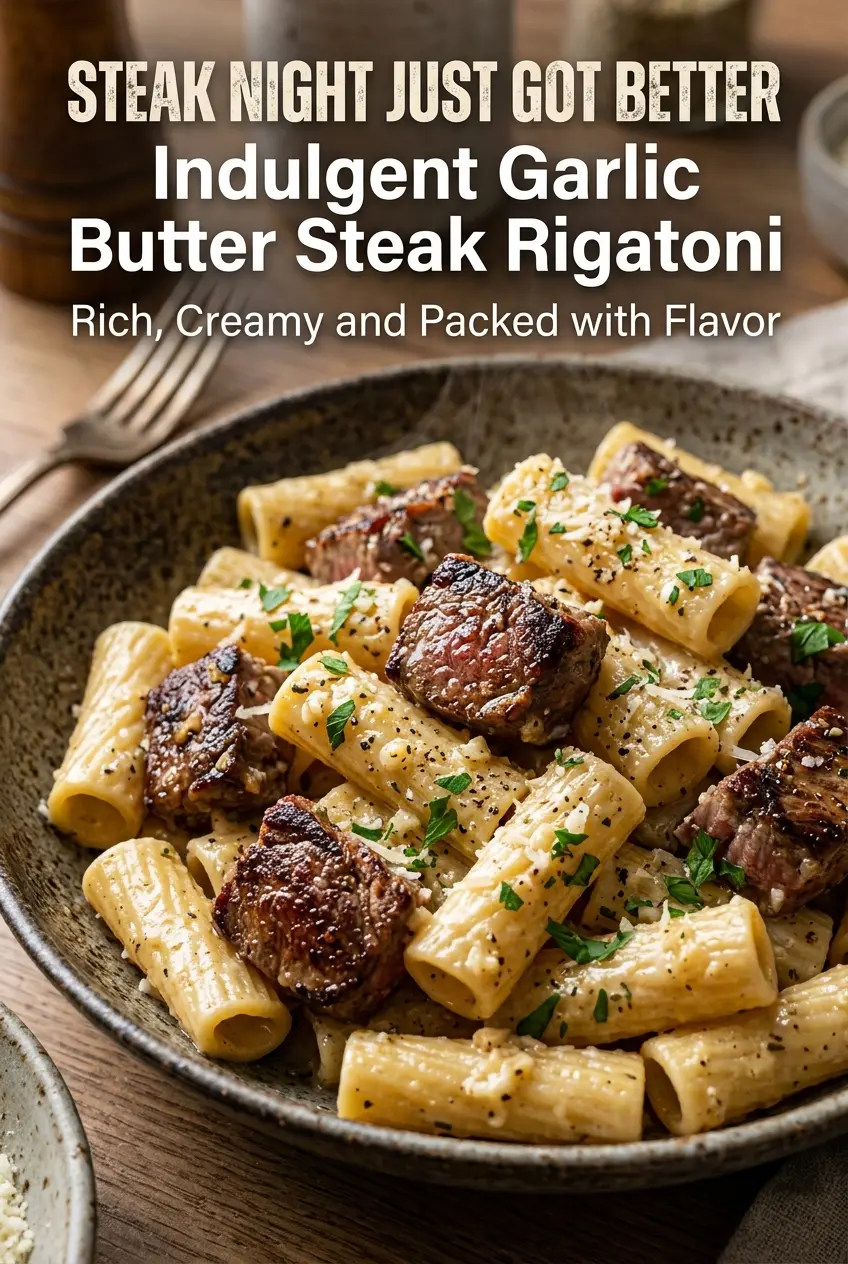
Indulgent Garlic Butter Steak Rigatoni
Ingredients
Equipment
Method
- Cook rigatoni pasta according to package directions until al dente, then reserve 1/2 cup pasta water and drain. Set aside the pasta water so it can be used to loosen the sauce later.
- Season the sirloin steak pieces with kosher salt, black pepper, and garlic powder. Coat evenly so the surface browns quickly in the hot skillet.
- Heat olive oil in a large skillet over high heat. When the oil is shimmering, add the steak in a single layer.
- Sear the steak pieces for 2–3 minutes per side until browned, then remove to a plate and set aside. Leave any browned bits in the skillet for flavor.
- Reduce heat to medium and melt unsalted butter in the skillet. Wait until the butter is fully melted and lightly foamy.
- Add minced garlic and cook for 30 seconds until fragrant. Stir constantly so the garlic doesn’t brown.
- Stir in heavy cream and Italian seasoning. Bring it to a steady simmer.
- Simmer the sauce for 2–3 minutes until slightly thickened. Keep it at a gentle bubbling so it stays creamy.
- Add freshly grated parmesan cheese and whisk until smooth. Whisk until the sauce turns glossy and evenly thick.
- Toss rigatoni pasta into the sauce until coated. Add a splash of reserved pasta water if needed for a silky consistency.
- Return the seared sirloin steak to the skillet and gently toss. Finish when everything is heated through and glossy.
- Garnish with chopped fresh parsley and serve immediately. The parsley should be bright and fresh on top.