
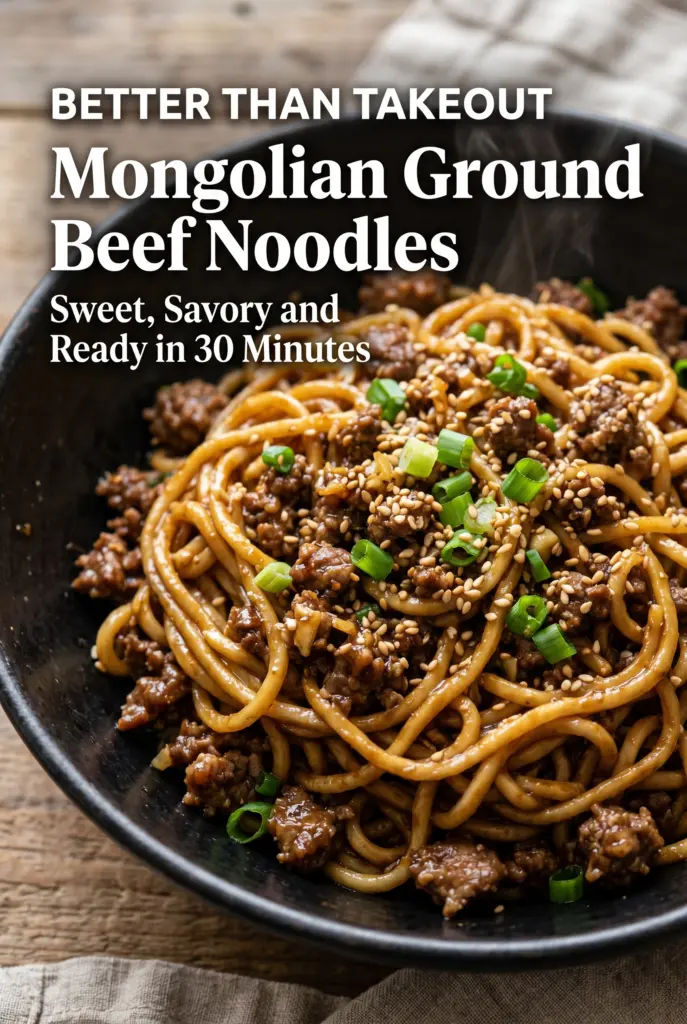
Mongolian Ground Beef Noodles hit that sweet spot between fast and satisfying: glossy noodles, savory beef, and a sauce that clings instead of pooling at the bottom of the bowl. The beef stays tender, the garlic and ginger come through clearly, and the whole dish tastes like takeout without needing a wok or a pile of specialty ingredients.
What makes this version work is the balance in the sauce and the order you build it. Brown sugar gives the Mongolian-style sweetness, but soy sauce, beef broth, and hoisin keep it from turning flat. The cornstarch slurry goes in at the end, after the sauce has had a chance to simmer, so it thickens into a proper glaze instead of turning pasty or gritty.
Below you’ll find the one detail that keeps the noodles from clumping, the ingredient swaps that still hold onto the same takeout feel, and a few small fixes for when the sauce looks thin before it suddenly comes together.
The sauce thickened up exactly how it should, and tossing the noodles right at the end kept everything glossy instead of mushy. My husband went back for seconds before I even sat down.
Save these Mongolian Ground Beef Noodles for the nights when you want a sticky, garlicky noodle bowl that comes together fast and tastes like you ordered in.
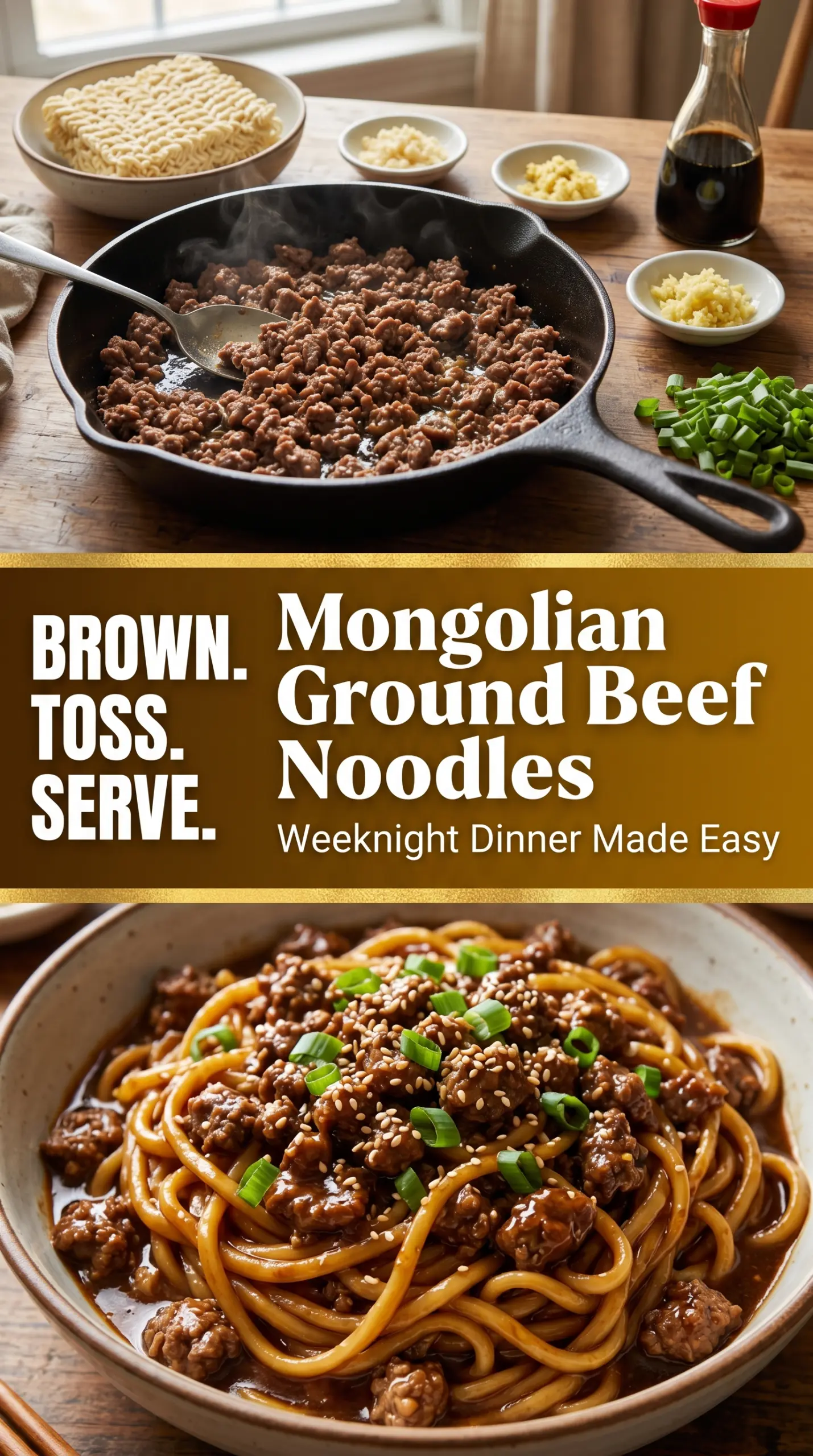
The Trick to Keeping the Sauce Glossy, Not Sticky
The biggest mistake with noodle bowls like this is rushing the thickener or letting the sauce boil too hard once the cornstarch goes in. Cornstarch needs a minute to hydrate and tighten the sauce, but if the pan is raging hot, it can seize into a gluey texture before it ever coats the noodles properly.
The other thing that matters here is the balance of liquid. Soy sauce brings salt and depth, beef broth keeps the sauce from tasting one-note, and brown sugar gives you that Mongolian-style lacquer. If the sauce tastes sharp before it thickens, it usually needs those extra couple minutes on the stove, not more sugar.
- Lean ground beef — Leaner beef leaves less grease behind, which keeps the sauce clean and glossy. If you use a fattier blend, drain off the excess after browning so the finished dish doesn’t taste heavy.
- Low-sodium soy sauce — This gives you control. Regular soy sauce can push the dish into overly salty territory once the sauce reduces, especially after the noodles go in.
- Hoisin sauce — This adds body and a deeper sweet-savory note that brown sugar alone can’t replace. If you don’t have it, the sauce will still work, but it loses some of that takeout-style complexity.
- Fresh ginger and garlic — Fresh is worth it here because both are part of the sharp, aromatic backbone of the dish. Powdered ginger and garlic can work in a pinch, but the sauce won’t have the same lift.
- Lo mein or linguine noodles — Either one works because you want noodles that can soak up sauce without falling apart. Cook them just to tender, then toss with sesame oil so they don’t clump while the beef finishes.
Building the Beef and Sauce in the Right Order
Cooking the Noodles First
Cook the noodles until they’re just tender, then drain them and toss them with sesame oil right away. That thin coating keeps them from sticking together while you finish the beef and sauce. If they sit wet and plain, they’ll grab onto themselves in clumps and fight the sauce later.
Browning the Beef
Cook the ground beef in a large skillet over medium-high heat until it’s no longer pink and you get a few browned edges. Those browned bits add depth to the finished sauce, so don’t rush to stir constantly. If there’s a lot of grease in the pan, spoon some off before you season and add the sauce.
Reducing the Sauce
Whisk the sauce ingredients together, pour them into the skillet, and let everything simmer for 3 to 4 minutes before you add the cornstarch slurry. That brief simmer takes the raw edge off the garlic and ginger and starts the flavor merging. When you stir in the slurry, the sauce should go from thin and shiny to thick enough to coat a spoon.
Tossing Everything Together
Add the noodles only after the sauce has thickened. Toss quickly but thoroughly so every strand gets coated while the skillet is still hot. If the pan looks dry, add a small splash of broth or water rather than more soy sauce, which can throw the balance off fast.
How to Adapt These Mongolian Noodles Without Losing the Takeout Feel
Make It Gluten-Free
Use tamari or a certified gluten-free soy sauce and swap in gluten-free noodles or rice noodles. The sauce still thickens the same way, but rice noodles soften faster, so toss them in at the very end and serve right away.
Use Ground Turkey or Chicken
Lean ground turkey or chicken works well if you want a lighter version. Add a teaspoon of neutral oil to the pan before browning, since these meats need a little help developing flavor and can taste flat if they’re cooked too dry.
Cut Back on Sugar
You can reduce the brown sugar slightly if you like a less sweet sauce, but don’t remove it completely. That sweetness is part of what makes the sauce read as Mongolian-style instead of just salty beef noodles.
Storage and Reheating
- Refrigerator: Store leftovers in an airtight container for up to 4 days. The noodles will absorb more sauce as they sit, so the dish gets a little thicker by day two.
- Freezer: It freezes, but the noodle texture softens after thawing. If you want to freeze it, undercook the noodles slightly and reheat gently for the best chance at keeping them from turning mushy.
- Reheating: Reheat in a skillet over medium-low heat with a splash of water or broth. The common mistake is blasting it in the microwave until the sauce dries out and the noodles tighten up.
Questions I Get Asked About This Recipe
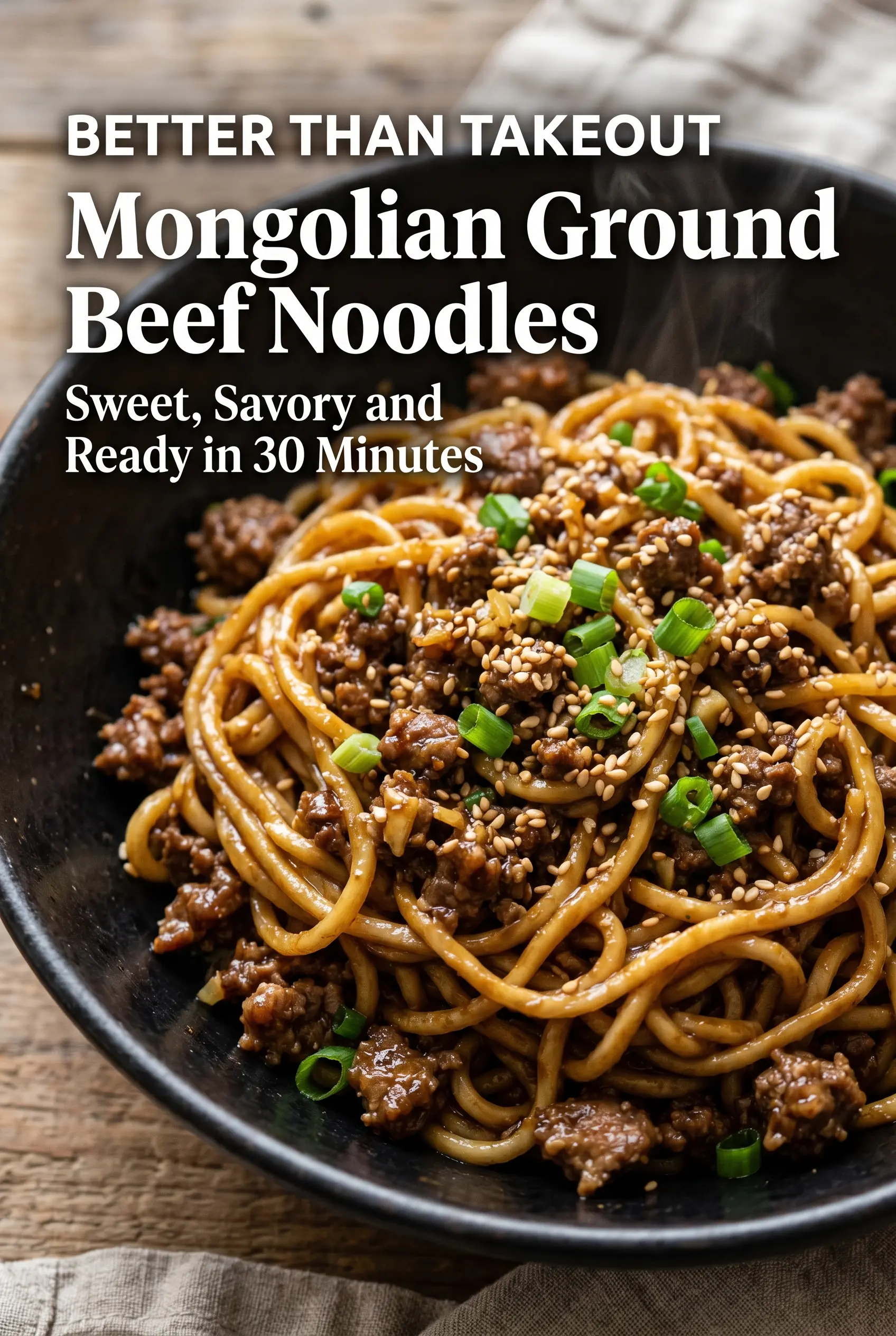
Mongolian Ground Beef Noodles
Ingredients
Equipment
Method
- Cook the linguine or lo mein noodles according to package directions until tender. Drain and keep hot so they don’t clump.
- Toss the drained noodles with sesame oil. They should look glossy and evenly coated.
- Brown the lean ground beef in a large skillet over medium-high heat. Stir until no longer pink.
- Season the beef with garlic powder and black pepper. Cook for about 30–60 seconds so the spices bloom.
- Whisk together low-sodium soy sauce, brown sugar, beef broth, hoisin sauce, minced fresh ginger, and garlic in a bowl. Stir until the sugar dissolves.
- Pour the sauce into the skillet with the beef. Simmer for 3–4 minutes over medium-high heat until gently bubbling and fragrant.
- Mix cornstarch and water in a small bowl. Stir the slurry into the skillet and cook 30–60 seconds, until the sauce turns noticeably thicker and coats the spoon.
- Add the cooked noodles to the skillet and toss until fully coated. Keep tossing until noodles look evenly glazed.
- Top with green onions and sesame seeds. Serve immediately while the sauce is glossy.