
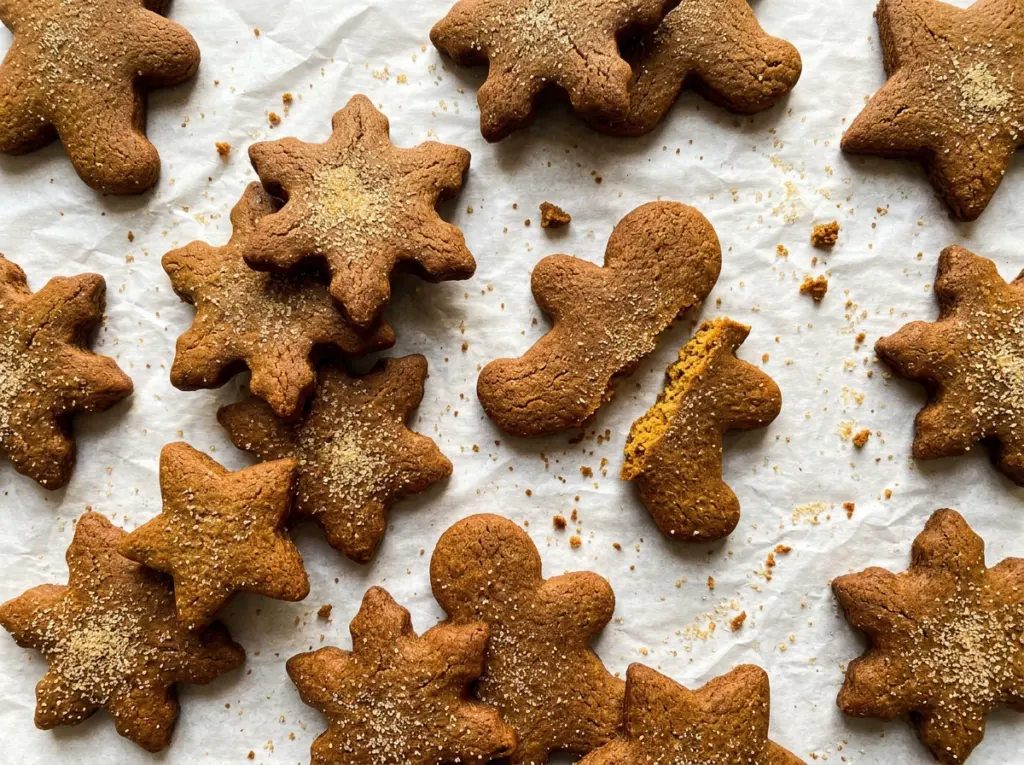
The first roll of gingerbread dough can feel a little stubborn after its chill, but pressing on with a warm, soft disk is what makes cutouts lose their clean edges. I divide the dough before refrigerating, then roll one piece at a time between parchment; it’s easier to handle and keeps the shapes neat without adding extra flour.
These gluten free gingerbread cookies get their familiar warmth from ginger, cinnamon, and cloves, with unsulphured molasses bringing a deep, mellow sweetness. A gluten-free 1-to-1 flour blend with xanthan gum gives the dough the structure it needs for cutout cookies. Bake just until the edges look set, then let the cookies rest on the pan before moving them. They come out tender, warmly spiced, and ready to cool into crisp-edged shapes.
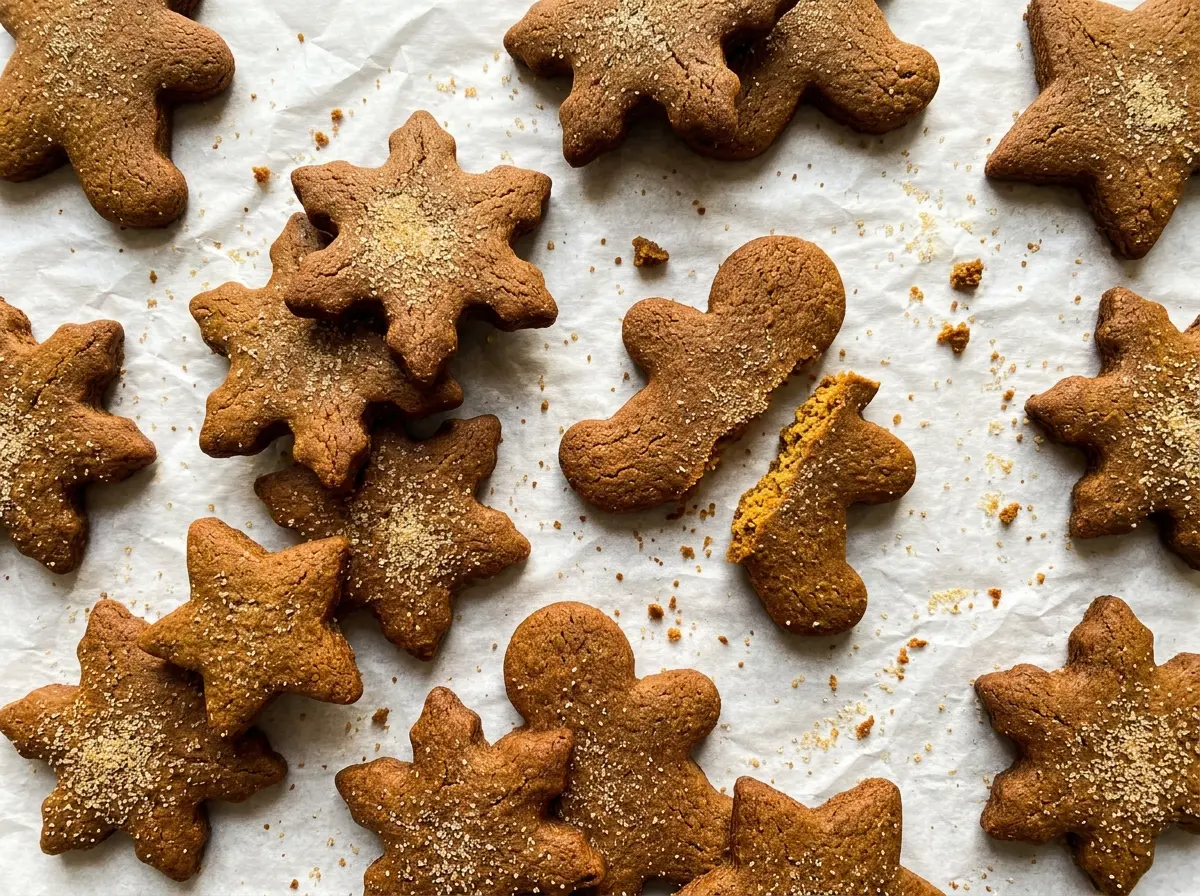
Kitchen Note
Let the cookies cool on the baking sheet for the full 5 minutes before moving them. They’re delicate while hot, and that short rest gives the edges time to firm up.
Save these gluten free gingerbread cookies for crisp-edged cutouts with a warm ginger-and-molasses flavor.
Why Gluten-Free Gingerbread Dough Needs a Full Chill
Cutout dough needs to hold its shape from the rolling pin to the baking sheet. With gluten-free flour, there’s no elastic gluten network to stretch and help the dough stay flexible, so the blend and the chill both matter. A 1-to-1 flour that includes xanthan gum gives the dough structure, while refrigeration firms the butter and makes the dough easier to roll and cut.
Skipping the chill—or dusting in extra flour to make a soft dough easier to handle—can work against you. Extra flour changes the balance of the dough, and a disk that’s too warm is harder to cut cleanly. I divide the dough into two disks before chilling because a flatter piece firms evenly and is simpler to roll than one large ball. Roll between parchment sheets, and the dough stays supported as you work without needing a heavily floured counter.
What Gives These Cutouts Their Gingerbread Character

- Gluten-free 1-to-1 baking flour with xanthan gum — Use a blend designed to replace wheat flour cup for cup, with xanthan gum already included. The gum helps the cutouts hold together; a plain gluten-free flour without it won’t behave the same way. The flour doesn’t need to be a premium brand, but check that it’s a baking blend rather than a single-ingredient flour.
- Unsulphured molasses — It brings the deep, rounded sweetness that makes these taste like gingerbread. Use regular unsulphured molasses rather than blackstrap, which has a much stronger, more bitter taste. There’s no need to seek out a specialty brand.
- Ground ginger, cinnamon, and cloves — Together they make the cookies warm and aromatic without relying on a premixed spice blend. Fresh, fragrant spices give the clearest flavor; if the jars in your cupboard smell faint when you open them, the finished cookies will too.
- Unsalted butter and light brown sugar — Softened butter creams smoothly with the sugar, while the packed brown sugar adds moisture and a gentle caramel note. Standard grocery-store butter and sugar work well here; the butter should be softened enough to beat smoothly, not melted.
- Large egg — The egg binds the dough and helps it stay cohesive when you roll and cut it. Use a large egg, as the dough’s moisture balance depends on it.
From Creamed Butter to Cutout Shapes: Keeping the Dough Together
Whisk the Dry Ingredients Evenly
Whisk the gluten-free flour, baking soda, ginger, cinnamon, cloves, and salt together in a medium bowl. Break up any small flour or spice clumps as you whisk so the leavening and spices are distributed throughout. An uneven mix can leave a cookie with a strong pocket of spice or a patch that rises differently. Set the bowl aside while you cream the butter and sugar.
Cream the Butter, Sugar, Molasses, and Egg
Beat the softened butter and packed light brown sugar in a large bowl until creamy, about 2 minutes. Add the molasses and egg, then beat until the mixture looks smooth, scraping down the bowl as needed. If molasses or butter clings to the sides, scrape it back into the center before adding the flour. Mix in the dry ingredients on low just until no dry patches remain; overmixing isn’t needed.
Chill, Roll, and Cut the Dough
Divide the dough into two disks, wrap them, and refrigerate for 1 hour. Heat the oven to 350°F and line two baking sheets with parchment paper. Roll one disk between sheets of parchment to 1/4-inch thickness, cut 2- to 3-inch shapes, and arrange them about 1 inch apart on a prepared baking sheet. Reroll the scraps, then repeat with the second disk.
Bake Until the Edges Look Set
Bake one sheet at a time for 8 to 10 minutes, watching for edges that look set. Don’t wait for deep browning; the cookies continue to firm as they cool. Leave them on the baking sheet for 5 minutes, then transfer them to a rack to cool completely. Moving them straight from the oven can break the warm cutouts.
Easy Changes for a Different Gingerbread Cookie
Make Them Dairy-Free
Replace the unsalted butter with an equal amount of unsalted dairy-free baking sticks. Choose sticks rather than soft tub spread, which has a different water content and can make the dough harder to handle. The cookies will keep their gingerbread shape, though the buttery flavor will be a little less pronounced.
Make the Spice Milder
Leave out the ground cloves for a softer, less pungent spice flavor. Ginger and cinnamon still give the cookies their familiar warmth, while the molasses remains the main deep note.
Use Dark Brown Sugar for a Deeper Note
Swap the light brown sugar for packed dark brown sugar. Its stronger molasses flavor makes the cookies taste darker and richer; the dough may feel a touch softer, so keep the full chill before rolling.
Storage and Reheating
- Refrigerator: Refrigeration isn’t needed; store the cooled cookies in an airtight container at room temperature for up to 5 days. The refrigerator can make them firmer.
- Freezer: Freeze completely cooled cookies in an airtight container, with parchment between layers, for up to 2 months. Thaw at room temperature.
- Reheating: These are best at room temperature, so no reheating is necessary. Skip the microwave, which can make the cookies soft and then tough as they cool.
Questions That Come Up When Baking These Cutouts
Gluten Free Gingerbread Cookies
Ingredients
Equipment
Method
- Whisk the gluten-free flour, baking soda, ginger, cinnamon, cloves, and salt together in a medium bowl.
- Beat the butter and brown sugar in a large bowl until creamy, about 2 minutes.
- Beat in the molasses and egg until smooth, scraping down the bowl as needed.
- Add the flour mixture and mix on low just until no dry patches remain.
- Divide the dough into two disks, wrap, and refrigerate for 1 hour.
- Heat the oven to 350°F.
- Line two baking sheets with parchment paper.
- Roll one disk between sheets of parchment to 1/4-inch thickness.
- Cut into 2- to 3-inch shapes and arrange them about 1 inch apart on a prepared baking sheet.
- Reroll the scraps and repeat with the second disk.
- Bake one sheet at a time for 8 to 10 minutes, until the cookies look set at the edges.
- Cool on the sheet for 5 minutes before transferring to a rack to cool completely.