
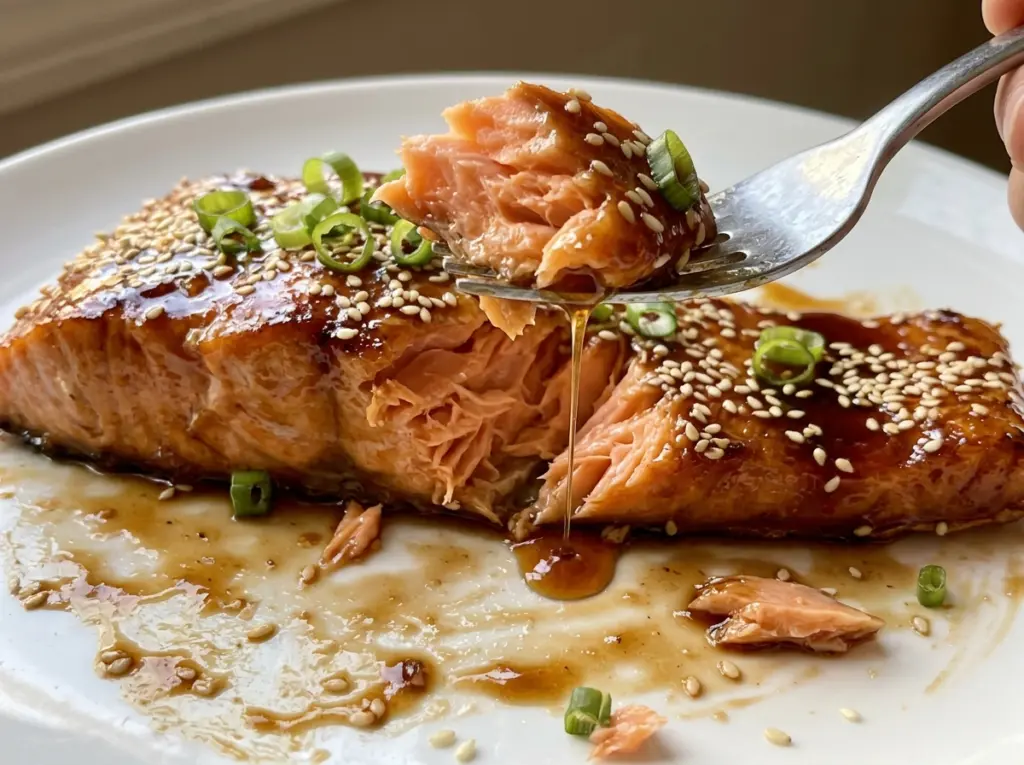
When the honey and soy sauce start to bubble together, the glaze smells savory first, then sweet, with garlic and ginger coming through as it thickens. I brush it over the salmon before baking and keep the rest for the table, so every piece of this Honey Soy Sauce Glazed Salmon gets a light coating in the oven and a fresh, glossy finish just before serving.
The cornstarch slurry is what gives the glaze enough body to cling without needing a long reduction. Mix it with cold water before it goes into the simmering sauce; sprinkling cornstarch straight into the pan is how you end up chasing little lumps with a whisk. The salmon bakes in one dish, and the doneness check is straightforward: look for a flaky texture and check the thickest part of each fillet.
This is a balanced, savory-sweet glaze, not a thick candy-like coating. The fish stays the focus, with enough sauce left to spoon over each serving at the table.
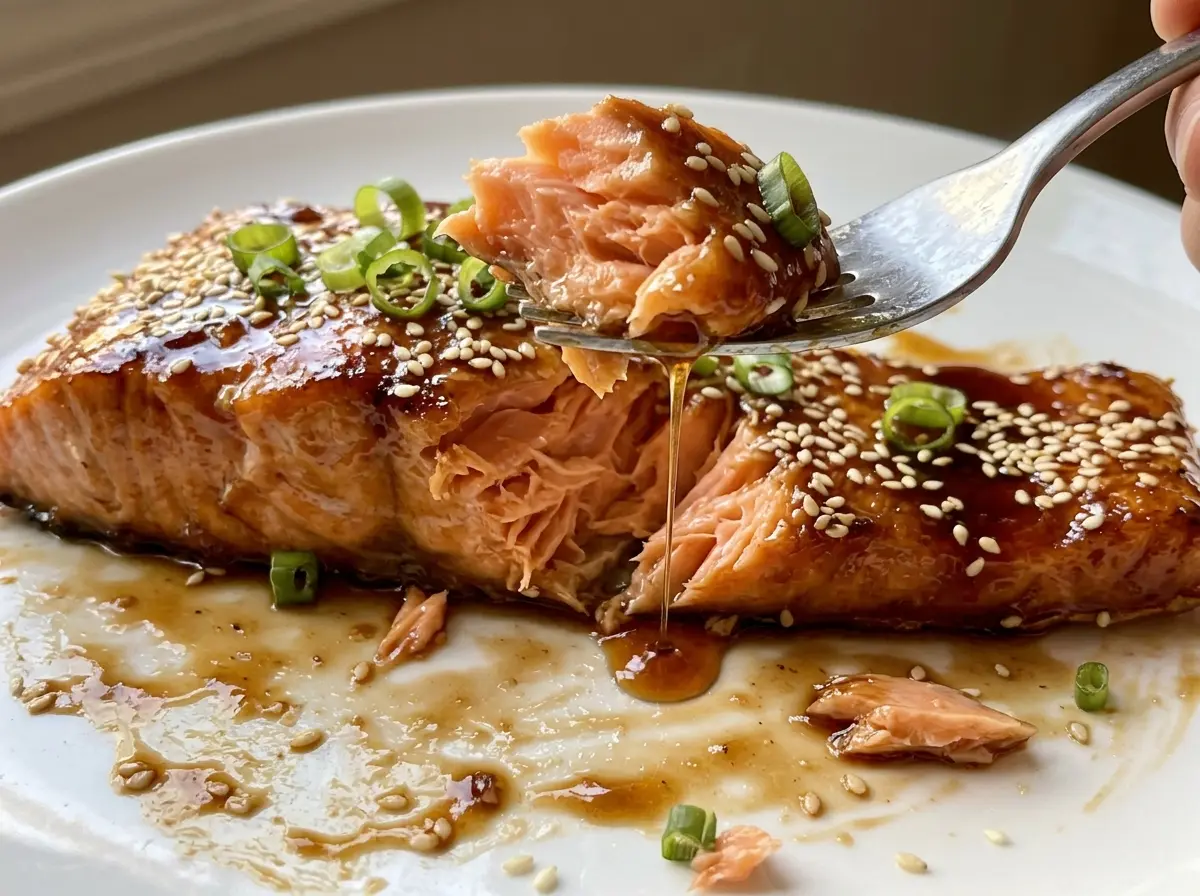
Kitchen Note
The slurry should be smooth before it goes into the saucepan. Once it hits the simmering glaze, watch for the sauce to turn glossy; it only needs 30 to 60 seconds, and it will continue to thicken a little as it sits.
Save this Honey Soy Sauce Glazed Salmon for a simple baked dinner with a glossy ginger-garlic glaze and extra sauce for serving.
Why the Glaze Goes on Twice, Not All at Once
It’s easy to think all the glaze should go over the salmon before it goes into the oven. I use only part of it at that point. The oven coating gives the tops a savory-sweet finish as the fish cooks, while the portion kept back stays smooth and bright for serving. That contrast matters: a little glaze baked onto the fish and a spoonful added afterward taste more lively than one heavy layer cooked for the entire time.
There’s also a practical reason to keep some aside. Salmon fillets don’t all have the same thickness, so their surfaces can cook at slightly different rates. A measured brush of glaze is enough to coat each portion without leaving it swimming in sauce. Then the reserved glaze lets you add more at the table without having to guess how much each piece needs while it’s baking.
Think of the glaze as both a baking coating and a finishing sauce. Use it in those two roles, and the salmon gets the flavor without losing the clean, flaky texture you want from a baked fillet.
What Gives This Honey-Soy Glaze Its Balance and Gloss

- Soy sauce — It brings the salty, savory backbone that keeps the honey from tasting one-dimensional. A standard soy sauce works well here; if you choose a low-sodium version, expect the finished glaze to taste less salty. Tamari is the closest swap when you need a gluten-free option, though brands vary in saltiness.
- Honey — Honey rounds out the soy sauce and helps the glaze coat the fish. A mild, everyday honey is a good choice; a strongly flavored honey will make its own character more noticeable. Keep the honey in the glaze rather than replacing it with a dry sweetener, which won’t behave the same way in this sauce.
- Rice vinegar — Its gentle acidity cuts through the honey and balances the savory sauce. Use plain rice vinegar rather than seasoned rice vinegar, which often includes extra sugar and salt that can shift the balance.
- Fresh garlic and ginger — Minced garlic and freshly grated ginger bring a sharper, more fragrant flavor than dried versions. Mince the garlic finely so larger pieces don’t dominate a bite, and grate the ginger just before mixing it into the saucepan.
- Cornstarch — This is what turns the simmering glaze glossy and gives it enough thickness to cling to the salmon. Mixing it with cold water first helps it disperse smoothly; leaving it out means the glaze will stay thinner rather than setting into the same coating.
- Salmon fillets — Choose four portions close to the same size so they’re easier to bake together. Fresh or previously frozen fillets work; if using frozen fish, thaw it completely before arranging it in the baking dish so the timing and texture are more predictable.
The Sauce-First Sequence That Keeps the Salmon on Track
Simmer the Soy, Honey, and Aromatics
Combine the soy sauce, honey, rice vinegar, minced garlic, and grated ginger in a small saucepan. Bring the mixture to a simmer over medium heat, stirring as needed so the honey dissolves into the soy sauce. A gentle simmer is the cue; you don’t need a hard boil to bring the ingredients together. Keep an eye on the pan while you prepare the slurry so the sauce doesn’t bubble unattended.
Thicken the Glaze Without Lumps
Stir the cornstarch and cold water together in a small bowl until no dry pockets remain. Whisk that slurry into the simmering sauce, then cook for 30 to 60 seconds, until the glaze looks glossy and slightly thickened. If it still looks watery, give it the full time in that range and keep whisking; if it tightens quickly, remove the pan from the heat. Set the finished glaze aside while you prepare the salmon.
Brush the Fillets Before They Bake
Heat the oven to 400°F and lightly coat a 9×13-inch baking dish with the neutral oil. Arrange the four salmon fillets in the dish, skin-side down if they have skin, and brush each with 2 tablespoons of glaze divided evenly among them. Keep the rest of the glaze separate for serving. The oil coats the baking dish, while the glaze goes on the fish.
Use the Thickest Fillet to Judge Doneness
Bake the salmon for 10 to 15 minutes. Check the thickest part of each fillet; it should reach 145°F and flake easily with a fork. Fillets can differ in thickness, so don’t judge every portion by the thinnest piece alone. Serve the salmon with the remaining glaze, adding it at the table to suit each portion.
Two Useful Ways to Adapt the Salmon and Glaze
Use Tamari for a Gluten-Free Glaze
Replace the soy sauce with the same amount of tamari. The glaze will keep its savory-sweet character, though the salt level depends on the brand, so taste the finished sauce before serving and expect some variation in saltiness.
Choose Skin-On or Skinless Fillets
Skin-on fillets can go straight into the dish skin-side down, while skinless portions work just as well in the same glaze. Skinless salmon has no skin to separate when serving, so handle it gently when moving it from the baking dish; either choice keeps the honey-soy finish intact.
Storage and Reheating
- Refrigerator: Store leftover salmon and glaze in separate airtight containers and refrigerate for 3 to 4 days. The fish will lose some of its just-baked flakiness as it chills.
- Freezer: Freeze cooked salmon in an airtight freezer-safe container for up to 2 to 3 months. Freeze leftover glaze separately; thaw both in the refrigerator before reheating.
- Reheating: Warm the salmon gently, covered, in the microwave or oven until it reaches 165°F, and reheat the glaze separately until pourable. Avoid high heat or prolonged reheating, which can dry out the fish.
Questions That Come Up When Baking Honey-Soy Salmon
Honey Soy Sauce Glazed Salmon
Ingredients
Equipment
Method
- In a small saucepan, combine the soy sauce, honey, rice vinegar, garlic, and ginger and bring to a simmer over medium heat.
- Stir the cornstarch and cold water together in a small bowl.
- Whisk the slurry into the simmering sauce and cook for 30 to 60 seconds, until glossy and slightly thickened.
- Remove the pan from the heat.
- Heat the oven to 400°F.
- Lightly coat a 9x13-inch baking dish with the oil.
- Arrange the salmon fillets in the dish, skin-side down if they have skin.
- Brush the salmon with 2 tablespoons of the glaze, dividing it evenly.
- Bake for 10 to 15 minutes, until the thickest part of each fillet reaches 145°F and flakes easily with a fork.
- Serve the salmon with the remaining glaze.