
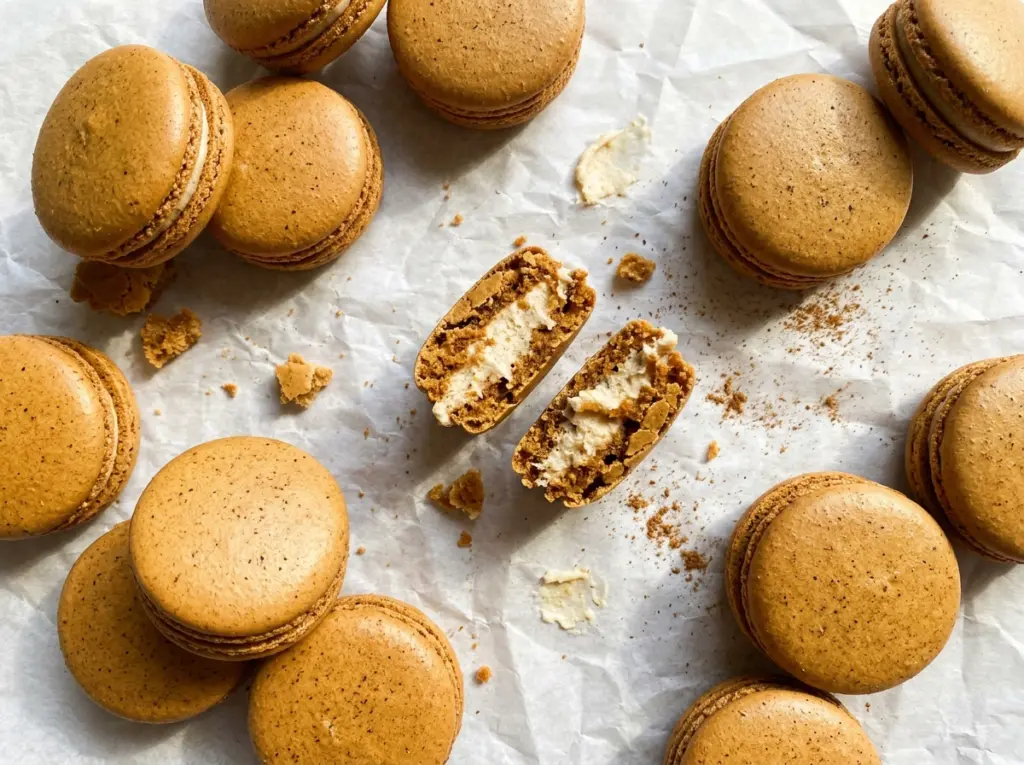
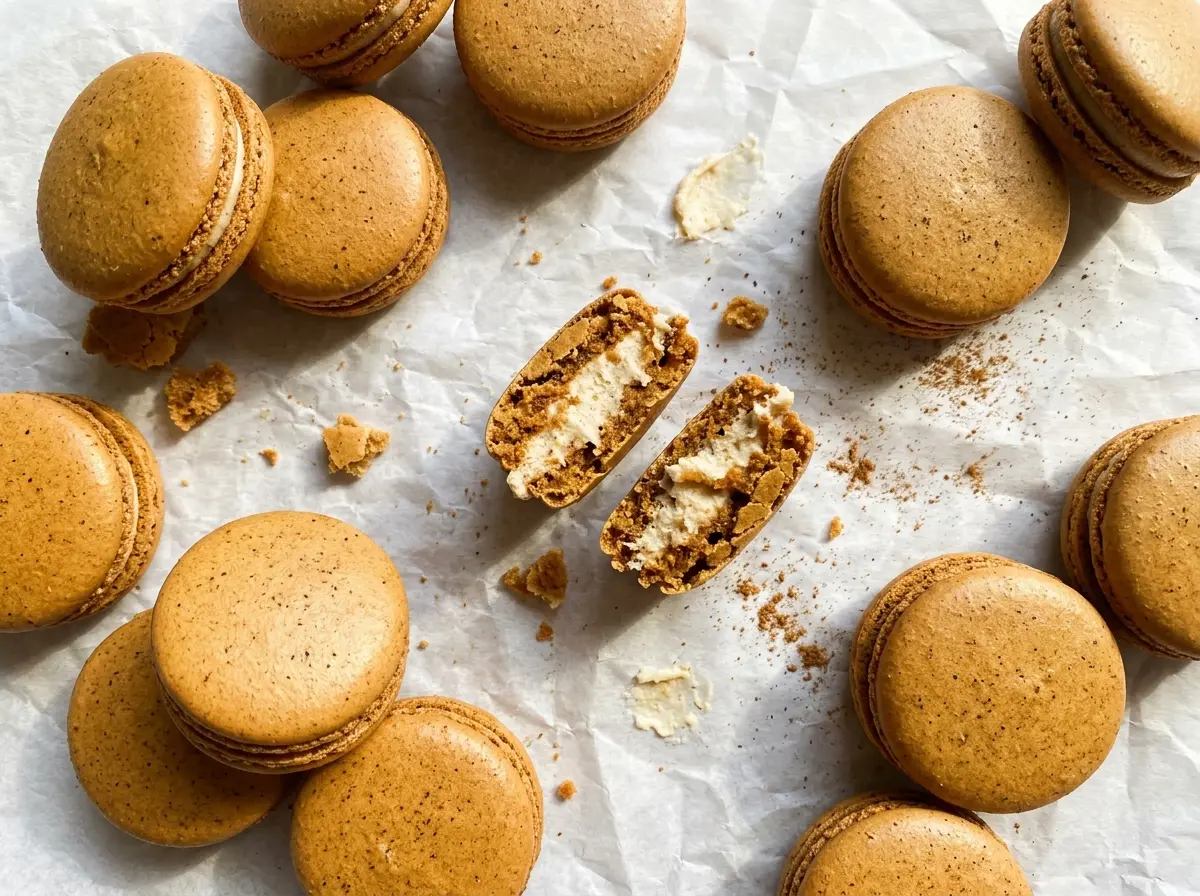
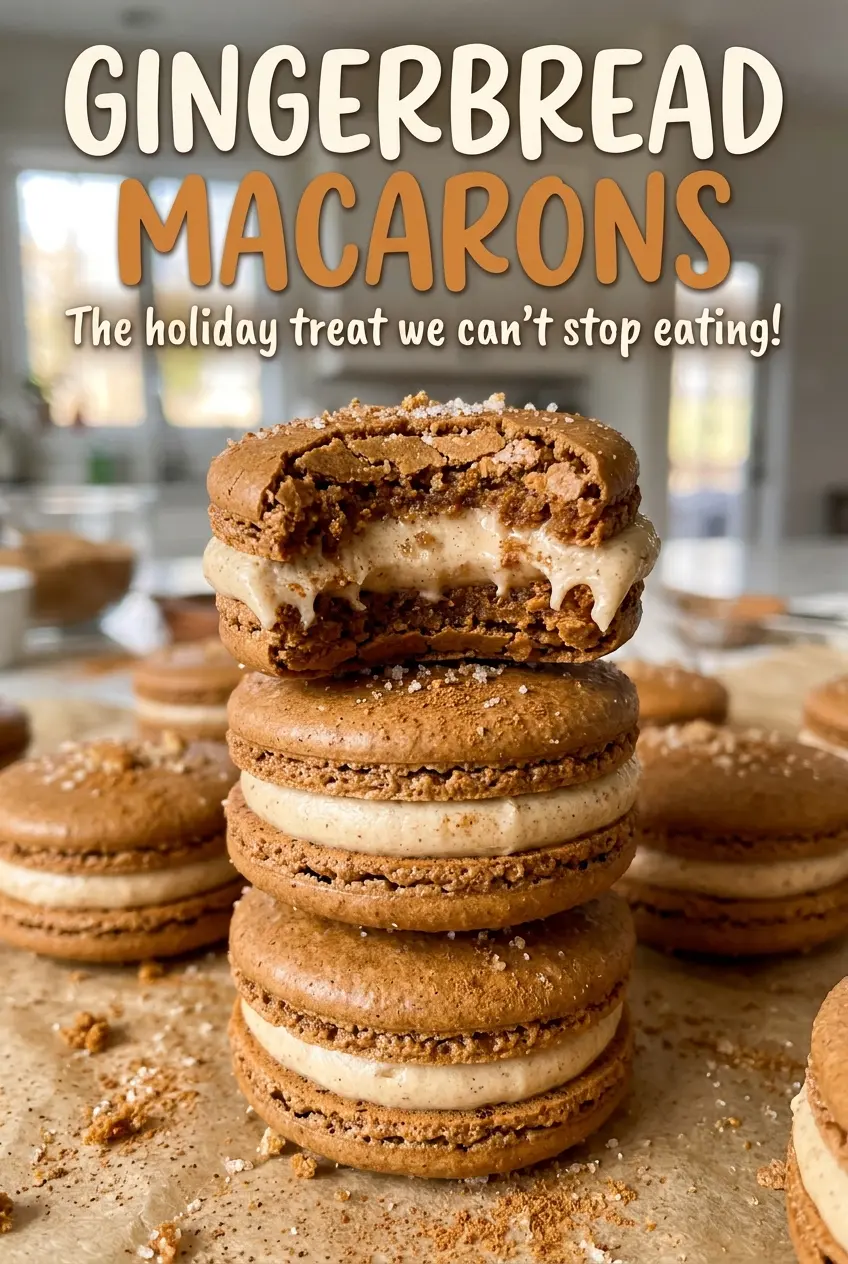
At the first tap of a baking sheet on the counter, tiny air bubbles rise to the surface of the macaron batter. I pop them before they have a chance to turn into little craters, because a smooth top makes these gingerbread macarons look as good as they taste. The shells are crisp on the outside, tender inside, and filled with white chocolate ganache scented with molasses and warm spices.
Macarons reward attention more than speed. I sift the almond flour and powdered sugar together, then fold them into glossy meringue until the batter falls in a thick ribbon. The shells need time to dry before they go into the oven; that wait is part of the method, not a delay to rush past. After filling, a night in the refrigerator lets the shells and spiced center settle into one soft, chewy bite.
Kitchen Note
The filling thickens as it chills, so I give it a stir every 10 minutes rather than leaving it untouched in the refrigerator. That keeps the texture even and makes it easier to judge when it’s ready to pipe.
Save these gingerbread macarons for a bake when you have time to let the shells dry and the spiced filling chill.
Why the Dry Shell Matters More Than an Extra Minute in the Oven
Macaron shells need a dry surface before baking. As the piped rounds sit, their tops form a light skin; in the oven, that surface helps direct the rise toward the bottom edge, where the ruffled feet form. If the tops still feel tacky when they go in, steam can break through unevenly and leave you with cracked shells or tops that aren’t smooth.
Room conditions affect how quickly the shells dry, which is why the resting time is a range rather than a single number. Start checking at 30 minutes, then continue until the tops feel dry and don’t stick when you touch one gently with a fingertip. A humid room can take longer. Don’t use the clock alone as your cue—the feel of the surface tells you whether the shells are ready for the oven.
This wait also gives you a useful chance to look over each tray. Pop any visible air bubbles with a toothpick before the tops dry, and keep the sheets level while they rest. Those small checks help the shells bake more evenly without changing the gentle texture you want inside.
Why Almond Flour and White Chocolate Set the Character of These Macarons
- Blanched almond flour gives the shells their fine texture and nutty base. Fine, blanched flour matters here; coarser meal can leave visible flecks and a rougher surface. Sifting removes lumps, and there isn’t a direct flour swap that keeps the same macaron structure.
- Powdered sugar blends with the almond flour to make a smooth dry mixture. Sift it with the flour rather than adding it straight to the meringue, where it won’t distribute the same way. A different granulated sweetener won’t provide the same fine texture.
- Egg whites and cream of tartar form the meringue that holds the shells together. Room-temperature whites whip readily, and a clean mixing bowl helps them build volume. The cream of tartar supports the whipped whites; egg substitutes won’t produce the same meringue for this formula.
- Granulated sugar goes into the whites gradually to build a glossy, stable meringue. Add it slowly once the whites are foamy instead of tipping it all in at once. That steady addition gives the sugar time to dissolve as the meringue whips.
- White chocolate and heavy cream create the smooth, pipeable base for the filling. Finely chopped chocolate melts more evenly when the hot cream is poured over it. These ingredients determine both the texture and the mild sweetness, so swapping in a different kind of chocolate or a non-dairy liquid would change the result.
- Unsulphured molasses and the spices bring the gingerbread character. The molasses adds a deep, rounded note, while ginger, cinnamon, and cloves keep the filling warm and fragrant. Use unsulphured molasses for the intended flavor; a stronger, more bitter type can overpower the delicate white chocolate.
From Smooth Spiced Ganache to Shells with Neat Feet
Make the Filling While It Has Time to Chill
Put the finely chopped white chocolate in a heatproof bowl. Warm the heavy cream in a small saucepan over medium-low heat until it’s steaming, but don’t let it boil. Pour it over the chocolate and leave it alone for 2 minutes before stirring; if you stir too soon, you may have unmelted pieces to work through. Once smooth, mix in the molasses, ginger, cinnamon, cloves, and salt, then refrigerate the filling for 20–30 minutes, stirring every 10 minutes, until it’s thick enough to pipe.
Whip a Glossy Meringue with Stiff Peaks
Heat the oven to 300°F and line two rimmed baking sheets with parchment paper. Sift the almond flour and powdered sugar through a fine-mesh sieve, then whisk them together. In a clean mixing bowl, beat the room-temperature egg whites with the cream of tartar until foamy, then add the granulated sugar gradually. Beat on medium-high for 5–7 minutes, until the meringue looks glossy and holds stiff peaks; if it’s still slumping, keep beating until it reaches that cue.
Fold Until the Batter Falls in a Thick Ribbon
Add the sifted almond mixture to the meringue in three additions, folding gently after each one. Stop when the batter falls from the spatula in a thick ribbon and a figure eight disappears into the mixture within 10–15 seconds. If the figure eight sits on top, fold a little more; once the batter runs off the spatula too quickly, you can’t fold the structure back in. Transfer it to a piping bag fitted with a ½-inch round tip and pipe 1½-inch rounds, about 1 inch apart.
Bake One Sheet at a Time, Then Fill and Rest
Tap each sheet firmly on the counter and use a toothpick to pop visible air bubbles. After the shells pass the dry-surface check, bake one sheet at a time for 15–18 minutes, until the tops are set and the feet look dry. Let them cool completely on the sheets before gently peeling them from the parchment; warm shells are fragile and can tear. Pair shells by size, pipe about 1 teaspoon of filling onto the flat side of half, and sandwich with the remaining shells. Refrigerate the assembled macarons in an airtight container for at least 12 hours, then bring them to room temperature for 20–30 minutes before serving.
Two Small Changes to Shape the Bite
Pipe Mini Gingerbread Macarons
Pipe rounds smaller than the standard 1½-inch shells for petite sandwiches. Smaller shells bake differently, so watch for set tops and dry-looking feet rather than assuming the standard bake time applies unchanged. Use a lighter amount of filling so it doesn’t squeeze out around the edges.
Make a Shell-Forward Sandwich
Pipe a thinner layer of the same spiced filling between each pair of shells. You’ll get more almond-meringue texture in each bite and a less sweet finish, without changing the filling or shell mixture. Keep the filling centered so it stays inside the edges as you sandwich them.
Storage and Reheating
- Refrigerator: Keep the macarons in an airtight container. Chill them for at least 12 hours before serving; the shells soften as they rest with the filling.
- Freezer: I don’t recommend freezing this batch because thawing may soften the shells and change the filling’s texture.
- Reheating: Don’t heat them. Bring refrigerated macarons to room temperature for 20–30 minutes before serving; warming them can make the filling too soft.
Questions That Come Up When Making Gingerbread Macarons
Gingerbread Macarons
Ingredients
Equipment
Method
- Put the white chocolate in a heatproof bowl.
- Heat the heavy cream in a small saucepan over medium-low heat until steaming but not boiling.
- Pour the hot cream over the chocolate and let stand for 2 minutes.
- Stir until smooth.
- Mix in the molasses, ginger, cinnamon, cloves, and salt.
- Refrigerate the filling for 20-30 minutes, stirring every 10 minutes, until thick enough to pipe.
- Preheat the oven to 300°F.
- Line 2 rimmed baking sheets with parchment paper.
- Sift the almond flour and powdered sugar together through a fine-mesh sieve into a bowl.
- Whisk the sifted almond flour and powdered sugar to combine.
- In a clean mixing bowl, beat the egg whites and cream of tartar with a hand mixer or stand mixer until foamy.
- Gradually add the granulated sugar and beat on medium-high until the meringue is glossy and holds stiff peaks, 5-7 minutes.
- Fold the almond flour mixture into the meringue in 3 additions.
- Stop folding when the batter falls from the spatula in a thick ribbon and a figure eight disappears into the batter within 10-15 seconds.
- Transfer the batter to a piping bag fitted with a 1/2-inch round tip.
- Pipe 1 1/2-inch rounds onto the prepared sheets, spacing them about 1 inch apart.
- Tap each sheet firmly on the counter.
- Pop any visible air bubbles with a toothpick.
- Let the piped shells stand at room temperature for 30-60 minutes, until their tops feel dry and do not stick to a fingertip.
- Bake one sheet at a time for 15-18 minutes, until the tops are set and the feet look dry.
- Cool completely on the sheets before gently peeling off the parchment.
- Pair the shells by size.
- Pipe about 1 teaspoon of filling onto the flat side of half the shells.
- Sandwich with the remaining shells.
- Arrange the macarons in an airtight container and refrigerate for at least 12 hours.
- Bring to room temperature for 20-30 minutes before serving.