
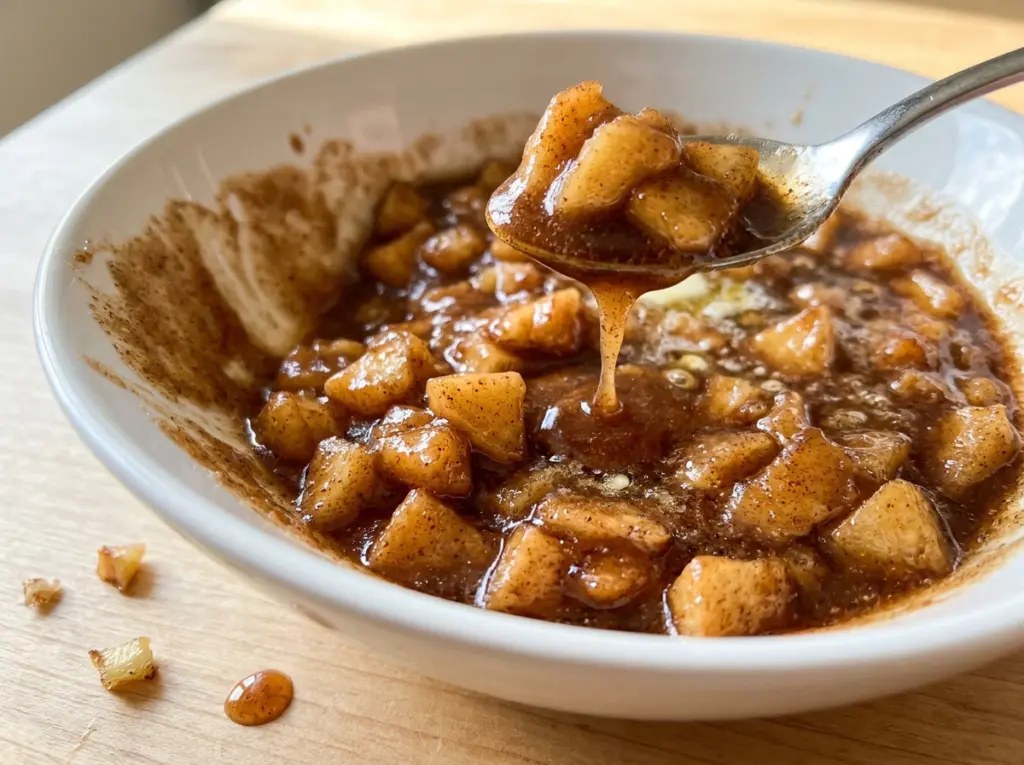
The first spoonful should pick up two textures at once: a cool, fluffy layer of cream cheese and warm apples coated in cinnamon syrup. I like this Apple Pie Dip when I want the familiar comfort of apple pie without rolling out a crust or turning on the oven. Graham cracker pieces make easy scoops, and the skillet topping comes together while the cream cheese base is being mixed.
The part that makes the dip feel balanced is keeping the apples tender but intact. They need enough time in the skillet to soften and take on the brown sugar and cinnamon, but not so long that they collapse into applesauce. A little lemon juice brightens the topping, and a cornstarch slurry gives it a glossy finish that sits neatly on the cream cheese instead of running all over the bowl.
Spread the base in a shallow serving bowl, spoon the warm topping over it, and bring the graham crackers to the table. Each scoop gets creamy, cinnamon-scented apples and a crisp little crunch.
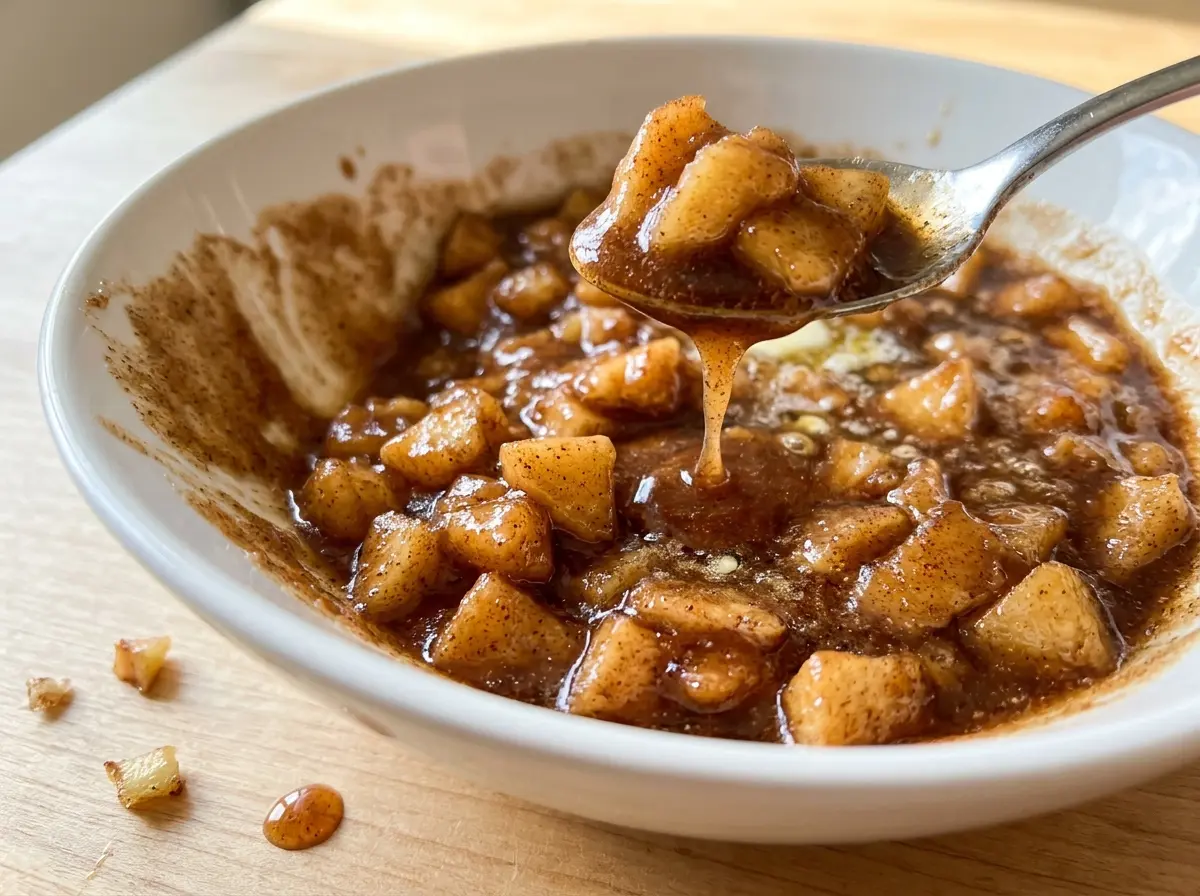
Kitchen Note
Cut the apples into even pieces, and they’ll soften at about the same pace. I stick with half-inch pieces so they’re easy to scoop onto a graham cracker without sliding off.
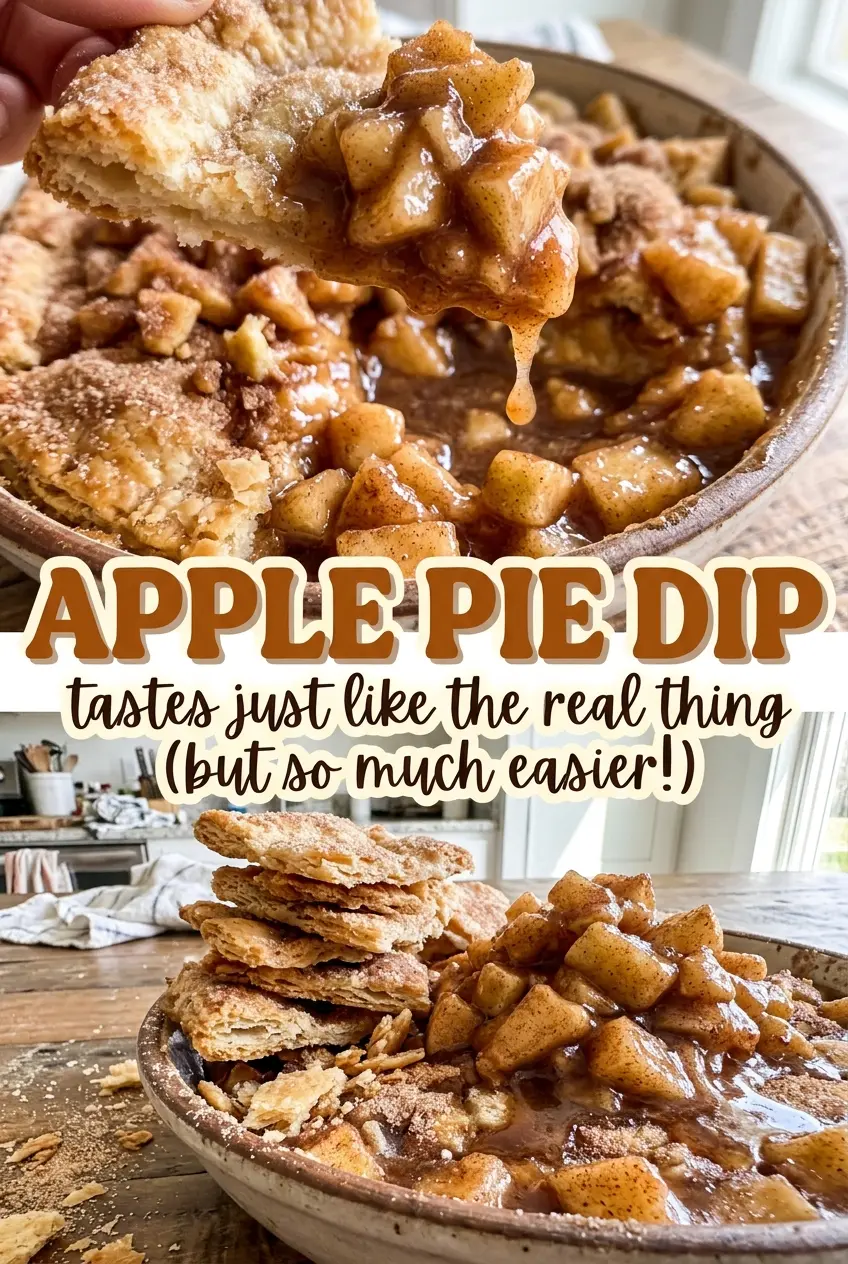
Save this Apple Pie Dip for a no-bake dessert spread: fluffy cream cheese, warm cinnamon apples, and graham crackers for scooping.
Why This Dip Works Better as Two Distinct Layers
Apple pie filling and cream cheese dip each have their own texture, and keeping them separate is what makes every scoop feel composed rather than heavy. The cream cheese mixture stays smooth and fluffy underneath, while the apples bring a warm, glossy topping with pieces you can see and taste. Stirring the two together would blur that contrast and make the cream cheese base less airy.
A shallow serving bowl helps the topping spread across the base instead of piling up in one deep spot. That matters when you’re dipping crackers: you want to reach the creamy layer and apple topping in the same scoop. Spoon the warm fruit over the surface shortly before serving, rather than mixing it through. The temperature contrast is part of the appeal, too—the topping is warm from the skillet while the cream cheese mixture stays cool and soft.
This isn’t a dip where the apples need to disappear into a thick sauce. They should be tender enough to bite through, but still recognizable as little pieces. That balance keeps the topping substantial without overwhelming the creamy layer.
What Gives the Creamy Base and Apple Topping Their Texture
- Block cream cheese — A softened block beats up smooth and gives the base enough body to hold the apple topping. Tub-style cream cheese is usually softer, so it won’t give quite the same sturdy, fluffy layer. Let the block soften before mixing; cold cream cheese is much more likely to leave little lumps.
- Powdered sugar, vanilla, and heavy cream — Powdered sugar blends smoothly into the cream cheese, while vanilla rounds out its tang and heavy cream loosens the mixture into a scoopable dip. Keep powdered sugar rather than swapping in granulated sugar, which can leave the base gritty. If you’re out of heavy cream, whole milk can loosen the mixture, though the result won’t be as rich; add it gradually until the dip turns smooth and spreadable.
- Apples — Choose apples that stay in pieces when cooked, rather than a soft variety that quickly breaks down. A firm pear can replace the apples for a softer, milder fruit topping; keep the pieces similar in size and watch their texture closely as they cook.
- Brown sugar and cinnamon — Packed light brown sugar melts around the fruit and gives the topping its caramel-like sweetness. Cinnamon brings the familiar apple-pie warmth; it’s worth using a fresh, fragrant jar because stale cinnamon tastes flat here.
- Butter and lemon juice — Butter gives the skillet topping richness, and lemon juice keeps the sweetness from tasting one-note. Unsalted butter keeps the flavor in the range intended; salted butter will make the topping taste saltier.
- Cornstarch — Mixed with water before it goes into the skillet, cornstarch thickens the apple juices into a glossy coating. Don’t sprinkle it straight over the apples, or it can clump instead of dispersing evenly.
- Graham cracker sheets — Their crisp, lightly sweet crunch is sturdy enough for dipping. For a gluten-free option, use gluten-free graham cracker sheets in their place; the creamy dip and apple topping stay the same.
How to Cook the Apples Without Losing Their Shape
Beat a Smooth Cream Cheese Base
Beat the softened cream cheese with the powdered sugar, vanilla, and heavy cream in a medium bowl until the mixture looks smooth and fluffy. Scrape the sides of the bowl if pockets of cream cheese are hiding there. Stop once the base is evenly blended; prolonged beating isn’t needed. Spread it into a shallow serving bowl so the apple topping has a broad surface to cover.
Soften the Apples in the Skillet
Melt the butter in a 10-inch skillet over medium heat, then add the apples, brown sugar, and cinnamon. Cook for 5 to 8 minutes, stirring often, until the apples are tender but still hold their shape. If the pieces start to look broken down, don’t keep cooking just to make them softer. The goal is tender fruit, not a smooth puree.
Thicken the Juices to a Gloss
Stir the lemon juice into the apples. In a small bowl, whisk the cornstarch and water together until there are no dry pockets, then stir that mixture into the skillet. Simmer for 1 to 2 minutes, watching as the juices turn glossy and thicken around the fruit. If the mixture still looks watery, give it the full simmer rather than adding dry cornstarch directly to the pan.
Layer and Serve While the Topping Is Warm
Spoon the warm apples over the cream cheese base once the topping has thickened. Spread them gently so you don’t drag the creamy layer up through the fruit. Break the graham cracker sheets into pieces and set them out for dipping. The dip is ready to serve as soon as the warm topping meets the cool base.
Two Easy Ways to Adapt Apple Pie Dip
Make It Gluten-Free at the Cracker
Replace the graham cracker sheets with gluten-free graham cracker sheets. The dip itself doesn’t change, so you still get the creamy base and warm cinnamon apples; choose sturdy crackers that can hold a scoop without crumbling.
Serve It in Individual Portions
Spoon the cream cheese mixture into small serving bowls instead of one shallow bowl, then divide the warm apple topping among them. This makes the portions easy to pass around and keeps each serving layered, though you’ll have more dishes to wash.
Storage and Reheating
- Refrigerator: Store the cream cheese dip and apple topping separately in covered containers for up to 3 days. The topping will firm up as it chills, and the cream cheese base will become more solid.
- Freezer: Freezing isn’t a good fit; the cream cheese layer can turn grainy after thawing, and the cooked apples can lose their shape.
- Reheating: Warm only the apple topping gently in a skillet over low heat, stirring often, then spoon it over the chilled dip. Don’t heat the cream cheese base with the topping, since it can become loose and lose its fluffy texture.
Questions That Come Up When Making Apple Pie Dip
Apple Pie Dip
Ingredients
Equipment
Method
- Beat the cream cheese, powdered sugar, vanilla, and heavy cream in a medium bowl until smooth and fluffy.
- Spread the mixture in a shallow serving bowl.
- Melt the butter in a 10-inch skillet over medium heat.
- Add the apples, brown sugar, and cinnamon and cook for 5 to 8 minutes, stirring often, until the apples are tender but still hold their shape.
- Stir in the lemon juice.
- Whisk the cornstarch and water together in a small bowl.
- Stir the cornstarch mixture into the apples.
- Simmer for 1 to 2 minutes, until the topping is glossy and thickened.
- Spoon the warm apple topping over the cream cheese dip and serve with the graham cracker pieces.