
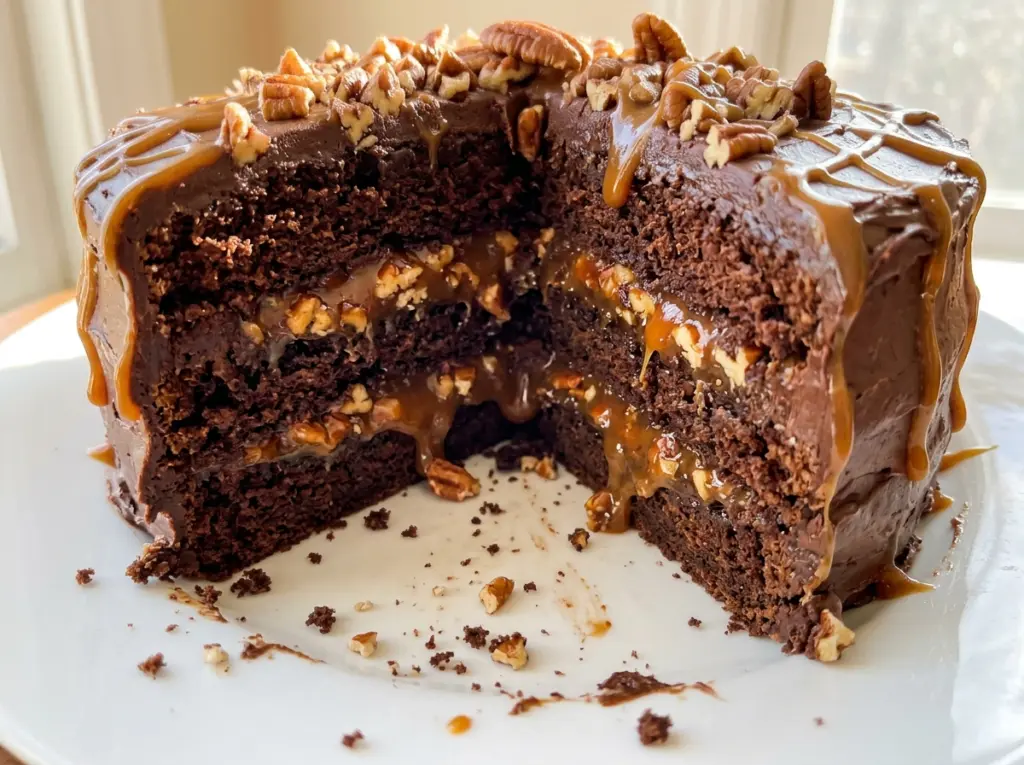
When soft caramels melt with cream and butter, they turn into a glossy topping that’s easy to spread while warm. On this chocolate cake, that layer settles around the pecans, and a fine chocolate drizzle gives each slice the familiar turtle-candy combination without adding another pan of frosting.
Holiday Turtle Cake starts with a tender cocoa cake baked in a 9×13-inch pan, so the topping can go right on top instead of needing a stack of layers. The chocolate is rich without making the caramel feel like an afterthought, and the pecans give the soft topping a crisp, nutty contrast.
I like that the cake can cool in its pan before the finishing layers go on. That gives the caramel a steady surface to cover, and the cake is ready to slice once the chocolate drizzle has set. The finished squares have a soft crumb, a chewy caramel layer, and just enough chocolate on top.
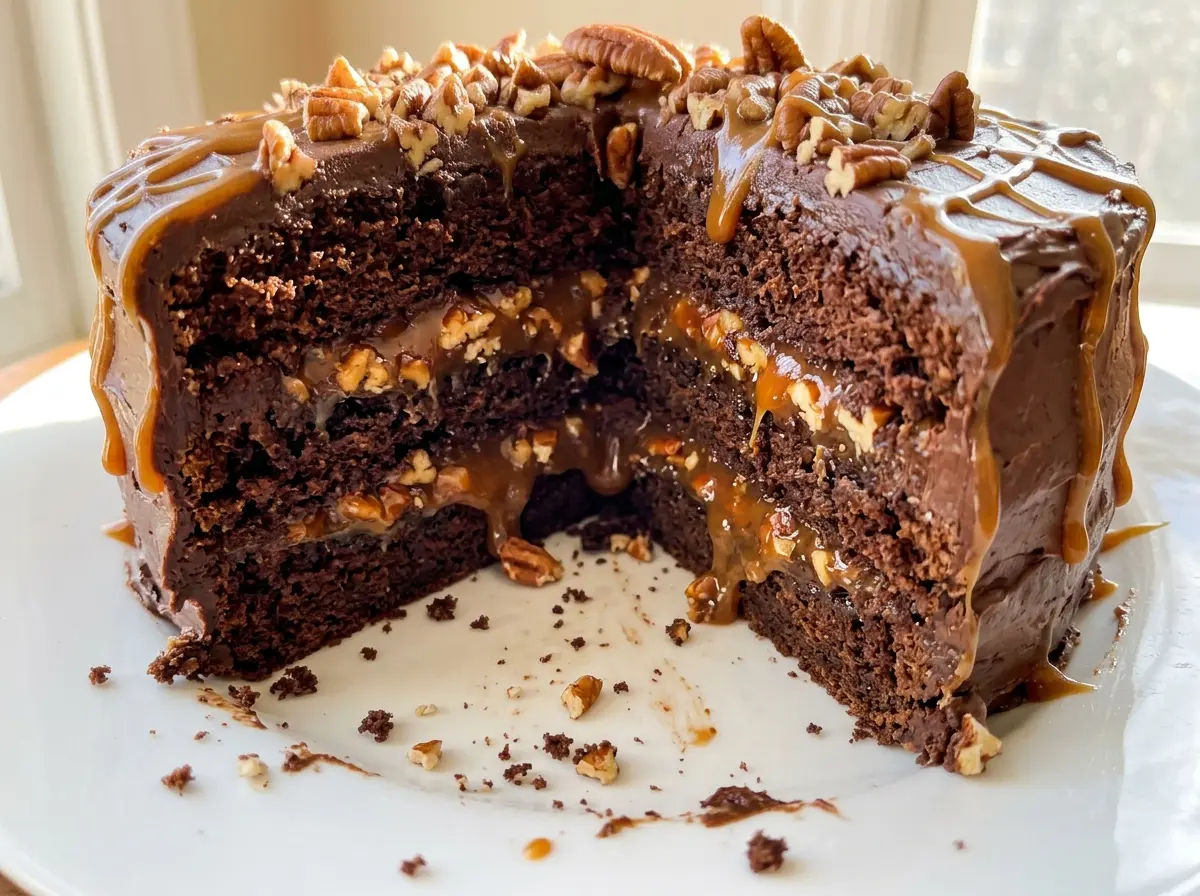
Kitchen Note
Scatter the pecans while the caramel is still glossy and soft. They settle into the topping more neatly before it begins to set.
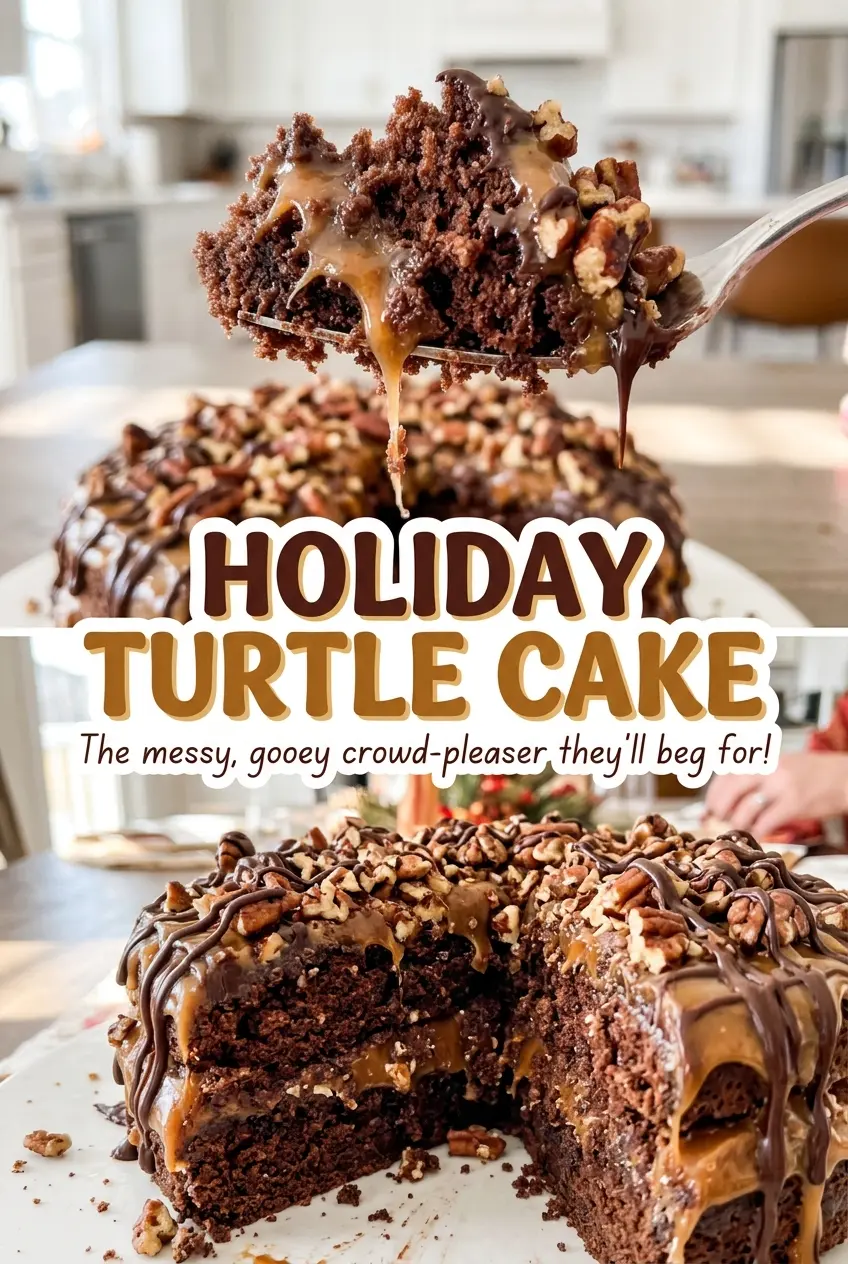
Save Holiday Turtle Cake for a chocolate-and-caramel bake with a chewy topping, pecans, and a smooth chocolate drizzle.
Why This Cake Batter Is Supposed to Look Almost Too Thin
After the boiling water goes in, this batter is much thinner than a typical cake batter. That can look like a mistake if you’re expecting something scoopable, but don’t add flour to thicken it. The liquid is part of the formula, and the finished cake gets its soft, tender crumb from that thin mixture baking evenly across the pan.
The hot water also helps disperse the cocoa through the batter, so you don’t end up with dry pockets or streaks of powder. Stir until the mixture looks smooth, then pour it into the prepared pan while it’s still fluid. It should settle into an even layer without needing to be pushed around. That loose consistency is a useful cue that the water has been incorporated, not a sign that you need to fix the proportions.
This matters especially with a cake that will carry a substantial topping. A dry or overly firm chocolate base would compete with the chewy caramel instead of letting the layers work together. Keep the flour amount steady and trust the thin batter; the oven is where it gains its structure.
What the Cocoa, Soft Caramels, and Pecans Each Bring
- Unsweetened cocoa powder — It gives the cake its chocolate base without adding extra sugar. A standard unsweetened cocoa works well here; sweetened cocoa drink mix isn’t an equivalent swap because it contains other ingredients that change the balance.
- All-purpose flour and the leaveners — The flour gives the thin batter enough structure to hold the topping, while baking powder and baking soda help the cake rise. Measure the flour without packing it into the cup; too much can make the crumb heavy.
- Whole milk, eggs, and vegetable oil — These bring moisture and structure to the chocolate cake. Vegetable oil keeps the crumb tender after cooling, while the eggs help the cake hold together under the caramel layer.
- Soft caramels, heavy cream, and butter — Soft caramels melt into a smooth topping when gently heated with the cream and butter. Use soft, unwrapped caramels rather than hard candies; the soft kind melts into the consistency this cake needs.
- Pecan halves — Their firm, buttery crunch is the contrast to the chewy caramel. Walnuts are a practical substitute if that’s what you have; they bring a slightly earthier taste but work in the same role.
- Semisweet chocolate chips and neutral oil — The chips make a familiar chocolate finish, and a little neutral oil helps the melted chocolate drizzle smoothly. A standard bag of chips is fine; there’s no need to seek out specialty chocolate for this thin topping.
How to Build the Cake and Finish Its Turtle Topping
Mixing a smooth, pourable chocolate batter
Heat the oven to 350°F and grease a 9×13-inch baking pan. Whisk the flour, sugar, cocoa powder, baking powder, baking soda, and salt in a large bowl, then add the eggs, milk, vegetable oil, and vanilla. Beat with an electric mixer on medium speed for 2 minutes. Stir in the boiling water until the batter is smooth and thin; if dry cocoa streaks remain, keep stirring before you pour.
Baking to a few moist crumbs
Pour the batter into the prepared pan and bake for 32–38 minutes. Test the center with a toothpick, rather than relying only on the edges, which can look ready before the middle is baked through. A few moist crumbs clinging to the toothpick are the cue to take the cake out. A completely clean toothpick can mean the cake has gone farther than it needs to.
Cooling the cake before adding caramel
Let the cake cool completely in the pan, about 2 hours. Don’t spread warm caramel onto a warm cake: the layers won’t stay as distinct, and the topping will be harder to spread evenly. The cake should feel cool across the center as well as at the edges before you move on. Keeping it in the pan also gives the soft cake support as you add the topping.
Spreading the caramel and setting the drizzle
Combine the soft caramels, heavy cream, and butter in a medium saucepan, and cook over low heat for 5–8 minutes, stirring until smooth. If the caramel still has lumps, keep it over low heat and stir rather than turning up the burner. Pour it over the cooled cake and spread it evenly, then add the pecans. Microwave the chocolate chips with the neutral oil in a small microwave-safe bowl in 20-second intervals, stirring between each, until smooth; drizzle over the cake and let the topping set for 30 minutes before slicing.
Three Swaps for a Different Holiday Turtle Cake
Use walnuts for a deeper nutty bite
Replace the pecan halves with the same volume of walnut halves. The topping keeps its crunch, but the walnuts taste a little earthier and less buttery than pecans.
Make the drizzle less sweet
Use bittersweet chocolate chips in place of semisweet chips for the drizzle. The darker finish gives a sharper contrast to the caramel; keep the neutral oil so the melted chocolate still drizzles easily.
Make it with gluten-free flour
Replace the all-purpose flour with the same volume of a cup-for-cup gluten-free baking blend intended for cakes. A blend that includes xanthan gum helps the cake hold together; expect a crumb that may be a little less springy than the wheat-flour version.
Storage and Reheating
- Refrigerator: Keep the covered cake refrigerated for up to 4 days. The caramel firms and the cake feels denser when cold.
- Freezer: Freeze individual slices tightly wrapped and stored in an airtight container for up to 2 months. Thaw in the refrigerator; the pecans may soften slightly.
- Reheating: This cake is best cool or at room temperature, so skip the microwave, which can melt the topping unevenly. Let a chilled slice sit out briefly before serving.
Questions That Come Up While Making Holiday Turtle Cake
Holiday Turtle Cake
Ingredients
Equipment
Method
- Heat the oven to 350°F.
- Grease a 9x13-inch baking pan.
- Whisk the flour, sugar, cocoa powder, baking powder, baking soda, and salt in a large bowl.
- Add the eggs, milk, vegetable oil, and vanilla.
- Beat with an electric mixer on medium speed for 2 minutes.
- Stir in the boiling water until the batter is smooth and thin.
- Pour the batter into the prepared pan.
- Bake for 32–38 minutes, until a toothpick inserted in the center comes out with a few moist crumbs.
- Cool the cake completely in the pan, about 2 hours.
- Combine the caramels, heavy cream, and butter in a medium saucepan.
- Cook over low heat, stirring, for 5–8 minutes, until smooth.
- Pour the caramel over the cooled cake and spread it evenly.
- Sprinkle the pecans over the top.
- Microwave the chocolate chips and oil in a small microwave-safe bowl in 20-second intervals, stirring between each, until smooth.
- Drizzle the chocolate over the cake.
- Let the topping set for 30 minutes before slicing.