
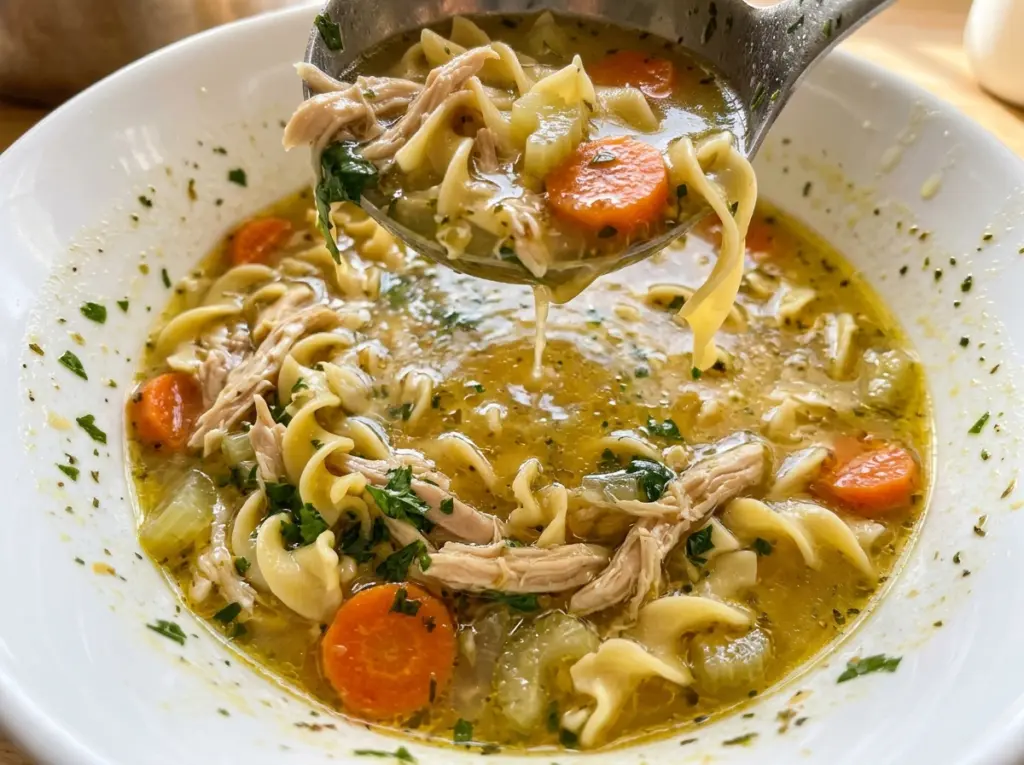
The vegetables soften first, then garlic and ginger hit the warm oil and the whole pot starts to smell like soup. I make this when I want a chicken noodle soup with a little more warmth than the usual bowl, but nothing complicated: tender chicken thighs, wide egg noodles, and a lemony finish.
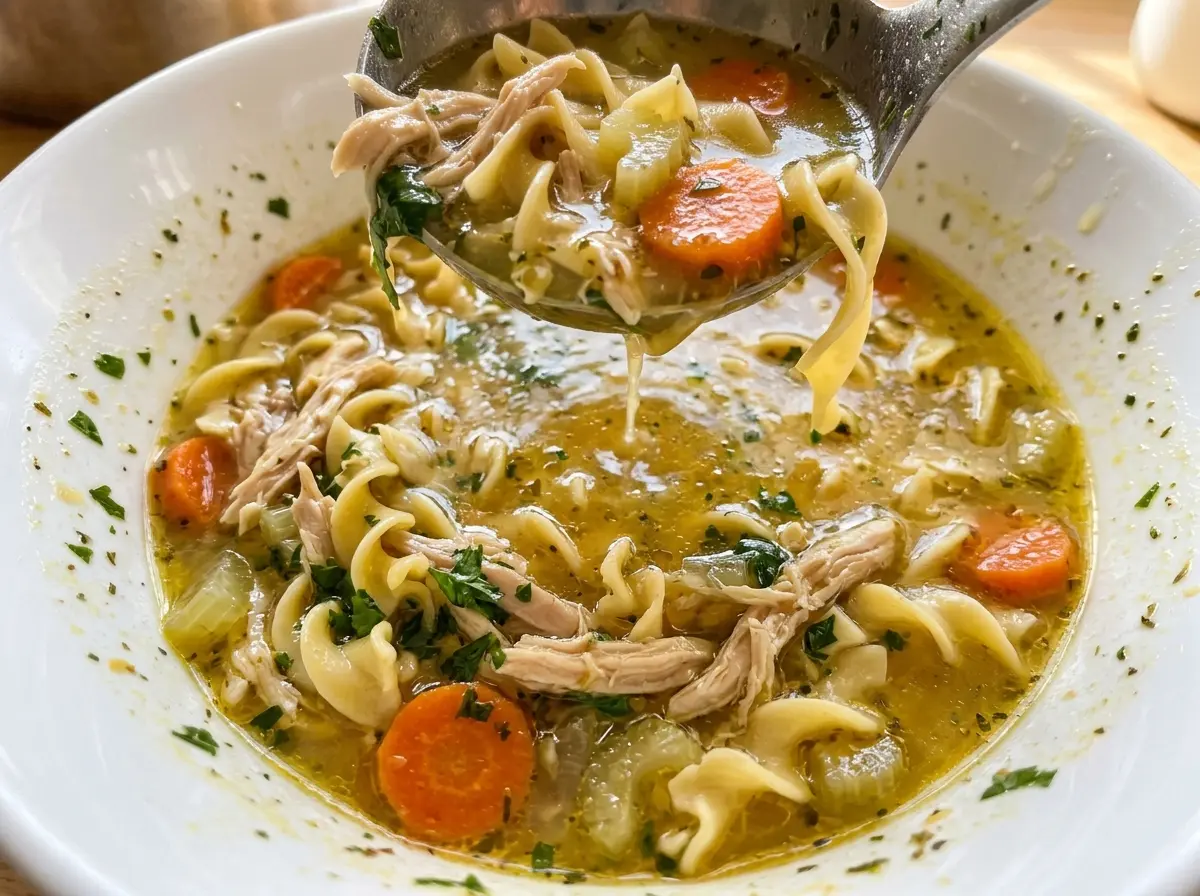
Fresh ginger brings gentle heat, while lemon juice and parsley stirred in at the end keep the broth bright. I cook the chicken whole in low-sodium broth, then shred it while the noodles simmer. That order keeps the chicken easy to handle and gives the noodles their own short window to turn tender. The finished soup is cozy, savory, and bright enough to keep each spoonful from feeling heavy.
Kitchen Note
Grate the ginger finely so it disperses through the broth instead of leaving you with big, fibrous pieces. I peel it first, then grate it right before it goes into the pot.
Save this Flu Fighting Chicken Noodle Soup for a cozy bowl with ginger warmth, tender chicken, and a bright lemon finish.
Why the Noodles Go In Only After the Chicken Comes Out
Chicken thighs need a longer simmer than egg noodles do. If both stay in the pot for the whole cooking time, the noodles can get soft before the chicken is ready to shred. Lifting the chicken out first gives the noodles a shorter, separate stretch in the broth, so you can cook them until tender without letting them sit through the chicken’s simmer.
It also makes the last part of the soup easier to manage. The thighs are simple to shred on a plate while the noodles cook, and the bay leaf can come out before it gets lost among them. Once the shredded chicken goes back in, the lemon juice and parsley need only a brief simmer to finish the pot. You get tender noodles, pieces of chicken in every serving, and a broth that still tastes clear and lively.
Fresh Ginger and Lemon Give This Chicken Soup Its Lift

- Chicken thighs — Boneless, skinless thighs stay tender through a simmer and shred easily. Choose pieces that are similar in size so they cook at roughly the same pace; chicken breasts are leaner and can turn out drier.
- Low-sodium chicken broth — Broth makes up most of the soup, so choose one you like the taste of. Low-sodium broth leaves room for the kosher salt without making the final pot taste overly salty.
- Fresh ginger — It adds a gentle, warming note that dried ginger won’t quite reproduce. A firm piece with smooth skin is easy to peel and grate; there’s no need to seek out a specialty variety.
- Wide egg noodles — Their broad shape makes a hearty bite alongside shredded chicken. Use a package you enjoy, and follow its timing if the noodles need longer or less time than the range here.
- Lemon juice and fresh parsley — Lemon brightens the savory broth, and parsley adds a fresh herbal finish. Fresh lemon and parsley make the difference here; bottled lemon juice and dried parsley won’t give quite the same lift.
- Yellow onion, carrots, celery, garlic, and thyme — These build the familiar savory base, with thyme adding an earthy note. Fresh vegetables should feel firm, but there’s no need to buy anything fancy for a pot of soup.
Building the Broth Before the Noodles
Soften the Vegetables in the Pot
Heat the olive oil in a 6-quart pot over medium heat, then add the diced onion, sliced carrots, and sliced celery. Cook for 5 minutes, stirring occasionally, until the onion begins to soften. You’re not looking for browned edges; the vegetables should start to relax while keeping their shape. Stir now and then so nothing catches on the bottom.
Wake Up the Garlic and Ginger
Stir the minced garlic and grated ginger into the softened vegetables. Cook for 30 seconds, just until fragrant. Keep the mixture moving so the garlic doesn’t scorch in the hot oil. When that warm aroma rises, the broth is ready to go in.
Simmer the Chicken Until Tender
Add the chicken broth, whole chicken thighs, dried thyme, bay leaf, kosher salt, and black pepper. Bring the pot to a boil, then reduce the heat and simmer uncovered for 15 to 20 minutes. Check the thickest part of a thigh with an instant-read thermometer; it should reach 165°F. If the pieces are different sizes, check each one and remove any that are ready.
Cook the Noodles and Finish the Soup
Transfer the chicken to a plate and remove the bay leaf before adding the wide egg noodles to the pot. Simmer for 6 to 8 minutes, or according to the package directions, until the noodles are tender. Shred the chicken with two forks and return it to the pot, then stir in the lemon juice and parsley. Simmer for 1 minute and serve.
Two Ways to Adapt the Noodles to Your Table
Make It Gluten-Free With Wide Gluten-Free Pasta
Replace the egg noodles with 6 ounces of wide gluten-free pasta. Cook it separately according to its package directions, then add it to bowls just before serving; gluten-free pasta can soften quickly when it sits in hot soup, and this keeps the broth from becoming starchy.
Leave Out the Noodles for a Lighter Bowl
Skip the egg noodles and keep the broth, chicken, vegetables, and finish the same. The result is a broth-forward soup with fewer carbohydrates and no noodle texture; the chicken and vegetables still make each bowl substantial.
Storage and Reheating
- Refrigerator: Keep leftovers in an airtight container for 3 to 4 days. The noodles will absorb broth and soften as the soup sits.
- Freezer: Freeze in airtight containers for up to 2 months for best quality. The cooked noodles soften after thawing; for a better texture, freeze the soup before adding noodles and cook them fresh when serving.
- Reheating: Warm the soup gently on the stovetop, stirring now and then, until steaming throughout. Avoid a hard boil, which can make the noodles break down.
Questions I Get Asked About This Chicken Noodle Soup
Flu Fighting Chicken Noodle Soup
Ingredients
Method
- Heat the olive oil in a 6-quart pot over medium heat, then add the onion, carrots, and celery and cook for 5 minutes, stirring occasionally, until the onion begins to soften.
- Stir in the garlic and ginger and cook for 30 seconds, until fragrant.
- Add the chicken broth, chicken thighs, thyme, bay leaf, salt, and pepper. Bring to a boil, then reduce the heat and simmer uncovered for 15 to 20 minutes, until the chicken reaches 165°F in the thickest part.
- Transfer the chicken to a plate and remove the bay leaf; add the egg noodles to the pot and simmer for 6 to 8 minutes, or according to package directions, until tender.
- Shred the chicken with two forks, return it to the pot, and stir in the lemon juice and parsley; simmer for 1 minute, then serve.