
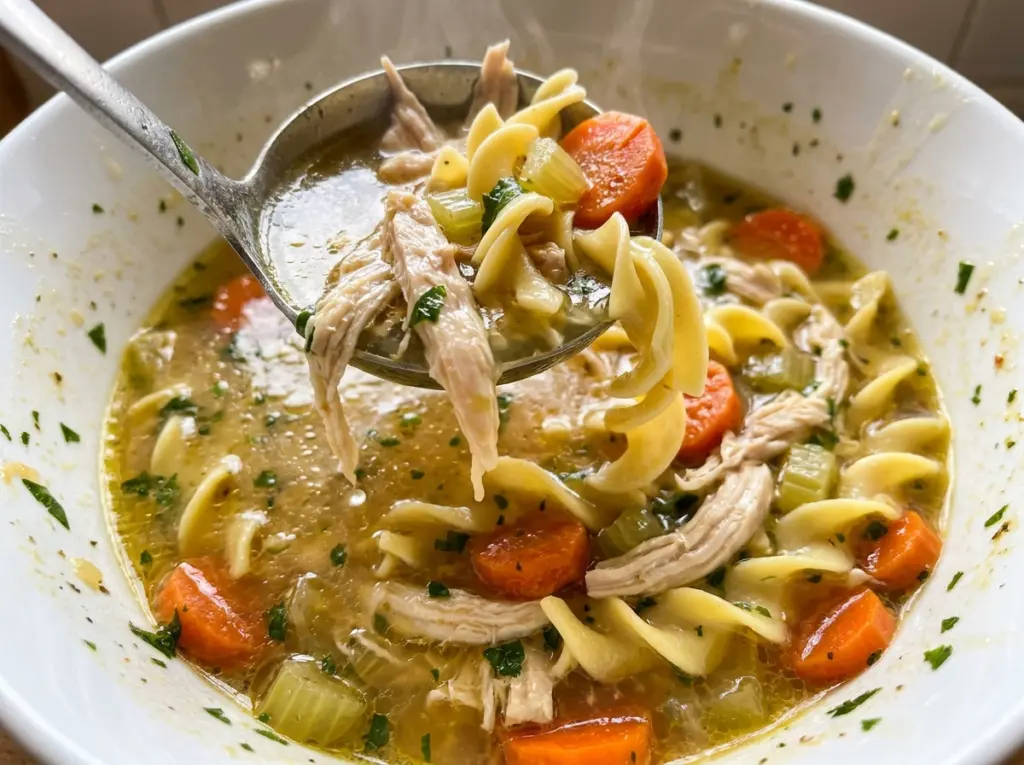
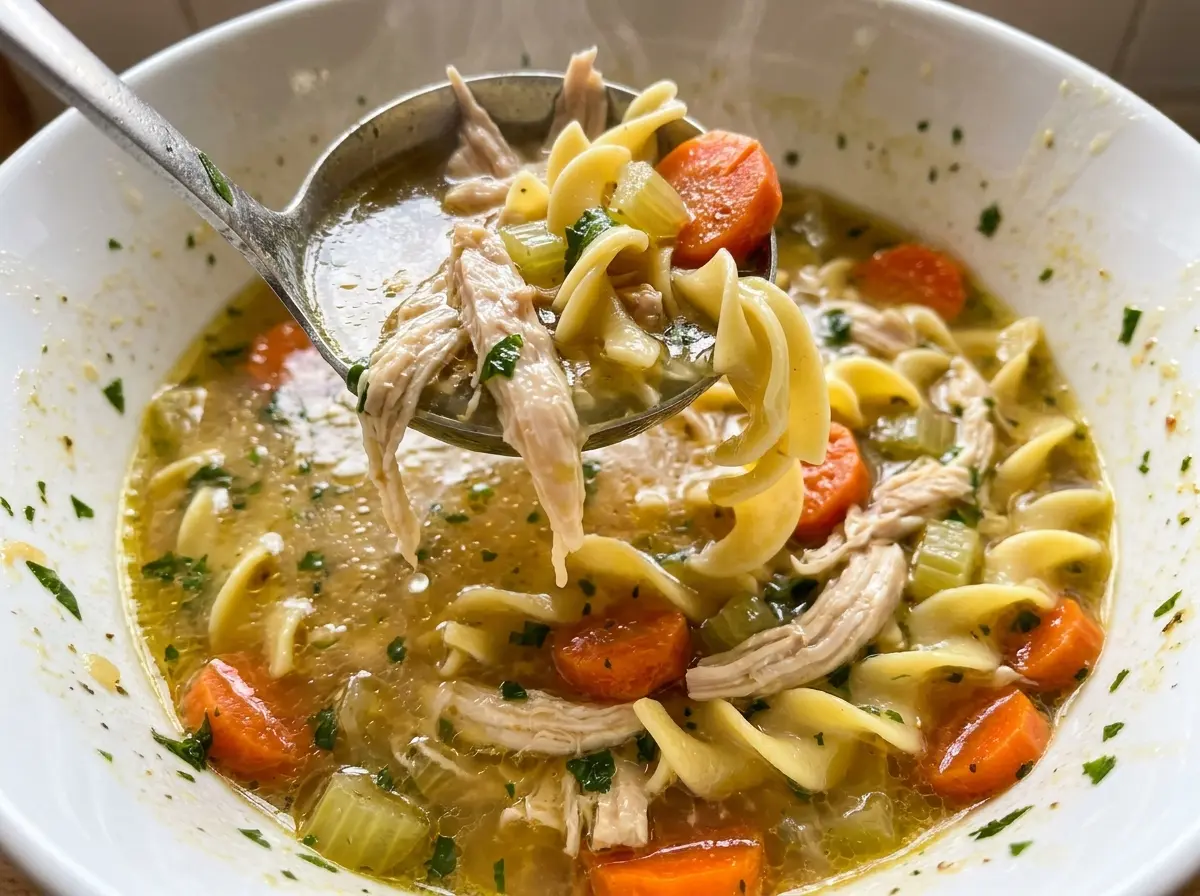
When the lid opens, the vegetables have softened into the broth and the chicken is ready to pull apart, but the noodles still need their own short turn. That timing is what keeps this Instant Pot Chicken Noodle Soup from becoming a pot of swollen noodles with a little broth left around them. I like that the pressure cooker handles the chicken and soup base together, then gives me a clear moment to finish the noodles right before serving.
The vegetables get a quick sauté first, which gives the broth a more rounded start than adding everything cold. After pressure cooking, I take the chicken out before the noodles go in; that makes it easy to check their texture without overcooking the chicken. A little stirring as the noodles simmer helps them cook evenly, and the shredded chicken goes back in at the end. You get a cozy bowl with tender chicken, soft vegetables, and noodles that still hold their shape.
Kitchen Note
Before I lock the lid, I scrape the pot until the bottom feels smooth. The browned bits belong in the soup, but anything stuck to the steel can trigger a burn warning, so give the center and edges a careful pass.
Save this Instant Pot Chicken Noodle Soup for a comforting bowl with tender chicken and noodles that keep their shape.
Why the Noodles Go In After the Pressure Cooking, Not Before
Egg noodles are quick-cooking, and ten minutes under pressure would leave them much softer than you want. They also release starch into the broth as they cook. Put them in at the end, uncovered, and you can watch for that just-tender texture instead of guessing what happened inside a sealed pot.
Taking the chicken out first solves two problems at once. The breasts stay out of the bubbling broth while the noodles finish, and you have room to stir without breaking the chicken into tiny pieces. The broth stays clear enough to see the noodles, too. When they’re tender, return the shredded chicken and let the soup rest briefly so everything warms together. This order gives you control over the part of the soup most likely to turn mushy, without adding another pot or changing the pressure-cooking stage.
What the Broth, Chicken, and Wide Noodles Each Bring

- Low-sodium chicken broth — It gives the soup its savory base while leaving room to season with kosher salt. A good everyday carton is fine here; a very rich or strongly flavored broth can take over the gentle taste of the vegetables. Regular chicken stock works as a swap, but use less added salt and taste before serving.
- Chicken breasts — Boneless, skinless breasts keep the soup light and shred into clean strands after pressure cooking. Thaw them fully before cooking so the timing stays reliable. Boneless, skinless thighs are a useful swap when you want a richer, more succulent bite; see the variation below.
- Wide egg noodles — Their broad shape catches broth and chicken in each spoonful, while the egg gives them a tender, substantial texture. Choose a familiar grocery-store brand; there’s no need for specialty noodles. Smaller egg noodles can be used, but watch them closely because their thinner shape may cook faster.
- Onion, carrots, and celery — Together, these vegetables make the familiar savory-sweet base that gives the broth more depth than broth alone. Fresh vegetables give the most even texture, though pre-cut produce is convenient if the pieces are still firm. Dice the onion and slice the carrots and celery so they soften during the brief sauté and pressure cook.
- Garlic and bay leaf — Garlic adds a sharp, savory note, while the bay leaf quietly rounds out the broth during pressure cooking. Freshly minced garlic has the brightest aroma, but jarred minced garlic is a practical stand-in. Remove the bay leaf before shredding and serving; it is there to season the soup, not to eat.
- Olive oil — It helps the vegetables soften during the sauté. Regular olive oil works well; a mild neutral cooking oil can replace it without changing the soup in a meaningful way.
From Sautéed Vegetables to Tender Noodles
Soften the Vegetables Before Pressure Cooking
Set a 6-quart Instant Pot to Sauté and add the olive oil, diced onion, sliced carrots, and sliced celery. Cook for 4 minutes, stirring occasionally, until the onion begins to soften; it should look glossy rather than browned. Add the minced garlic and cook for 30 seconds, just until fragrant. Press Cancel before adding the broth so the vegetables stop cooking on the hot setting.
Pressure-Cook the Chicken in the Broth
Pour in the low-sodium chicken broth and scrape the bottom of the pot well, then add the thawed chicken breasts, kosher salt, black pepper, and bay leaf. Lock the lid, set the steam valve to Sealing, and cook on High Pressure for 10 minutes. Let the pressure release naturally for 10 minutes, then carefully release any remaining pressure. The chicken should be easy to handle with two forks; if needed, check that it has reached 165°F.
Simmer the Noodles and Finish the Soup
Transfer the chicken to a plate, remove and discard the bay leaf, and shred the chicken with two forks. Set the Instant Pot to Sauté and bring the broth to a simmer before adding the wide egg noodles. Cook uncovered for 6 to 8 minutes, stirring occasionally, until the noodles are tender; don’t rely on the timer alone if your brand cooks quickly. Press Cancel, stir in the shredded chicken, and let the soup sit for 2 minutes before serving.
Easy Ways to Adapt This Chicken Noodle Soup
Use boneless, skinless chicken thighs
Replace the chicken breasts with boneless, skinless thighs and keep the same pressure-cooking method. Thigh meat has a richer taste and a softer, more succulent texture, while still shredding neatly into the soup.
Make it gluten-free with separate-cooked noodles
Use gluten-free noodles in place of the egg noodles and cook them separately according to their package directions. Add them to bowls just before serving rather than simmering them in the Instant Pot; gluten-free pasta can turn soft quickly and may cloud the broth.
Storage and Reheating
- Refrigerator: Store leftovers in an airtight container for 3 to 4 days. The noodles will soften and absorb some broth as they sit.
- Freezer: For the best texture, freeze the broth, vegetables, and shredded chicken without the noodles. Thaw in the refrigerator, bring the soup base to a simmer, and cook fresh noodles before serving.
- Reheating: Warm leftovers gently in a saucepan over medium-low heat, stirring now and then. Avoid a hard boil, which can make the noodles break apart and the chicken stringy.
Questions That Come Up When Making Instant Pot Chicken Noodle Soup
Instant Pot Chicken Noodle Soup
Ingredients
Equipment
Method
- Set a 6-quart Instant Pot to Sauté. Add the olive oil, onion, carrots, and celery and cook for 4 minutes, stirring occasionally, until the onion begins to soften.
- Add the garlic and cook for 30 seconds.
- Press Cancel and pour in the chicken broth, scraping up any browned bits from the bottom of the pot. Add the chicken, salt, pepper, and bay leaf.
- Lock the lid and set the steam valve to Sealing. Cook on High Pressure for 10 minutes, then let the pressure release naturally for 10 minutes before carefully releasing any remaining pressure.
- Transfer the chicken to a plate, remove and discard the bay leaf, then shred the chicken with two forks.
- Set the Instant Pot to Sauté and bring the broth to a simmer.
- Add the egg noodles and cook uncovered for 6 to 8 minutes, stirring occasionally, until tender; check that the chicken has reached 165°F if needed.
- Press Cancel and stir the shredded chicken into the soup. Let it sit for 2 minutes before serving.