
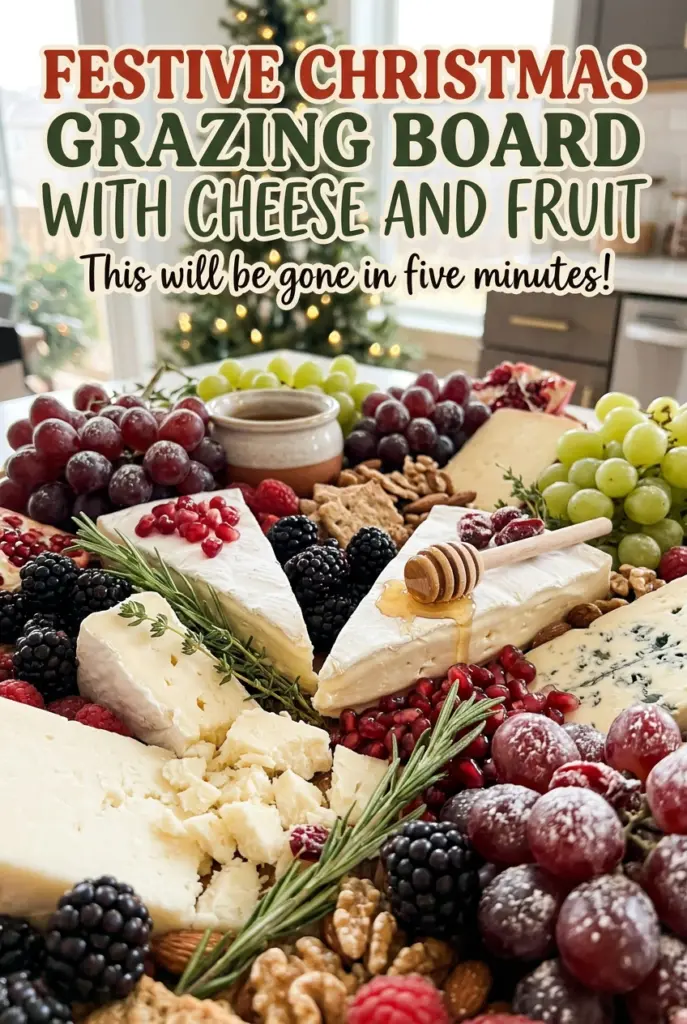
The pear and apple slices look fresh when they first hit the board, then start to brown while I’m arranging the cheese. Tossing them with lemon juice first gives me time to finish setting everything out without rushing. That little bit of prep makes this festive Christmas grazing board with cheese and fruit easier to assemble, and the bright fruit gives the richer cheeses a fresh contrast.
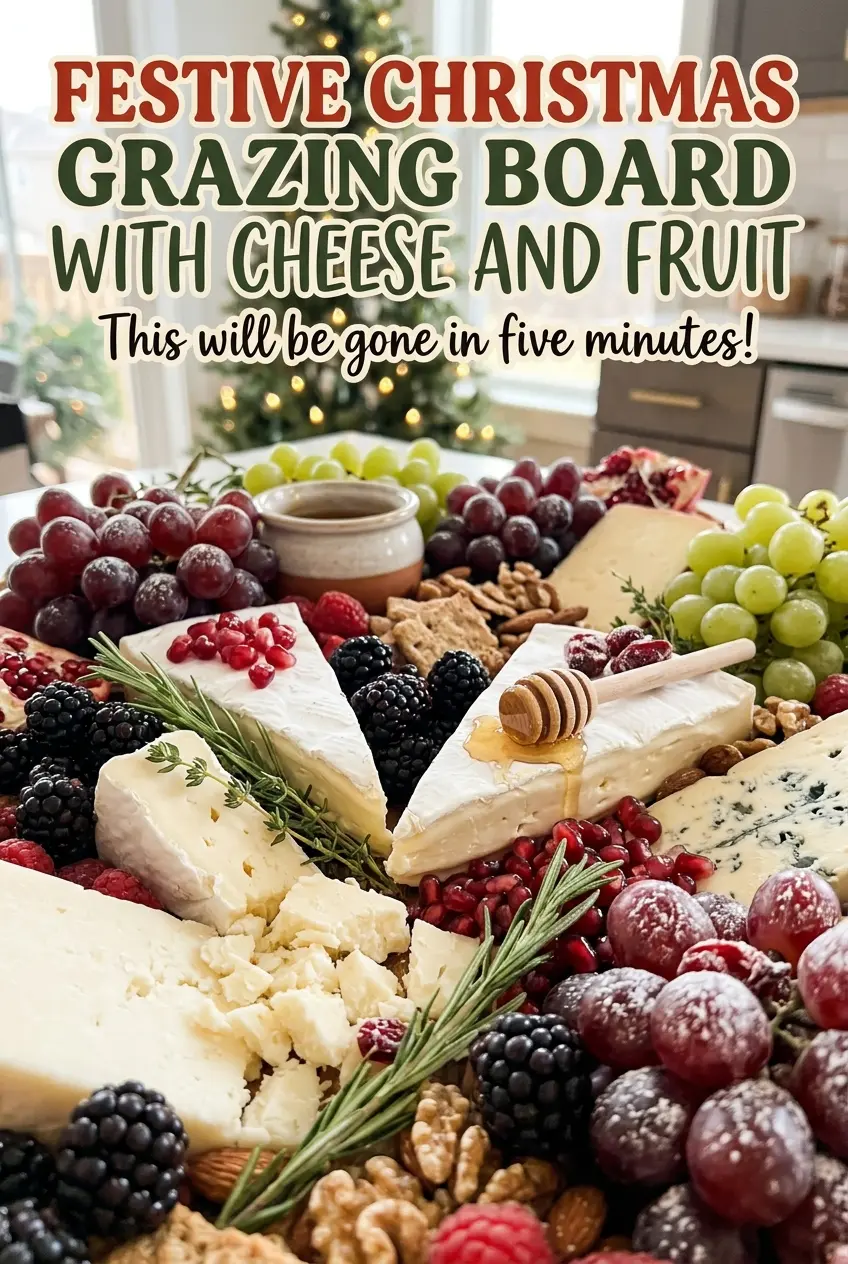
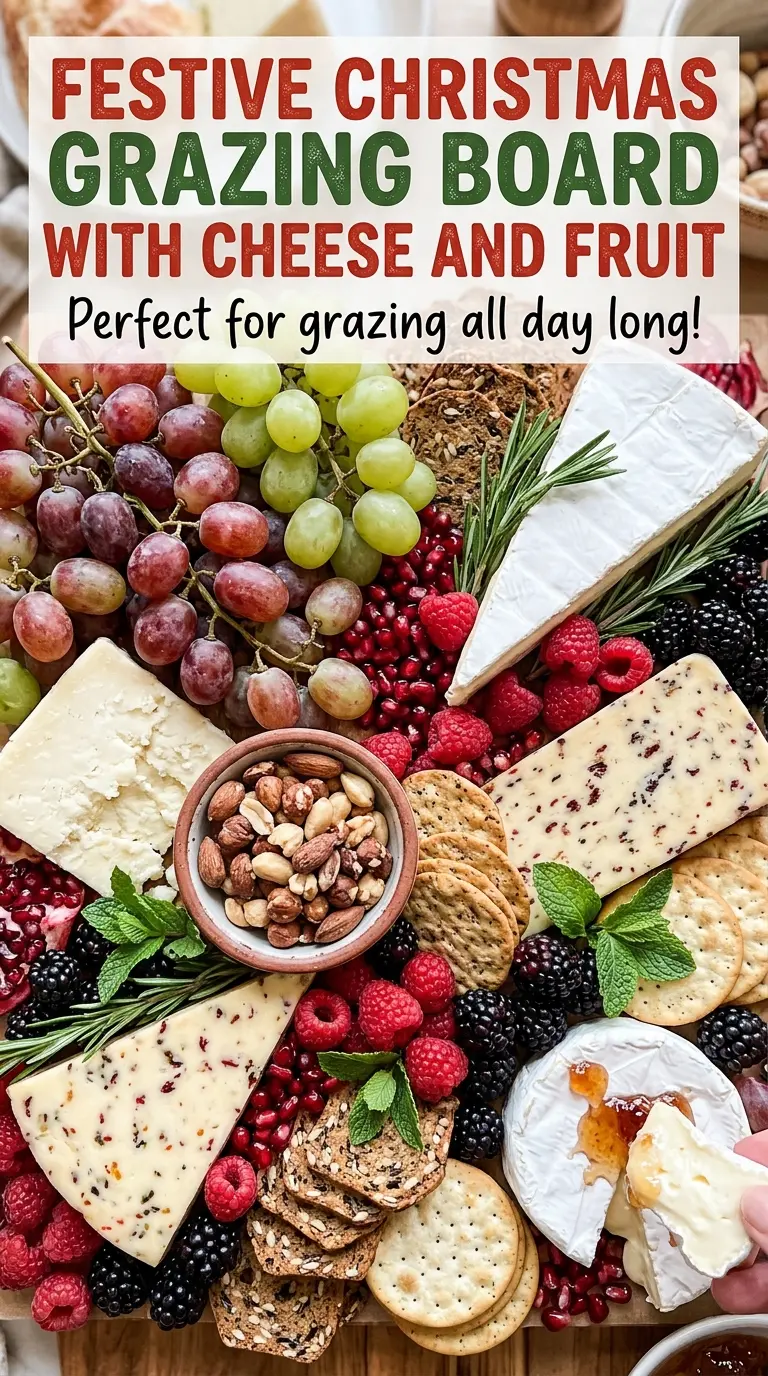
I arrange the cheeses and fruit across a 20-by-15-inch board, then fit the crackers around the cheeses and tuck the smaller accompaniments into bowls. Keeping the Brie whole gives the board a clear centerpiece, while the cheddar cubes and Manchego wedges are easy to pick up and pair with a cracker. Finished with rosemary and dried cranberries, it’s a generous board for 10 that looks festive without needing elaborate decoration.
Kitchen Note
Dry the grapes and raspberries well after rinsing them. Leftover water can pool under the fruit and leave the board damp before anyone has served themselves.
Save this festive Christmas grazing board for an easy-to-arrange spread with three cheeses, fresh fruit, crackers, and fig preserves.
Why the 20-by-15-Inch Board Needs Breathing Room
A grazing board works best when each item has a clear place to land. With three cheeses, fruit, crackers, and several small accompaniments, crowding everything into one tight cluster makes the choices harder to see and the crackers harder to reach. The 20-by-15-inch board gives the cheeses enough room to act as anchors, with the other foods arranged around them.
Think in small groups rather than trying to fill every inch. The cheddar cubes and Manchego wedges have different shapes, so they’re easy to distinguish at a glance; the Brie wheel adds a larger, rounded shape. Place grapes and fruit slices in the open spaces, then let the crackers sit around the cheeses, where they’re close to the main pairings. The bowls keep the olives, almonds, and fig preserves from drifting into the fruit or crackers.
A little open space is useful, not unfinished. It gives people room to reach in and take a cracker without nudging the fruit, and it keeps the board’s colors and shapes visible. The dried cranberries and rosemary finish those gaps without covering up the larger pieces.
What the Cheeses, Fruit, and Sweet-Salty Extras Bring
- Cheddar, Brie, and Manchego — Each cheese brings a different texture and taste: cheddar is firm and sharp, Brie is soft and creamy, and Manchego is firm enough to cut into thin wedges. Buying cheese you enjoy eating matters more than choosing an elaborate brand; the distinct styles are what make this combination interesting. I wouldn’t replace one with another of the same type, since that would make the board less varied.
- Pears, apple, and lemon juice — The two kinds of sliced fruit add crisp, juicy bites alongside the cheeses. Lemon juice coats the cut surfaces and slows browning while you finish arranging the board. Choose fruit that slices cleanly rather than pieces that are bruised or overly soft.
- Red grapes and raspberries — Seedless grapes are easy to pick up whole, while the raspberries add a tender, tart bite. Raspberries are delicate, so handle them gently when rinsing and placing them. Fresh berries suit this board better than thawed ones, which tend to lose their shape.
- Water crackers and whole-wheat crackers — The water crackers give the cheese a mild, crisp base; the whole-wheat crackers bring a more pronounced grain flavor. The contrast comes from having both kinds, but either box can be left off if you want a simpler board.
- Almonds, olives, fig preserves, and dried cranberries — These accompaniments balance salty, sweet, and chewy bites without competing with the cheeses. The almonds and olives work well in small bowls, and the fig preserves are easier to serve from a bowl than spread directly over the board. Dried cranberries are best scattered across the open spaces so they’re easy to spot.
- Fresh rosemary — The sprigs bring a woodsy aroma and a deep green finish. Use them as garnish tucked around the cheese and fruit, rather than mixing the leaves through the food.
How to Arrange the Board Without Bruising the Fruit
Coat the Sliced Fruit
Core and thinly slice the pears and apple, then toss the slices with lemon juice. Turn them gently so the cut surfaces get a light coating without breaking the pieces. Thin slices are easy to pair with cheese and fit neatly into the spaces between larger clusters. Set the fruit aside while you arrange the main items.
Place the Cheeses and Fresh Fruit
Arrange the cheddar cubes, whole Brie wheel, and Manchego wedges on the 20-by-15-inch serving board. Add the grapes, pear slices, apple slices, and raspberries around them, leaving enough room to see each group. The whole Brie makes a useful visual anchor, while the cubed and wedged cheeses create smaller, ready-to-pick-up portions. If the raspberries look crushed, move them gently rather than pressing them into a gap.
Fit in the Bowls and Crackers
Set the almonds, olives, and fig preserves in three small bowls on the board. Arrange the crackers around the cheeses so they’re easy to reach, then scatter the dried cranberries over the board. If a bowl seems to take over one area, move it toward an open edge instead of piling food on top of it. Keep the crackers visible rather than burying them beneath fruit.
Add Rosemary and Serve
Tuck the rosemary sprigs around the cheese and fruit as the final garnish. Place them where they frame the food without hiding the sliced fruit or berries. Serve the board once it’s arranged, or cover and refrigerate it if you’re making it ahead. Avoid pressing the cover against the raspberries or rosemary, which can crush the delicate pieces.
Three Ways to Change the Board’s Format
Make a cracker-free cheese-and-fruit board
Leave off both boxes of crackers and arrange the cheeses, fruit, bowls, almonds, olives, fig preserves, and cranberries on the board. The result leans more heavily on the fresh fruit and cheese, with fewer crisp, neutral bites for the spreads.
Turn it into individual grazing plates
Divide the same cheese, fruit, crackers, and accompaniments among individual plates instead of arranging everything on one board. Keep the fig preserves and olives in small shared bowls, or portion them onto plates if you want each serving self-contained. This format gives everyone a defined portion, but loses the abundant centerpiece effect.
Arrange the cheeses in a wreath
On the rectangular board, arrange the cheeses and fruit in a loose ring, leaving a small open space in the middle. Tuck rosemary around the outside of the ring and place the bowls and crackers near the edges. It gives the spread a holiday-inspired shape, though you’ll have less room for a wide, evenly spaced layout.
Making Ahead and Serving
- Refrigerator: Cover and refrigerate the assembled board if you’re making it ahead. The fruit and berries are at their best when freshly arranged.
- Freezer: Don’t freeze the assembled board. The fruit and soft cheese won’t keep their intended texture after thawing.
- Serving: Set the board out when you’re ready to serve. Discard perishable items left at room temperature for more than 2 hours.
Questions That Come Up While Building This Grazing Board
Festive Christmas Grazing Board with Cheese and Fruit
Ingredients
Equipment
Method
- Toss the pear and apple slices with the lemon juice.
- Arrange the cheddar, Brie, Manchego, grapes, pear and apple slices, and raspberries on a 20x15-inch serving board.
- Set the almonds, olives, and fig preserves in three small bowls on the board, then arrange the crackers around the cheeses and scatter the dried cranberries over the board.
- Tuck the rosemary sprigs around the cheese and fruit, then serve.
- If making ahead, cover and refrigerate the board.
- Discard perishable items left at room temperature for more than 2 hours.