

The beef starts to sizzle as soon as it hits the oil, and the diced onion softens right alongside it. I like that this baked ziti builds its sauce in the same pot, so the browned bits from the beef end up right where they belong—in the tomatoes. After a gentle simmer, the sauce tastes full and savory, not raw or watery, and it gives every piece of pasta a good coating.
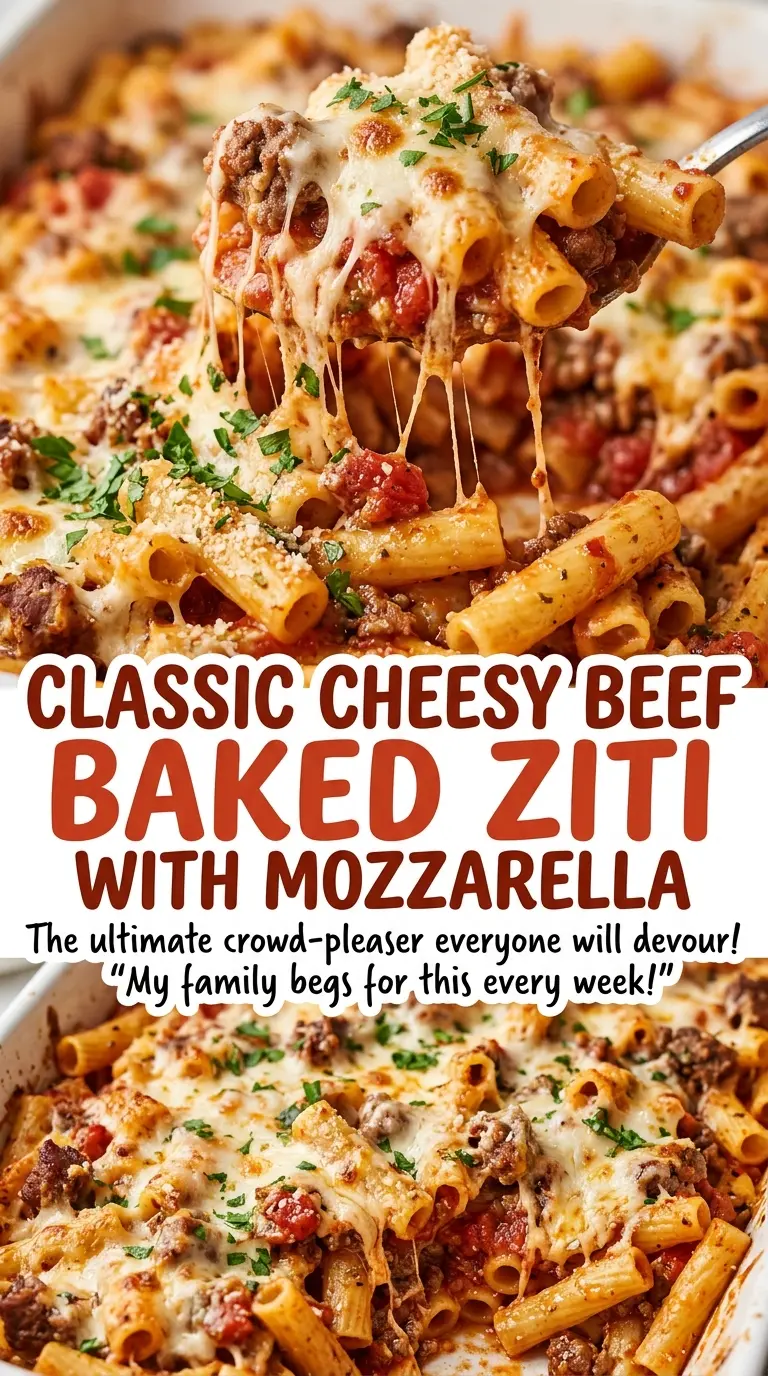
For this classic cheesy beef baked ziti, I keep the ricotta mixture separate from the sauce and layer it between the pasta. That gives you creamy pockets throughout instead of a casserole where all the cheese disappears into the tomato base. The top turns golden in spots while the middle stays tender and saucy, with mozzarella tying the layers together.

Kitchen Note
Pull the ziti from the water two minutes before it reaches the package’s al dente time. It keeps cooking in the oven, and starting it slightly firm is what keeps the finished pasta from going soft.
Save this classic cheesy beef baked ziti for a cozy dinner with tender pasta, creamy ricotta layers, and a golden mozzarella top.
Why Ricotta Belongs in Layers, Not Stirred Into the Sauce
Ricotta has a different job from mozzarella here. Mixed with egg and Parmesan, it becomes a soft, savory filling that holds together in creamy pockets. If you stir it straight into the tomato sauce, those pockets disappear and the whole casserole eats more uniformly—still pasta and cheese, but without the distinct layers that make baked ziti satisfying.
Spreading the filling over the pasta in two passes helps distribute it through the dish rather than leaving one thick layer in the middle. The egg helps the ricotta mixture set as it bakes, while Parmesan seasons it from within. Keep the filling in dollops as you assemble; it doesn’t need to cover every bit of pasta. The sauce and mozzarella finish the job, and the different textures come through in each scoop.
What the Beef, Tomato, and Cheese Each Bring to the Bake
- Ground beef — The 85% lean beef brings a savory, meaty base without leaving the sauce overly greasy. Brown it well, then drain excess fat if there’s enough in the pot to pool around the meat. There isn’t a direct substitute among the ingredients in this version; leaving it out makes a tomato-and-cheese bake instead.
- Crushed tomatoes and tomato sauce — They do different work together: crushed tomatoes give the sauce body, while tomato sauce makes it smoother and easier to coat the pasta. Canned tomatoes are a practical choice here, and there’s no need to pay extra for a premium brand. Keep both styles in the mix rather than swapping one can for the other; the balance and texture will change.
- Ricotta, egg, and Parmesan — Ricotta makes the filling creamy, the egg helps it set, and Parmesan adds a salty, nutty note. Grating Parmesan from a wedge gives a more pronounced flavor, but packaged grated Parmesan works in this mixed filling. Cottage cheese isn’t a like-for-like stand-in for ricotta in these layers.
- Mozzarella — Shredded mozzarella melts across the top and adds stretch to the filling. A standard bag of shredded mozzarella is fine; this is a hearty baked casserole, not a dish where subtle differences in melting need special handling.
- Ziti — The hollow tubes catch sauce inside and out, so the pasta stays coated through the bake. Use the package’s al dente timing as your guide and take the ziti out a little early; the oven finishes the cooking.
Build the Beef Sauce and Layers Without Losing the Pasta’s Bite
Brown the Beef with the Onion
Heat the olive oil in a large pot or Dutch oven over medium-high heat, then add the ground beef and diced onion. Cook for 7–9 minutes, breaking the beef into small pieces as it browns, until the onion is softened. If fat collects in the pot, drain the excess before moving on. Browning the beef rather than just simmering it gives the sauce a deeper, more savory base.
Simmer the Tomato Sauce
Add the minced garlic and cook for 30 seconds, stirring so it doesn’t scorch against the bottom of the pot. Stir in the crushed tomatoes, tomato sauce, Italian seasoning, kosher salt, and black pepper. Bring the sauce to a gentle simmer and cook uncovered for 20 minutes, stirring occasionally. It should look cohesive and lightly thickened, not watery or rapidly boiling.
Cook the Ziti and Mix the Filling
Bring the water and kosher salt to a boil in a large pot, add the ziti, and cook until two minutes short of the package’s al dente time. Drain it well; excess water clinging to the pasta thins the sauce. In a medium bowl, stir together the ricotta, egg, Parmesan, and one cup of the mozzarella until combined. The filling should be creamy and spoonable, not runny.
Layer the Pasta in the Baking Dish
Heat the oven to 375°F and lightly grease a 9×13-inch baking dish. Spread one cup of sauce in the dish, then toss the drained ziti with two cups of sauce so the pieces are coated before layering. Add half the pasta, dollop on half the ricotta mixture, and repeat with the remaining pasta and ricotta. Spread the remaining sauce over the top and finish with the remaining mozzarella.
Bake Until Bubbling, Then Let It Set
Cover the dish with foil and bake for 20 minutes. Uncover and bake for another 15–20 minutes, until the sauce bubbles around the edges and the mozzarella has browned in spots; the center should reach at least 160°F. If the top is browned before the center is ready, don’t pull it early—use the center temperature as your guide. Rest the casserole for 15 minutes before serving so the layers settle and portions hold together.
Two Simple Ways to Adapt This Beefy Ziti
Make It Vegetarian by Leaving Out the Beef
Omit the ground beef and cook the onion in the olive oil until softened, then continue with the garlic and tomato ingredients. The sauce will be lighter and less savory, but the ricotta and mozzarella still make a substantial baked pasta. Drain any excess oil only if needed; without the beef, there won’t be beef fat to remove.
Give the Top More Mozzarella
For a more pronounced cheesy top without changing the total mozzarella, move half a cup from the amount mixed into the ricotta to the topping. The filling will be a little less stretchy, while the surface gets a thicker layer that melts and browns across the casserole.
Storage and Reheating
- Refrigerator: Store covered for 3–4 days. The pasta will soften a little as it sits, but the ricotta layers stay creamy.
- Freezer: Freeze individual portions tightly wrapped for up to 2–3 months. Thaw overnight in the refrigerator for more even reheating.
- Reheating: Microwave a covered portion in short intervals until the center reaches 165°F. Avoid reheating it uncovered for too long, which can dry the pasta around the edges.
Questions That Come Up When Making Baked Ziti
Classic Cheesy Beef Baked Ziti with Mozzarella
Ingredients
Equipment
Method
- Heat the olive oil in a large pot or Dutch oven over medium-high heat, add the ground beef and onion, and cook for 7–9 minutes, breaking up the beef, until browned and the onion is softened; drain excess fat if needed.
- Add the garlic and cook for 30 seconds.
- Stir in the crushed tomatoes, tomato sauce, Italian seasoning, kosher salt, and black pepper.
- Bring to a gentle simmer and cook uncovered for 20 minutes, stirring occasionally.
- Bring the water and kosher salt to a boil in a large pot.
- Add the ziti and cook until 2 minutes short of the package’s al dente time; drain well.
- In a medium bowl, stir together the ricotta, egg, Parmesan, and 1 cup of the mozzarella until combined.
- Heat the oven to 375°F and lightly grease a 9x13-inch baking dish.
- Spread 1 cup of sauce in the dish.
- Toss the drained ziti with 2 cups of sauce.
- Spread half of the pasta in the dish and dollop half of the ricotta mixture over it.
- Repeat with the remaining pasta and ricotta mixture.
- Spread the remaining sauce over the top and sprinkle with the remaining 1 cup mozzarella.
- Cover the dish with foil and bake for 20 minutes.
- Uncover and bake for 15–20 minutes, until bubbling, browned in spots, and at least 160°F in the center.
- Rest the baked ziti for 15 minutes before serving.