
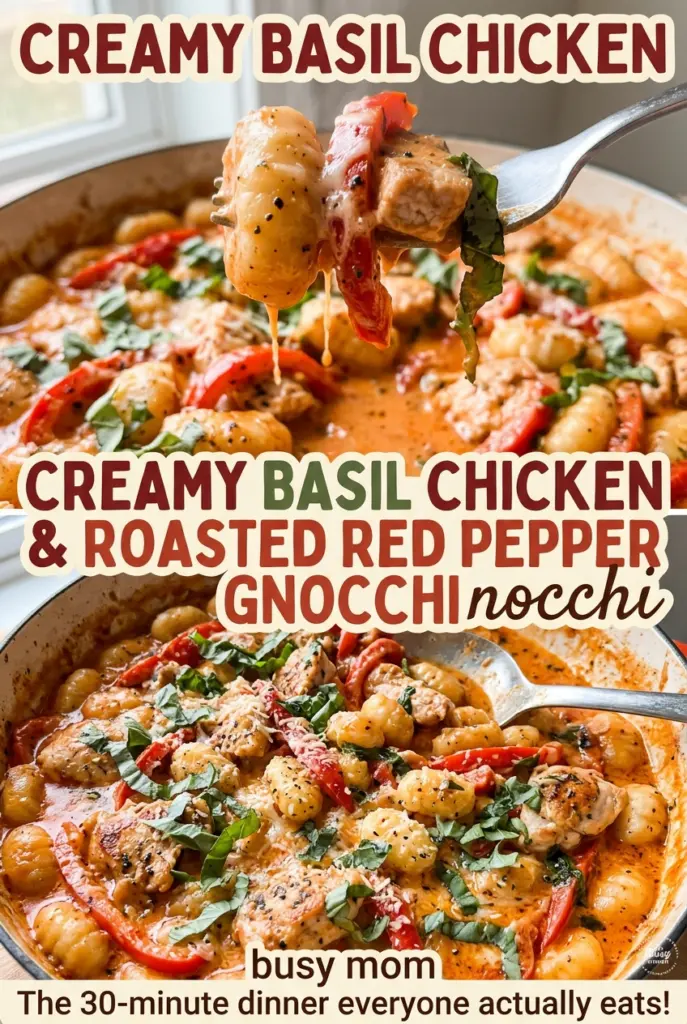
The chicken gets a quick, hot sear, then comes out of the skillet while the gnocchi cook in a creamy broth. That two-part approach is what keeps the breast pieces tender instead of leaving them to simmer the whole time. In this creamy basil chicken and roasted red pepper gnocchi, everything finishes together in one pan, with the peppers lending a little sweetness to the sauce.
Shelf-stable potato gnocchi go straight into the skillet, so there’s no separate pot to boil and drain. As they soften, they release a little starch into the broth and cream, helping the sauce cling to each dumpling. I add the Parmesan and basil only after taking the skillet off the heat; the cheese melts into the sauce, while the basil stays fresh and fragrant. You end up with tender gnocchi, browned chicken, and a glossy sauce that’s ready to bring to the table.
Kitchen Note
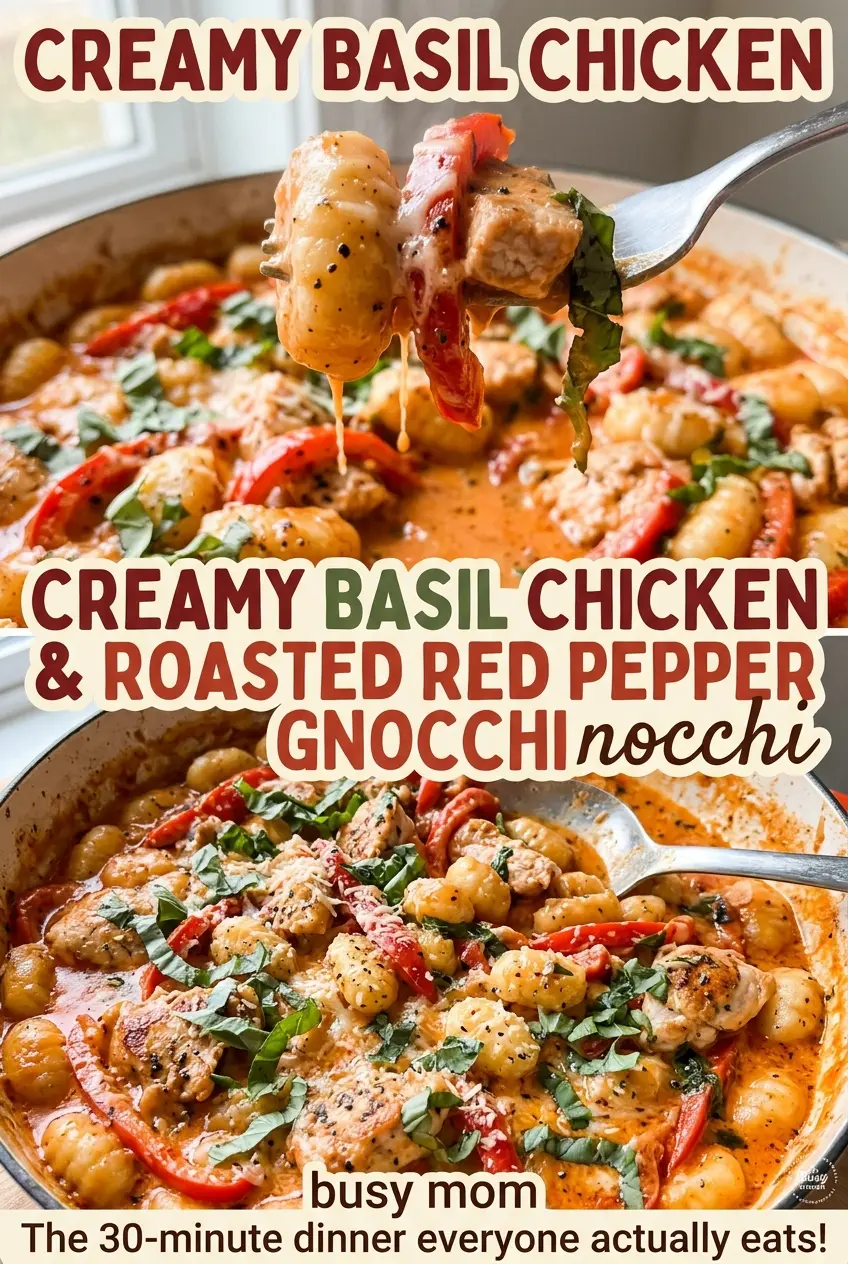
Take the chicken out after it’s browned, even if the centers aren’t cooked through yet. It finishes in the sauce later, and leaving it in during the gnocchi simmer can dry out the breast pieces.
Save this creamy basil chicken and roasted red pepper gnocchi for a one-skillet dinner with tender dumplings and a sauce that clings.
Why Shelf-Stable Gnocchi Belongs in the Sauce, Not a Pot of Water
Gnocchi often gets treated like pasta: boil it separately, drain it, and add it to a finished sauce. Here, the shelf-stable potato dumplings cook right in the broth and cream instead. That means their surface starch stays in the skillet, where it helps give the sauce body without flour or a separate thickener.
The liquid needs room to reduce while the gnocchi soften. An uncovered, gentle simmer lets some steam escape; a hard boil, on the other hand, can make the cream sauce reduce too quickly before the centers of the gnocchi turn tender. Stir occasionally so the dumplings don’t settle and catch, then use tenderness—not a forceful boil—as your cue. If the sauce looks a little loose while the gnocchi are cooking, give the starch time to do its work rather than adding another thickener.
What the Cream, Peppers, and Basil Each Bring to the Skillet
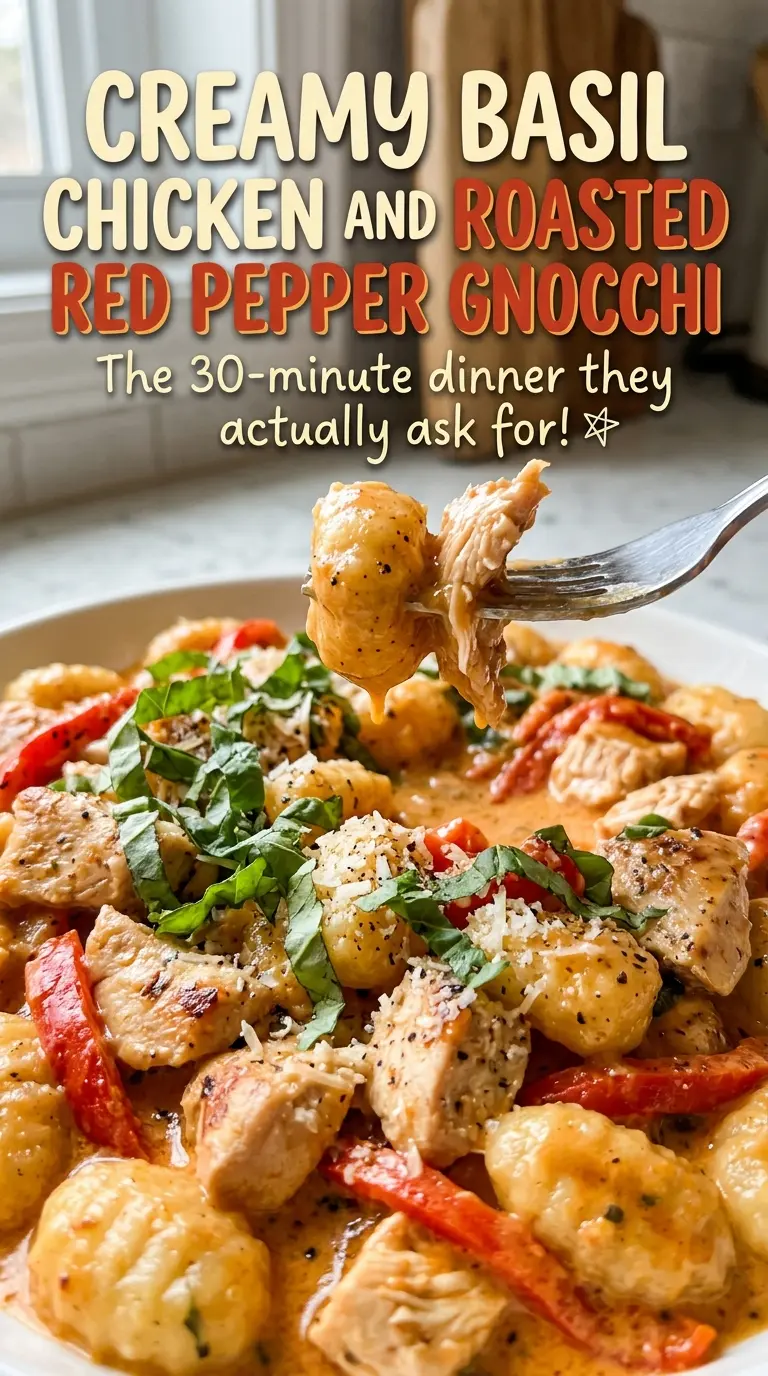
- Chicken breast — Its mild flavor lets the roasted peppers and basil come through, and evenly cut pieces cook at a similar pace. Look for boneless, skinless pieces that are easy to cut into uniform chunks; boneless, skinless thighs are a workable swap if you prefer richer meat.
- Shelf-stable potato gnocchi — This type is meant for the skillet’s direct simmer and contributes starch as it cooks. Refrigerated gnocchi can work, but it may soften on a different schedule, so check its texture early rather than relying on the same timing. For this version, the shelf-stable package is the most predictable choice.
- Heavy cream — It gives the broth enough richness to become a creamy sauce. Half-and-half can replace it for a lighter result, though the sauce will be thinner; milk is a poor swap here because it lacks the same richness and is more prone to separating during simmering.
- Jarred roasted red peppers — Their mellow sweetness balances the savory chicken and Parmesan. The inexpensive jarred kind works well; drain it before chopping so extra liquid doesn’t dilute the skillet. Peeled, well-drained homemade roasted peppers can replace them, with a less briny taste.
- Finely grated Parmesan — Fine shreds melt into the sauce more readily than thick shavings. A wedge grated just before cooking gives the smoothest result, while finely grated packaged Parmesan is convenient. Pecorino can replace it if you like a sharper, saltier finish.
- Fresh basil — Chopped fresh leaves bring a bright, herbal finish that dried basil won’t quite reproduce. Choose leaves that look green and fresh, and chop them shortly before stirring them in; if you don’t have fresh basil, leaving it out is better than expecting dried herbs to give the same finish.
How to Brown the Chicken Before the Gnocchi Simmer
Sear the Chicken in a Single Layer
Season the chicken with salt and black pepper while you heat olive oil in a 12-inch skillet over medium-high heat. Arrange the pieces in a single layer and cook for 4–5 minutes, turning once, until browned but not cooked through. If the pieces are crowded, they won’t brown as evenly, so use the wide skillet called for here. Transfer the chicken to a plate while you build the sauce.
Soften the Garlic Without Browning It
Reduce the heat to medium before adding the minced garlic. Stir constantly for 30 seconds; the garlic should smell fragrant, not turn dark at the edges. If it browns, it can make the sauce taste bitter, so keep it moving and add the broth and cream promptly. Stir those liquids together in the skillet to pick up the savory bits left from searing.
Simmer the Gnocchi and Peppers
Stir in the shelf-stable gnocchi and the drained, chopped roasted red peppers, then bring the skillet to a gentle simmer. Leave it uncovered for 5–7 minutes, stirring occasionally so the gnocchi cook evenly in the liquid. They’re ready when tender all the way through, not firm in the center. Keep the simmer gentle; a rolling boil can reduce the sauce before the dumplings are tender.
Finish the Chicken, Parmesan, and Basil
Return the chicken and any juices on the plate to the skillet. Simmer for 2–4 minutes, stirring occasionally, until the thickest chicken pieces reach 165°F. Take the skillet off the heat before stirring in the finely grated Parmesan and chopped basil. The cheese should melt into the hot sauce, and the basil will keep its fresh aroma instead of cooking away.
Three Swaps That Give This Skillet a Different Spin
Use Thighs for a Richer Chicken Bite
Replace the chicken breast with boneless, skinless chicken thighs cut into 1-inch pieces. They bring a richer taste and stay juicy, while the rest of the skillet method stays the same; check the thickest pieces for the same safe finishing temperature.
Make It Vegetarian
Leave out the chicken and use vegetable broth in place of chicken broth. Choose Parmesan made with vegetarian-friendly rennet if that matters for your diet. The result is a creamy pepper-and-gnocchi skillet without the browned chicken’s savory depth.
Choose Gluten-Free Potato Gnocchi
Swap in shelf-stable gluten-free potato gnocchi, checking the package to confirm it’s suitable for a skillet simmer. Brands vary in texture, so start checking for tenderness during the usual simmer and avoid cooking past the point where the dumplings are soft. The sauce may feel slightly different depending on the starch in the gnocchi.
Storage and Reheating
- Refrigerator: Store leftovers in a covered container and eat within 3 days. The gnocchi will absorb some sauce as they sit, so the mixture will be thicker.
- Freezer: Freezing isn’t recommended; the cream sauce may separate and the gnocchi can turn soft after thawing.
- Reheating: Warm gently in a skillet over low heat, stirring often and adding a splash of chicken broth to loosen the sauce. Avoid a hard boil, which can make a cream sauce separate.
Questions That Come Up With Creamy Skillet Gnocchi
Creamy Basil Chicken and Roasted Red Pepper Gnocchi
Ingredients
Equipment
Method
- Season the chicken with the salt and pepper.
- Heat the olive oil in a 12-inch skillet over medium-high heat, add the chicken in a single layer, and cook for 4–5 minutes, turning once, until browned but not cooked through; transfer to a plate.
- Reduce the heat to medium, add the garlic to the skillet, and cook for 30 seconds, stirring constantly.
- Pour in the chicken broth and heavy cream, then stir in the gnocchi and roasted red peppers.
- Bring to a gentle simmer and cook uncovered for 5–7 minutes, stirring occasionally, until the gnocchi are tender.
- Return the chicken and any accumulated juices to the skillet.
- Simmer for 2–4 minutes, stirring occasionally, until the chicken reaches 165°F in the thickest pieces.
- Remove the skillet from the heat and stir in the Parmesan and basil.