
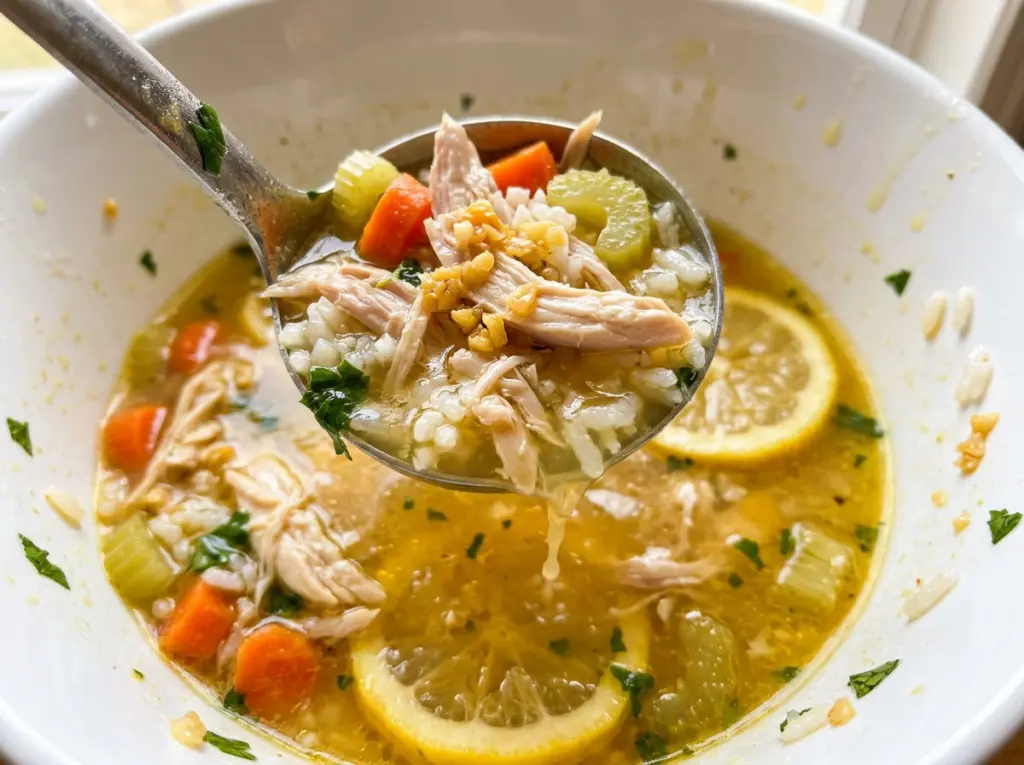
The diced vegetables go into the pot first, and after a few minutes the onion turns translucent while the carrots and celery soften at the edges. Garlic follows just long enough to smell warm and savory. Then the broth simmers with chicken and rice until the grains are tender and the chicken is cooked through. I make this easy lemon garlic chicken soup with rice when I want a comforting bowl that still tastes light.
There’s no roux or cream to weigh down the broth. The rice gives it a little body, and fresh lemon keeps each spoonful bright. Letting the soup stand for five minutes before serving gives the bubbling a chance to settle. The result is savory broth, soft rice, and tender chicken with a clean citrus finish.
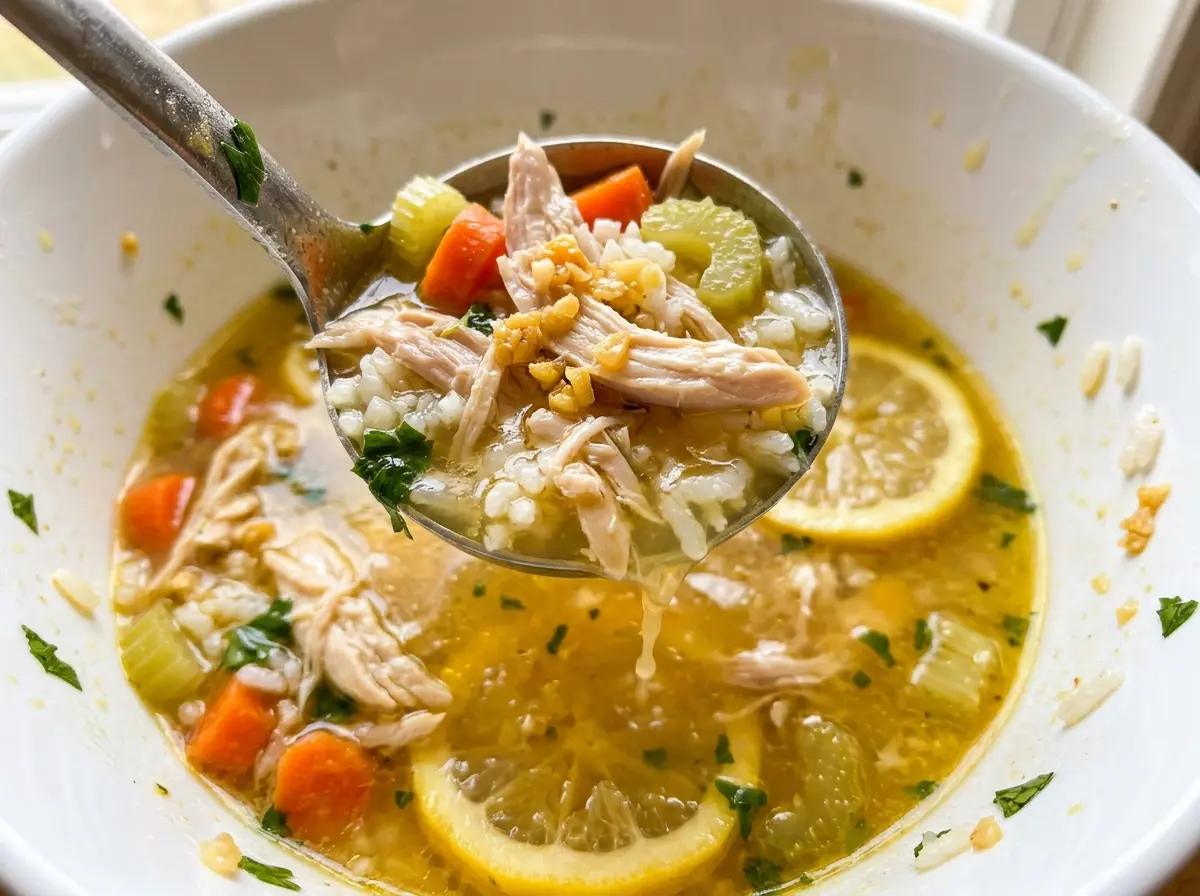
Kitchen Note
Cut the chicken into evenly sized half-inch pieces before you start. When the pieces are close in size, they cook through together during the short simmer instead of leaving a few larger pieces that need extra time.
Save this lemon garlic chicken soup for a night when you want tender chicken, soft rice, and a bright lemon finish in one pot.
Why the Lemon Goes In After the Pot Leaves the Heat
Fresh lemon juice is doing more than adding sourness here. Its acidity balances the savory broth and makes the chicken and rice taste lighter, while its fresh citrus aroma is easiest to notice when it hasn’t been boiled away. That’s why I stir it in after taking the pot off the heat rather than letting it simmer with the rice.
Adding lemon at the end also gives you a more dependable finish. The soup has already had time to develop its savory base from the vegetables, garlic, chicken, and broth; the citrus brightens that base without taking over. If lemon juice goes in too early, the soup can taste flatter by the time it’s ready to serve. Keep the pot off the burner while you stir it in, then give the soup its short rest before ladling it out.
What the Rice, Broth, and Lemon Each Bring to the Pot

- Long-grain white rice — It cooks right in the broth and gives the soup gentle body while keeping the grains more distinct than a short-grain rice would. A basic store-brand long-grain rice works well; jasmine rice is a practical swap if you like a softer, more fragrant bowl. Skip instant rice, which softens too quickly during the simmer.
- Low-sodium chicken broth — It gives the soup its savory base while leaving room for the salt in the pot to season it without making the broth taste overly salty. A standard store brand is fine. If you use regular-sodium broth instead, expect a saltier result and taste before adding any extra seasoning.
- Chicken breasts — Boneless, skinless breasts are lean and cook quickly once cut into small pieces. A value pack is fine; trim away any large pieces of fat before cutting. Boneless, skinless thighs are another option, with a richer flavor and slightly more tender texture.
- Onion, carrots, celery, and garlic — These build the savory base without needing a long cooking time. Ordinary fresh vegetables work; there’s no need to seek out specialty produce. A white onion can replace the yellow onion, though its flavor is a little sharper. Fresh garlic has the clearest aroma, but jarred minced garlic can stand in when needed.
- Fresh lemon juice — Fresh juice brings a cleaner citrus scent than bottled juice, which matters in a soup where lemon is the finishing note. Bottled lemon juice can replace it in the same amount, but the final bowl won’t smell quite as fresh. Squeeze the lemon before you start cooking so it’s ready when the pot comes off the heat.
The Short Simmer That Cooks the Rice and Chicken Together
Soften the Vegetables Before the Garlic
Heat the olive oil in a 6-quart pot over medium heat, then add the diced onion, carrots, and celery. Cook, stirring occasionally, for 5–7 minutes, until the onion is softened and the vegetables have begun to lose their raw firmness. Stir in the minced garlic and cook for about 30 seconds, just until fragrant. Garlic can turn bitter if it browns, so move on as soon as you smell it.
Start the Rice in Broth
Stir in the kosher salt and black pepper, then add the chicken, chicken broth, and long-grain white rice. Bring the pot to a boil over high heat so the liquid is hot before you lower the burner. Once it boils, reduce the heat to maintain a gentle simmer and leave the pot uncovered. A hard, rolling boil can make it harder to keep the chicken tender and the rice evenly cooked.
Check the Rice and Chicken Near the End
Simmer for 15–18 minutes, stirring occasionally so rice doesn’t settle and stick at the bottom. The rice should be tender, and the chicken should reach 165°F in the center. If either needs more time, keep the pot at a gentle simmer and check again every 2–3 minutes. Don’t judge the chicken by the outside color alone; use an instant-read thermometer in the center of a piece.
Finish with Lemon and a Short Rest
Once the rice is tender and the chicken is cooked through, remove the pot from the heat. Stir in the fresh lemon juice so its citrus flavor stays bright. Let the soup stand for five minutes before serving; it will stop bubbling and settle into an easy-to-ladle consistency. Give it one gentle stir before you fill the bowls.
Easy Changes for a Different Bowl of Chicken and Rice Soup
Use Thighs for a Richer Broth
Replace the chicken breasts with boneless, skinless chicken thighs cut into similarly sized pieces. Thighs bring a little more richness to the broth and stay tender through the simmer. Check that the pieces are cooked through before serving.
Make the Soup Vegetarian with Chickpeas
Use vegetable broth in place of chicken broth and stir drained canned chickpeas into the pot with the rice. Chickpeas add a hearty, creamy bite without needing a separate cooking step. The soup will have a gentler, more vegetable-forward taste than the chicken version.
Keep It Gluten-Free
Rice is naturally gluten-free, so the main change is choosing a low-sodium chicken broth labeled gluten-free. The substitution keeps the same savory direction and doesn’t require a change to the cooking method.
Storage and Reheating
- Refrigerator: Store leftovers in a covered container for 3–4 days. The rice will continue to absorb broth, so the soup will be thicker after chilling.
- Freezer: Freeze cooled soup in airtight containers for up to 2–3 months. The flavor holds up well, though the rice will be softer after thawing.
- Reheating: Warm it gently in a saucepan over medium-low heat, stirring now and then. Add a splash of broth or water if the rice has absorbed more liquid than you’d like; boiling it hard can make the rice mushy.
Questions That Come Up While Making This Chicken Rice Soup
Easy Lemon Garlic Chicken Soup with Rice
Ingredients
Equipment
Method
- Heat the olive oil in a 6-quart pot over medium heat, then add the onion, carrots, and celery and cook, stirring occasionally, until softened, 5–7 minutes.
- Stir in the garlic and cook until fragrant, about 30 seconds.
- Stir in the salt and pepper, then add the chicken, broth, and rice; bring to a boil over high heat, then reduce the heat to maintain a gentle simmer and cook uncovered for 15–18 minutes, stirring occasionally.
- Check that the rice is tender and the chicken has reached 165°F in the center; if needed, continue simmering and check again every 2–3 minutes, then remove the pot from the heat and stir in the lemon juice.
- Let the soup stand for 5 minutes, then serve.