
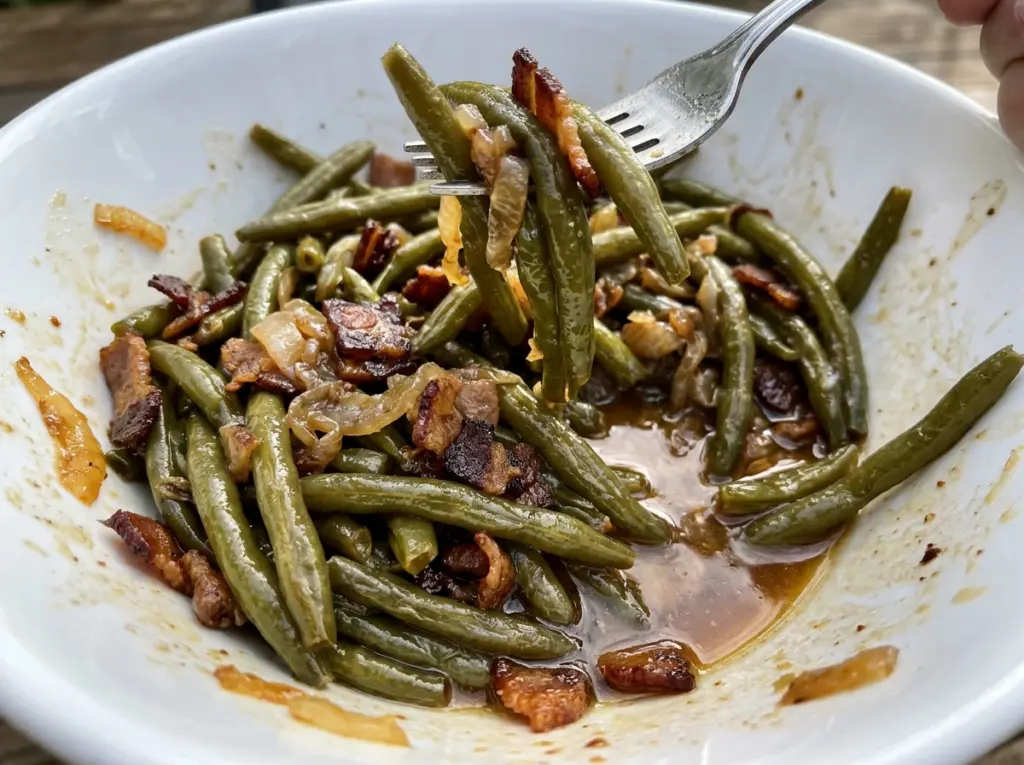
The bacon starts with a steady sizzle, then its fat slowly gathers in the bottom of the Dutch oven. That’s the moment I know these green beans are headed somewhere different from a quick, crisp-tender side. For Classic Southern Seasoned Green Beans, the bacon and onion cook first, and then fresh beans simmer low and slow in chicken broth until they’re very tender.
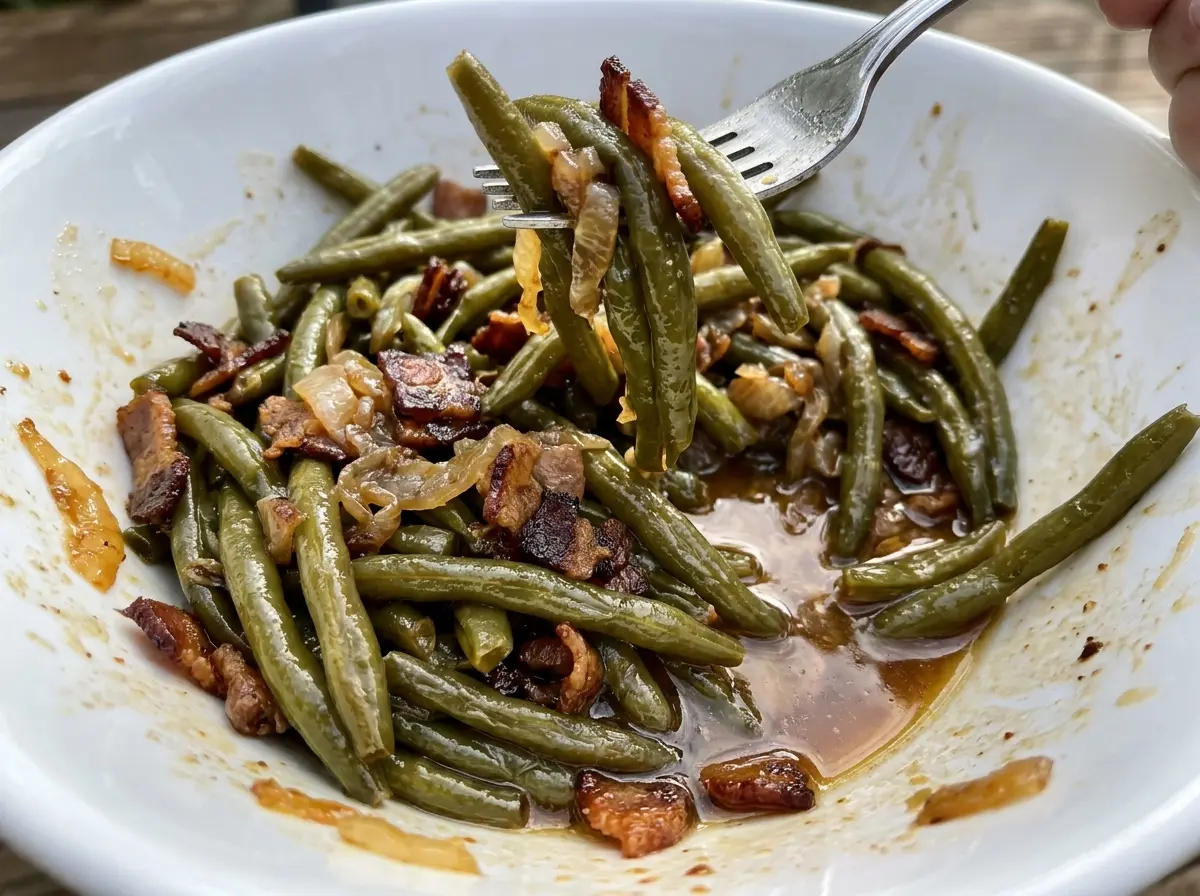
I used to think green beans needed to stay bright and snappy. This pot taught me to look for a softer finish: the beans take on the savory broth as they cook, while the bacon adds depth without needing a long list of seasonings. Keep the lid on between occasional stirs and hold the pot at a gentle simmer. The result is a cozy side of tender green beans with a little flavorful cooking liquid left in the pot.
Kitchen Note
Keep the simmer gentle once the pot is covered; a hard boil can cook away the broth before the beans are tender. I check the heat each time I give the pot an occasional stir.
Save Classic Southern Seasoned Green Beans for a side dish with tender beans, smoky bacon, and a savory broth that comes together in one pot.
Why These Green Beans Need a Long, Gentle Simmer
These aren’t meant to be quick-cooked green beans with a crisp bite. They’re braised: the beans spend time covered with bacon, onion, and chicken broth, giving them a chance to soften all the way through and pick up the savory cooking liquid. If you stop while they’re still firm, you’ll miss the tender texture that makes this style of side dish distinct.
The gradual cook also gives the ingredients time to work together. Bacon renders its fat before the onion goes in, so the onion softens in that savory base instead of being added raw to the broth. Then the beans simmer in the same pot. Keep the heat low after the broth reaches a simmer; the goal is a quiet, steady cook, not a rolling boil. The timing has a range because bean size and stovetop heat can vary, so use tenderness—not the clock alone—as your final cue.
Why Bacon and Low-Sodium Broth Matter More Than Extra Seasoning

- Bacon — As it browns, bacon contributes both rendered fat for the onion and a smoky, savory note to the broth. The exact cut matters less than using bacon that browns and renders; a strongly smoked bacon will make that flavor more pronounced. Turkey bacon isn’t a direct stand-in because it won’t render the same amount of fat.
- Yellow onion — Diced onion softens into the base and mellows as the pot simmers. A white onion works in its place, though its flavor tends to be a little sharper. Keep the pieces diced so they soften alongside the beans rather than staying in large chunks.
- Fresh green beans — Fresh beans are what this long simmer is timed around. Trim the ends before they go into the pot, and choose beans that look firm rather than limp. Canned beans aren’t a good swap for this method; they’re already cooked and won’t hold up to the same long braise.
- Low-sodium chicken broth — It supplies the liquid for the simmer and lets the bacon’s saltiness come through without making the pot too salty. Regular chicken broth will work, but it can make the finished beans saltier. The black pepper adds a little warmth; the recipe keeps the seasoning simple so the bacon and broth stay noticeable.
How the Bacon-Broth Pot Comes Together
Render the Bacon Before Adding the Onion
Set a 4-quart Dutch oven over medium heat and cook the chopped bacon for 6 to 8 minutes, stirring occasionally. Look for browned pieces and rendered fat in the bottom of the pot; bacon that’s only warmed through hasn’t built the same base. Keep it moving now and then so it browns without scorching. Once it’s browned, the onion can go straight into that fat.
Soften the Onion in the Pot
Add the diced yellow onion and cook for 4 to 5 minutes, stirring often. It should soften and turn translucent around the edges, with no raw, crunchy bite. If the onion starts browning quickly, lower the heat rather than letting the bottom of the pot scorch. This short stage softens the onion before the liquid goes in.
Simmer the Beans Until Very Tender
Add the trimmed green beans, chicken broth, kosher salt, and black pepper, then bring the pot to a simmer. Cover it, reduce the heat to low, and cook for 45 to 60 minutes, stirring occasionally. Keep the pot at a gentle simmer and check that the beans are very tender before you stop; they shouldn’t still have a firm, squeaky center. The broth will remain in the pot rather than cooking away completely.
Two Ways to Adjust the Pot Without Losing Its Character
Make a vegetarian version
Leave out the bacon and use vegetable broth instead of chicken broth. Start the diced onion with a small splash of the vegetable broth and cook it until softened, then add the green beans and remaining broth with the seasonings. The result is lighter and won’t have the smoky depth or rendered bacon fat of the original.
Choose a more smoke-forward bacon
Use hickory-smoked bacon in place of a milder bacon, keeping the same amount and cooking method. Its smoke will carry more strongly into the broth, which suits a pot where the beans simmer for a long time. Since bacon brands vary in saltiness, taste the finished broth before adding any extra seasoning.
Storage and Reheating
- Refrigerator: Store in a covered container for 3 to 4 days; the beans will soften a little more as they sit.
- Freezer: Freeze the beans with their broth in an airtight container for up to 3 months. Thaw overnight in the refrigerator; expect a softer texture after freezing.
- Reheating: Warm gently on the stovetop with the cooking liquid, stirring occasionally, until the leftovers reach 165°F. Avoid a hard boil, which can make already-tender beans mushy.
Questions I Get Asked About These Southern Green Beans
Classic Southern Seasoned Green Beans
Ingredients
Equipment
Method
- Cook the bacon in a 4-quart Dutch oven over medium heat for 6 to 8 minutes, stirring occasionally, until browned and the fat has rendered.
- Add the onion and cook for 4 to 5 minutes, stirring often, until softened.
- Add the green beans, chicken broth, salt, and black pepper, and bring to a simmer.
- Cover, reduce the heat to low, and simmer for 45 to 60 minutes, until the beans are very tender; stir occasionally and check that the pot remains at a gentle simmer.