
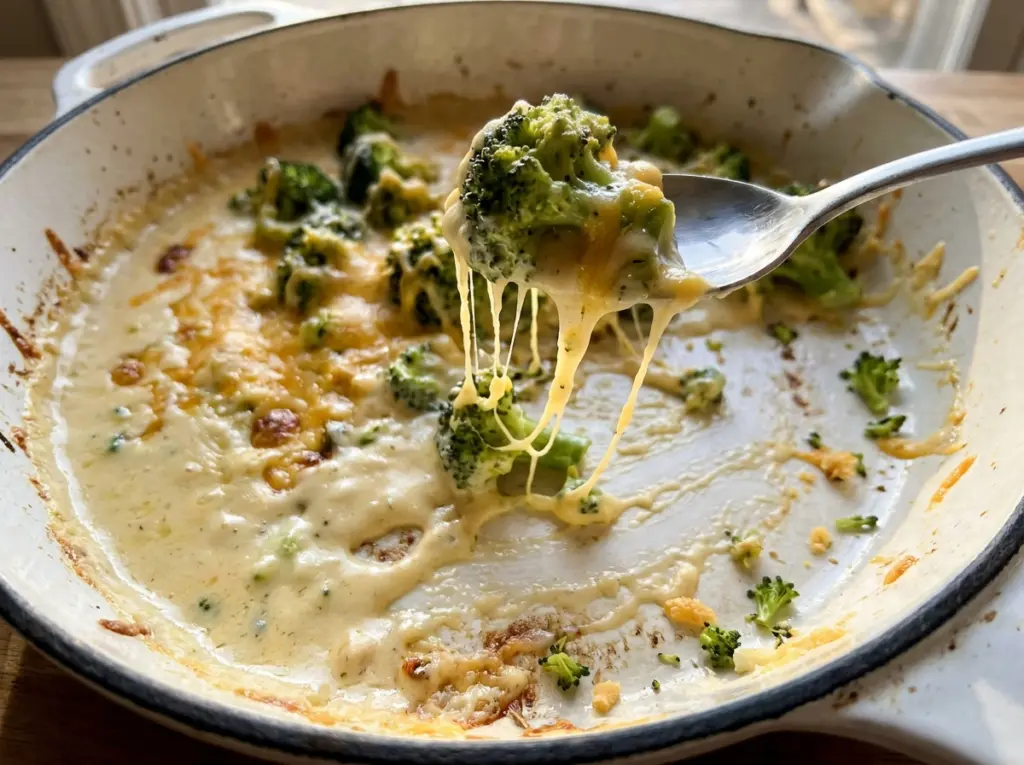
The broccoli goes into the skillet bright and crisp, then comes out tender without getting waterlogged. I used to think a cheese sauce needed to be made in a separate pot, but here the same skillet handles both parts, which keeps the cooking straightforward and the cleanup down. This easy cheesy broccoli skillet is a useful side when you want the florets coated in warm cheddar sauce instead of sitting under a puddle of it.
The order matters: cook the broccoli first, move it to a plate, and build the sauce in the cleared skillet. That gives the flour and butter room to form a smooth base before the milk goes in. Then the cheddar melts gradually over low heat, so the sauce stays creamy enough to cling to the broccoli. Serve it hot, while the cheese is still silky and the florets hold their shape.
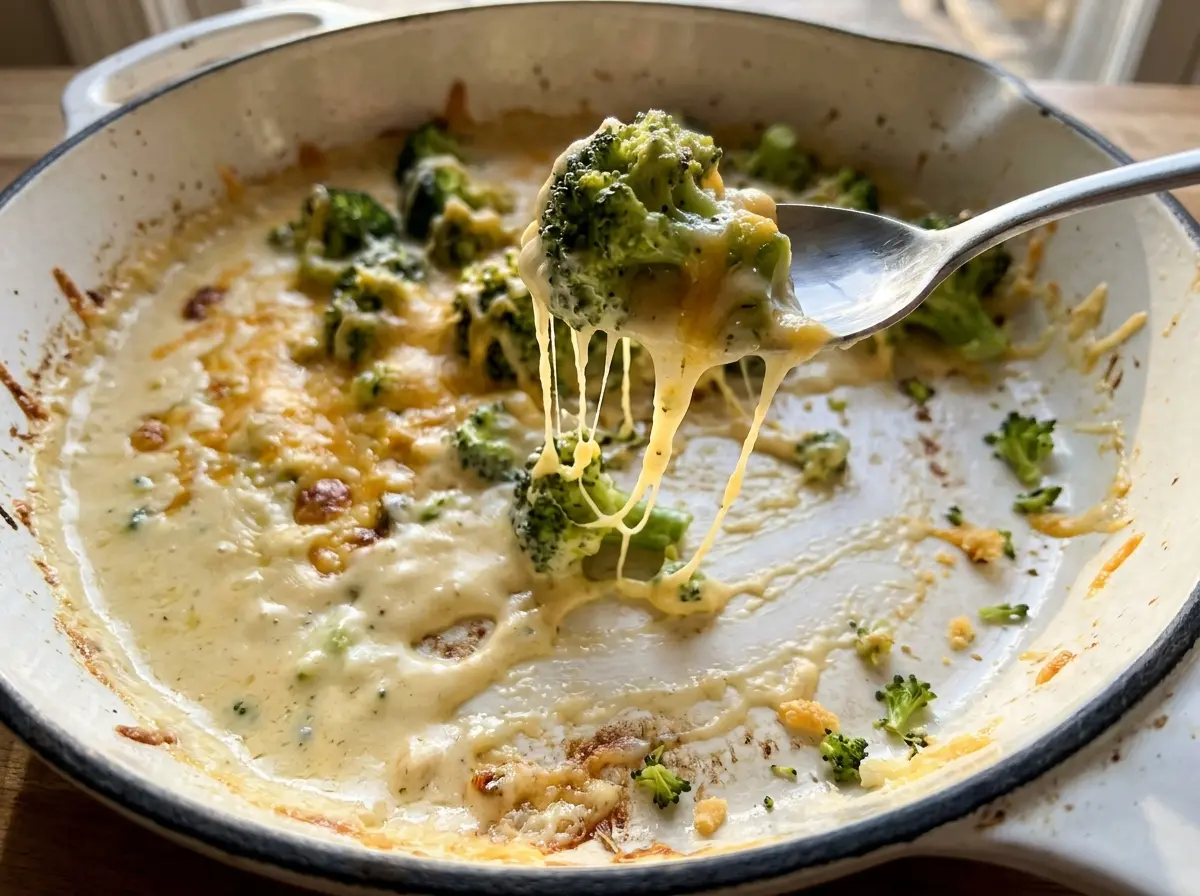
Kitchen Note
Keep the heat low when the cheddar goes in. I add it a handful at a time and whisk each addition smooth before adding more; turning the heat up to hurry it along is the easiest way to end up with a grainy sauce.
Save this Easy Cheesy Broccoli Skillet for a cozy side of fork-tender broccoli tucked into smooth sharp cheddar sauce.
Why This Broccoli Gets Tender Without Turning Watery
Broccoli can go from crisp to limp quickly in a skillet, especially when it’s submerged in water and left to boil. Here, the water is covered with the florets for a short cook, so the covered skillet does the work with steam while the broccoli stays in contact with the pan. The result should be bright green and fork-tender, not dull and collapsing.
That short cook also gives the broccoli a head start before the cheese sauce is made. The florets don’t have to simmer in the sauce to finish cooking, which helps them keep their shape when everything comes together. It’s a small distinction, but it makes this feel like broccoli with cheddar sauce rather than a soft, sauce-heavy mash.
Use the doneness cue, not just the clock: the broccoli should give when you pierce it with a fork. The 4-to-6-minute window gives you room to check, since florets aren’t always cut to identical sizes. Once they’re tender, move them out of the skillet so they don’t keep cooking while you make the sauce.
Why Sharp Cheddar and Whole Milk Matter in This Skillet

- Broccoli florets — Fresh florets bring the green color and tender bite that make this a broccoli side, not just a cheese sauce. Cut any oversized pieces down so they cook at a similar pace to the smaller florets. Frozen broccoli isn’t a like-for-like swap here because it brings extra moisture and a different texture.
- Sharp cheddar — Sharp cheddar gives the sauce a clear cheese flavor without needing a long ingredient list. Use a cheddar you enjoy eating; a milder cheddar makes the sauce less assertive. Pre-shredded cheddar works, though freshly shredded cheese often melts more smoothly because it may not have the same coating used to keep packaged shreds separate.
- Whole milk — Whole milk gives the sauce a creamy body while still whisking smoothly into the flour-and-butter base. Lower-fat milk can make a thinner sauce, so whole milk is the dependable choice for the texture here.
- All-purpose flour and butter — Together they make the roux that thickens the milk into a sauce that can cling to the florets. Whisk the flour into the melted butter before adding milk; there isn’t a direct gluten-free swap tested for this particular roux method.
- Olive oil — A little oil coats the skillet as the broccoli starts cooking. The amount is modest, so the oil’s job is to help the florets cook in the pan rather than to add a strong olive flavor.
From Bright-Green Florets to a Smooth Cheddar Coating
Steam the broccoli in the covered skillet
Heat the olive oil in a 12-inch skillet over medium heat, then add the broccoli and water. Cover the skillet and cook for 4 to 6 minutes, checking for bright green florets that are fork-tender. If a fork still meets a firm center, give the broccoli the remaining time in that range and check again. Transfer the cooked florets to a plate before making the sauce.
Clear the pan and build the roux
Carefully pour off any water remaining in the skillet after moving the broccoli. Leaving that water behind can dilute the sauce, so take a moment to clear the pan. Melt the butter over medium heat, add the flour, and whisk for 1 minute until the mixture is blended. Keep whisking as it cooks so the flour is incorporated rather than sitting in clumps.
Whisk the milk to a thickened base
Gradually whisk in the whole milk until the mixture is smooth, then add the salt and black pepper. Bringing the milk in gradually helps it blend into the roux without lumps. Bring the sauce to a gentle simmer while whisking, then cook for 2 to 3 minutes until it thickens. A gentle simmer is enough; a hard boil isn’t needed.
Melt in the cheddar and coat the broccoli
Reduce the heat to low and whisk in the shredded cheddar a handful at a time, waiting for each addition to melt before adding the next. The sauce should look smooth and glossy rather than stringy or grainy. Return the broccoli to the skillet and stir gently, turning the florets until they’re coated. Serve hot so the sauce stays creamy.
Two Simple Ways to Change the Texture or Serving Style
Cut the florets smaller for more even coating
Cut the broccoli into smaller, bite-size florets before it goes into the skillet. More pieces get coated with cheddar in each spoonful, and the smaller bites are easier to serve alongside other foods. Check for fork tenderness within the same cooking window, since smaller pieces can soften sooner.
Serve the cheddar sauce alongside
For a different presentation, leave the cooked broccoli on its plate instead of returning it to the skillet, then spoon the finished cheese sauce over the top or serve it alongside. The florets stay distinct rather than fully coated, and everyone can choose how much sauce to take. Make the sauce just before serving so it’s warm and easy to spoon.
Storage and Reheating
- Refrigerator: Store leftovers in a covered container for 3 to 4 days. The broccoli softens and the sauce thickens as it chills.
- Freezer: Freezing isn’t recommended for the best texture; thawed broccoli tends to soften further, and the cheddar sauce may turn grainy.
- Reheating: Warm gently in a skillet over low heat, stirring carefully until hot. Avoid a hard boil, which can make a cheese sauce separate.
Questions That Come Up When Making Cheesy Broccoli
Easy Cheesy Broccoli Skillet
Ingredients
Equipment
Method
- Heat the olive oil in a 12-inch skillet over medium heat, then add the broccoli and water.
- Cover and cook for 4 to 6 minutes, until the broccoli is bright green and fork-tender.
- Transfer the broccoli to a plate.
- Carefully pour off any water remaining in the skillet.
- Melt the butter in the same skillet over medium heat.
- Add the flour and whisk for 1 minute.
- Gradually whisk in the milk until smooth.
- Add the salt and pepper.
- Bring the sauce to a gentle simmer, whisking.
- Cook for 2 to 3 minutes, until thickened.
- Reduce the heat to low and whisk in the cheddar a handful at a time until smooth.
- Return the broccoli to the skillet and stir gently to coat it in the cheese sauce.
- Serve hot.