
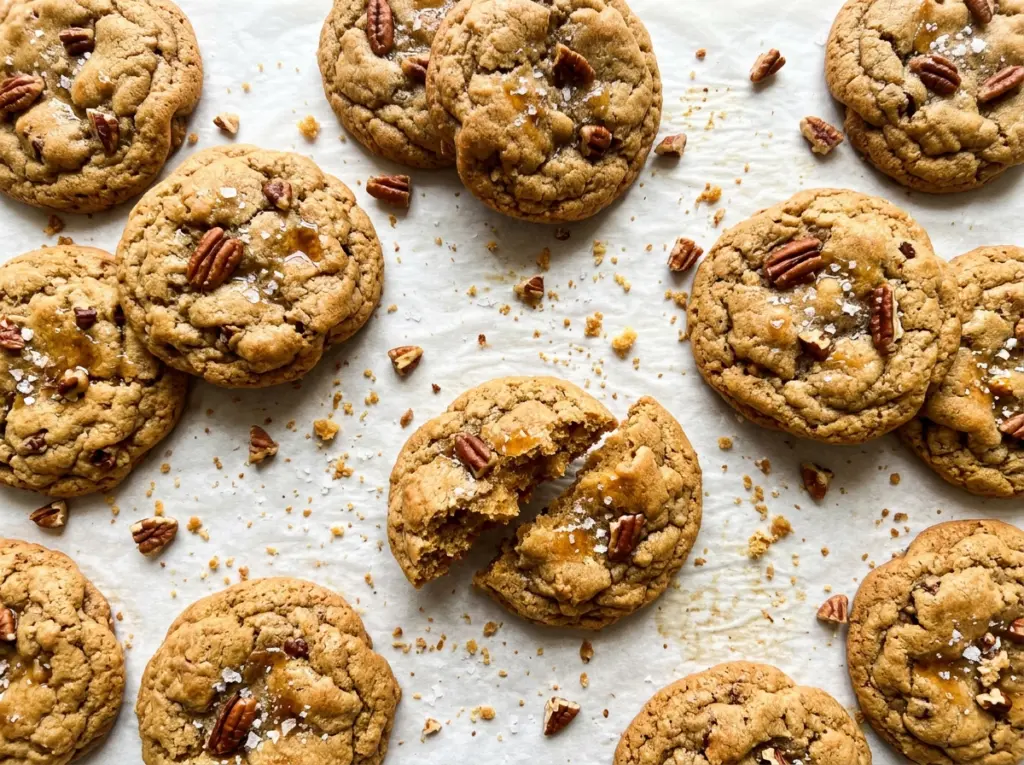
The butter starts out pale and quiet, then the milk solids turn amber and the kitchen smells nutty. That’s the moment to pull the pan off the heat; a little longer can take browned butter from toasty to bitter. I use that fragrant butter as the base for these brown butter maple pecan cookies, with pure maple syrup for a warm, mellow sweetness and chopped pecans in every bite.
The dough is softer than a standard drop-cookie dough when it first comes together, so I give it a proper chill before scooping. That short rest firms the butter and makes the portions easy to handle, while the cookies still bake up with golden edges and soft centers. A pinch of flaky sea salt on each warm cookie brings the maple and pecans into focus without covering up their flavor.
Kitchen Note
Keep your eyes on the milk solids at the bottom of the pan, not just the butter’s color. When they’re amber and the butter smells nutty, take it off the heat and stir in the water carefully while the pan is off the burner.
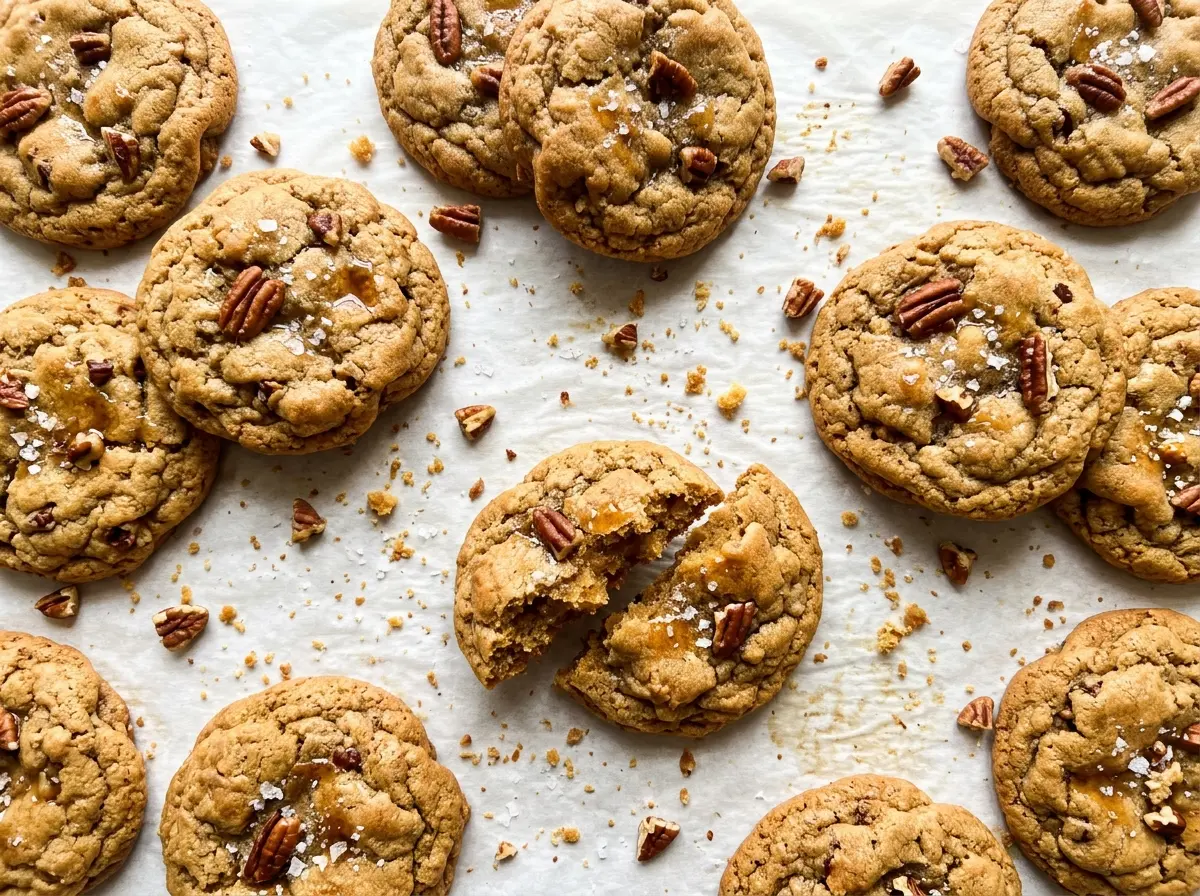
Save these brown butter maple pecan cookies for a bake with golden edges, soft centers, and a little flaky salt on top.
Why Brown Butter Needs Water Back in This Dough
Browning butter does more than deepen its flavor. As it cooks, some of its water evaporates, leaving the butterfat and toasted milk solids behind. The two tablespoons of water stirred in after browning bring moisture back into the dough. Skip that step and you’re changing the balance of the mixture, not just leaving out a flavorless splash.
That small adjustment matters here because the dough also includes maple syrup, brown sugar, a whole egg, and an extra yolk. The syrup adds liquid along with maple flavor, while the brown sugar and yolk help give the baked cookies their tender, rich bite. The added water lets the browned butter fit into that mixture without making the dough feel dry or crumbly. It’s a quiet bit of kitchen arithmetic that helps the cookies bake up with defined edges and a soft middle.
What Maple Syrup, Egg Yolks, and Pecans Bring to These Cookies

- Unsalted butter — Butter is the starting point for the browned flavor, so use butter you enjoy eating on its own. Unsalted gives you control over the dough’s seasoning, and be sure to transfer the browned milk solids along with the liquid butter; they carry much of the toasted flavor.
- Pure maple syrup — Choose real maple syrup rather than pancake syrup. The maple flavor is part of what distinguishes these cookies, and pancake syrup is a different product with a different sweetness and consistency. There isn’t a direct swap that keeps the same maple character.
- Light brown sugar — Packed light brown sugar adds sweetness and a gentle molasses note that sits well beside the maple. Dark brown sugar will make that molasses character more pronounced, so keep the light variety for the milder balance here.
- Egg and egg yolk — The whole egg helps bind the dough, and the extra yolk contributes richness. Room-temperature eggs blend more readily into the warm butter mixture; cold eggs can make that mixture firm up as you whisk.
- All-purpose flour and baking soda — All-purpose flour gives the cookies enough structure to hold their shape, while baking soda helps them spread and brown. These aren’t ingredients I’d swap casually: cake flour can make the cookies too delicate, and baking powder won’t behave exactly like baking soda.
- Pecans and flaky sea salt — Fresh pecans bring the buttery crunch, so use pieces that smell sweet and clean rather than stale. The flaky salt is a finishing touch, not a replacement for the fine sea salt in the dough; its larger flakes add little salty pops on the surface.
From Amber Butter to Soft-Centered Cookies
Brown the Butter, Then Let It Cool
Melt the butter pieces in a medium saucepan over medium heat, stirring often for 5–8 minutes. Watch for the milk solids to turn amber and listen for the bubbling to quiet as the butter browns. Take the pan off the heat, carefully stir in the water, and transfer the butter and browned bits to a large bowl. Let it cool until warm, about 20 minutes, before mixing in the eggs.
Bring the Wet and Dry Mixtures Together
Whisk the flour, baking soda, and fine sea salt in a separate medium bowl so the leavening is spread through the flour. In the cooled butter, whisk the brown sugar and maple syrup, then add the egg, egg yolk, and vanilla and whisk until smooth. Stir in the flour mixture just until you no longer see dry streaks; continuing to work the dough after that can make the cookies tougher. Fold in the chopped pecans so they’re distributed without crushing them.
Chill Until the Dough Can Hold a Scoop
Cover the bowl and refrigerate the dough for 45–60 minutes. It should feel firm enough for a scoop to hold its shape instead of slumping straight back into the bowl. If the center still feels loose, give it the full chill rather than trying to portion it early. Line two 18×13-inch baking sheets with parchment while the dough firms, and preheat the oven to 350°F.
Bake, Rotate, and Salt While Warm
Scoop the dough into 1 1/2-tablespoon portions, placing 12 on each sheet with about 2 inches between them. Bake the sheets on the upper and lower oven racks for 10–12 minutes, switching racks and rotating the sheets halfway through. Pull them when the edges are golden and set but the centers still look soft; they’ll continue to settle as they cool. Sprinkle the cookies evenly with flaky sea salt while they’re warm, leave them on the baking sheets for 5 minutes, then move them to a wire rack.
Three Small Changes That Keep the Cookies in Balance
Swap Pecans for Walnuts
Use chopped walnuts in place of the pecans, keeping the same amount and folding them into the dough in the same way. They bring a slightly more earthy, less buttery taste, but still give the cookies a satisfying crunch.
Make a Pecan-Free Batch
Leave out the pecans for cookies with a smoother bite and less crunch; the dough still bakes without them. If you’re avoiding pecans because of an allergy, take cross-contact seriously and use clean equipment and ingredients that are safe for that person.
Use Dark Brown Sugar for More Molasses
Replace the light brown sugar with dark brown sugar in the same amount. The cookies will have a deeper molasses note that competes a little more with the maple, so choose this when you want a bolder, less delicate sweetness.
Storage and Reheating
- Refrigerator: Refrigeration isn’t needed. Keep the cooled cookies in an airtight container at room temperature for up to 5 days; chilling them can make the butter firm and the cookies taste less tender.
- Freezer: Freeze cooled cookies in an airtight freezer-safe container for up to 2 months, separating layers with parchment so they don’t stick together. Thaw at room temperature.
- Reheating: For a warm cookie, microwave one briefly, just until warmed through. Longer heating can dry the edges and make the center tough.
Questions That Come Up While These Cookies Bake
Brown Butter Maple Pecan Cookies with Sea Salt
Ingredients
Equipment
Method
- Preheat the oven to 350°F.
- Line two 18x13-inch baking sheets with parchment paper.
- Melt the butter in a medium saucepan over medium heat, stirring often, for 5–8 minutes, until the butter smells nutty and the milk solids turn amber.
- Remove the butter from the heat and carefully stir in the water.
- Transfer the butter and browned bits to a large bowl and cool until warm, about 20 minutes.
- In a medium bowl, whisk together the flour, baking soda, and fine sea salt.
- Whisk the brown sugar and maple syrup into the cooled butter.
- Whisk in the egg, egg yolk, and vanilla until smooth.
- Stir in the flour mixture just until no dry streaks remain.
- Fold in the pecans.
- Cover and refrigerate the dough for 45–60 minutes, until firm enough to scoop.
- Scoop the dough into 1 1/2-tablespoon portions and arrange 12 on each prepared baking sheet, spacing them about 2 inches apart.
- Bake on the upper and lower oven racks for 10–12 minutes, switching and rotating the sheets halfway through, until the edges are golden and set while the centers still look soft.
- Sprinkle the warm cookies evenly with the flaky sea salt.
- Let the cookies cool on the baking sheets for 5 minutes.
- Transfer the cookies to a wire rack to cool.