
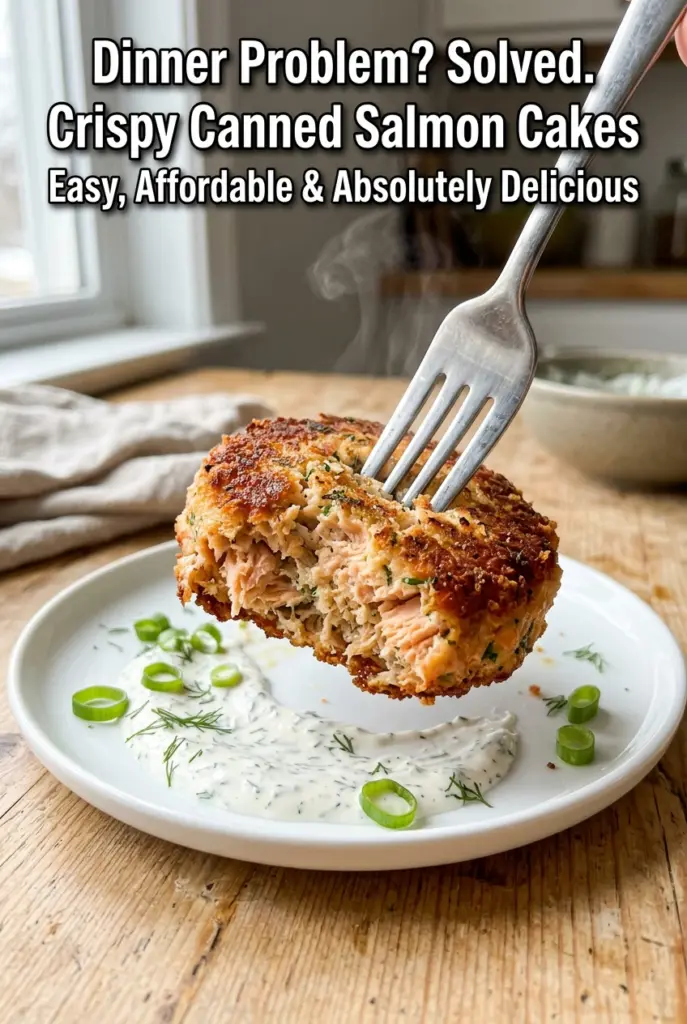
Golden salmon cakes with a crisp crust and a tender center are one of those pantry dinners that never feel like a compromise. The outside gets shatteringly crisp in the pan while the inside stays moist, savory, and bright with lemon, herbs, and a little Dijon. Canned salmon can go in two directions: dry and crumbly, or soft and cohesive. This version lands in the sweet spot, with enough binder to hold together without turning heavy.
The trick is in the balance. Breadcrumbs give the cakes structure, mayonnaise keeps them from eating dry, and the brief chill before frying helps the patties stay intact as soon as they hit the pan. I also like using both lemon juice and zest, because the zest carries the fresh citrus note while the juice cuts through the richness. A little smoked paprika adds depth without making the salmon taste smoky in an obvious way.
Below, I’ve included the exact method I use to get that deep golden crust, plus a few smart swaps if you need to work with what’s already in the kitchen. The sauce is optional, but it takes these from good to the kind of dinner people remember.
The cakes held together beautifully after that short chill, and the crust got crisp without falling apart when I flipped them. I used the dill sauce and it was a perfect match with the lemon and salmon.
Crispy canned salmon cakes with lemon and dill are the weeknight dinner to save for later.
The Reason Salmon Cakes Fall Apart Before They Hit the Pan
Most salmon cakes fail for one of two reasons: the mixture is too wet, or the pan is too hot before the crust has time to set. Canned salmon can carry more moisture than people expect, especially if it hasn’t been drained well. Once that extra liquid is in the bowl, breadcrumbs alone can’t always save the texture unless the mixture chills before frying.
The other problem is impatience. If you move the cakes around too soon, the crust tears before it has a chance to form. Let the first side cook until it’s deeply golden and releases cleanly from the pan. If it sticks, it’s not ready yet.
- Drain the salmon well — Press out the extra liquid before flaking it. Wet salmon makes loose cakes that won’t hold a neat shape.
- Keep the mix gentle — A fork is enough. Stirring hard turns the salmon into paste and makes the cakes dense.
- Chill before frying — Ten to fifteen minutes in the fridge firms the mixture so it sears instead of spreading.
What Each Ingredient Is Actually Doing in These Salmon Cakes

The salmon does the obvious work here, but the supporting ingredients are what decide whether the cakes taste rich and cohesive or dry and flat. Pink salmon is sturdy and affordable, and it flakes well once drained. If you have only one can on hand, you can scale the recipe down, but keep the same ratio of binder so the patties still hold together.
- Breadcrumbs — Plain or panko both work. Panko gives a lighter texture; finer crumbs make a more compact cake. If you use crackers instead, crush them finely so they blend evenly.
- Mayonnaise — This keeps the inside moist and adds richness without making the cakes greasy. Greek yogurt can work in a pinch, but the cakes will taste a little tangier and less plush.
- Dijon mustard — It sharpens the salmon and helps the seasoning taste complete. Yellow mustard will work, but it brings a different kind of sweetness and less depth.
- Lemon zest and juice — The zest is the bigger flavor here. Juice alone can taste thin, but zest gives the cakes that fresh, aromatic lift.
- Fresh herbs and green onion — Parsley keeps the flavor clean while green onion adds a mild bite. Dried parsley won’t give the same brightness, though it can stand in if that’s what you have.
How to Get a Deep Golden Crust Without Drying Out the Salmon
Building the Mixture
Drain the salmon thoroughly, then flake it into small pieces so the binder can coat everything evenly. Add the eggs, mayo, Dijon, breadcrumbs, herbs, seasonings, and lemon all at once, then fold just until the mixture holds together. If you mash it into a paste, the cakes turn heavy and tight instead of tender.
Shaping and Chilling
Divide the mixture into equal portions and form patties about three-quarters of an inch thick. Thicker cakes need longer to cook through, which usually means a darker crust than you want. A short rest in the fridge firms up the exterior and helps the breadcrumbs hydrate, so the patties are less likely to crack in the pan.
Pan-Frying for the Crisp Finish
Heat the oil until it shimmers, not until it smokes. Add the cakes in a single layer and leave them alone for a few minutes; movement is what tears the crust. When the first side is deeply golden and the cakes release easily, flip them once and finish the second side until it matches.
Serving While the Crust Is Still at Its Best
Move the cooked cakes to a paper towel-lined plate for only a minute or two, then serve right away. Like most pan-fried foods, these lose their crisp edge as they sit, especially under steam. The sauce and lemon wedges should be ready before the cakes leave the pan so nothing waits on the hot, crunchy part.
How to Adapt These Salmon Cakes for Different Kitchens
Gluten-Free Salmon Cakes
Use gluten-free breadcrumbs or crushed gluten-free crackers in the same amount. The texture stays crisp, but some gluten-free crumbs absorb liquid faster, so let the mixture rest for a minute before shaping and add a spoonful more if the patties feel loose.
Dairy-Free Dipping Sauce
Skip the sour cream or yogurt and serve the cakes with a quick lemon-dijon mayo instead. It keeps the same bright, creamy contrast without changing the texture of the salmon cakes themselves.
Baked Instead of Pan-Fried
Brush the patties lightly with oil and bake them on a lined sheet at 425°F until the tops are browned and the centers are hot. You’ll lose some of the crackly crust from the skillet, but you gain easier cleanup and a method that works well for a bigger batch.
Making Them a Little Lighter
Swap part of the mayo for extra beaten egg or a spoonful of plain Greek yogurt. The cakes will be less rich and slightly firmer, which is useful if you’re serving them over salad instead of with a sauce.
Storage and Reheating
- Refrigerator: Store cooked salmon cakes in an airtight container for up to 3 days. The crust softens a little, but the flavor stays good.
- Freezer: Freeze cooked cakes on a tray until solid, then pack them in a freezer bag for up to 2 months. They reheat best from frozen if you want to avoid a soggy middle.
- Reheating: Warm in a skillet over medium-low heat or in a 375°F oven until hot through. The common mistake is microwaving them too long, which steams the crust and leaves the centers rubbery.
Questions I Get Asked About These Salmon Cakes
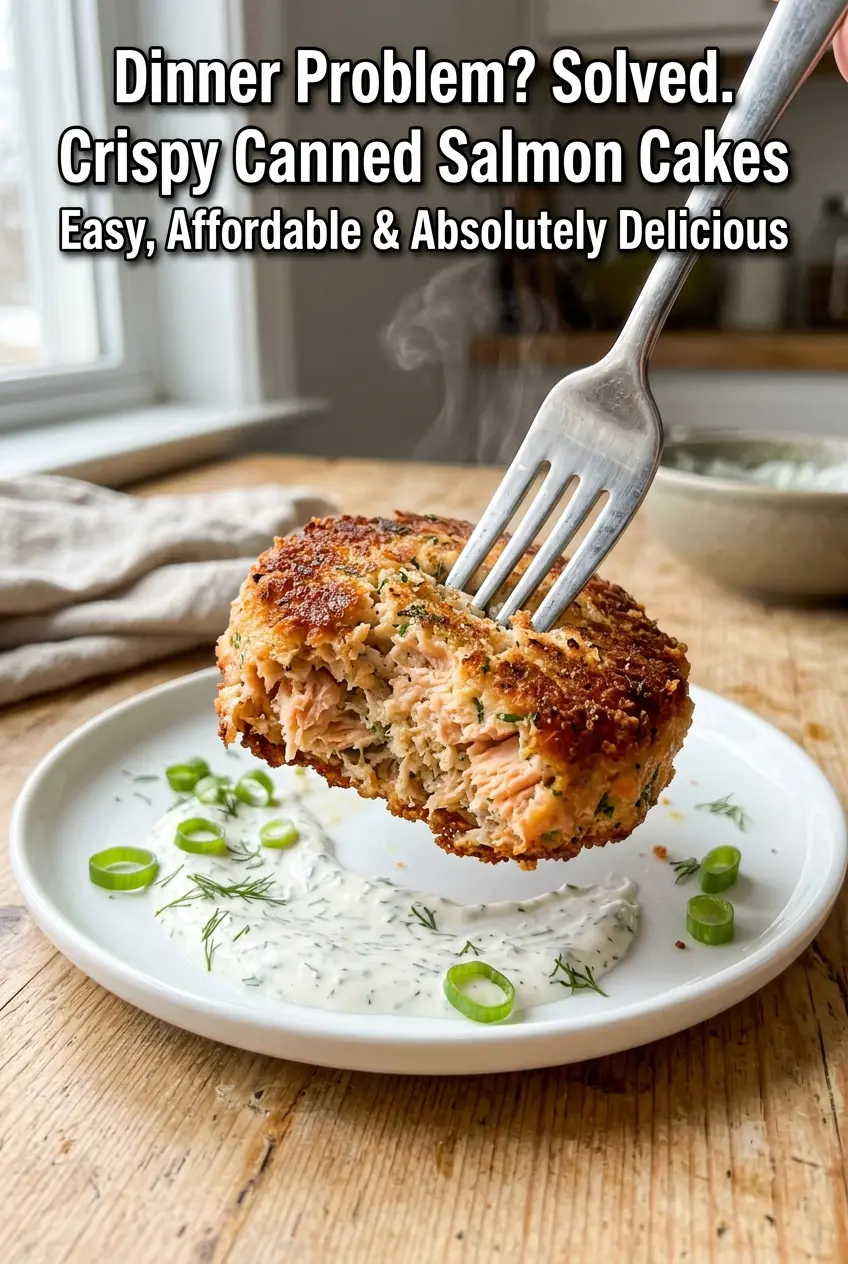
Crispy Canned Salmon Cakes
Ingredients
Equipment
Method
- Drain the canned salmon thoroughly, removing any large bones and skin. Flake the salmon into a large mixing bowl so the pieces are small for better binding.
- Add the beaten eggs, mayonnaise, Dijon mustard, breadcrumbs, parsley, green onions, garlic powder, smoked paprika, salt, black pepper, lemon juice, and lemon zest. Mix gently with a fork until just combined, so the cakes stay tender instead of dense.
- Check the texture for shaping and adjust if needed. If it feels too wet, add 1–2 more tablespoons of breadcrumbs; if too dry, add a small spoonful of mayo.
- Divide the mixture into 8 equal portions and shape each into a patty about 3/4 inch thick. Place the patties on a plate and refrigerate for 10–15 minutes so they hold their shape.
- Whisk together sour cream or Greek yogurt, dill, lemon juice, and garlic powder until smooth. Season with salt and pepper to taste, then set aside in the fridge.
- Heat 2 tablespoons of olive oil in a large non-stick skillet over medium heat. Wait until the oil shimmers, then add the salmon cakes in a single layer without crowding the pan.
- Cook the first side for 3–4 minutes without touching, until a deep golden-brown crust forms. Flip carefully and cook the second side for another 3–4 minutes until equally golden.
- Transfer the cooked cakes to a plate lined with paper towels. Add more olive oil to the pan if needed for any remaining batches, then serve hot.