
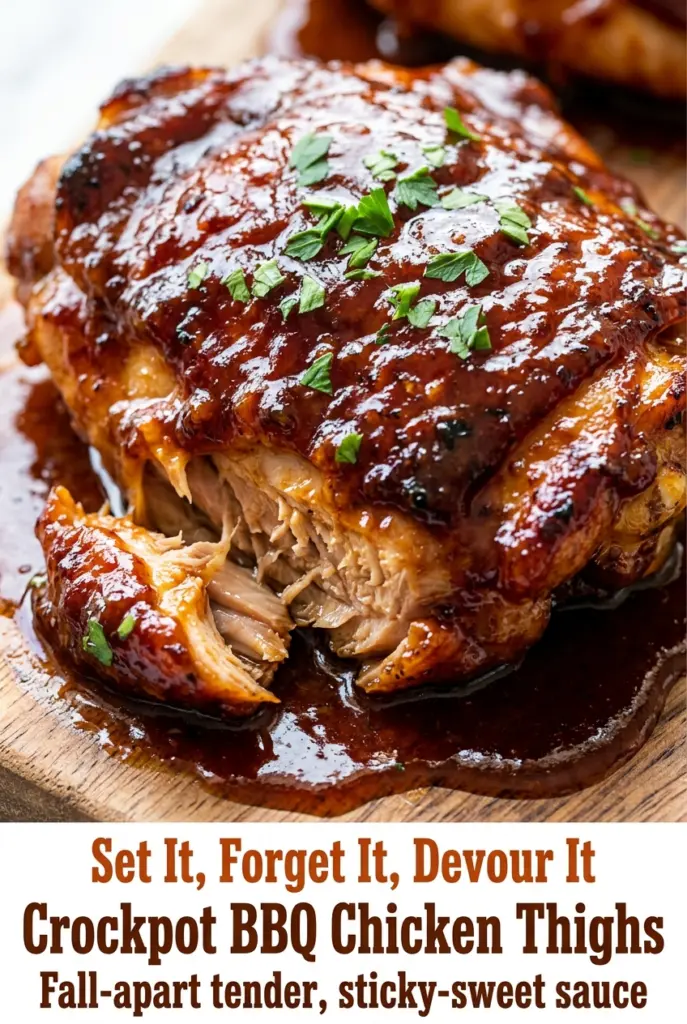
Crockpot BBQ chicken thighs come out with the kind of sticky, fall-apart texture people usually expect from hours on a smoker, but without standing over a grill or babysitting a pan. The chicken turns juicy and tender while the sauce cooks down around it, so every bite gets that sweet-tangy barbecue coating all the way through. Bone-in thighs are the right cut here because they stay forgiving in the slow cooker and bring enough fat to keep the meat from drying out.
The little details matter. Drying the chicken first helps the seasonings cling and keeps the sauce from turning muddy. A splash of apple cider vinegar sharpens the barbecue sauce so it doesn’t taste flat after hours of slow cooking, and a bit of brown sugar helps the edges go glossy if you finish the chicken under the broiler. If you’ve ever had slow-cooked BBQ chicken turn pale or bland, this version fixes both problems.
Below you’ll find the exact slow cooker timing, the easiest way to get the sauce to cling, and a broiler finish that gives the skin those sticky, caramelized edges worth chasing.
The sauce thickened up perfectly and the chicken shredded without any dryness at all. I broiled it at the end like you said and the sticky edges were the best part.
Save these sticky crockpot BBQ chicken thighs for a no-fuss dinner with juicy meat, tangy sauce, and caramelized edges.

The Trick to BBQ Chicken That Stays Juicy in the Slow Cooker
The biggest mistake with slow cooker barbecue chicken is treating it like a sauce-only recipe and forgetting the chicken itself needs structure. Thighs handle the long cook better than breasts because they have enough fat and connective tissue to stay tender instead of stringy. That matters even more when the sauce has sugar in it, because sugar can make the edges seem done before the meat has actually softened.
Cooking on low gives the fat time to melt gently and keeps the barbecue sauce from reducing too aggressively. If you rush this dish on high for too long, the sauce can start tasting sharp and the chicken can go from tender to dry around the edges. The goal is fork-tender meat that still holds onto some texture until you shred it or serve it whole.
- Bone-in, skin-on chicken thighs — The bone helps the meat cook evenly, and the skin adds flavor even if you don’t eat every bite of it. Boneless thighs work in a pinch, but they cook faster and don’t give you the same rich, forgiving result.
- Barbecue sauce — Use one you already like eating. A thin, overly sweet sauce will stay thin and overly sweet, while a thicker sauce will cling better and finish with more body.
- Apple cider vinegar — This keeps the sauce from tasting heavy after hours of slow cooking. If you skip it, the sauce can turn flat and sticky in the wrong way.
- Worcestershire sauce — This adds savory depth that makes the chicken taste like it simmered longer than it did. There isn’t a perfect substitute, but soy sauce plus a tiny splash of molasses gets partway there.
How to Build the Sauce So It Clings Instead of Sliding Off
Seasoning the chicken first
Pat the thighs dry before the seasoning goes on. Wet skin steams, and steamed skin never gives you the same flavor hold or finish. The paprika, garlic powder, onion powder, salt, and pepper should coat every piece evenly so the meat itself tastes seasoned, not just the sauce on top. If the thighs are crowded together or stacked in the cooker, they’ll steam more than they braise, so keep them in a single layer if your slow cooker allows it.
Whisking the sauce until smooth
Mix the barbecue sauce with the vinegar, brown sugar, Worcestershire, garlic, and paprika before it touches the chicken. That lets the sugar dissolve and the garlic disperse instead of clumping in one spot. The sauce should look glossy and pourable, not grainy. If your barbecue sauce is already very thick, the vinegar loosens it just enough so it can move around the chicken and keep the bottom from scorching.
Cooking until the meat yields easily
Cover the slow cooker and let it run on low for 6 to 7 hours, or on high for 3 to 4 hours if you’re short on time. The chicken is done when it pulls apart with a fork and the thickest part reads at least 165°F. The real clue is texture: the meat should separate easily, but it shouldn’t have collapsed into dry shreds. If there’s a lot of liquid in the pot at the end, that’s normal; spoon the chicken out and simmer the sauce a little if you want it thicker.
Broiling for the sticky finish
That last broil is what gives this dish the edge people remember. Transfer the thighs to a foil-lined baking sheet, brush on some of the sauce from the slow cooker, and broil just until the skin turns dark at the edges and gets sticky. Don’t walk away from the oven; sugar burns fast. Two or three minutes is often enough, and the difference between glossy caramelization and bitter char happens in seconds.
What to Change When You Need a Different Version
Boneless thighs for faster cooking
Boneless, skinless thighs work well if you want easier serving and less mess. They cook faster, so start checking them earlier, and skip the broil if there’s no skin to crisp. The flavor stays rich, but you lose a little of the built-in protection that bone-in thighs give you.
Make it gluten-free
Use a certified gluten-free barbecue sauce and swap the Worcestershire for a gluten-free version. That’s the only place gluten usually hides here, so the rest of the recipe can stay exactly the same. The finished chicken still comes out sticky and balanced, without any loss in texture.
Sweet-and-smoky instead of tangy
Use a sweeter barbecue sauce and reduce the brown sugar a little. That keeps the dish from tipping into cloying territory while still giving you a glossy glaze. This version works best if you’re serving it on buns or with a sharp side like slaw.
No broiler, no problem
If you don’t want to turn on the broiler, leave the thighs in the slow cooker for a few minutes uncovered after cooking and spoon some sauce over the top. You won’t get the same sticky, caramelized edges, but the chicken will still be juicy and well-coated. It’s the better choice when you want the easiest possible finish.
Storage and Reheating
- Refrigerator: Store the chicken and sauce in an airtight container for up to 4 days. The sauce gets thicker as it sits, which helps it cling even better the next day.
- Freezer: It freezes well for up to 3 months. Cool it completely first, then freeze the chicken with plenty of sauce so the meat stays protected from freezer burn.
- Reheating: Reheat covered in the oven at 325°F or gently on the stovetop with a splash of water if the sauce has tightened up. The common mistake is blasting it in the microwave until the edges dry out; low heat keeps the chicken juicy.
Answers to the Questions Worth Asking
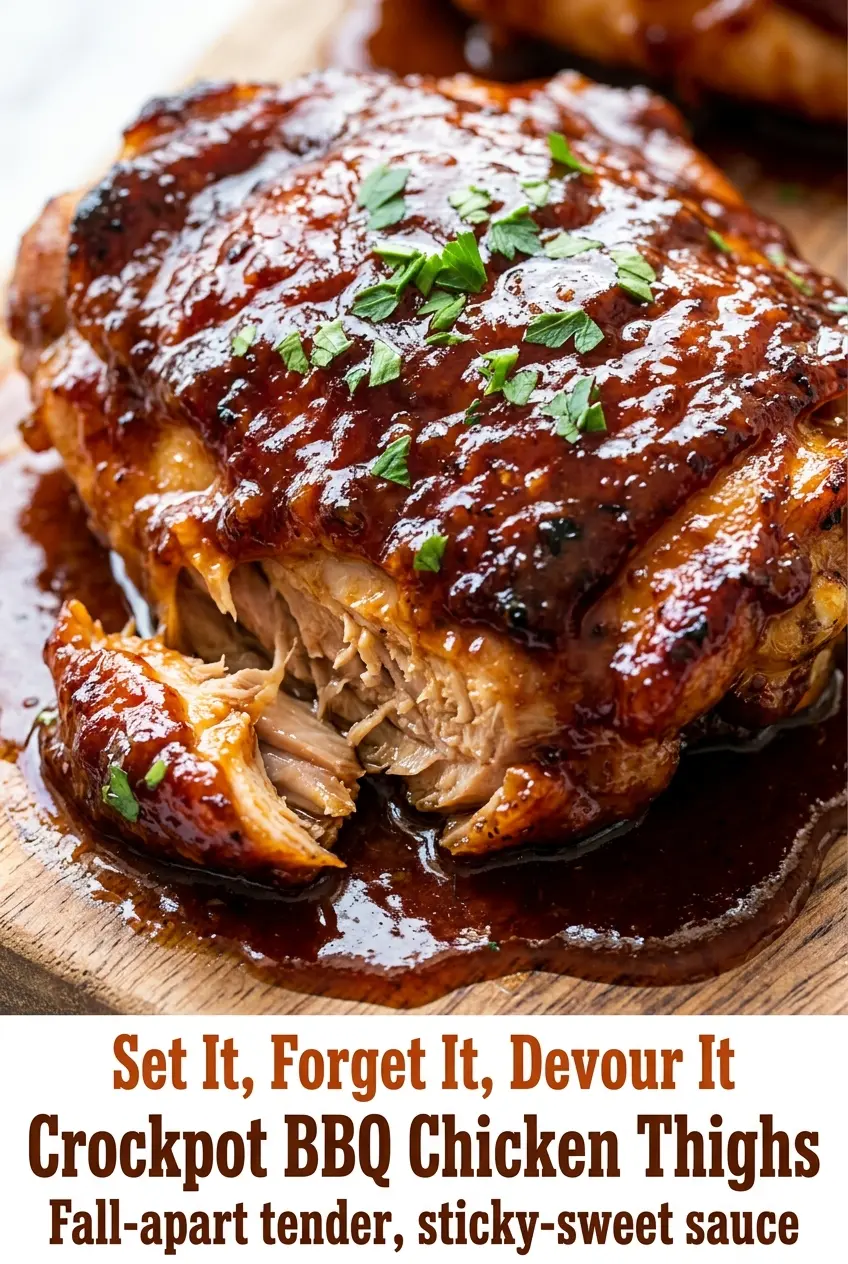
Crockpot BBQ Chicken Thighs
Ingredients
Equipment
Method
- Pat chicken thighs dry, then season all over with salt, black pepper, smoked paprika, garlic powder, and onion powder.
- Whisk barbecue sauce, apple cider vinegar, brown sugar, Worcestershire sauce, minced garlic, and smoked paprika until smooth.
- Place chicken thighs in the bottom of the slow cooker in a single layer, then pour the BBQ sauce mixture evenly over the top so each thigh is coated.
- Cover and cook on LOW for 6–7 hours (or HIGH for 3–4 hours) until chicken is fork-tender and easily pulls apart, reaching an internal temperature of at least 165°F.
- Transfer chicken to a foil-lined baking sheet, brush with extra sauce from the crockpot, and broil at 500°F for 3–4 minutes until the skin caramelizes and turns sticky at the edges.
- Let chicken rest 5 minutes, then serve whole with extra sauce spooned on top or shred and toss back into the sauce for pulled BBQ chicken.
- Top with fresh chopped parsley or chives and toasted sesame seeds (if using) before serving.