
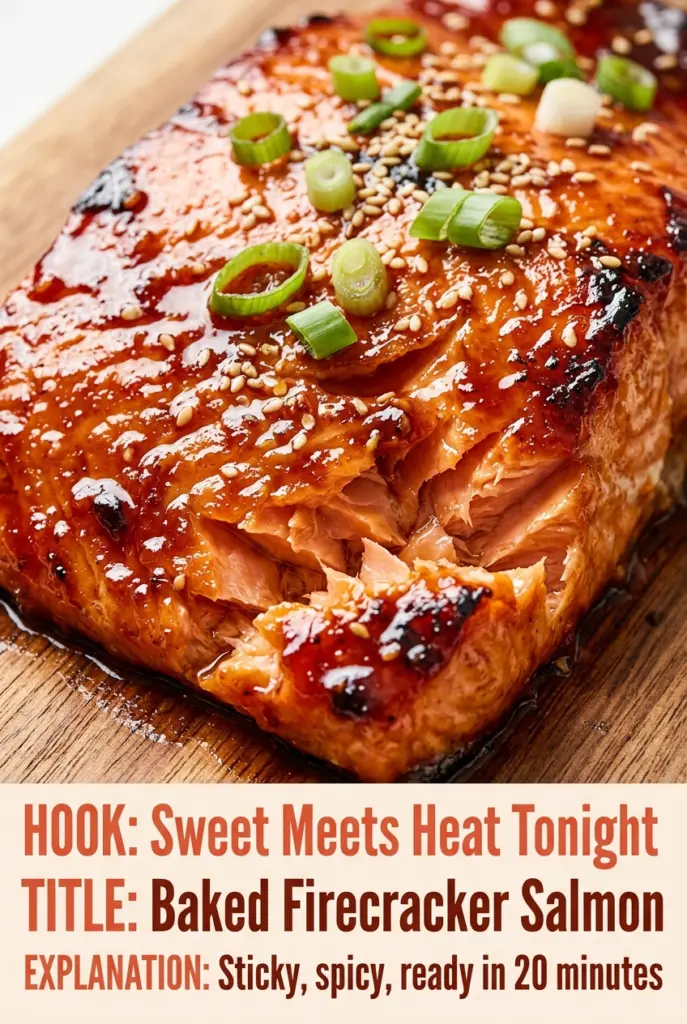
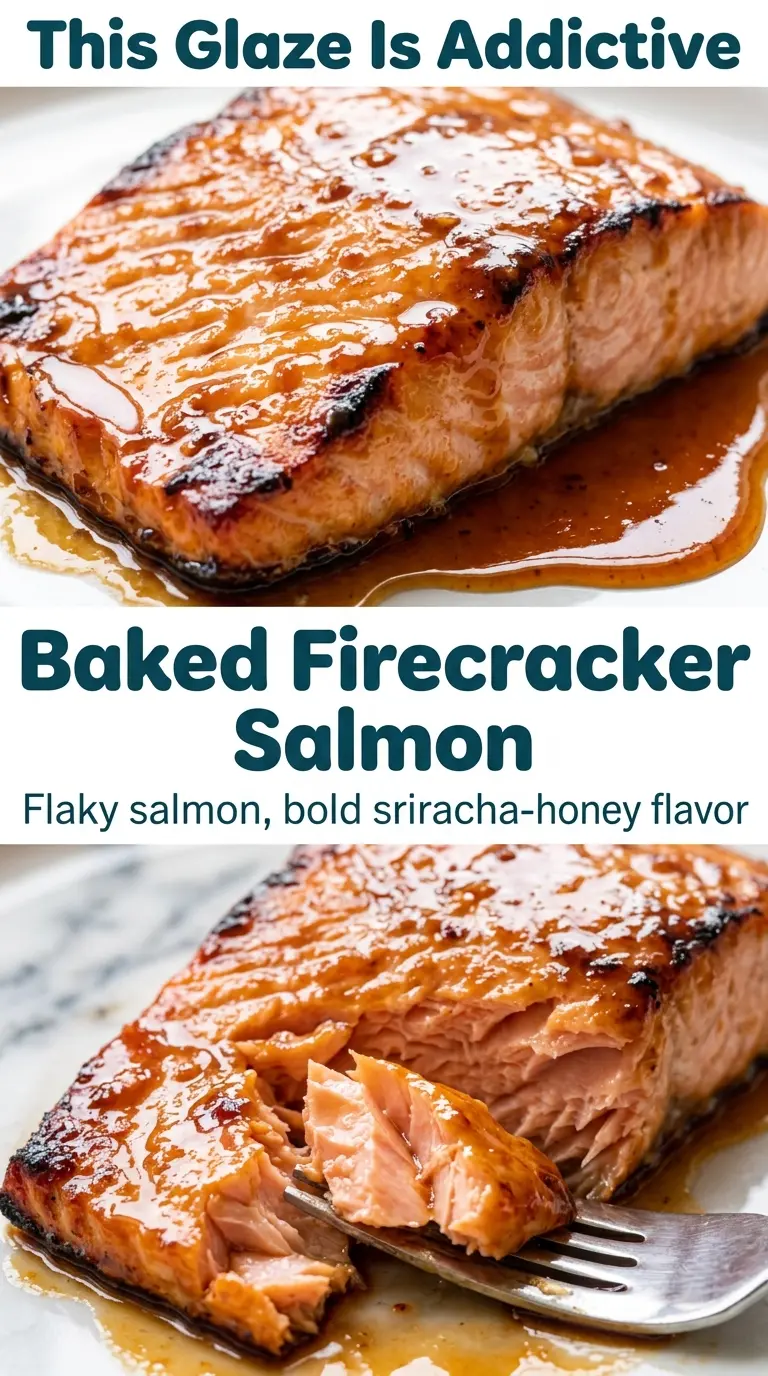
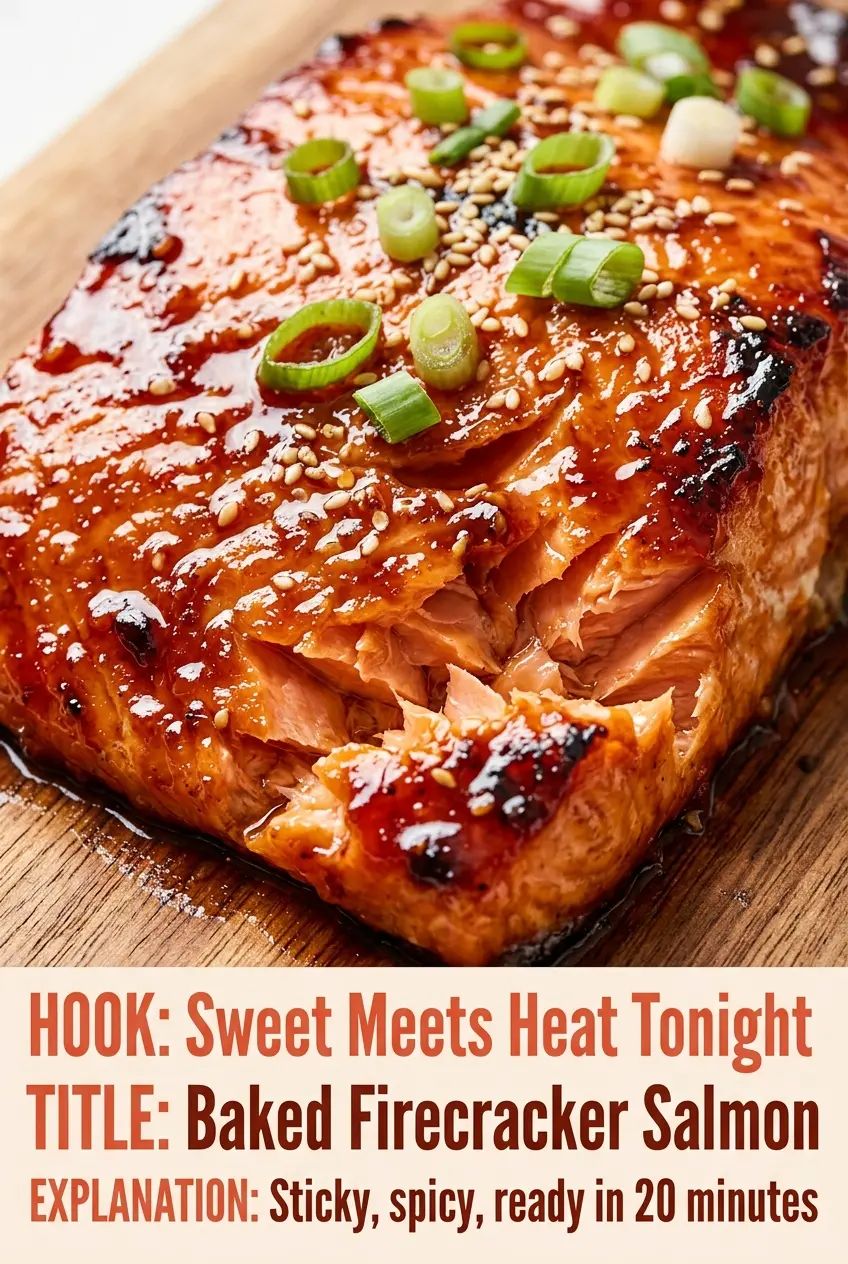
Baked firecracker salmon lands on the plate with sticky edges, tender flakes, and a glaze that hits sweet, spicy, and savory all at once. The real payoff is the contrast: the salmon stays juicy in the center while the honey-sriracha coating reduces into a glossy finish that clings instead of sliding off. A quick broil at the end gives the glaze that slightly charred edge that makes each bite taste bigger than the ingredient list looks.
What makes this version work is the way the glaze is cooked before it ever hits the fish. Simmering the honey, soy sauce, garlic, ginger, and sriracha for a couple of minutes takes the raw bite out of the aromatics and starts building body. The cornstarch slurry finishes the job so the sauce thickens enough to paint onto the salmon and stay put in the oven.
You’ll find a few things below that matter more than they might seem at first glance, including how to keep the glaze from burning under the broiler and how to adjust the heat without losing the balance that makes this dish work. If you like salmon with a little drama and not much cleanup, this one earns its spot in the regular rotation.
The glaze thickened up beautifully and stayed on the salmon instead of running all over the pan. I broiled it for just a minute and got those sticky little charred edges without drying the fish out.
Save these sticky honey-sriracha salmon fillets for the nights when you want a fast dinner with a caramelized glaze and zero boring bites.
The Broiler Finish That Keeps the Glaze Sticky, Not Burnt
Firecracker salmon falls apart when the glaze goes on too early at too high a heat. Honey is the culprit. It caramelizes fast, then crosses into bitter territory if it sits under direct broiler heat for too long. The fix is to bake the salmon first until it’s almost done, then brush on the remaining glaze and broil just long enough to darken the edges.
That second coating matters. The first layer seasons the fish and starts the glaze setting. The final layer gives you that shiny, tacky finish that tastes like it came from a restaurant kitchen instead of a sheet pan. If your glaze looks thin in the pan, it needs one more minute of simmering before it goes on the salmon.
What the Honey, Sriracha, and Cornstarch Each Bring to the Pan
- Salmon fillets — Use fillets that are similar in thickness so they finish at the same time. Skin-on salmon gives you a little insurance against overcooking and helps the fish release cleanly from the pan, but skinless works fine if that’s what you have.
- Honey — This is the backbone of the glaze. It gives you shine, sweetness, and the sticky finish that makes the recipe work, so don’t swap in a thin sweetener and expect the same texture.
- Sriracha — This brings heat plus garlic and vinegar in one shot, which means the glaze tastes layered instead of one-note spicy. You can reduce it for a milder dinner, but if you replace it with plain hot sauce, the balance shifts and the glaze usually tastes sharper.
- Soy sauce — This keeps the glaze from reading as candy. It adds salt and depth, and low-sodium soy sauce works well if you want more control over the seasoning.
- Rice vinegar — A little acidity keeps the glaze bright and cuts through the richness of the salmon. Lemon juice can stand in if needed, but rice vinegar has a softer edge.
- Cornstarch slurry — This is what turns the sauce from thin and runny to brushable. Stir it in only after the glaze has simmered so it thickens cleanly instead of turning gummy.
Building the Glaze So It Sticks Before It Hits the Fish
Drying and Seasoning the Salmon
Pat the salmon dry first. Surface moisture keeps the glaze from gripping the fish and can leave you with a watery layer under the sauce. A light coat of olive oil, salt, and pepper is enough here; the glaze carries most of the flavor. If the fillets are wildly different in thickness, tuck the thinner ends under so they cook more evenly.
Cooking the Glaze Until It Turns Glossy
Whisk the honey, sriracha, soy sauce, rice vinegar, garlic, and ginger in a small saucepan and bring it to a gentle simmer. You want the garlic and ginger to soften and lose their raw edge, not to fry or scorch. Stir in the cornstarch slurry and cook just until the sauce looks shiny and lightly thickened. If it gets paste-thick in the pan, it’s too far gone for brushing.
Baking Before Broiling
Brush on about half the glaze and bake the salmon at 400°F until it’s just opaque and flakes at the edges but still looks slightly translucent in the center. That usually takes 10 to 12 minutes, depending on thickness. Pulling it early matters because the broiler will finish the job fast. If you wait until it looks fully done in the oven, the final minute under the broiler can push it over the edge.
Finishing With Charred Edges
Brush the remaining glaze over the baked salmon, then switch to broil and watch closely. One to two minutes is usually enough to darken the glaze and give it those sticky charred spots. Stay near the oven the entire time. Honey burns in a hurry, and the difference between caramelized and bitter is usually less than a minute.
How to Adapt Baked Firecracker Salmon Without Losing the Point
Milder Heat for Sensitive Eaters
Cut the sriracha back to 1 tablespoon and keep everything else the same. You’ll still get that sweet-savory glaze, but the heat lands in the background instead of the front. Going lower than that starts to flatten the firecracker character, so the fish tastes more like a honey soy glaze than the original dish.
Gluten-Free Version
Use a gluten-free soy sauce or tamari in place of regular soy sauce. The glaze still thickens and browns the same way, and the flavor stays balanced. Check the sriracha label too, since a few brands include additives you may want to avoid.
No Salmon on Hand
This glaze works on shrimp, chicken thighs, or firm tofu, but the timing changes. Shrimp need only a short bake and broil, chicken needs a longer cook through, and tofu benefits from being pressed and roasted until the edges firm up. The glaze stays the same; the texture of the protein changes the whole experience.
Storage and Reheating
- Refrigerator: Store leftovers in an airtight container for up to 2 days. The glaze will thicken in the fridge, and the salmon stays best before it starts to dry out.
- Freezer: Freezing cooked salmon isn’t my first choice here. The texture turns softer after thawing, and the glaze loses some of its sticky edge.
- Reheating: Warm gently in a 275°F oven, covered loosely with foil, until just heated through. High heat dries salmon fast and can burn the sugary glaze before the fish is warm in the center.
Questions I Get Asked About This Recipe
Baked Firecracker Salmon
Ingredients
Equipment
Method
- Preheat oven to 400°F. Line a baking sheet with foil or parchment and lightly grease.
- Pat salmon fillets dry, then rub with olive oil, salt, and black pepper.
- In a small saucepan over medium heat, whisk together honey, sriracha, soy sauce, rice vinegar, garlic, and fresh ginger.
- Bring the mixture to a gentle simmer for 2 minutes.
- Stir in the cornstarch slurry and cook 1 more minute until glossy and slightly thickened.
- Arrange salmon fillets on the prepared sheet.
- Brush salmon generously with about half the firecracker glaze, reserving the rest for later.
- Bake for 10–12 minutes, until salmon is just opaque and flakes easily with a fork (internal temp 130–135°F for medium).
- Switch oven to broil.
- Brush salmon with the remaining glaze.
- Broil for 1–2 minutes, watching closely, until edges caramelize and turn slightly sticky-charred.
- Sprinkle with green onion and toasted sesame seeds.
- Serve immediately with lime wedges on the side.