
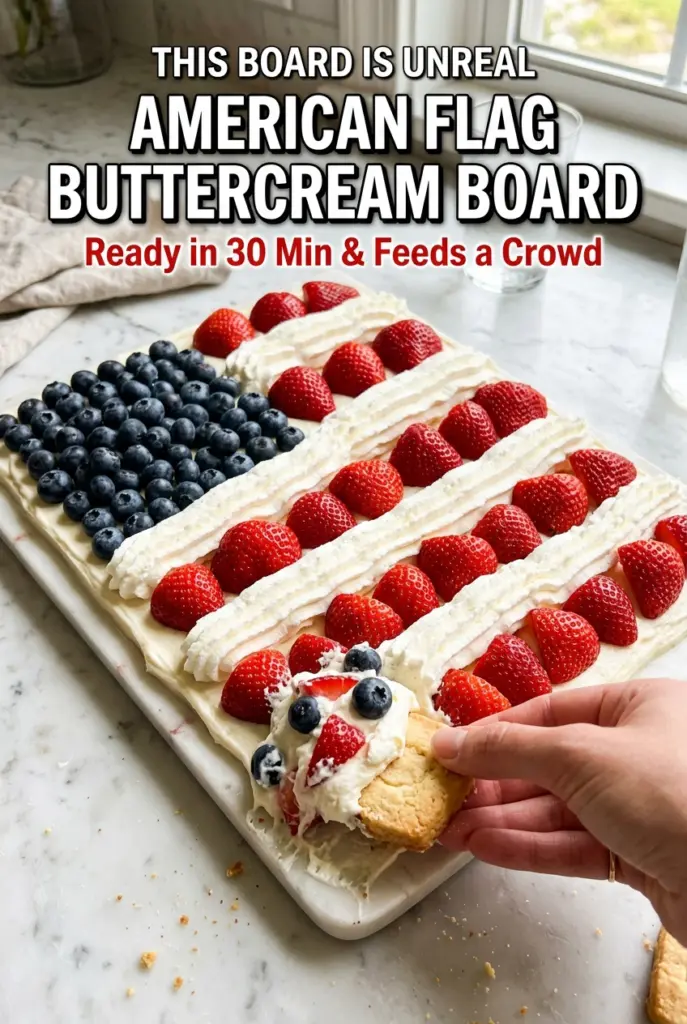
Silky buttercream spread across a board, then turned into a bold red, white, and blue dessert, always gets a crowd moving before anyone even takes a bite. The texture is part of the appeal: soft enough to scoop, stable enough to hold the flag design, and sweet in a way that works with salty pretzels, crisp cookies, and fresh fruit. It feels festive without asking you to bake a cake, chill layers, or fuss with frosting that has to behave perfectly.
The trick is building a buttercream that’s spreadable but not loose. A full four sticks of butter gives the base enough body to hold the berries, and the powdered sugar is added gradually so it stays smooth instead of grainy. Whipped cream is used for the white stripes, but only after it’s beaten to stiff peaks; anything softer will slump and blur the design the moment it hits the board.
Below you’ll find the exact way to keep the lines clean, the easiest swap if you want a lighter finish, and the one serving tip that keeps the board looking sharp right up until dessert is gone.
The buttercream held its shape so well on the board, and the strawberries didn’t slide around at all. I made it two hours before our cookout and it still looked neat when we served it with graham crackers.
Save this American Flag Buttercream Board for the party table when you want a no-bake dessert that looks festive and scoops up cleanly.
The Reason the Flag Stays Sharp Instead of Sliding Into a Mess
Most buttercream boards fail for one simple reason: the base is too soft. If the butter is too warm or the sugar goes in too fast, the frosting turns loose and the fruit starts drifting the second it’s arranged. A stiffer buttercream gives you enough grip to hold the berries in place without becoming hard or crusty.
The other thing that matters is surface shape. A smooth, even layer is easier to decorate, but it doesn’t need to look polished to the point of feeling fussy. A slightly rustic finish actually helps here, because the fruit and whipped cream stand out better against a surface that isn’t overworked.
- Softened butter — It should yield when pressed but still hold its shape. Melted or greasy butter won’t whip properly and the board will slump.
- Powdered sugar, sifted — Sifting keeps the buttercream from turning lumpy. That matters more here than in a cake frosting because the board needs to spread evenly.
- Heavy cream — This loosens the buttercream just enough to make it scoopable. Don’t add extra unless the mixture is too stiff to spread, or the design won’t stay put.
- Fresh berries — Use firm strawberries and dry blueberries. Wet fruit is the enemy of clean lines, because moisture breaks the buttercream surface and makes the berries slide.
What Each Ingredient Is Doing in the Board
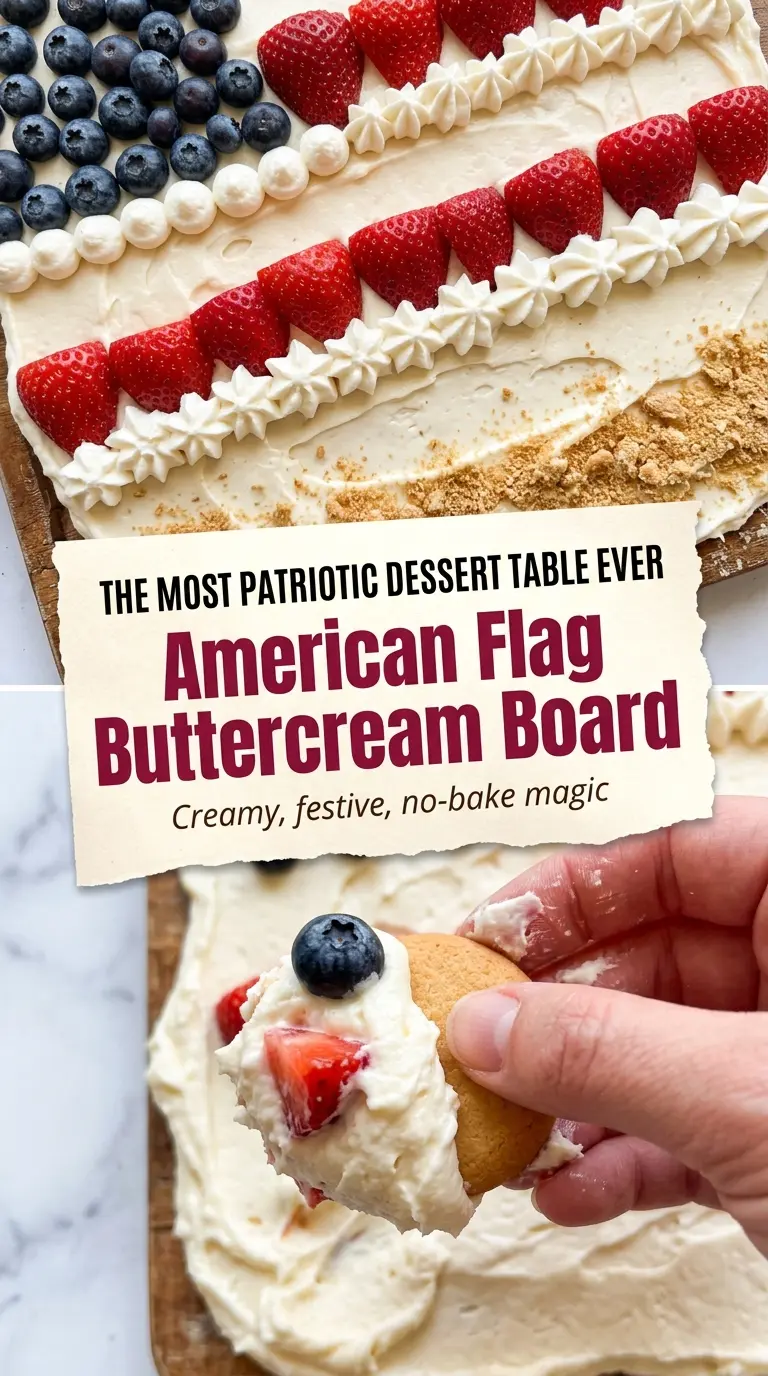
The butter is the structure. You need enough of it to create a thick, stable base that can support the weight of the fruit without melting into the platter. Use good unsalted butter here, because the flavor comes through in every scoop and salted butter can push the whole dessert in an odd direction.
The whipped cream topping is a separate component for a reason. It gives you clean white stripes without thinning the whole board, and the powdered sugar helps it hold its shape longer. If you want a brighter red, a tiny bit of gel coloring on the strawberries or in the whipped cream can sharpen the color, but fresh fruit alone still gives a strong patriotic look.
The dipping items matter more than they first seem. Graham crackers and vanilla wafers are soft enough to scoop the buttercream without cracking the design apart, while pretzels add salt and crunch. Fresh fruit slices work too, especially if you want a lighter serving option alongside the sweets.
Building the Board Without Losing the Design
Whipping the Butter to the Right Place
Start by beating the softened butter until it looks paler and feels airy. That takes a few minutes, and it’s worth it because dense butter leads to dense frosting that’s harder to spread. If the butter still looks glossy and greasy, it’s too warm; the finished board will never hold crisp lines.
Adding Sugar Without a Powder Cloud
Add the sifted powdered sugar one cup at a time on low speed, then stop and scrape the bowl before the next addition. Dumping it all in at once leaves dry pockets and a grainy texture. When it’s fully mixed, the buttercream should look smooth and thick, not stiff enough to tear the spatula.
Spreading the Base and Placing the Fruit
Spread the buttercream in an even layer over a wooden board, slab, or rectangular platter. Don’t chase a perfectly flat finish; a slight rustic texture helps the fruit grip. Press the blueberries in first for the blue field, then add the halved strawberries in rows. The berries need gentle pressure so they sit in the buttercream instead of skating across the top.
Finishing the White Stripes
Whip the cream to stiff peaks before piping. Soft peaks collapse and blur the flag, which is the fastest way to lose the clean look. Pipe the white stripes between the strawberry rows, then stop and step back before adding anything else. If a line looks crooked, nudge it now while the cream is still fresh.
Three Ways to Make This Board Fit the Crowd
Dairy-Free Buttercream Board
Use a sturdy plant-based butter and a dairy-free whipping topping that holds peaks. The texture will be a little softer and the flavor less rich, but the board still works well if you chill it briefly before serving.
Less Sweet Version
Cut the powdered sugar slightly in the buttercream and rely more on the fruit and dipping items for balance. The frosting will be a touch softer, so keep the layer a little thicker on the board and serve it sooner rather than later.
Smaller Party Board
Halve the buttercream and use a smaller platter if you’re serving a tighter group. Keep the same red, white, and blue layout, just with fewer rows, so the design still reads like a flag instead of a random fruit tray.
Storage and Reheating
- Refrigerator: Store uncovered for up to 2 hours before serving, or loosely covered for a few hours if needed. Longer storage softens the fruit and dulls the clean look.
- Freezer: Don’t freeze the finished board. The berries turn mushy and the whipped cream loses its texture when thawed.
- Reheating: No reheating is needed. If the buttercream gets too firm in the fridge, let the board sit at room temperature for 15 to 20 minutes so it softens enough to scoop cleanly.
Answers to the Questions Worth Asking
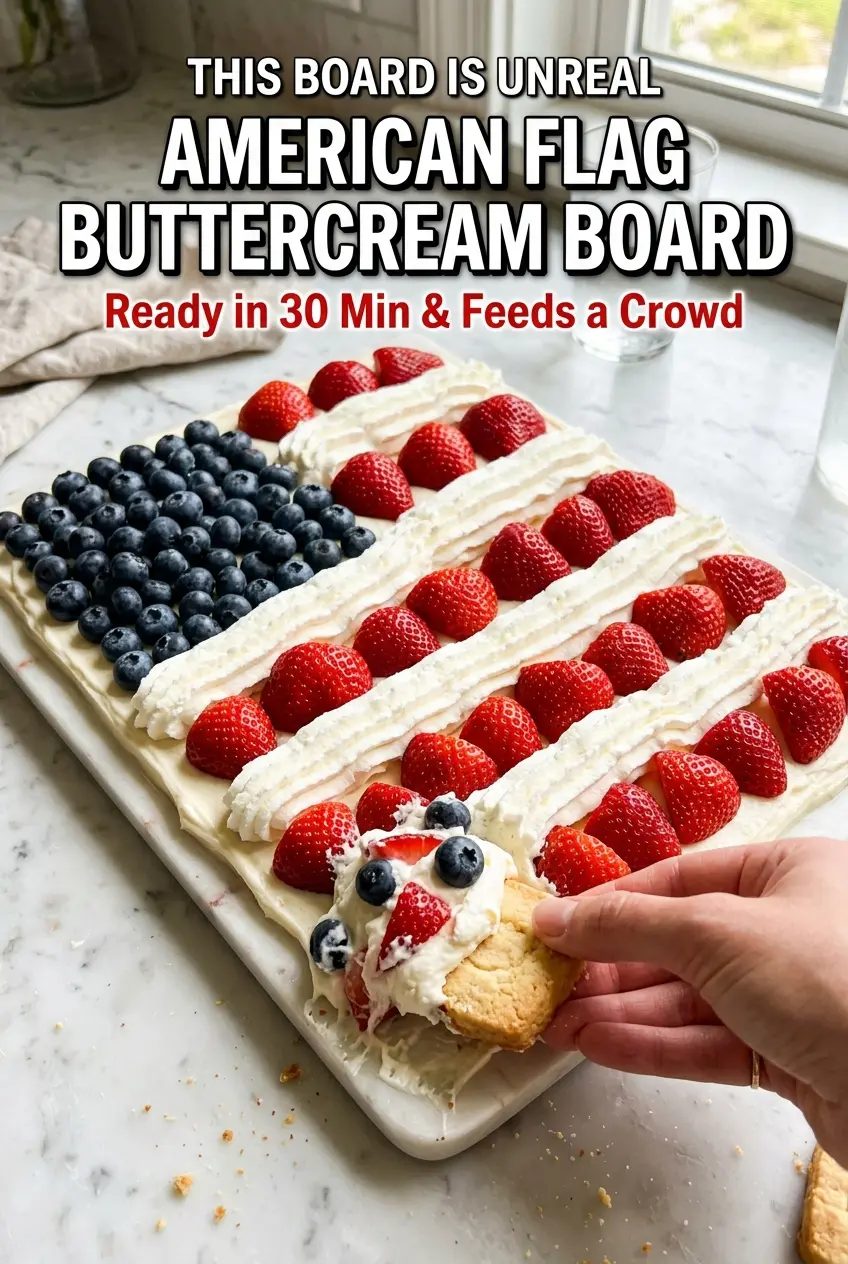
American Flag Buttercream Board
Ingredients
Equipment
Method
- Beat the softened unsalted butter in a stand mixer or with a hand mixer on medium-high for 3–4 minutes until pale and fluffy, pulling down the sides as needed.
- Reduce speed to low and gradually add the sifted powdered sugar, one cup at a time, mixing well between each addition until fully incorporated.
- Add the heavy cream, pure vanilla extract, and salt, then beat on high for 2 minutes until light, smooth, and spreadable.
- Spread the buttercream onto a large wooden board, marble slab, or rectangular platter using an offset spatula, smoothing into an even layer with a slightly rustic (not perfectly flat) finish.
- Whip the heavy whipping cream with powdered sugar and vanilla until stiff peaks form, then transfer it to a piping bag fitted with a star or round tip.
- Create the blue star field in the top-left corner by pressing blueberries in tight rows (4–5 rows works well) gently into the buttercream so they hold.
- Pipe or arrange 6–7 horizontal red stripes across the remaining right portion using rows of halved strawberries (cut side down), pressed into the buttercream.
- Pipe whipped cream in straight lines between the strawberry rows to form the white stripes.
- Stand back and adjust any loose berries, then add piped whipped cream rosettes to the corners if desired.
- Arrange graham crackers, vanilla wafers, Nilla cookies, and pretzels around the outer edges of the board so guests can scoop easily.
- Add fresh fruit slices near the edges, then serve immediately or refrigerate uncovered for up to 2 hours before serving for best results the same day.