
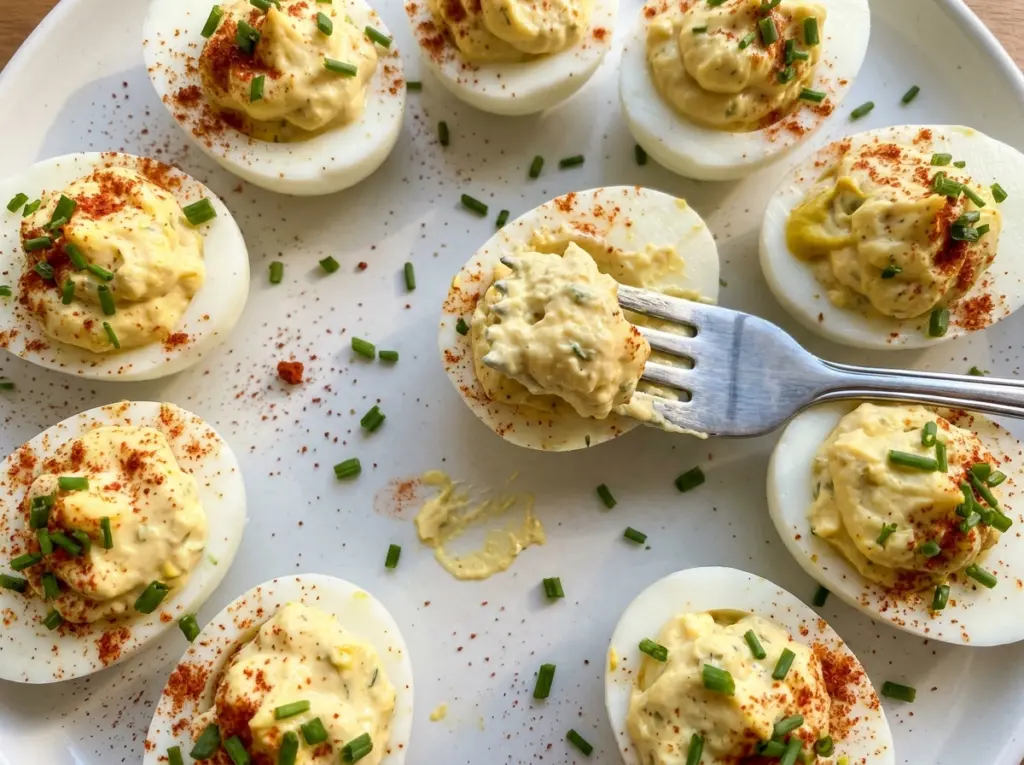
The shells come off cleanest when the eggs have had time to cool all the way through; rushing that part can leave you picking at little bits of shell instead of getting on with the filling. For these creamy horseradish deviled eggs, I use a covered, off-heat cook and an ice bath, then mash the yolks until there are no stubborn lumps. The result is a tidy platter of tender whites with a smooth, tangy center.
Prepared horseradish gives the filling a clear, lively bite without turning it into a hot sauce. Mayonnaise softens that sharpness, while Dijon and white vinegar keep the yolks from tasting heavy. Drain the horseradish before it goes in, and the filling stays thick enough to settle neatly into each egg white. A little paprika on top adds color and a familiar warm note; each bite starts cool and creamy, then the horseradish lands cleanly at the back of your nose.
Kitchen Note
Drain the prepared horseradish well before it goes into the bowl. Extra liquid loosens the filling, and it won’t sit as neatly in the egg whites.
Save these creamy horseradish deviled eggs for a make-ahead platter with a smooth filling and a sharp, tangy finish.
Why These Eggs Finish Cooking Off the Burner
Leaving eggs over a rolling boil seems like the surest way to cook them through, but that steady blast of heat can leave the whites rubbery and the yolks dry around the edges. Eggs keep cooking in the hot water after the pan comes off the burner. With the lid on, that retained heat finishes the centers more gently, so the yolks stay easier to mash into a creamy filling.
That gentler finish also helps avoid the green-gray ring that sometimes forms around an overcooked yolk. The ring isn’t harmful, but it’s a sign the egg has spent too long at high heat. This method gives the eggs a controlled rest in the covered pan, followed by a fast cool-down. The contrast matters: the covered pan finishes the cooking, and the cold water and ice stop it. You get firm whites that hold their shape when halved, without yolks that crumble into dry little bits.
What Each Ingredient Does in the Horseradish Filling

- Large eggs — They give you sturdy halves with enough room for a generous spoonful of filling. Using large eggs keeps the balance between the whites and the yolks predictable; smaller eggs can leave you with filling that doesn’t fit as neatly.
- Mayonnaise — This is what makes the mashed yolks creamy and cohesive. A familiar, standard mayonnaise works well here; there’s no need for a specialty jar, but a strongly flavored version will change the filling’s taste.
- Prepared horseradish — Its sharp, direct heat is the defining flavor, and prepared horseradish blends more evenly into the yolks than a coarse fresh root. Choose plain prepared horseradish rather than a creamy horseradish sauce, which has a different texture and flavor.
- Dijon mustard and white vinegar — Dijon brings a rounded mustard tang, while vinegar cuts through the richness of the yolks and mayonnaise. White vinegar keeps that acidity clean and direct, rather than adding another strong flavor.
- Paprika — A light dusting gives the finished eggs their familiar color and a mild, warm finish. Sprinkle it on after filling, so it stays visible instead of disappearing into the mixture.
From Covered Pan to Smooth, Filled Egg Whites
Bring the Eggs to a Full Boil, Then Cover
Set the 6 large eggs in a 3-quart saucepan and add 8 cups cold water, enough to cover them by about 1 inch. Bring the water to a full boil over high heat. Take the pan off the heat, cover it, and let the eggs stand for 12 minutes. Keep the lid on during that rest so the retained heat can finish cooking the centers.
Cool Before Peeling and Halving
Transfer the eggs to a bowl with the remaining 4 cups cold water and 2 cups ice. Let them cool for 10 minutes, then drain and peel them. The eggs should feel cool enough to handle comfortably before you start peeling. Halve each one lengthwise and lift the yolks into a medium bowl, keeping the whites intact for filling.
Mash the Yolks and Fill the Whites
Mash the yolks until fine before stirring in the mayonnaise, prepared horseradish, Dijon mustard, white vinegar, salt, and black pepper. Keep stirring until the mixture looks smooth rather than streaky; visible dry yolk crumbs need a little more mashing and mixing. Spoon the filling evenly into the egg-white halves, then sprinkle the tops with paprika. Cover and refrigerate for at least 20 minutes before serving so the filling can chill and settle.
Two Ways to Change the Shape Without Changing the Filling
Pipe a Ridged Finish
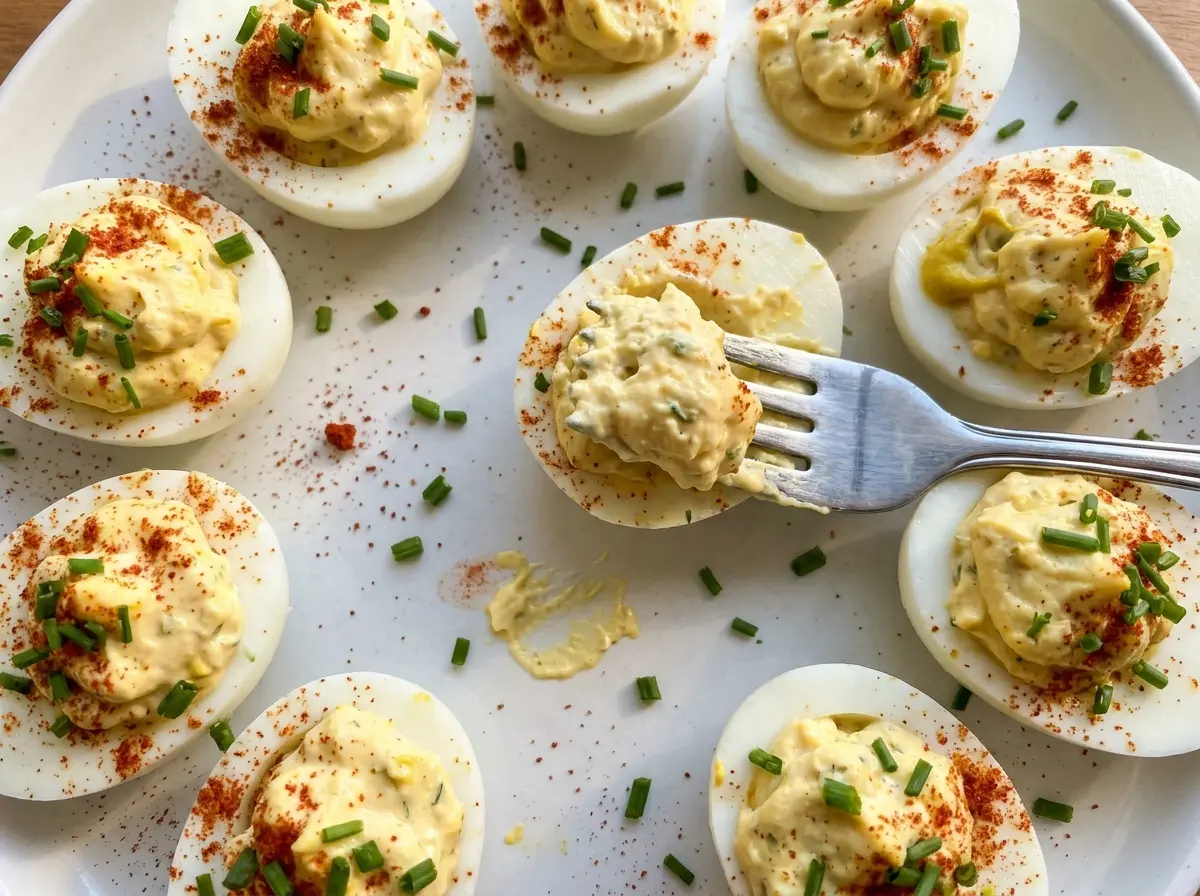
For a more polished platter, transfer the finished filling to a piping bag and pipe it into the egg-white halves instead of spooning it in. The ingredients stay the same, but the ridged tops look dressier and make it easier to portion the filling evenly. Use a wide opening so the horseradish mixture passes through without squeezing hard.
Turn the Same Batch Into Egg Salad
If you’d rather serve it as a scoopable salad, chop the cooked egg whites and fold them into the completed yolk mixture. You’ll keep the same creamy horseradish flavor, but the texture becomes chunkier and the halves are no longer needed for serving. Add the paprika over the bowl just before it goes to the table.
Storage and Reheating
- Refrigerator: Keep the eggs covered and refrigerated for up to 3 days. The whites may soften slightly as they sit.
- Freezer: Don’t freeze deviled eggs; thawed whites turn watery and rubbery, and the filling loses its smooth texture.
- Reheating: These are served cold, so reheating isn’t recommended. Keep the platter refrigerated until serving and don’t leave it at room temperature for more than 2 hours.
Questions That Come Up With Horseradish Deviled Eggs
Creamy Horseradish Deviled Eggs
Ingredients
Equipment
Method
- Place the eggs in a 3-quart saucepan.
- Add 8 cups cold water, enough to cover the eggs by about 1 inch.
- Bring the water to a full boil over high heat.
- Remove the pan from the heat.
- Cover the pan and let the eggs stand for 12 minutes.
- Transfer the eggs to a bowl with the remaining 4 cups cold water and the ice.
- Cool for 10 minutes.
- Drain and peel the eggs.
- Halve the eggs lengthwise and transfer the yolks to a medium bowl.
- Mash the yolks until fine.
- Stir in the mayonnaise, horseradish, Dijon mustard, vinegar, salt, and black pepper until smooth.
- Spoon the filling evenly into the egg-white halves.
- Sprinkle with paprika.
- Cover and refrigerate for at least 20 minutes before serving.